What is Sinus Lifting (Sinus Kaldırma)?
The air cavities located on both sides of the nasal congestion, which serve functions such as reflecting sound and warming the inhaled air, are referred to as “maxillary sinuses.” These cavities are adjacent to the roots of the upper back teeth. When the teeth in the relevant areas are lost for various reasons and that area remains empty for many years, the sinuses begin to expand downwards due to the effects of gravity and air pressure. The sagging of the sinus can lead to the bone of the jaw in that region eroding to the thickness of paper. The sinus lifting procedure is designed to recreate the depth and volume required for placing titanium artificial roots in the jawbone.
In the İzmir location, the sinus lifting procedures carried out at Avrupadent clinics are conducted with a multidisciplinary surgical approach, taking into account each individual’s unique bone structure and cellular repair capacity. This procedure encompasses advanced-level techniques in dental surgery. The new bone area formed using body-compatible graft materials prepares the ground for the stability of the prosthetic structures to be added on top, as it integrates into the patient’s own live jawbone after a biological cycle lasting several months.
In Which Situations is the Sinus Lifting Procedure Evaluated?
The areas experiencing the most pressure in the oral structure are the molar regions, which are of great importance for prosthetic restoration. However, since the upper jawbone is structurally more spongy and porous, when tooth loss occurs, the resorption process develops quite rapidly. The main anatomical tables directing this specific surgical intervention in the clinic are as follows:
| Clinical Condition | Medical Necessity of the Procedure |
|---|---|
| Long-term Toothlessness | Resorption of alveolar bone in the vertical dimension due to the position of the extracted teeth remaining vacant for years. |
| Sinus Lifting (Sinus Dropping) | When the tooth roots are lost, the sinus cavity expands downward, occupying bone volume. |
| Periodontal Destruction | Advanced gum inflammation erodes the bone surrounding the teeth, creating deep defects in the jaw. |
| Traumatic Tooth Extractions | Damage to the bone wall during difficult extractions in the past leads to a decrease in height. |
How is Sinus Lifting Performed?
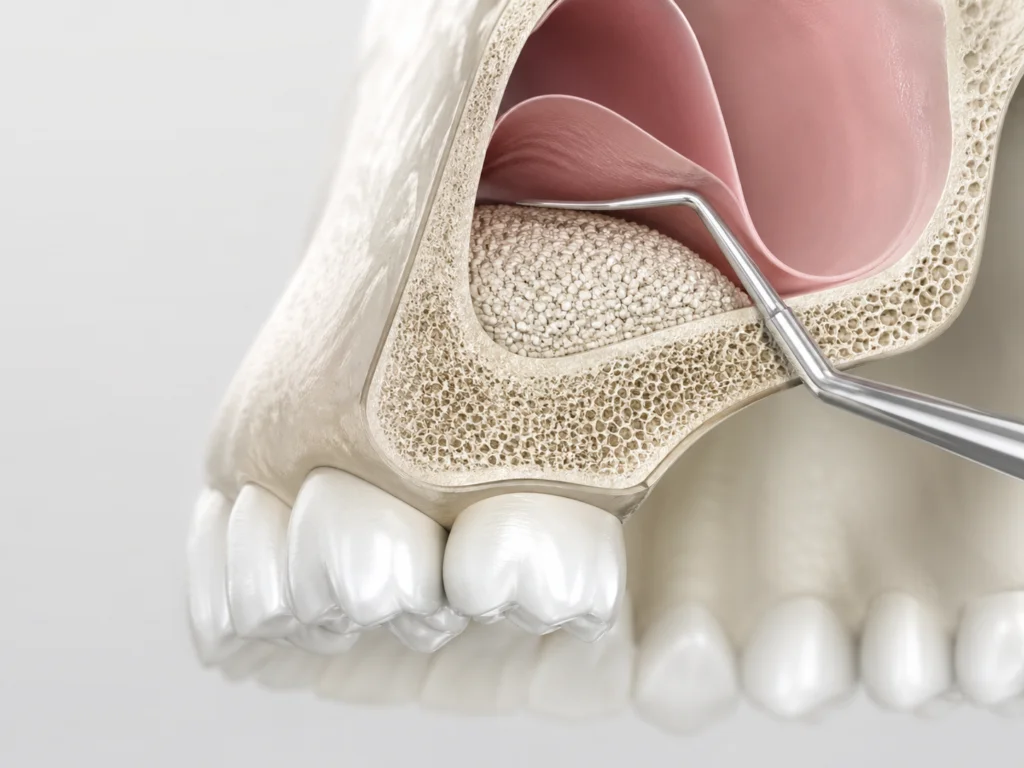
The surgical procedure begins with a local anesthesia application that prioritizes patient comfort. After the area of bone to be operated on is exposed, the physician creates a small window in the outer wall of the jawbone using highly precise diamond or special piezosurgery (bone cutting device that works with sound waves). Just behind this window lies the sinus membrane, which has a very delicate structure. The most critical point of the procedure is to gently lift this membrane upward in an arch shape without allowing it to tear, using specially designed instruments.
When the membrane is lifted upwards, a new cavity is created underneath it. This cavity is filled with biocompatible bone minerals in a dense manner, which the body can turn into its own bone. To prevent the grafts placed from spilling out and to guide cellular healing, the window is covered with a collagen-based barrier (membrane). Then, the gum tissue is returned to its original position and stitched with fine surgical threads, initiating the body’s biological remodeling phase that will last for months.
Who Might Be Suitable for Sinus Lifting?
Bone repair surgeries are expected to encourage the body’s self-renewal mechanisms, hence the individual’s overall circulatory system and cellular metabolism should be within a certain order. As long as the bone quality is at a reasonable level, advanced age does not create a restriction regarding this treatment. What is important is that the patient still has the potential for bone production in their jawbone where the procedure will be performed.
Furthermore, the patient must not have an active infection (acute sinusitis) in the sinus cavities, a cystic formation, or large polyps. Individuals with diabetes or bleeding profile disorders can ensure stability of medical values by communicating with their healthcare provider. Patients whose systemic values are within ideal ranges can be comfortably included in these surgical procedures if they comply with the physician’s recommendations.
How is an Assessment Made Before Sinus Lifting?
Since the sinuses are part of the respiratory system, the goal is to ensure that the entire area is healthy before any surgical intervention. If the patient experiences continuous nasal obstruction, has severe seasonal allergies, or if there is liquid (inflammation) accumulation within the sinus cavity, it is medically recommended to have these conditions evaluated and managed by Ear, Nose and Throat (ENT) specialists before performing bone graft surgery.
Radiological examinations create the map for the operation. The physician calculates the current bone height in millimeters. This measurement guides the determination of whether the sinus membrane will be removed with a window opened from the side (open technique) or through a small socket opened from the peak of the gum (closed technique).
How is the Sinus Lifting Treatment Process Planned?
At Izmir Avrupadent, jaw surgery plans are organized step by step. Firstly, if there is an infection (for example, a deep tartar buildup) in the gums of the area where the procedure will be performed or in neighboring teeth, professional cleaning procedures are carried out to prepare the area for sterile surgery.
Afterward, the details of the operation are explained to the patient. The type of bone powder to be used (animal-derived, synthetic, or human-derived) is selected based on biological needs. After determining the surgical date, the route for the artificial titanium roots to be added during the procedure or months later is also designed as part of this planning, and the patient is informed about the procedure.
What Steps Are Followed in Sinus Lifting Application?
The surgical steps taken to promote cellular repair are meticulously followed within the framework of respecting the anatomy of the area. The basic stages followed in open surgery technique are as follows:
| Surgical Phase | Medical Details of the Procedure |
|---|---|
| Regional Anesthesia | Local anesthetics will be applied to numb the inner cheek area of the upper jaw being worked on. |
| Lateral Window Access | After retracting the gum tissue and reaching the outer surface of the bone, a small viewing window will be opened in the bone. |
| Membrane Elevation | The delicate sinus membrane seen through the opened window will be gently lifted upward without tearing it from the bone. |
| Graft Placement | The void created by pushing the membrane will be tightly filled with sterile bone powders and supportive minerals. |
| Suturing (Stitching) | The protective membranes of the added area are sutured back to the original position of the outer tissue with surgical threads. |
What Should Be Considered Before Sinus Lifting?
The sinus mucosa is directly connected to the nasal passages. If the patient develops cold symptoms such as upper respiratory infections, nasal discharge, or severe sneezing attacks close to the appointment date, it is medically advisable to postpone the operation to a later date. Because coughs after the procedure can increase pressure inside the sinus, risking surgical success.
During the clinical operation, to ensure the patient’s comfort, it is advised to have a light meal beforehand, as this supports preventing fluctuations in blood sugar after anesthesia. Moreover, if there is smoking that adversely affects tissue repair, limiting tobacco use a week before the operation has a significantly positive effect on cellular healing.
What Should Be Considered After Sinus Lifting?
Because there is work done on the air cavities, it is advised to stay away from any actions that could create pressure changes. Actions like inflating balloons, playing wind instruments, diving into the sea/pool creating pressure or taking a flight should be restricted for weeks following the operation. Additionally, observing nasal bleeding or very light drainage from the nose during the first few days is anatomically normal.
Swelling (edema) in the cheeks is a response of the healing physiology in such procedures where the bone membrane is opened. Regular use of the prescribed antibiotics, pain relievers, and medications that reduce swelling will enhance comfort during the process. The use of tobacco should be highly restricted during this sensitive period, as it interferes with the neovascularization process and the graft’s integration with the bone.
What Treatments are Evaluated Before Sinus Lifting?
Bone volume augmentation is generally planned to support another prosthetic or surgical infrastructure that will be built upon it. The fundamental dental practices that require sinus lifting procedures are as follows:
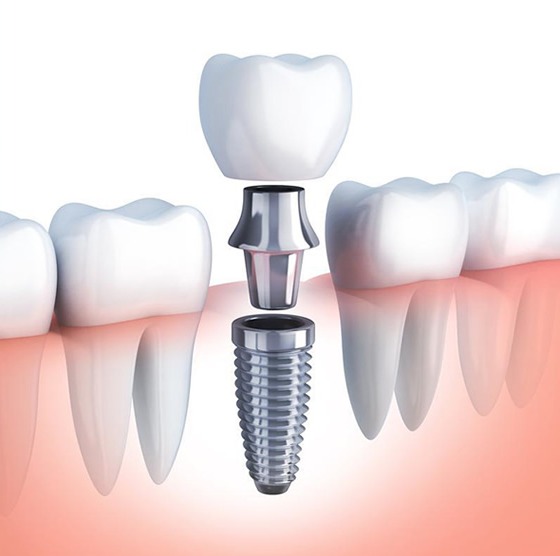
- Titanium Artificial Root (Implant) Operations: Essentially, it is designed to create vertical bone height that will surround the bodies to be placed in the upper jaw molar region.
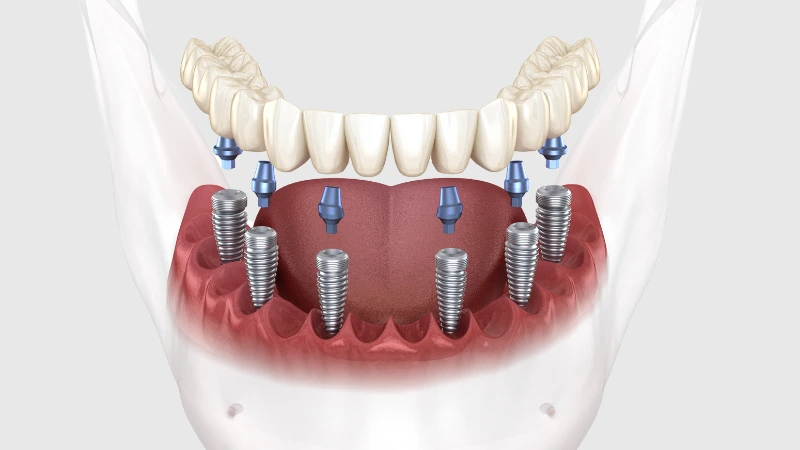
- All-on Concepts: In upper jaws where all teeth are lost, it is employed to strategically place 4 or 6 roots while stretching anatomical limits in the back sections.
- Support Before Cyst Resection: During the cleaning of enlarged cysts in the rear area of the upper jaw that lead to bone tissue weakening, it is evaluated to prepare the area.
What is the Relationship Between Sinus Lifting and Implant Treatment?
If a patient’s back teeth in the upper jaw are missing and the bone height is only 2-3 millimeters, when a standard-sized titanium root is placed (e.g., 8-10 mm), a large part of the screw will protrude into the bone, meaning it will enter the sinus air space. This situation can lead to infections (sinusitis) and allow the screw to fall out of the jaw.
When the sinus membrane is pushed up and bone dust is filled into that area, the physician artificially raises that 2 millimeters of bone to a height of 10-12 millimeters. This way, the artificial roots, which will have a dental prosthesis added on top, are positioned supported by solid bone tissue all around, gaining a functional lifespan.
How is the jawbone evaluated before the sinus lifting procedure?
The physician examines the existing bone length to select the type of surgery (open or closed). If the bone height is below 4-5 mm, an “open technique” is devised by creating a window from the cheek side since a significant amount of grafting is required. If the bone length is around 6-7 mm and only a minor elevation is needed, a less traumatic “closed technique” can be preferred by accessing through the gum crest.
Additionally, radiological examinations check for the presence of inflammatory thickening on the sinus membrane or bony partitions (Underwood septums) that divide the cavity. These anatomical barriers can increase the risk of membrane rupture during surgery, prompting the physician to modify the surgical strategy based on these findings.
What Diagnosis and Imaging Methods are Used in Sinus Lift Applications?
The predictability of surgical success is achieved by clearly illuminating hidden areas within the cranial bones. The advanced systems used in the clinic for this purpose are as follows:
- ▪ Dental Volumetric Tomography (CBCT): It is the most fundamental diagnostic device that generates a surgical map by reflecting the volume of the tissue, the structure of the sinuses, and the depth of voids in three-dimensional sections.
- ▪ Panoramic Radiography: It is a supportive method that allows monitoring the general relationship of the upper and lower jaw, neighbor tooth roots, and the approximate position of the sinus floor in a single wide view.
What Are the Differences Between Open and Closed Sinus Lifting?
The choice of technique is related to the bone distance of the hospital. The clinical characteristics of the two methods differ in the following ways:
| Comparison Point | Open Sinus Lifting (Lateral Approach) | Closed Sinus Lifting (Crestal Approach) |
|---|---|---|
| Application Area | It is performed by creating a surgical window in the outer wall of the jawbone facing sideways. | It is applied by pushing upward from the implant cavity opened from the top of the jawbone using instruments. |
| Bone Height Requirement | Used in severe resorption cases where the existing bone is 4-5 mm or less. | If the existing bone is around 5-7 mm, it is only selected during times when a slight support is needed. |
| Surgical Trauma | Since a wider area has been opened, the likelihood of experiencing mild facial swelling after the procedure is higher. | Since the gum tissue is less separated, the post-operative process is characterized by minimal swelling. |
How Does the Healing Process Progress After Sinus Lifting?
The intervention from the outside (the stitching area) reaches a level where daily functions are not affected within a short time, thanks to the high renewal rate of the oral mucosa. However, the process in the sub-layers of the tissue is like building a structure. The added graft materials (bone minerals) begin to be surrounded by blood cells and osteoblasts (bone-forming cells) coming from the surrounding bone tissue.
When revascularization is established, the powders dissolve slowly and are replaced by the patient’s own bone tissue, which gains complete cellular resistance. This new bone bed, safely formed under the sinus membrane, generally acquires a hard and resistant structure suitable for porcelain placement (loading) over the titanium roots by the end of the 6th month, depending on the volume and the individual’s tissue response.
How Long Can Sinus Lifting Procedure Take?
With the closed technique, the small pushing procedures performed from inside the implant socket can generally be completed much faster, usually in 30-45 minutes; while in the open technique, the extensive exposure of the gum, the opening of a window, and the delicate removal of the membrane from the bone require a more intense concentration and time.
If there are anatomical indentations or bone partitions (septums) on the upper jaw, distinguishing these from the membrane tear may extend the duration of the procedure. However, throughout the entire process, the patient does not perceive any clinical fatigue due to the active local anesthesia; the procedures are managed calmly within the anticipated medical timeline.
How Should Oral and Dental Care Be Implemented After Sinus Lifting?
The stitches applied in the operation area are locking mechanisms that prevent contact with the grafts placed inside the tissue. Harsh brush strokes or forceful water sprays can stretch these stitches and cause the wound edges to open. Therefore, mechanical pressure should not be applied to that area, and brushing should not be performed unless your doctor advises otherwise.
In addition, when using the mouthwash, it is essential to move the liquid gently in the mouth and to avoid vigorous swishing. After the stitches are removed and the tissue surfaces are joined, gentle massages to the area with extra soft surgical brushes, as recommended by your physician, will help to gradually return to routine oral hygiene practices.
Why is the Control Examination After Sinus Lifting Important?
The first visit made in the first week after the surgical intervention is to determine whether the wound has closed to the external environment. If the suture threads remain in the mouth longer than the specified time, they may lead to local infections by allowing food to accumulate. During this control appointment, the stitches will be gently removed to relax the tissue.
The larger and more definitive determining controls are carried out approximately 6 months after the procedure. The volume of the powders placed beneath the sinus base using dental tomographs is verified to see if it has been preserved, as well as how much the spongy tissue has hardened. When the density of the bone reaches an appropriate level for porcelain to be placed on the implants, the next prosthetic phase of the treatment plan is initiated.
Can Sinus Lifting Be Planned Together with Other Oral, Dental, and Jaw Surgery Procedures?
Performing both surgical procedures in a single appointment (simultaneously) prevents the tissues from being opened again and exposed to surgical trauma, and reduces the patient’s healing time by a few months. However, for this to be possible, the artificial root placed in the jaw must provide initial retention (primary stability) within the patient’s own bone. If the bone thickness is around 1-2 millimeters, the screw will not be able to retain, so only the sinus lifting procedure is performed first, and then it is expected to bond with the bone for 6 months before the screws are placed.
Additionally, if there are infected tooth remnants or cystic tissues that need to be removed in the same area during this surgery, planning the removal (resection) of those formations can be included as a comprehensive part of the process.