What are Space Maintainer Applications?Space maintainer applications; are passive pedodontic devices designed to preserve the anatomical space left by primary teeth that must be extracted before the natural time of eruption due to childhood caries, trauma, or structural issues, until the permanent tooth erupts from below.Primary teeth are not only structures that ensure children’s nutrition and speech; they also serve as guides for the permanent teeth that are developing inside the jawbone. When a primary tooth is lost months or years before its time, the adjacent teeth will tend to tilt, shift, or drift into that space over time. This shifting can lead to the buried permanent tooth becoming trapped inside the jawbone or erupting at an undesirable angle outside the dental arch. Space maintainer applications form the basis of preventive dentistry approaches aimed at controlling the development of these potential orthodontic disorders at an early stage.
At the Avrupadent clinics located in Izmir, space maintainer applications are planned to support oral functions, keeping in mind the growth and development dynamics of children. These appliances, specially produced in a laboratory environment for the child’s dental arch structure, help to prevent unwanted movements of neighboring teeth while preserving the space millimetrically. These devices, which can be designed in fixed or removable forms, contribute to the balance of chewing in the area where they are applied, serving as a protective medical barrier aimed at significantly reducing the need for complex orthodontic treatments in later years.
In Which Situations Are Space Maintainers Used?
Situations in which appliances are used; clinical scenarios where early extraction of primary teeth occurs due to severe damage or cystic infections, with the gap longer than six months until the eruption of the underlying permanent tooth.A space maintainer may not be necessary after every primary tooth extraction. The practitioner analyzes the timeline between the tooth extraction and the eruption of the underlying permanent tooth using radiological data. If the bone over the underlying tooth is very thin and the tooth is about to erupt, there is no need for an appliance. However, if the time interval is long, an appliance is planned to monitor bone and tooth movements. The main conditions that necessitate this requirement in clinical evaluations are as follows:
Clinical Condition Functional Purpose of the Procedure Advanced Degree Caries Mandatory extraction of milk teeth that cannot be repaired with filling or root canal treatment to prevent space collapse. Physical Traumas Preservation of the space of lost milk teeth that were broken or lost due to accidents such as falls or impacts. Early Loss Complications Creating a barrier to prevent blockage for the remaining teeth due to the narrowing space caused by adjacent teeth tilting. Multiple Milk Tooth Loss In cases where several teeth are extracted at once, organizing areas that will support the child’s chewing efficiency and aesthetic profile.
Why is the Space Maintainer Application Evaluated in Children?
The purpose of evaluating the application is to maintain the normal growth trajectory of the jawbones, limit deviations from the natural eruption paths of the teeth, and minimize the likelihood of issues arising with the gums, jaw joint, or severe malocclusion problems in later years.Childhood is a dynamic growth phase in which the jawbones expand and the facial proportion is formed. Primary teeth not only help with chewing but also stimulate the surrounding bone tissue, supporting the three-dimensional development of the jaw. When a tooth is lost early, the bone development in that area may slow down. More importantly, the teeth have a tendency to lean against each other; when a support (tooth) is extracted, the adjacent teeth tilt into this gap. The permanent tooth that will emerge from below risks being trapped in the bone as it will not be able to fit into the narrowing space, or it may erupt towards the palate / lip (malocclusion).
For this reason, pediatric dentistry specialists create an anatomical barrier without delay to replace the lost primary tooth. Neighboring teeth that are likely to topple into the gap remain stable thanks to the mechanical resistance provided by the appliance. This helps ensure that the permanent teeth can take their place in a straight alignment along the curve of the jaw, laying the foundations for a healthy chewing mechanism aesthetically and functionally.
How Are Retainer Applications Made?
Application process; after the extraction is done, the doctor takes a precise measurement from the relevant jaw area using special spoons and materials, which is then sent to the laboratory to create the device from stainless materials suitable for the child’s dental model, and in the final step, the device is fitted and secured to the tooth in a clinical environment.The clinical process begins with taking the child’s dental impressions. Nowadays, this procedure can be performed using traditional dough-like (alginate, etc.) materials, as well as very comfortably completed with intraoral optical scanners. The impression-taking process is a quick procedure that lasts only seconds and does not cause pain. Based on the copies taken, laboratory technicians design the device to fit perfectly with the child’s jaw width and the anatomy of neighboring teeth.
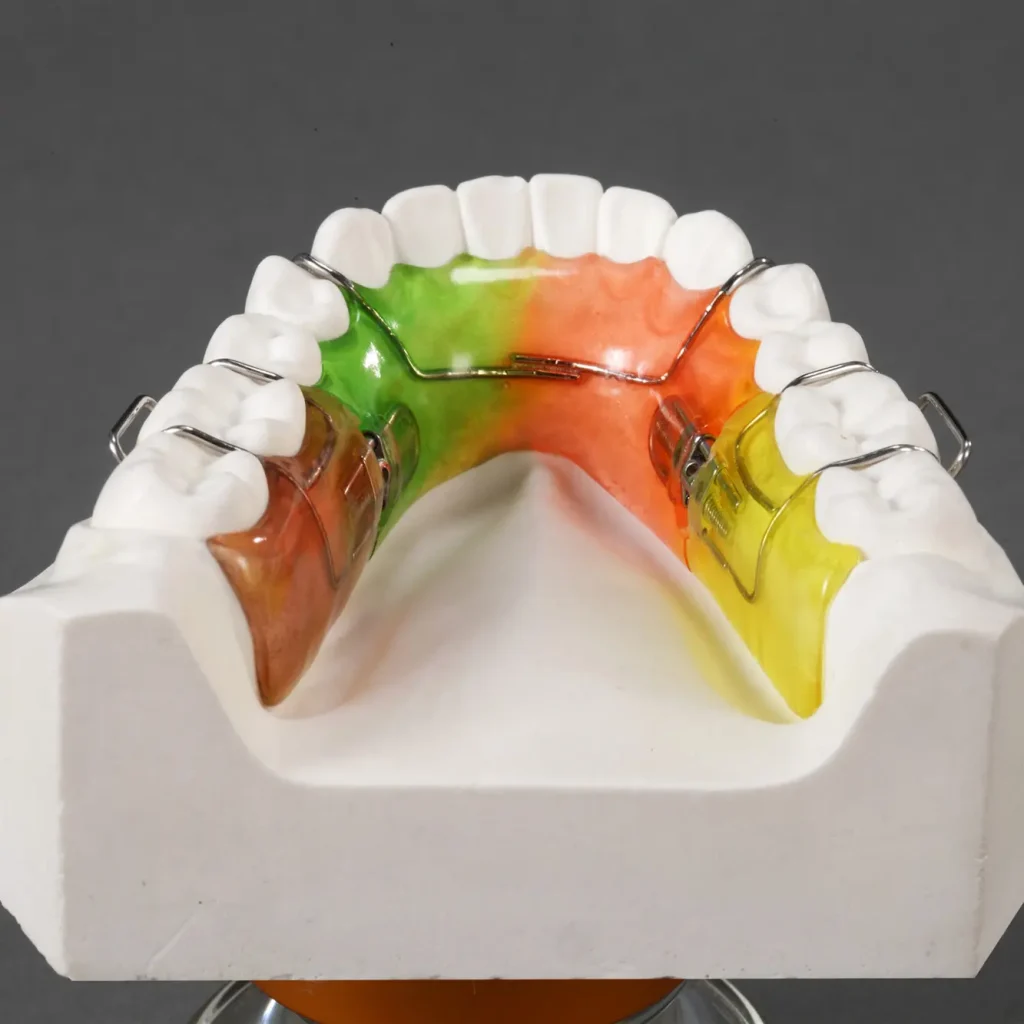
If a fixed model (such as a band-lup) is planned, the band that will be placed on the tooth next to the gap and the thin wire covering the gap are carefully shaped. The device that arrives at the clinic from the laboratory is tried on the child’s mouth by the doctor (fitted). After ensuring that the wire does not exert pressure on the gums and does not disrupt the closure, it is attached to the supporting tooth with special dental cements. If a removable model is designed, how to install and remove the device is practically explained to the child and the family.
Who Can Benefit From Space Holders?
These appliances; are suitable for children and adolescents who have not yet completed their permanent dentition process, those who have experienced early tooth loss in their milk teeth or front teeth, and those who are aware of maintaining oral hygiene habits.The main target audience for the application is children undergoing a mixed dentition (the period when both milk and permanent teeth coexist) phase. Especially in the age range of 4 to 10, this is when milk teeth are most commonly lost due to decay, and simultaneously, the permanent teeth start their journey within the bone. Protective appliances applied during this transition phase positively support the skeletal development of children.
The suitability of the devices is related to the motivation of the child and the family for treatment. During the months that the fixed or removable appliances will remain in the mouth, the child is expected to avoid consuming hard foods and to take care with their brushing routine. In cases where family cooperation is strong, achieving clinical goals is much more comfortable and efficient.
How is an Assessment Made Before the Space Maintainer Application?
Clinical evaluation phase; includes measuring the mesio-distal (horizontal) width of the planned extraction site or previously extracted tooth, analyzing the permanent tooth buds inside the jawbone through radiographic films (X-ray), and approximating the eruption time of the permanent tooth.The pedodontist collects comprehensive anatomical data before making a decision regarding the preventive apparatus. With the taken panoramic or periapical X-rays, the development level of the retained permanent tooth (how much of the root formation is completed) and the millimetric distance to the bone surface of the tooth are determined. If the bone layer above the permanent tooth is completely resorbed and the eruption of the tooth is very close, there is no need to place any apparatus in that space.
Moreover, the health status of the supporting teeth on both sides of the gap is examined. If a fixed apparatus is planned, the adjacent tooth through which the band will be passed needs to have a healthy and stable form. If there is also a lesion on that tooth, it is first restored through restorative treatments, and then the apparatus measurement phase is entered.
How is the Space Maintainer Treatment Process Planned?
Treatment planning; is determining whether to use unilateral (fixed) or bilateral (removable palatal) device models based on the number of missing teeth in the area experiencing early loss and its position in the jaw, organized in accordance with the child’s school and life routine principles.At the Izmir Avrupadent branches, the treatment map is individualized according to the child’s oral dynamics. If only one primary tooth is missing, the process is quite practically completed by planning a small band to be placed behind the missing tooth, with a wire that extends forward (band-lup). However, if multiple primary teeth have been lost on both sides of the jaw, in this case, devices that support both aesthetics and functional chewing are designed to be toothed and removable (can be taken out).
During the planning phase, the family is informed that the process is temporary and that these devices need to be kept in the mouth until the permanent teeth emerge. The device’s production (laboratory) phase is generally kept close enough between the tooth extraction and the device installation period not to give a chance for the gap to narrow. This strategic timing completely prevents the loss of space in the jaw arch.
What Steps Are Monitored in the Retainer Application?
The clinical steps taken to maintain the space and preserve the child’s chewing balance are carried out with a pain-free and comfortable medical flow. The roadmap followed in a standard application is as follows:
- • Examination and Measurement Acquisition: Removal of the digital or elastic impressions (dimensions) of the space where the tooth has been extracted or will be extracted.
- • Laboratory Production: Shaping of the custom-made appliance by dental technicians from stainless steel or acrylic based on the obtained millimetric measurements.
- • Clinical Trial (Adjustment): Checking if there is any uncomfortable contact with the child’s gums or opposing teeth by placing the prepared device in the child’s mouth.
- • Stabilization or Delivery: After ensuring compatibility, fixed models should be fabricated by special agents (the cement); movable models should be delivered to the family with usage instructions.
What Should Be Considered Before the Placeholder?
Details that parents should pay attention to before the application: Ensuring that the child’s oral flora is free from debris or tartar, conveying the process in a pain-free manner as a “measurement game” to support psychological adaptation, and ensuring that oral hygiene is fully maintained during the appointment.The appliances have designs that adhere to the surfaces of the teeth and surrounding mucosa. The presence of tartar or food plaque on the teeth not only reduces the precision of the measurement but also diminishes the retention force (adhesion) of the device on the tooth. Therefore, careful brushing of the teeth before the appointment supports the success of the procedure. If other filling treatments are planned by the physician, these restorations must be completed before the measurement phase.
This application does not require a surgical procedure or an injection (anesthesia). It should be explained in pedagogical language that a photo of the child’s mouth will be taken with a small camera or soft materials similar to play dough while going to the dentist for “removing the mold of their teeth.” Once the fear factor is eliminated, children tend to be much calmer and cooperative in the treatment chair.
How Should Oral Care Be Performed During Spacer Use?
Oral care during use; for fixed models, the edges of the ring (band) should be carefully brushed, and for removable models, they should be taken out of the mouth after meals, cleaned with liquid soap and a separate brush under warm water, ensuring that the tooth brushing routine is not disrupted.Fixed appliances created for teeth result in the formation of an anatomical new extraction (barrier) for food accumulation between the tooth and gum. If the edges of these bands are not cleaned thoroughly, the accumulated bacterial plaque can lead to gum redness (gingivitis) and initial cavities beneath the band in the enamel over time. In addition to the child’s standard brushing, it is clinically important for parents to check these special areas and support them with fine-tipped brushes if necessary.
The maintenance of movable (removable) appliances is quite different. To prevent the transparent or acrylic surface from losing its shine and from tartar buildup, hot water or abrasive toothpaste should not be used; instead, a gentle cleaning routine should be adopted. The appliance must be stored in a special storage box when not in use to protect it from risks of loss or breakage, such as being crushed or forgotten wrapped in a napkin.
In Which Dental Problems Are Space Maintainer Applications Evaluated?
These protective systems used to compensate for missing deciduous teeth are designed not only to manage space limitations but also to address potential joint and functional disorders. The basic problem areas being evaluated are as follows:
Dental or Functional Problem The Regulating Effect of the Appliance Displacement of Adjacent Teeth (Tilting) Defining the limits of skeletal space with wires to restrict the backward tilting of the posterior teeth and narrow the area. Risks of Permanent Tooth Eruption Keeping the vertical distance of the residual tooth in the bone open to prevent the tooth from erupting toward the palate or side. Eruption of the Opposing Tooth If there is a gap in the lower arch, preventing the opposing tooth in the upper arch from elongating into that gap and disrupting occlusion. Mastication and Phonetic Disorders Supporting letter pronunciations and articulation functions during speech in multiple losses (especially in the anterior region).
Why is Space Maintenance Important in Early Loss of Primary Teeth?
The importance of these applications in early losses lies in preventing the potential emergence of severe orthodontic complications, asymmetries of the jaw joint, and cases of impacted teeth by ensuring the proper closure of the gaps between teeth.Baby teeth are not simple structures that can be “pulled out whenever the time comes.” Their presence in the jawbone is a guiding signal that indicates, “a permanent tooth should come out from here”. When an early extraction occurs, this guide disappears. Within the dynamic of jawbone growth, the permanent molars located at the back always exhibit a tendency to be pushed forward. If there is no supportive barrier in between, these molars tilt forward, narrowing the arch length.
Even a few millimeters of narrowing can lead to the small permanent molar getting stuck in the bone. Teeth that remain impacted may require surgical extraction in later years or alignment through months of braces treatment. Space maintainers provide a significant contribution to oral health by eliminating these potentially complicated and exhausting processes with a quite simple, passive, and protective approach.
What is the difference between Fixed and Mobile Space Maintainers?
Difference between two types of appliances; fixed appliances are designed in such a way that they cannot be removed by the patient once adhered to the teeth by the dentist; while mobile appliances are devices, usually in the form of a plate, that can be put on and taken off by the child at will, typically used in cases of multiple tooth loss.The model preferred by the physician may vary according to the characteristics of the clinical case. The features of fixed and removable forms are as follows:
Comparison Criteria Fixed Retainers Removable Retainers Type of Deficiency Generally preferred in cases of single or regional milk tooth loss. In cases where multiple teeth are lost on the same arch, a plan is made. Usage Shape The tooth is cemented, functioning independently of the hospital for 24 hours. It can be removed for follow-up; the child needs to maintain discipline in usage and requires family monitoring. Contribution to Chewing It maintains the space but does not directly contribute to chewing since no artificial tooth has been added to that space. Since acrylic artificial teeth can be added to the gaps, it supports the child’s chewing and speech functions.
How is the Space Maintainer Usage Process Followed?
The phase of tracking the process; it is conducted by monitoring the mechanical retention of the device with periodic appointments set by the physician and analyzing how close the underlying permanent tooth’s bone surface is to the growth phase with radiological films.Devices cannot be forgotten and left unchecked for years after being placed. The child’s jaw is in the process of growth and development, therefore the compatibility of the device with the oral tissues should be evaluated at certain intervals. The materials of fixed appliances (brackets) can wear down over time. If the physician detects this situation during check-ups, they will remove the appliance, clean it, and reassemble it in a healthy manner to prevent any decay in the tooth.
The primary biological monitoring of the process is based on the permanent tooth emerging from below. When the enamel cusp of the permanent tooth penetrates through the gum boundary and begins to become visibly evident in the mouth, it means that the role of the space maintainer has been completed. At this stage, the appliance will be removed by the dentist in a short time, and the tooth will be allowed to rise freely (erupt) towards its natural position.
Why is Control Examination After Space Maintenance Important?
The clinical necessity of control examinations; is to determine whether the applied apparatus is causing irritation by penetrating surrounding tissues (gingiva), to professionally clean the bacterial plaques (tartar) formed at the edges of the appliance, and to ensure that the treatment plan continues along the targeted path.Since children’s jawbones exhibit dynamic growth, a removable appliance compatible with a measurement taken months earlier may start to feel tight on the child’s jaw after six months. During control sessions, the physician refreshes the child’s comfort by making slight adjustments or alignments to the acrylic parts of the moving retainers. This adaptation is quite valuable because an appliance that exerts pressure may be rejected by the child.
With fixed appliances, consumption of hard foods may cause breakages or distortions in the thin metals. The family may not notice this breakage, but a broken wire can apply incorrect orthodontic force to the teeth and cause damage. Routine dental examinations support the ongoing success of the preventive philosophy by verifying the mechanical integrity of the appliance.
How Long Can the Space Maintainer Application Last?
Procedure and Usage Duration; while the clinical phase (measurement and delivery) is completed within a few days, the usage duration of the appliance in the mouth can extend from a few months to several years, depending on the eruption rate of the underlying permanent tooth and the child’s age/bone development profile.The appliance is clinically produced and the fixation of the tooth or the delivery of the removable model takes place in very short, practical sessions. The duration spent in the chair is approximately 15-20 minutes, as the procedure does not involve anesthesia and is not painful. However, the actual duration depends on the length of time the appliance will serve its function in the mouth.
For example, if the normal age for the eruption of a permanent tooth, which will replace an early-extracted milk tooth in a 7-year-old child, is around 10-11 years, it is anticipated that the appliance will remain in the mouth for an average of 3 to 4 years to wait for its development within the bone. However, in cases where extractions are performed close to the eruption age, the lifespan of this barrier can be limited to a timeline of around 6 months.
What Should Be Considered When Using a Space Maintainer?
Details to Pay Attention to During Use; Avoid consuming very sticky (gum, caramel) or hard (hazelnut, chickpea) foods to prevent the breakage of components and wires, do not play with the appliance using the tongue, and ensure daily oral hygiene is meticulously maintained.These mechanically designed barriers have a certain resistance, but they may remain vulnerable to continuous and intense pressures. A common reflex in children is to continually touch a new device with their tongues to try to displace it; this action weakens the device’s grip on the tooth by loosening its structure. It is beneficial for parents to gently remind their children about this matter for the safety of the process.
Diet control is the greatest protector of mechanical integrity. Highly adhesive candies seep between the metal bands, triggering decay and distorting the structure. If a part of the device is noticed to be broken, displaced, or embedded into the gum during use, one should not expect the situation to correct itself and should promptly consult a physician to address the deformation of the device.
Can space maintainer applications be planned together with other pediatric dental treatments?
Yes, they are at the center of multidisciplinary approaches. Appliance applications can be used concurrently as part of a common preventive treatment package along with fillings (restorations) of other decayed primary teeth, protective mineralization procedures such as fissure sealing (dental varnish), and general fluoride applications.Pedodontic applications aim for the overall health of the mouth. Simply pulling a tooth from a child’s mouth and placing a barrier in its place does not repair the overall health if there are other active infections in the mouth. If there is a cavity in the tooth that supports the device, this tooth must first be restored with a filling or root canal treatment (amputation). After the support leg has achieved mechanical resistance, the placement of the ring is completed.
Especially in very young patients with low clinical cooperation (non-cooperative), it is often planned to gather all these procedures in a single session under general anesthesia or sedation. The doctor performs the extractions on the sleeping child, completes the fillings, and integrates the space maintainer system according to the previously calculated measurements before moving to the awakening phase. This provides psychological comfort to the child.
How to Create a Personalized Plan in Space Maintainer Applications?
Personalized design; The jaw curvature of the child, the size of the tooth that has been extracted, the timing for the eruption of the permanent tooth, and the child’s ability to maintain daily oral hygiene (motivation) are analyzed through digital and clinical examinations, leading to a model that is unique to that individual.Every child’s dental deficiency and jaw dynamics are distinct. If multiple molars have been extracted in the posterior region and there are no remaining teeth in the back to provide support for a fixed bridge, a simple loop-wire model cannot be designed. In this case, the doctor can design more comprehensive anatomical designs such as a lingual arch that also relies on the teeth in front to distribute the pressure homogeneously along the arch.
When planning in the processes of İzmir Avrupadent, the child’s compliance plays a decisive role. If the child is unlikely to wear a removable appliance regularly throughout the day or is very young, the doctor may prefer fixed models made for their teeth using discretion. Thus, the success of the treatment is taken out of the individual’s discretion and placed under the assurance of medical mechanics.
Primary teeth are not only structures that ensure children’s nutrition and speech; they also serve as guides for the permanent teeth that are developing inside the jawbone. When a primary tooth is lost months or years before its time, the adjacent teeth will tend to tilt, shift, or drift into that space over time. This shifting can lead to the buried permanent tooth becoming trapped inside the jawbone or erupting at an undesirable angle outside the dental arch. Space maintainer applications form the basis of preventive dentistry approaches aimed at controlling the development of these potential orthodontic disorders at an early stage.
At the Avrupadent clinics located in Izmir, space maintainer applications are planned to support oral functions, keeping in mind the growth and development dynamics of children. These appliances, specially produced in a laboratory environment for the child’s dental arch structure, help to prevent unwanted movements of neighboring teeth while preserving the space millimetrically. These devices, which can be designed in fixed or removable forms, contribute to the balance of chewing in the area where they are applied, serving as a protective medical barrier aimed at significantly reducing the need for complex orthodontic treatments in later years.
In Which Situations Are Space Maintainers Used?
A space maintainer may not be necessary after every primary tooth extraction. The practitioner analyzes the timeline between the tooth extraction and the eruption of the underlying permanent tooth using radiological data. If the bone over the underlying tooth is very thin and the tooth is about to erupt, there is no need for an appliance. However, if the time interval is long, an appliance is planned to monitor bone and tooth movements. The main conditions that necessitate this requirement in clinical evaluations are as follows:
| Clinical Condition | Functional Purpose of the Procedure |
|---|---|
| Advanced Degree Caries | Mandatory extraction of milk teeth that cannot be repaired with filling or root canal treatment to prevent space collapse. |
| Physical Traumas | Preservation of the space of lost milk teeth that were broken or lost due to accidents such as falls or impacts. |
| Early Loss Complications | Creating a barrier to prevent blockage for the remaining teeth due to the narrowing space caused by adjacent teeth tilting. |
| Multiple Milk Tooth Loss | In cases where several teeth are extracted at once, organizing areas that will support the child’s chewing efficiency and aesthetic profile. |
Why is the Space Maintainer Application Evaluated in Children?
Childhood is a dynamic growth phase in which the jawbones expand and the facial proportion is formed. Primary teeth not only help with chewing but also stimulate the surrounding bone tissue, supporting the three-dimensional development of the jaw. When a tooth is lost early, the bone development in that area may slow down. More importantly, the teeth have a tendency to lean against each other; when a support (tooth) is extracted, the adjacent teeth tilt into this gap. The permanent tooth that will emerge from below risks being trapped in the bone as it will not be able to fit into the narrowing space, or it may erupt towards the palate / lip (malocclusion).
For this reason, pediatric dentistry specialists create an anatomical barrier without delay to replace the lost primary tooth. Neighboring teeth that are likely to topple into the gap remain stable thanks to the mechanical resistance provided by the appliance. This helps ensure that the permanent teeth can take their place in a straight alignment along the curve of the jaw, laying the foundations for a healthy chewing mechanism aesthetically and functionally.
How Are Retainer Applications Made?
The clinical process begins with taking the child’s dental impressions. Nowadays, this procedure can be performed using traditional dough-like (alginate, etc.) materials, as well as very comfortably completed with intraoral optical scanners. The impression-taking process is a quick procedure that lasts only seconds and does not cause pain. Based on the copies taken, laboratory technicians design the device to fit perfectly with the child’s jaw width and the anatomy of neighboring teeth.
If a fixed model (such as a band-lup) is planned, the band that will be placed on the tooth next to the gap and the thin wire covering the gap are carefully shaped. The device that arrives at the clinic from the laboratory is tried on the child’s mouth by the doctor (fitted). After ensuring that the wire does not exert pressure on the gums and does not disrupt the closure, it is attached to the supporting tooth with special dental cements. If a removable model is designed, how to install and remove the device is practically explained to the child and the family.
Who Can Benefit From Space Holders?
The main target audience for the application is children undergoing a mixed dentition (the period when both milk and permanent teeth coexist) phase. Especially in the age range of 4 to 10, this is when milk teeth are most commonly lost due to decay, and simultaneously, the permanent teeth start their journey within the bone. Protective appliances applied during this transition phase positively support the skeletal development of children.
The suitability of the devices is related to the motivation of the child and the family for treatment. During the months that the fixed or removable appliances will remain in the mouth, the child is expected to avoid consuming hard foods and to take care with their brushing routine. In cases where family cooperation is strong, achieving clinical goals is much more comfortable and efficient.
How is an Assessment Made Before the Space Maintainer Application?
The pedodontist collects comprehensive anatomical data before making a decision regarding the preventive apparatus. With the taken panoramic or periapical X-rays, the development level of the retained permanent tooth (how much of the root formation is completed) and the millimetric distance to the bone surface of the tooth are determined. If the bone layer above the permanent tooth is completely resorbed and the eruption of the tooth is very close, there is no need to place any apparatus in that space.
Moreover, the health status of the supporting teeth on both sides of the gap is examined. If a fixed apparatus is planned, the adjacent tooth through which the band will be passed needs to have a healthy and stable form. If there is also a lesion on that tooth, it is first restored through restorative treatments, and then the apparatus measurement phase is entered.
How is the Space Maintainer Treatment Process Planned?
At the Izmir Avrupadent branches, the treatment map is individualized according to the child’s oral dynamics. If only one primary tooth is missing, the process is quite practically completed by planning a small band to be placed behind the missing tooth, with a wire that extends forward (band-lup). However, if multiple primary teeth have been lost on both sides of the jaw, in this case, devices that support both aesthetics and functional chewing are designed to be toothed and removable (can be taken out).
During the planning phase, the family is informed that the process is temporary and that these devices need to be kept in the mouth until the permanent teeth emerge. The device’s production (laboratory) phase is generally kept close enough between the tooth extraction and the device installation period not to give a chance for the gap to narrow. This strategic timing completely prevents the loss of space in the jaw arch.
What Steps Are Monitored in the Retainer Application?
The clinical steps taken to maintain the space and preserve the child’s chewing balance are carried out with a pain-free and comfortable medical flow. The roadmap followed in a standard application is as follows:
- • Examination and Measurement Acquisition: Removal of the digital or elastic impressions (dimensions) of the space where the tooth has been extracted or will be extracted.
- • Laboratory Production: Shaping of the custom-made appliance by dental technicians from stainless steel or acrylic based on the obtained millimetric measurements.
- • Clinical Trial (Adjustment): Checking if there is any uncomfortable contact with the child’s gums or opposing teeth by placing the prepared device in the child’s mouth.
- • Stabilization or Delivery: After ensuring compatibility, fixed models should be fabricated by special agents (the cement); movable models should be delivered to the family with usage instructions.
What Should Be Considered Before the Placeholder?
The appliances have designs that adhere to the surfaces of the teeth and surrounding mucosa. The presence of tartar or food plaque on the teeth not only reduces the precision of the measurement but also diminishes the retention force (adhesion) of the device on the tooth. Therefore, careful brushing of the teeth before the appointment supports the success of the procedure. If other filling treatments are planned by the physician, these restorations must be completed before the measurement phase.
This application does not require a surgical procedure or an injection (anesthesia). It should be explained in pedagogical language that a photo of the child’s mouth will be taken with a small camera or soft materials similar to play dough while going to the dentist for “removing the mold of their teeth.” Once the fear factor is eliminated, children tend to be much calmer and cooperative in the treatment chair.
How Should Oral Care Be Performed During Spacer Use?
Fixed appliances created for teeth result in the formation of an anatomical new extraction (barrier) for food accumulation between the tooth and gum. If the edges of these bands are not cleaned thoroughly, the accumulated bacterial plaque can lead to gum redness (gingivitis) and initial cavities beneath the band in the enamel over time. In addition to the child’s standard brushing, it is clinically important for parents to check these special areas and support them with fine-tipped brushes if necessary.
The maintenance of movable (removable) appliances is quite different. To prevent the transparent or acrylic surface from losing its shine and from tartar buildup, hot water or abrasive toothpaste should not be used; instead, a gentle cleaning routine should be adopted. The appliance must be stored in a special storage box when not in use to protect it from risks of loss or breakage, such as being crushed or forgotten wrapped in a napkin.
In Which Dental Problems Are Space Maintainer Applications Evaluated?
These protective systems used to compensate for missing deciduous teeth are designed not only to manage space limitations but also to address potential joint and functional disorders. The basic problem areas being evaluated are as follows:
| Dental or Functional Problem | The Regulating Effect of the Appliance |
|---|---|
| Displacement of Adjacent Teeth (Tilting) | Defining the limits of skeletal space with wires to restrict the backward tilting of the posterior teeth and narrow the area. |
| Risks of Permanent Tooth Eruption | Keeping the vertical distance of the residual tooth in the bone open to prevent the tooth from erupting toward the palate or side. |
| Eruption of the Opposing Tooth | If there is a gap in the lower arch, preventing the opposing tooth in the upper arch from elongating into that gap and disrupting occlusion. |
| Mastication and Phonetic Disorders | Supporting letter pronunciations and articulation functions during speech in multiple losses (especially in the anterior region). |
Why is Space Maintenance Important in Early Loss of Primary Teeth?
Baby teeth are not simple structures that can be “pulled out whenever the time comes.” Their presence in the jawbone is a guiding signal that indicates, “a permanent tooth should come out from here”. When an early extraction occurs, this guide disappears. Within the dynamic of jawbone growth, the permanent molars located at the back always exhibit a tendency to be pushed forward. If there is no supportive barrier in between, these molars tilt forward, narrowing the arch length.
Even a few millimeters of narrowing can lead to the small permanent molar getting stuck in the bone. Teeth that remain impacted may require surgical extraction in later years or alignment through months of braces treatment. Space maintainers provide a significant contribution to oral health by eliminating these potentially complicated and exhausting processes with a quite simple, passive, and protective approach.
What is the difference between Fixed and Mobile Space Maintainers?
The model preferred by the physician may vary according to the characteristics of the clinical case. The features of fixed and removable forms are as follows:
| Comparison Criteria | Fixed Retainers | Removable Retainers |
|---|---|---|
| Type of Deficiency | Generally preferred in cases of single or regional milk tooth loss. | In cases where multiple teeth are lost on the same arch, a plan is made. |
| Usage Shape | The tooth is cemented, functioning independently of the hospital for 24 hours. | It can be removed for follow-up; the child needs to maintain discipline in usage and requires family monitoring. |
| Contribution to Chewing | It maintains the space but does not directly contribute to chewing since no artificial tooth has been added to that space. | Since acrylic artificial teeth can be added to the gaps, it supports the child’s chewing and speech functions. |
How is the Space Maintainer Usage Process Followed?
Devices cannot be forgotten and left unchecked for years after being placed. The child’s jaw is in the process of growth and development, therefore the compatibility of the device with the oral tissues should be evaluated at certain intervals. The materials of fixed appliances (brackets) can wear down over time. If the physician detects this situation during check-ups, they will remove the appliance, clean it, and reassemble it in a healthy manner to prevent any decay in the tooth.
The primary biological monitoring of the process is based on the permanent tooth emerging from below. When the enamel cusp of the permanent tooth penetrates through the gum boundary and begins to become visibly evident in the mouth, it means that the role of the space maintainer has been completed. At this stage, the appliance will be removed by the dentist in a short time, and the tooth will be allowed to rise freely (erupt) towards its natural position.
Why is Control Examination After Space Maintenance Important?
Since children’s jawbones exhibit dynamic growth, a removable appliance compatible with a measurement taken months earlier may start to feel tight on the child’s jaw after six months. During control sessions, the physician refreshes the child’s comfort by making slight adjustments or alignments to the acrylic parts of the moving retainers. This adaptation is quite valuable because an appliance that exerts pressure may be rejected by the child.
With fixed appliances, consumption of hard foods may cause breakages or distortions in the thin metals. The family may not notice this breakage, but a broken wire can apply incorrect orthodontic force to the teeth and cause damage. Routine dental examinations support the ongoing success of the preventive philosophy by verifying the mechanical integrity of the appliance.
How Long Can the Space Maintainer Application Last?
The appliance is clinically produced and the fixation of the tooth or the delivery of the removable model takes place in very short, practical sessions. The duration spent in the chair is approximately 15-20 minutes, as the procedure does not involve anesthesia and is not painful. However, the actual duration depends on the length of time the appliance will serve its function in the mouth.
For example, if the normal age for the eruption of a permanent tooth, which will replace an early-extracted milk tooth in a 7-year-old child, is around 10-11 years, it is anticipated that the appliance will remain in the mouth for an average of 3 to 4 years to wait for its development within the bone. However, in cases where extractions are performed close to the eruption age, the lifespan of this barrier can be limited to a timeline of around 6 months.
What Should Be Considered When Using a Space Maintainer?
These mechanically designed barriers have a certain resistance, but they may remain vulnerable to continuous and intense pressures. A common reflex in children is to continually touch a new device with their tongues to try to displace it; this action weakens the device’s grip on the tooth by loosening its structure. It is beneficial for parents to gently remind their children about this matter for the safety of the process.
Diet control is the greatest protector of mechanical integrity. Highly adhesive candies seep between the metal bands, triggering decay and distorting the structure. If a part of the device is noticed to be broken, displaced, or embedded into the gum during use, one should not expect the situation to correct itself and should promptly consult a physician to address the deformation of the device.
Can space maintainer applications be planned together with other pediatric dental treatments?
Pedodontic applications aim for the overall health of the mouth. Simply pulling a tooth from a child’s mouth and placing a barrier in its place does not repair the overall health if there are other active infections in the mouth. If there is a cavity in the tooth that supports the device, this tooth must first be restored with a filling or root canal treatment (amputation). After the support leg has achieved mechanical resistance, the placement of the ring is completed.
Especially in very young patients with low clinical cooperation (non-cooperative), it is often planned to gather all these procedures in a single session under general anesthesia or sedation. The doctor performs the extractions on the sleeping child, completes the fillings, and integrates the space maintainer system according to the previously calculated measurements before moving to the awakening phase. This provides psychological comfort to the child.
How to Create a Personalized Plan in Space Maintainer Applications?
Every child’s dental deficiency and jaw dynamics are distinct. If multiple molars have been extracted in the posterior region and there are no remaining teeth in the back to provide support for a fixed bridge, a simple loop-wire model cannot be designed. In this case, the doctor can design more comprehensive anatomical designs such as a lingual arch that also relies on the teeth in front to distribute the pressure homogeneously along the arch.
When planning in the processes of İzmir Avrupadent, the child’s compliance plays a decisive role. If the child is unlikely to wear a removable appliance regularly throughout the day or is very young, the doctor may prefer fixed models made for their teeth using discretion. Thus, the success of the treatment is taken out of the individual’s discretion and placed under the assurance of medical mechanics.
Space Maintainer Applications hakkında sıkça sorulan sorular ve cevapları
Doğal dökülme zamanı gelmiş süt dişleri için Yer Tutucu Uygulamaları yapılmasına gerek var mıdır?
Kalıcı dişin sürme zamanı gelmişse ve süt dişi doğal sürecinde düşmüş veya sallanarak çekilmişse bu aparatlara gerek duyulmaz.
Kalıcı dişin sürme zamanına (kemiği aşma durumuna) bakılarak Yer Tutucu Uygulamaları süresi hesaplanır mı?
Eğer röntgende kalıcı dişin üzerindeki kemik erimiş ve diş diş etine çok yaklaşmışsa aparata gerek kalmayabilir; aksi halde sürme zamanına göre bekleme süresi hesaplanır.
Destek olarak kullanılacak komşu süt dişlerindeki çürükler Yer Tutucu Uygulamaları ölçüsünden önce onarılmalı mıdır?
Aparatın yapışacağı veya yaslanacağı dişlerde çürük varsa, tutuculuğun bozulmaması ve dişin kırılmaması için tüm dolgular ölçüden önce bitirilir.
Sabit aparatın ortasından geçen destek teli Yer Tutucu Uygulamaları sırasında boşluğun kapanmasını nasıl engeller?
Metal yüzükten karşıdaki dişe doğru uzanan paslanmaz tel, aradaki boşluğu bir köprü gibi geçerek dişlerin birbirine doğru kaymasını fiziksel olarak durdurur.
Her ana öğünden sonra diş fırçalamak sabit Yer Tutucu Uygulamaları çevresinde çürük riskini sıfırlamak için şart mıdır?
Metal yüzükler ve teller gıda birikimi için ekstra alan yarattığından, asit oluşumunu önlemek ve dişi korumak için yenen her yemek sonrası fırçalama kesin kuraldır.
Kalem ısırmak veya tırnak yemek gibi çocukluk alışkanlıkları Yer Tutucu Uygulamaları telleri üzerinde deformasyon yaratır mı?
Sürekli aynı noktaya uygulanan bu bilinçdışı mekanik stresler telleri büküp yamultarak cihazın formunu ve koruyucu işlevini bozacağı için mutlaka bıraktırılmalıdır.
Aparat kopması gibi acil durumlarda Avrupadent İzmir randevu sıralamasında Yer Tutucu Uygulamaları onarımı için öncelik tanır mı?
Kopan metalin çocuğun yanağına batmasını veya kalıcı dişin yolunun kapanmasını engellemek için acil müdahale protokolü devreye alınarak bekletilmeden klinik ortamında anında düzeltme yapılır.
Sabit ve hareketli olmak üzere Yer Tutucu Uygulamaları kaça ayrılmaktadır?
Hastanın ağzındaki diş eksikliğinin sayısına ve konumuna göre hekimin dişe yapıştırdığı sabit veya hastanın takıp çıkarabildiği hareketli apareyler olarak ikiye ayrılır.
Çekilen dişin boşluğunun milimetrik genişliği Yer Tutucu Uygulamaları tasarımında ölçülür mü?
Alttan gelecek kalıcı dişin genişliği ile mevcut boşluğun milimetrik uyumu klinik ve radyolojik olarak ölçülerek koruma alanı boyutlandırılır.
Diş çekimi yaralarının tamamen kapanması kalıcı Yer Tutucu Uygulamaları ölçüsü için tıbben gerekli midir?
Yaranın açıkken ölçü maddesinden etkilenmemesi ve çekim boşluğundaki diş etinin son formunu alması için çekim yarasının iyileşmesi güvenle beklenir.
Hareketli Yer Tutucu Uygulamaları akrilik gövdesi hastanın damağına baskı yapmasın diye laboratuvarda cilalanır mı?
Sürekli damak ve dil ile temas edecek olan sert plastiğin tüm yüzeyleri tahrişi önlemek için laboratuvarda özel motorlarla ayna gibi pürüzsüzleştirilip cilalanır.
Hareketli Yer Tutucu Uygulamaları günlük temizlik için çıkarılarak sıvı sabun ve ayrı bir fırçayla yıkanmalı mıdır?
Plağın damak yüzeyine yapışan tükürük artıklarını temizlemek için ağız dışında soğuk su, sıvı sabun ve sadece bu işe ayrılmış bir fırçayla yıkanması hijyen için yeterlidir.
Hareketli plaklar yemek yerken tamamen çıkarıldığı için bu tip Yer Tutucu Uygulamaları sistemlerinde beslenme özgürlüğü tam mıdır?
Evet, damaklı plaklar yemek öncesi kutusuna konulduğu için çocuk dişleri üzerinde hiçbir engel olmadan sert veya yapışkan dilediği her gıdayı özgürce tüketebilir.
Gelecekte çocukların ortodontik tel tedavisine ihtiyaç duymasını engellemek adına Avrupadent İzmir hekimlerinin Yer Tutucu Uygulamaları önermesi temel bir koruyucu yaklaşım mıdır?
Kesinlikle öyledir; çekim boşluğunu koruyarak kalıcı dişin dümdüz kendi yerine çıkmasını sağlamak, ileride yaşanacak devasa çene darlıklarını ve uzun yıllar sürecek ağır tel tedavilerini baştan durduran en önemli pedodontik yatırımdır.
Tek bir diş eksikliğinde uygulanan sabit Yer Tutucu Uygulamaları dişe nasıl tutunur?
Çekim boşluğunun yanındaki sağlam dişe özel medikal yapıştırıcılarla sabitlenen metal bir yüzük (bant) ve uzantısındaki tel aracılığıyla tutunur.
Çocuğun çene kapanış ilişkisi Yer Tutucu Uygulamaları aparatının formunu belirlerken incelenir mi?
Alt ve üst dişlerin birbirine nasıl kilitlendiği değerlendirilerek, yapılacak aparatın karşıt dişlere çarpıp kırılmaması için uygun dizayn seçilir.
Sabit aparatların takılacağı seansta Yer Tutucu Uygulamaları için çocuğun tok karnına gelmesi önerilir mi?
Aparat yapıştırıldıktan sonra yapıştırıcının tam sertleşmesi için kısa bir süre yemek yenmemesi isteneceğinden, çocuğun kliniğe tok gelmesi konforunu artırır.
Çocuğun bilinci tamamen açıkken Yer Tutucu Uygulamaları yapıştırma sürecinin tamamlanması standart mıdır?
Hiçbir uyuşturma veya can acıtan müdahale yapılmadığı için çocuk tamamen uyanıktır ve hekimin yönergeleriyle uyum içinde süreci sızısızca atlatır.
Aşındırıcı granüllü macunlar kullanmak hareketli Yer Tutucu Uygulamaları plaklarının cilasını mikroskobik olarak çizer mi?
Normal diş macunlarındaki iri partiküller plastiğin cam gibi cilasını mikroskobik olarak çizeceğinden leke tutulumunu (sararmayı) ve koku birikimini çok artırır.
İçecekleri pipet kullanarak tüketmek sabit Yer Tutucu Uygulamaları çevresindeki asit temasını azaltmada faydalı bir yöntem midir?
Mecbur kalınarak içilecek meyve suları veya asitli içeceklerde pipet kullanmak, sıvının doğrudan aparatın etrafına çarpmadan boğaza yönlenmesini sağlayarak çürük riskini azaltır.
Contact Us for Space Maintainer Applications in Izmir
Space Maintainer Applications are a treatment method that involves preserving the gap until the permanent successor tooth erupts in cases of early loss of primary teeth, and preventing malalignment in the dental arch. At AvrupaDent, this treatment is administered by dentists within a treatment plan tailored to the patient's oral and dental health. You can contact us for detailed information about the treatment process.İletişime Geçin
- Güncelleme tarihi:25 Sep 2026