
What is All-on-4 Implant Treatment?
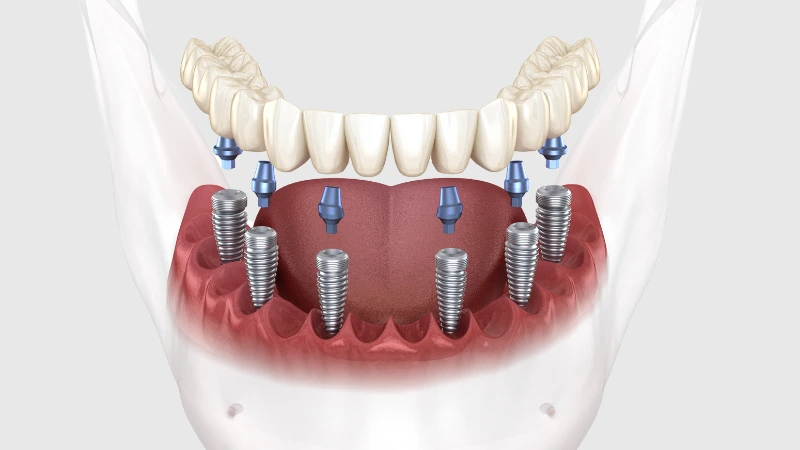
In bone loss situations, volume loss (atrophy) is observed over time in the posterior parts of the jawbone. These volume losses complicate the placement of standard vertical titanium implants in the rear areas. The All-on-4 concept is based on the principle of positioning 2 vertical implants in the anterior region of the jaw where bone quantity is denser, and 2 artificial roots at an angle of 30 to 45 degrees in the posterior areas. This strategic angling significantly reduces the need for advanced bone grafting procedures (bone augmentation) by ensuring avoidance of anatomical voids (sinuses in the upper jaw, nerve canals in the lower jaw).
The All-on-4 treatments planned at Avrupadent clinics located in Izmir aim to help patients leave behind the difficulties of using removable denture prostheses. This system transmits chewing pressure to the bone in a balanced manner through 4 main load-bearing columns, aiming to meet the patient’s functional and aesthetic expectations with high compatibility. This approach, which combines surgery and prosthetic engineering, provides an ideal foundation for designing a tooth arrangement suitable for the individual’s facial profile.
In Which Situations Can All-on-4 Implant Treatment Be Evaluated?
This concept has been developed to rationally resolve the physical limitations imposed by anatomy with an engineering perspective. In patients who have been edentulous for many years, the bone in the back of the jaw thins out, and intervening in that area with classical methods brings along bone graft operations that last for months. The All-on-4 concept is designed for such challenging clinical scenarios. The fundamental conditions under which the procedure is applied are as follows:
| Clinical Scenario | Medical Goal of the Procedure |
|---|---|
| Advanced Degree Posterior Bone Resorption | Utilizing the density of the anterior bone thanks to properly positioned posterior implants, without approaching sinus and nerve canals. |
| Total Edentulism | If there are no teeth in the jaw, a fixed bridge replaces the removable dentures. |
| Need for Extraction of Existing Teeth | Extracting the last teeth in the mouth due to extreme infection and looseness to transition to a fixed system. |
| Bone Graft Intolerance | Offering alternatives when the patient’s medical condition or schedule does not permit advanced bone surgeries. |
How is All-on-4 Implant Treatment Planned?
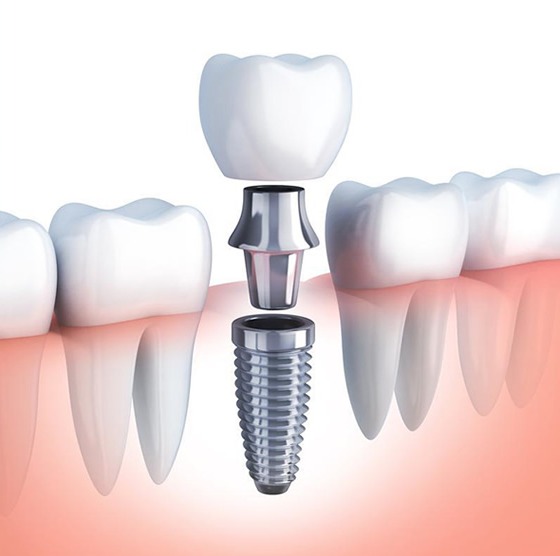
The concept of “prosthesis-centered” is designed in the management of the process in İzmir Avrupadent. Before the surgeon begins the operation, the shape of the main prosthesis, which will support the gum tissue, is created in a virtual environment to match the patient’s facial profile. Bone areas where titanium bodies will be placed are organized in a way that directly corresponds to the load-bearing points of this prosthesis. The emergence points of the anchored back roots, along with the addition of “multi-unit” (open corrective) intermediate pieces, are configured to turn into a flat chewing platform.
During the planning phase, safety distances to the mandibular nerve running through the jaw and the maxillary sinus cavities in the upper jaw are carefully measured. By choosing openings where the bone structure is suitable, the distribution of load on the prosthesis is planned to be homogenous to the jaw. This meticulous engineering phase provides the fundamental basis for the system to exhibit stable function in the coming years.
Who Might Be Suitable for All-on-4 Implant Therapy?
The implementation of the application does not create an age restriction; even in healthy individuals in their nineties, bone quality can be planned to the extent that it is suitable. The important clinical criterion is that the person’s overall medical profile and the bone density in the anterior parts of the jaw (the area between the canines) must be sufficient to support 4 dental implants.
In individuals with diabetes, hypertension, or cardiovascular disorders, the clinical values are managed by exchanging information with the patient’s own physician. When systemic indicators reach regular levels, surgical measures can safely be included in the treatment plan.
How is an Evaluation Made Before All-on-4 Implant Treatment?
The ability to perform procedures on a healthy jawbone is dependent on cellular repair capabilities. If there are untreated severe inflammation foci within the mouth, these infections can also reach the areas around the newly placed artificial roots. Doctors plan preliminary cleaning and maintenance processes to achieve ideal oral hygiene before the surgical procedure.
The medications used by the hospital affect the clinical path. Anticoagulant agents, bisphosphonate group medications that regulate bone metabolism, or treatments influencing the immune system should be communicated to the physician in detail. During the evaluation, the vertical closure distance is measured, and it is aesthetically planned how the fixed bridge, which will come over the concept, will support the lips from the inside.
What Diagnosis and Imaging Methods are Used in All-on-4 Implant Treatment?
The predictability of surgical interventions depends on the details of the radiological data obtained before the operation. Especially, the fundamental imaging methods used to determine the openings of the artificial roots to be placed are as follows:
- Dental Volumetric Tomography (CBCT): An advanced technology system that presents the bone thickness, density, and nerve canals in three-dimensional sections, producing a surgical map. Data from this device is a critical clinical necessity for accurate positioning.
- Panoramic Radiography: It is the fundamental method that allows for a rough examination by showing the general condition of the upper and lower jaws, any remaining tooth roots, and the jaw joints in a single plane.
- Intraoral Optical Scanners: These are camera systems that digitally copy the topography of the jaws and the gums, allowing for the production of surgical guide plates.
How Does the All-on-4 Implant Treatment Process Progress?
The operation is performed under local anesthesia (or sedation). If there are deformed teeth planned for extraction in the mouth, they are removed in the same session, and titanium bodies are placed in the extracted sockets or previously healed areas. One of the major advantages of this concept is “immediate loading,” allowing for a fixed (non-removable) temporary prosthesis to be screwed in on the day of the surgical procedure or within that week. This step helps the patient continue their aesthetic and social life without interruption.
After the surgical intervention, a waiting period is initiated for the titanium roots to integrate with the bone at the cellular level. This biological adaptation process generally takes between 3 to 6 months, depending on whether it’s for the lower or upper jaw. Once healing is complete, the temporary bridge is removed, final measurements are taken from the shaped gum tissue, and a permanent prosthesis made from durable materials is integrated into the mouth.
What Steps Are Followed in the All-on-4 Implant Treatment?
The protocol is a series of sessions in which surgical and prosthetic steps follow each other with high precision. The clinical steps followed in a standard application are as follows:
| Clinical Stage | Medical Details of the Procedure |
|---|---|
| Surgical Intervention | Anesthesia of the area, arranging the bone site, and placing 2 vertical and 2 angled titanium roots. |
| Temporary Prosthesis Installation | The installation of a light acrylic bridge produced with the taken measurements by screwing it into the operation area to ensure aesthetics. |
| Biological Integration | The resting period (months) during which diet rules are followed for the osteointegration of the bone with titanium. |
| Permanent Prosthesis Phase | Functional trials and delivery of the final prosthesis prepared in the laboratory with the measurements obtained after healing. |
What Should Be Considered Before All-on-4 Implant Treatment?
To minimize the microbial presence in the working area for a surgical intervention, it supports the prevention of possible complications. If the doctor prescribes a medication (protective mouthwash or medication) to be started a few days before the procedure, it is essential to use it according to the specified schedule for the successful execution of the clinical procedure.
During the operation, the person’s comfort is maintained through local anesthesia or sedation; therefore, arriving at the clinic rested positively affects blood pressure balance. A few days after the operation, work and social planning should be organized according to this rest requirement for the application of dietary and communication rules.
What Should Be Considered After All-on-4 Implant Treatment?
It is normal to see slight swelling (edema) in the cheek area after surgical intervention; this is a physiological aspect of tissue repair. The prescribed analgesic medications will help you go through this process comfortably. During the healing phase when temporary prostheses are in place, avoiding excessive pressure on the titanium roots is vital. Therefore, until permanent prostheses are placed, hard, easily detachable foods should be avoided, and soft diets (moistened vegetables, puree, pasta, etc.) should be preferred.
Smoking decreases the oxygen level in the blood, slowing down the healing of the wound area and negatively affecting the integration of the artificial root with the bone. To ensure the long-term continuity of treatment, it is highly recommended to limit smoking, especially in the first weeks of healing. Rigid brushing should not be applied to the stitches in the operation area, and hygiene should be maintained with the antiseptic liquids recommended by the physician.
How is Jawbone Evaluated in All-on-4 Treatment?
The success of the concept’s adaptation to anatomy relies on the density of the bone. The physician focuses on the generally thicker and denser anterior mandible, avoiding the posterior areas that may have resorbed (been diminished) due to tooth loss years ago. While placing 2 straight screws in this anterior region, the other 2 screws to be placed in the adjacent areas are positioned with an inclination of 30-45 degrees backwards.
This angled positioning allows for the use of long and wide titanium roots without contacting the nerves or nerve canals in the posterior areas. Thus, the need for bone grafting (adding powder) surgery is reduced. Not only the volume of the bone but also the degree of hardness determines the “initial retention (primary stability)” of the screw and this stability decides whether the temporary prosthesis can be placed.
How is the Fixed Prosthesis Procedure Planned in All-on-4 Implant Treatment?
In patients experiencing bone loss, significant tissue recession (deficiency) occurs around the lips. The fixed prosthesis prepared not only contains the white tooth forms but also includes pink acrylic/porcelain base components that compensate for the volume of the atrophied bone and gum. This way, the lips are supported from within, giving the facial features a more dynamic expression.
Another important mechanical feature of these prostheses is that, unlike titanium infrastructures that are cemented in place, they are anchored with tiny retaining screws (screw system). Screw prosthesis systems allow the dentist to easily remove the prosthesis as a single unit during clinical check-up sessions in the following years, facilitating the cleaning of the gold underneath and enabling routine hygiene maintenance to be carried out comfortably, thus sustaining the integrity of the treatment.
What Are the Stages of Temporary and Permanent Prostheses in All-on-4 Implant Treatment?
The system is designed to ensure that the patient is not left without teeth, hence it consists of two different prosthetic phases. The differences and aims between temporary and permanent restorations are as follows:
| Comparison Point | Temporary Fixed Prosthesis | Permanent (Fixed) Prosthesis |
|---|---|---|
| Application Time | It is placed on the same day as the surgical operation or within a few days. | It is placed after the average 3-6 month bone healing (union) process is completed. |
| Clinical Purpose | To ensure aesthetics and phonetics (speech), to shape the lips. | In addition to aesthetics, to regain complete and strong chewing (masticatory) function. |
| Material Composition | Made from lightweight and flexible acrylic or composite materials. | Produced with durable zirconium, metal-supported porcelain, or hybrid systems. |
How Long Can All-on-4 Implant Treatment Take?
The length of the process is directly related to the healing physiology of the bone tissue. On the day of the operation, teeth are extracted, 4 artificial roots are placed, and temporary teeth are fitted for the patient to return to daily life. However, it is expected that the bone resistance reaches maximum levels for the material that will withstand permanent chewing forces to be placed.
When the measurement phase for the production of permanent prostheses is reached, a few weeks of laboratory and clinical traffic begins depending on the details of the trials (framework trial, tooth trial, etc.). In İzmir Avrupadent protocols, a schedule is provided from the beginning according to the patient’s own anatomical findings, clearly conveying the process.
In Which Tooth Deficiencies Can All-on-4 Implant Treatment Be Applied?
This concept is an engineered bridge designed to rehabilitate a complete arch of the jaw (lower or upper jaw) as a single piece. In individuals with healthy teeth remaining in their mouth, extracting those healthy teeth to perform All-on-4 is inconsistent with preventive dentistry principles. However, if the existing teeth are so loose due to deep periodontitis (bone loss) that they cannot be saved, then those teeth can be cleaned and transitioned to this treatment.
Just as the lower and upper jaws can be planned separately, in cases where both jaws are completely edentulous, simultaneous dual jaw (bimaxillary) concepts can be planned, allowing for the reconfiguration of all supporting parameters of the face in the same session.
How Should Oral and Dental Care Be Done After All-on-4 Implant Treatment?
In fixed prostheses, the teeth are joined in a block (single piece), which makes it impossible to reach between the teeth with classic thin dental floss. If food debris accumulates in the area where the gum tissue meets the bridge below the prosthesis, it can lead to infections called “peri-implantitis” that eat away at the bone if not completely removed with a toothbrush.
To overcome this clinical picture, patients are required to include water flossers in their daily routines. Additionally, mechanical flushing can be achieved using special guided bridge floss (superfloss) available in pharmacies. In cases where hygiene is adequately maintained, the effectiveness of these systems over long years is clinically supported.
Why is Control Examination Important in All-on-4 Implant Treatment?
Artificial roots bond to the jawbone in an extremely rigid manner. This rigid structure can cause an unstable force acting on the prosthesis during chewing to turn into a direct mechanical shock. During six-month or yearly control visits, the physician monitors these contacts with special papers and alleviates any points with excessive load through microscopic smoothing (polishing).
Since the All-on-4 concept is a screw-based system, during the control session, the physician can completely remove the prosthesis from the mouth (in one piece) and meticulously clean the gum lines underneath with professional equipment, then reattach the prosthesis. This maintenance process is an indispensable stage for preserving the biological compatibility of the treatment.
Can All-on-4 Implant Treatment be Planned Alongside Other Dental Treatments?
The mouth is an entirety, and a perfect prosthesis made for just one jaw cannot ensure a proper closure if the teeth in the opposing jaw are in poor form. Therefore, when the All-on-4 bridge is designed for the upper jaw, the levels, inclinations, and conditions of the natural teeth in the lower jaw that the bridge will contact are restored simultaneously.
Additionally, surgical supportive treatments such as correcting minor irregularities in the bone (ridge smoothing) and thickening of the gum tissue (periodontal grafting) can also be successfully included as part of the main operation during the surgical session in which the procedure is performed.
How is Personalized Treatment Planning Done in All-on-4 Implant Treatment?
Each individual’s jaw dynamics are different. In a patient experiencing complete edentulism, a natural indentation occurs around the cheek area. The dentist designs the surface of the prosthesis facing the lips to be slightly fuller (using pink acrylic/porcelain support) to mask this indentation. In long-faced patients, teeth are designed to be more oval horizontally, creating a visual illusion on the face.
In planning, the distribution of 4 roots within the bone is personalized according to the shape of the patient’s jaw arch (in U or V shape) using computer-assisted programs. This way, the chewing pressure is distributed from 4 points in the healthiest way, ensuring long-term functional capacity.