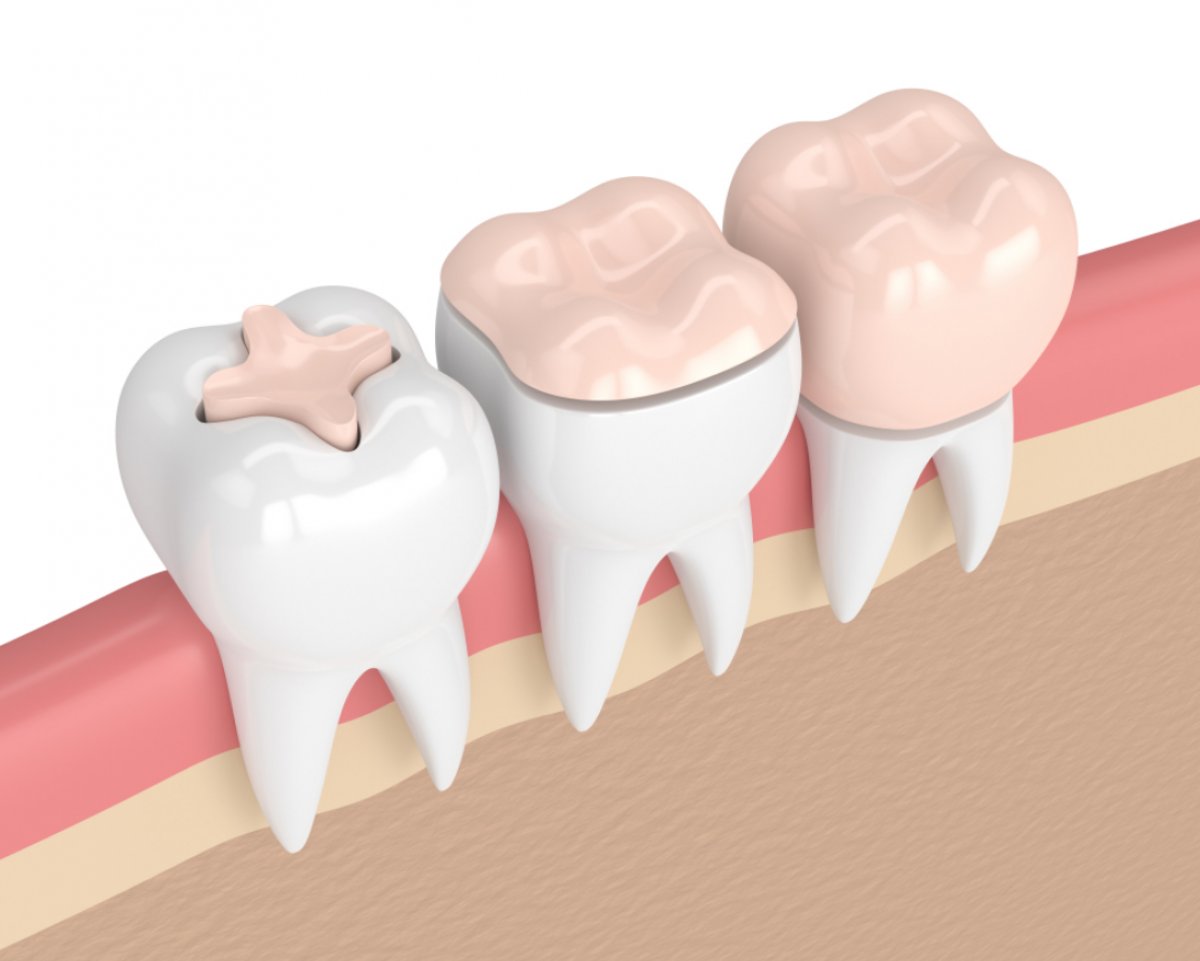

What is Zirconium Dental Coating?
Advancements in dental practice and material science have allowed for the production of tissue-friendly solutions that can meet both physical durability and aesthetic expectations simultaneously in clinical applications. For many years, restorations made from metals like chrome-cobalt or nickel with a porcelain overlay (metal-supported porcelain) have been used to compensate for tooth structure losses. However, the concealing properties of metal materials could cause restorations to display a more opaque (matte) appearance, differing from the reflection and fracture indices of natural tooth enamel.
Zirconium is an element with high physical resistance found as a mineral in nature and placed in the periodic table. In dentistry, it is not used in its pure form; instead, it is medically presented as stabilized zirconium oxide crystals (blocks) reinforced with yttrium in a laboratory environment. This form allows the material to show physical resistance against chewing forces, while also enabling the creation of a light-colored framework resembling dental tissue instead of a metallic gray color.
Natural human enamel reflects some of the light that falls on it while transmitting some towards the dentin layer, creating a deep, semi-transparent (translucent) optical appearance. Zirconium oxide materials aim to imitate this light permeability, depending on production technologies, and establish optical continuity with the living dental tissues surrounding the restoration.
In the restoration processes planned at Izmir Avrupadent clinics, zirconium material can be included in the treatment plan after appropriate case analysis not only in the frontal (anterior) areas where the aesthetic expectation is high but also in the back (posterior) molars where strong pressure is applied by the chewing muscles.
Who Is Zirconium Dental Crown Suitable For?
 Each individual’s oral flora, chewing habits, and aesthetic requirements vary. Zirconium-containing restorations can be used in the treatment of various patient profiles due to their wide range of clinical applications (indications). Individuals who feel a need for aesthetic adjustments in tooth forms, sizes, or arrangements can request treatment planning based on these optical advantages after a doctor’s evaluation.
Patients with metal-supported porcelain veneers from past periods, who experience clinical discomfort due to grayish/purplish reflections (metal margin) appearing over time at the gum line, can update these restorations with those supported by zirconium if their periodontal (gum) health is deemed appropriate after a doctor’s examination. The material’s corrosion-resistant (non-oxidizing) structure minimizes the risk of color changes in surrounding tissues (gum epithelium) in the long term.
When examined in terms of biological compatibility, zirconium is preferred as a tissue-friendly material for individuals with immunological allergies (hypersensitivities) to metals such as nickel, chromium, or cobalt. Additionally, zirconium restorations can be used to mask deep and stubborn discolorations in dental enamel that do not respond adequately to clinical tooth whitening (bleaching) methods, which may occur due to febrile illnesses experienced in early childhood, the use of certain antibiotic groups (such as tetracyclines), or excessive fluoride intake.
In Which Clinical Situations is it Applied?
Zirconium restorations can be planned for various indications based on clinical needs:
- ▪
Severe Material Losses and Fractures: Zirconium restorations are preferred when extensive fractures occur in dental tissue and the remaining healthy tissue is no longer able to provide sufficient retention for standard filling materials (composite or amalgam). This application aims to encase the tooth like a protective band (ferrule effect), reducing the risk of fracture under horizontal or vertical forces. - ▪
Preservation of Endodontically Treated Teeth: Teeth that have undergone endodontic (canal) treatment lose vital pulp (nerve and blood vessel) tissues and consequently lose moisture over time, becoming drier and more fragile. They are supported against vertical chewing forces and the dark color changes that simultaneously occur are camouflaged. - ▪
Orthodontic Alternative Expectations and Diastema Closure: The closure of natural or acquired gaps between teeth (diastema) can be considered in patients with anatomical alignments who have slight regional malocclusions, where long-term orthodontic (braces) treatment is not contemplated (in cases deemed appropriate after the dentist’s occlusion analysis). - ▪
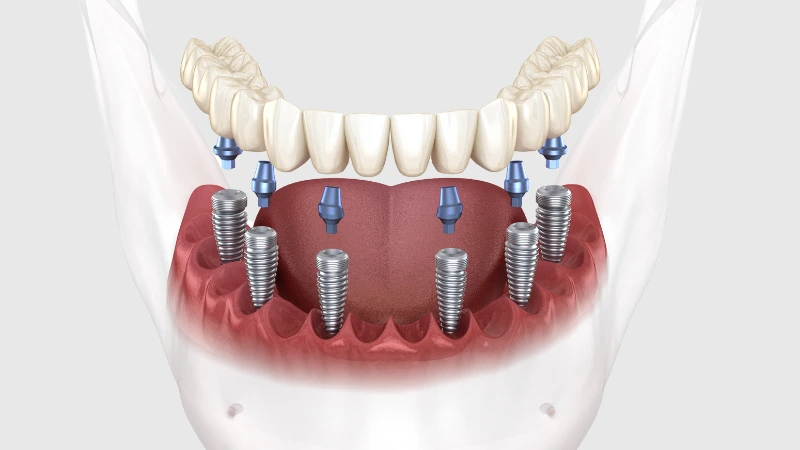
Bridge Prosthetics for Tooth Loss: In cases of one or several adjacent tooth loss, zirconium-supported bridges prepared using the neighboring teeth on both sides of the targeted gap are used to restore aesthetic and chewing functionality. - ▪
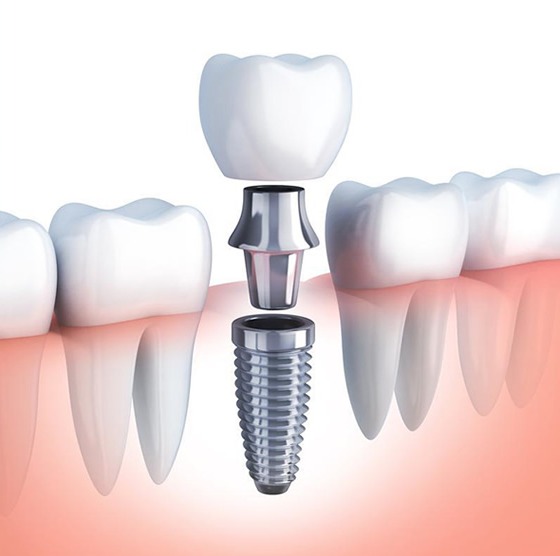
Implant-Supported Restorations: In the prosthetic phase of titanium artificial roots (implants) placed in the jawbone, zirconium crowns are preferred as upper structure materials due to their cellular compatibility with the gums and non-reflective properties.
\t
\t
How is Zirconium Tooth Coating Applied?
This process, which requires medical and technical expertise, begins with the clinical examination of the patient and is carried out step by step according to specific protocols. To support the comfort of the patient during the procedure and to keep sensitivity under control, the appropriate local anesthesia (regional numbness) methods chosen by the physician are applied.
After anesthesia, to ensure that the planned coating fits the biological boundaries of the tooth, does not exert pressure on the gum pocket, and does not create a volumetric excess; the physician performs regional shaping (reduction) from the enamel layer with about 1 to 2 millimeters using “step cut (chamfer/shoulder)” techniques. This area is designed as a socket for the zirconium material.
After the shaping phase, the measuring process begins. In the Europadent clinical protocols, three-dimensional intraoral scanning cameras (digital measuring systems) are generally used to obtain a digital copy of the reduced teeth, neighboring teeth, and occlusal dynamics, and this data is sent directly to the laboratory. Since the tooth has been reduced, to avoid sensitivity during the waiting process between sessions, to maintain chewing function, and to preserve aesthetic appearance, “temporary acrylic coatings” are made and fixed to the teeth on the same day.
In the laboratory stage, restoration is designed using Computer-Aided Design and Manufacturing (CAD/CAM) software over the digital data obtained. Zirconium oxide blocks are milled using special cutters to create a custom framework for the patient. This framework is fired in special high-temperature kilns (sintering) to achieve crystallization and the final physical strength. Then, aesthetic details, color transitions, and translucency features are layered with dental ceramics. In the trials conducted in our clinic, after checking marginal fit (the closure at the gum line), contact points with neighboring teeth, and vertical closure forces, restorations are adapted to the tooth using dental materials (cements).
What Stages Does Clinical Treatment Involve?
Restorative dental treatments progress through planned clinical sessions that follow one another, allowing the physician to evaluate biological parameters and make suitable adjustments. Zirconium applications are generally evaluated in four main stages:
What Are the Physical Properties and Advantages of Zirconium Dental Crowns?
 In dentistry, the selection of restorative materials is made according to the amount of tooth structure remaining and the aesthetic demands of the area. The reason behind the widespread use of zirconium is its balanced combination of physical strength and optical properties.
Biological Compatibility (Biocompatibility): Zirconium material has the potential to establish a clinically positive interaction with gingival cells (fibroblasts). It does not carry the risk of causing reactions in patients with a history of metal allergies. Thanks to the healthy adaptation of the gingival epithelium to the material, the risk of dark reflections (metal bands) in marginal border lines, which can be seen with traditional metals, is minimized, and it supports overcoming factors that prepare the ground for gingival recessions.
Thermal Insulation and Surface Resistance: Traditional metal alloys have the characteristic of rapidly conducting heat, which can trigger sensitivity in extreme hot or cold food consumption on the pulp (nerve). Zirconium oxide ceramic, due to its low thermal conductivity, insulates the dentin and pulp tissue from temperature differences. Additionally, thanks to the special glaze layer applied to its surface, which is baked, it achieves a surface purity; this makes it difficult for bacterial plaque to adhere while providing physical resistance against discoloration that may occur due to substances like tea, coffee, or tobacco.
Mechanical Durability: Zirconium oxide crystals are capable of withstanding quite high pressures regarding fracture toughness and bulk strength. Therefore, they possess the physical capacity to compensate for vertical and horizontal pressures in restorations in posterior (back molar) areas, which are chewing centers.
What Are the Differences from Other Types of Crowns?
Patients starting at the clinic often wonder how to choose among alternatives like “Metal-ceramic”, “Zirconium”, and “E-max (Lithium Disilicate / Full Ceramic)”. This three main material group has different medical profiles in terms of light translucency, durability, and costs.
- ▪
Comparison with Metal-Ceramics: While metal ceramics consist of a supporting inner structure made of cast metal alloys that sit on the tooth, zirconium is made of zirconium oxide, which is a ceramic-based material that is milled using CAD/CAM and is non-oxidized. Since metal ceramics can block light, the teeth may appear more opaque, while zirconium aims for a more organic reflection with its translucency. However, in long-distance (for example, 4-5 units) restoration gaps, the flexibility of the metal framework may have advantages in certain biomechanical situations, and it can offer a more economically accessible alternative. - ▪
Comparison with E-max (Full Ceramic) Crowns: E-max restorations, which contain lithium disilicate crystals, do not have any additional framework (metal or zirconium block); they are produced entirely from monolithic glass ceramics. Thus, E-max crowns provide slightly closer values to the illusion of tooth enamel in terms of light transmissibility and optical color depth compared to zirconium, and they are particularly evaluated intensely in anterior single crowns. However, the fracture and breakage resistance of glass ceramics is lower than that of zirconium. Therefore, when durability is required in areas of increased chewing forces or where bridges need to be made due to tooth deficiencies, the use of zirconium comes to the forefront.
How Do Zirconium Crowns Support Natural Tooth Appearance?
In the concept of dental aesthetics, “natural appearance” is defined not merely by the color of the tooth, but also by its physical interaction with light, translucency, color reflection, and the anatomical surface texture (porous nature). When light source is placed on a natural tooth; the cervical area due to the gum influence appears darker/opaque, while the incisal region, which is the tip of the tooth, shows a transition closer to transparency.
The feldspathic porcelain powders processed layer by layer (layering technique) in the laboratory on a zirconium oxide framework enables the ability to imitate the three-dimensional color transition of the tooth. Additionally, with the collaboration of the dentist and the laboratory, horizontal-vertical grooves and microscopic form differences naturally occurring on the tooth enamel can be embedded in the material. The light falling on the surface being reflected at different angles by breaking into these forms (opalescence and fluorescence properties) contributes to preventing an artificial “tile/cardboard” like appearance. In our clinic, color selections are made under scientific illumination conditions, considering the patient’s age factor, skin and lip color, along with the characteristics of adjacent teeth.
The Role of Aesthetic Smile Design in Procedures
Aesthetic Smile Design; it is a multidisciplinary assessment and planning approach that evaluates not only the dental structures but also the gum levels, lip closure boundaries, facial asymmetries, the inter-pupillary line (the horizontal line passing through the pupils), and the vertical dimensions of the face as a whole. In the reflection of these plans in the clinic, zirconium restorations are frequently conceived as treatment materials.
Depending on the degree of gums’ showing, in cases where dental heights are short vertically, contact points between teeth open, or upper gum tissues appear overly visible while smiling (gummy smile), design stages are created using digital software. After interventions such as gum leveling (gingivectomy, etc.), the forms of the prepared teeth are reconstructed using zirconium material, in accordance with the patient’s facial shape (e.g., angular or oval), characteristics, and gender, aiming for harmony with the smile line.
What Medical Preparations Should Be Made Before the Procedure?
The foundation of the success aimed to be achieved in restorative dental treatments is the natural tooth and surrounding tissues being free from infections, on which the crown will be placed. According to treatment protocols, the direct tooth extraction should not proceed to measurement stages without the biological infrastructure being prepared.
Periodontal (gum) health is a critical parameter regarding the fit of the restoration. If there are signs of edema (swelling) and bleeding in the gums during measurement, there is a risk that the margin of the crown will remain exposed when the gum returns to its normal anatomical level after healing. To avoid such anatomical discrepancies, it is expected that the gums will return to their physiological health by cleaning the tartar and eliminating plaque as directed by the dentist before the procedure. If necessary, the root health of the relevant teeth may be evaluated radiologically and root canal treatments may be included in the process.
Clinical Processes to be Considered After the Procedure
After adapting zirconium restorations into the oral cavity with medical agents (cements), the treatment is actively completed. However, the patient’s chewing reflex (proprioception) and the tissues’ physiological adaptation to the new crown sizes may take some time. Some factors to pay attention to after the treatment are as follows:
- • During Anesthesia Effect: Since the effect of local anesthesia (numbness) will continue after the procedure, it is advised to avoid hot liquids and foods that require chewing for a few hours to prevent lip/cheek burns.
- • Adaptation Period: In the first few days after simulation, it is recommended to avoid excessively hard and sticky foods to support the maturation of the chemical bond of the material used with the tooth. It is a physiological condition to experience a slight adaptation process in speech (pronunciation) functions in the first days, depending on the changes in tooth forms.
- • Sensitivities: Especially in interventions made to live (non-root treated) teeth, mild bleeding from the procedure site or sensitivity can occur in the first days; this condition usually decreases and tends to disappear with the body’s adaptation.
How Long Does Treatment Last and What Is the Lifespan of Restorations?
Current CAD/CAM technologies have standardized treatment timelines to increase laboratory production speeds and enhance digital workflows. Typically, the process involving tooth preparation, digital measurement, infrastructure/porcelain trials, and cementation stages is organized with 3 or 4 clinical appointments. Temporary prosthetics are always used during these intervals to allow the patient to continue their social life. If periodontal adjustments or endodontic treatments (root canal therapy) need to be performed within the scope of the case, the clinical timeline may be extended under the supervision of the dentist to promote tissue healing.
When assessing the service life, zirconium in materials science is a highly dense material that is resistant to corrosion, does not break down, and structurally remains intact. Therefore, the restoration itself does not wear down over time. However, the key to restorative success in dentistry lies in the health of the underlying surfaces where the crown sits; that is, the living tooth, the tooth root, and the gum. Secondary fractures originating from the lower region of the crown, due to the inability to eliminate bacterial plaque, can lead to the loss of the underlying tooth’s health rather than the zirconium itself. For patients diagnosed with bruxism, using a night guard (splint) to relieve abnormal loads on the restoration is a primary protective approach that supports the clinical service life.
How Does Oral Health Support and Care Work?
The general purpose of restorative interventions is to ensure the continuity of oral physiology. Zirconium applications aim to minimize the risk of fracture in the tooth root by wrapping reduced mechanical strength dental tissue with a 360-degree collar (ferrule effect), thereby addressing both vertical and horizontal pressures. When a tooth is lost, the risk of neighboring teeth tilting (migration) into the gap created is attempted to be prevented by reconstructing these contact points with prepared bridge prostheses. Meanwhile, regular surface contacts play a supportive role in overcoming food impactions and thus periapical fractures.
Günlük Bakım Uygulamaları: Restorasyon sonrasında hijyen rutini, doğal diş bakımından farksız ancak çok daha özenli yürütülmelidir. Zirkonyum yüzeyi çürümese de, kaplamanın sınırının bittiği diş eti hizasında (marjin) biriken bakteriler alttaki kendi dişinizi tehdit edebilir. Bu nedenle günde iki kez, yumuşak veya orta sertlikte kıllara sahip bir fırça ile (diş etinden dişe doğru modifiye bass fırçalama tekniği kullanılarak) mekanik temizlik sağlanmalıdır. Standart fırçanın ulaşamadığı kaplama arayüzlerinde mutlaka günlük diş ipi veya uygun çapta arayüz fırçaları kullanılmalıdır. Köprü protezi bulunan bölgelerde dişsiz boşluğun altı (gövde/pontik bölgesi) için “superfloss” türü süngersi diş iplerinin veya ağız duşu sistemlerinin kullanımı bakteri plağını uzaklaştırmak için önerilmektedir.
Tedavi Başarısını Etkileyen Faktörler Nelerdir?
Klinik restorasyonların sızıntı yapmadan ve dokuyla bütünleşerek fonksiyon görebilmesi, birbiriyle bağlantılı birçok disiplinin standartlara uygun yönetilmesiyle mümkündür. Tıbbi planlamada başarı, Hekim-Laboratuvar-Hasta üçgenindeki dengenin korunmasına dayanır.
- • Clinical Application: The correctness of the diagnosis made by the physician and the techniques for tooth preparation (stepwise cutting applications) are the fundamental medical procedures that determine the marginal adaptation of the restoration to the tooth.
- • Material and Laboratory: The purity and density standards of the zirconium blocks used support the mechanical integrity of the designs made according to the technician’s (ceramist’s) occlusal and aesthetic forms in the laboratory.
- • Patient Compliance: Following the oral hygiene guidelines, adhering to dietary restrictions, and attending regular routine dental check-ups (every six months) after the operation are the maintenance phases that determine the permanence of the treatment.
Our Corporate Approach and Information Standards
In the clinics of Avrupadent, the treatment needs of our patients in the field of oral and dental health are clinically analyzed in relation to data provided by panoramic and 3D (CBCT) radiological imaging and intraoral (intraoral) scanning systems. All medical findings obtained during the diagnosis stage, alternative treatment protocols, characteristics of the materials to be used, and the expected physiological effects of the process are discussed with our patients in an objective dialogue framework, away from bias.
In all procedures carried out, infection control, prevention of cross-contamination, and sterilization standards defined in national health regulations are meticulously managed with our central autoclave systems. At the core of our corporate service philosophy is to ensure our patients have access to rational information about their medical conditions, to support the diagnosed discomforts with modern treatment options, and to plan this health journey in a safe, traceable, and transparent medical environment.