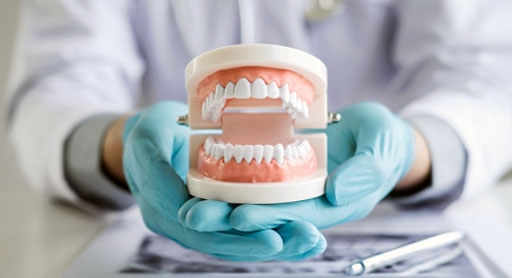
What is Denture Treatment?Denture treatment is a branch of dentistry that focuses on compensating for teeth lost due to various reasons or the loss of dental tissues through biocompatible artificial materials produced in a laboratory, with the aim of restoring the functions of chewing, speaking, and visual integrity of the person.Tooth loss in human health not only creates a visual deficiency; it also directly affects the chewing function, which is the first step of the digestive system. Dental prosthesis treatment comes into play exactly at this point, focusing on the restoration of the unity of the mouth and jaw. Thanks to the medical materials developed from the past to the present, these artificial teeth, which replace the lost tissues, have reached levels that are quite close to human anatomy in terms of tissue compatibility and functionality. If missing teeth are not replaced, sequential functional losses such as jawbone resorption, tilting of adjacent teeth, and occlusal disorders can occur. Prosthetic applications are designed to overcome these biomechanical imbalances.
The dental prosthesis treatment approaches applied in the Avrupadent clinics serving in the Izmir region are carried out while considering the unique jaw closure dynamics and face ratios of each individual. The main goal of the applications is to restore the missing function of the person, while preserving the health of the temporomandibular joint and ensuring the natural course of phonetic (speech) ability continues. The acrylic, ceramic, or zirconium-based materials used are selected as part of a special planning to be clinically compatible with the gum and surrounding tissues.
Hangi Prosthetic Dental Treatment Hizmetine İhtiyacın Var?
In What Situations is Dental Prosthesis Treatment Applied?
Situations where prosthetic dental treatment is applied; single/multiple tooth deficiencies caused by fracture or trauma, teeth with significant material loss that cannot be saved with fillings, complete tooth loss conditions where all teeth are lost, and anatomical tissue losses resulting from gum diseases.The gaps occurring in the jaw structure affect not only that area but also the dynamics of the entire jaw system. Other teeth that shift into the vacant areas gradually lose their functional positions over time, narrowing the chewing space. Prosthetic treatments come into play in various clinical scenarios to prevent this imbalance. The main conditions that lead patients to consult a dentist and create a need for prosthetics are as follows:
Clinical Situation Explanation and Functional Effect Regional (Partial) Tooth Deficiency The situation of losing one or several teeth located next to each other or in different positions in the jaw. Total Tooth Loss Loss of all teeth in the lower and/or upper jaw due to aging or advanced periodontitis. Severe Material Loss Requirement for a crown due to breakage or fracture that cannot support the filling material. Bite and Occlusion Disorders Condition of excessive load on the jaw joint (TMJ) caused by the loss of teeth leading to a decrease in vertical dimension.
How is Prosthetic Dental Treatment Planned?
Planning the Treatment; involves questioning the patient’s overall medical condition, conducting radiological and clinical examinations, examining the jaw bone and existing teeth, followed by evaluating fixed, removable, or implant-supported prosthesis options depending on the number and location of missing teeth.Success is evaluated through a multi-parameter assessment filter. The dentists at İzmir Avrupadent primarily examine the root supports of the natural teeth that have been left in the mouth during the planning phase, as well as the health of the gums. If the planned prosthesis will be supported by the existing teeth (such as a bridge or removable prosthesis), it is clinically necessary for the supporting teeth to possess bone structure that can carry this load.
Subsequently, the dynamics of the patient’s occlusion are analyzed. The way the upper and lower jaws interact, the position of the lips during speech, and the condition of the facial muscles are determined. The obtained digital or conventional measurements are sent to specialized dental laboratories. The planning is shaped not only by the dentist’s decision but also in accordance with the patient’s anatomical suitability, the time they can allocate for treatment, and their personal expectations.
Who Can Benefit from Prosthetic Dental Treatment?
Prosthetic dental treatment; is suitable for adult individuals experiencing partial or complete tooth loss, whose anatomical form of the tooth has been altered due to a significant fracture/break, who have completed their growth and development, and who do not have an acute infection in the jaw area where the procedure will be performed.The applicability of prosthetic restorations depends on the general health of the jaw tissues, not just on the age. Whether it is a young adult beginning treatment for a single tooth deficiency or an elderly individual who has lost all their teeth, deficiencies must be functionally replaced. However, in children and adolescents whose bone development is ongoing, different approaches (such as space maintainers or removable temporary devices) are generally preferred instead of fixed bridges or implant-supported prostheses.
Systemic diseases that the individual has (such as uncontrolled diabetes, etc.) can affect the process if an implant-supported prosthesis is being planned. In such cases, consultations with medical doctors are held, and the prosthesis construction stages are initiated after the medical condition is brought under control.
How is an Assessment Conducted Before Prosthetic Dental Treatment?
Clinical assessment before the procedure; starts with a physical examination of the oral cavity, determining the amount of bone resorption and the roots of the teeth through panoramic X-rays, examining the periodontal (gum) health of the teeth to be supported, and analyzing the movements of the temporomandibular joint (TMJ).Measurements and designs taken without establishing a solid foundation for the prosthesis may result in dysfunction in the long term. Therefore, during the examination, the first check is whether the remaining teeth in the mouth are loose. If a tooth has a cyst or irreparable bone loss, it will be extracted prior to including it in the prosthetic plan. Teeth that can be saved are prepared as support bases for the prosthesis by being treated with root canal therapy or fillings.
Additionally, it is checked whether the opposing teeth have extended into the gap due to missing teeth. If this vertical space loss is detected, preliminary treatment procedures (leveling) are added to adjust the height of the planned prosthesis. After this clinical mapping is done, the appropriate material and type of prosthesis are determined.
What Types of Prostheses are Used in Dental Prosthetic Treatment?
Main Types of Prostheses Used; fixed prostheses (crowns and bridges) that the patient cannot remove by themselves, removable dentures (full and partial plates) that can be inserted and removed by the patient, and implant-supported prostheses which rely on artificial roots placed in the jawbone.The nature of tooth loss directly determines the type of prosthesis to be applied. Prosthetic applications, divided into three main groups as fixed, movable, and implant-supported, are further classified into different supporting materials and retention mechanisms:
- • Fixed Crown (Cap): It is the covering of a single tooth with a significant loss of substance using porcelain or zirconium, resembling a cap.
- • Fixed Bridge: It involves using healthy teeth on both sides of the gap caused by tooth loss as supports, filling the space in between with a porcelain body.
- • Movable Partial (Partial) Denture: These are structures that attach to existing teeth with clasps or precision attachments when too many teeth are missing to create a fixed bridge.
- • Movable Complete (Total) Denture: These are commonly referred to as palate dentures, which are supported by the tissue of the palate via suction forces when there are no teeth left in the mouth.
What is the Difference Between Fixed and Removable Prosthetics?
The most significant difference between fixed and removable prosthetics; fixed prosthetics are permanently attached to the teeth or implants with special medical adhesives and cannot be removed by the patient, whereas removable prosthetics can be manually inserted and removed by the patient for cleaning purposes.The choice of system has anatomical limitations. To create a fixed prosthetic, there must be natural teeth or implants that can bear the load on both sides of the gap. If the teeth in the very back of the jaw are lost and there are no supporting structures, then one would transition to removable prosthetics (hooked or clasped) that rely on the surrounding tissues for support. The structural differences between the two methods are classified below:
Comparison Criteria Fixed Prosthetics (Crown/Bridge) Removable Prosthetics (Full/Partial) Usage and Removal It is fixed in the mouth, provides a natural tooth sensation. Can only be removed by a dentist. Can be removed daily by the patient for cleaning or before sleep. Support Mechanism It only receives support from natural teeth or implant bodies. In addition to natural teeth, it also receives support from the jawbone and palatine mucosa. Care Style Cleaned inside the mouth with brushes and floss threaders. Washed outside the mouth with special brushes and cleaning tablets. Volume and Size It is of natural tooth dimensions, does not cover the palatal tissue. Contains acrylic bases (palate) to ensure retention, is voluminous.
How Is the Process of Prosthetic Tooth Treatment Carried Out?Treatment process; it progresses with the clinical preparation and shaping of the support teeth, taking measurements of the jaw closure, step-by-step realization of the infrastructure and porcelain trials in the dental laboratory, and the delivery of the prosthesis after approval of suitability.Procedures require coordinated work between the physician and dental technicians. If a fixed bridge or crown is to be made, a reduction (preparation) is performed under local anesthesia on the enamel tissues of the supporting teeth to create space for the thickness of porcelain (approximately 1-2 mm). After the teeth are prepared, precise measurements are taken with classical silicone materials or digital optical scanners. While porcelain is produced in the laboratory environment, temporary teeth are placed on the patient in the same session to protect the teeth and prevent sensitivity.
In removable complete or partial dentures, the process begins with taking measurements. A detailed map of the palate tissue is created. Wax templates are prepared on the models obtained from the measurements. With these wax templates, the patient’s vertical closure distance and lip support where the teeth will align are determined. During the tooth trial phase, the patient approves the color and arrangement of the teeth in front of the mirror. In the final stage, the wax form is converted into acrylic, and the prosthesis is delivered to the patient.
How Many Stages Can Prosthetic Dental Treatment Be Completed In?
Stages of Completion; Although they may vary depending on the quality of the planned prosthesis, fixed prostheses generally take 3-4 sessions (approximately 7-10 days), while removable prostheses are usually completed in an average of 4-5 sessions, including measurements, closure, and tooth fitting stages.Clinical stages are divided according to the technical requirements of the material. In fixed crown or bridge applications; the first stage involves tooth trimming and measurement acquisition, the second stage involves fitting a metal or zirconium framework, the third stage is the fitting of porcelain (matching the original color and form of the tooth), and the final stage is polishing (glaze) and permanent bonding (cementation).
In complete (total) prostheses, the process requires more detail because the lack of teeth results in lip support and occlusal height being built from scratch. The first and second measurement stages are organized with sessions including base fittings, wax-up tooth fittings, and finishing, scheduled at specific intervals. In the case management at Avrupadent, the treatment begins with a schedule determined according to the patient’s case.
What Should Be Considered Before Dental Prosthesis Treatment?
Patients should pay attention to the following before treatment; They should undergo preliminary treatments such as dental cleaning to prevent oral infections and bleeding, and inform their doctor about any existing chronic diseases (such as hypertension, heart disease, etc.) and medications they are taking in full detail.For the prosthesis to fit the tooth and gum perfectly, there should be no bleeding in the area where measurements are taken. If active gingivitis (gum inflammation) is present during the measurements, the tooth margins may not be clearly visible due to bleeding. This condition can cause the prosthesis produced in the laboratory not to fit the tooth properly. Therefore, it is clinically important for patients to maintain maximum oral hygiene before the procedure.
Additionally, since local anesthesia will be used in the procedures, patients are advised to come to the appointment on an empty stomach. Having the radiological examinations requested by the dentist prepared in advance ensures that the treatment plan can be initiated smoothly.
What Should Be Considered After Dental Prosthesis Treatment?
Fundamental considerations to keep in mind after the procedure; in the initial days, eat soft foods to help the muscles and tongue adapt to the new structure, avoid consuming food during the first few hours following the procedure to allow the bonding agents in fixed prosthetics to fully harden, and in the case of removable prosthetics, inform the doctor about any bruises that occur.The addition of a new volume to the oral structure means a new environment for the tongue, cheek, and lip muscles to adapt. For patients fitted with fixed crowns or bridges, it may take several days for the new tooth to habituate to chewing pressure. During this stage, a slight feeling of fatigue may be experienced in the teeth or jaw joint. However, if there is an excessive contact (high point) with the opposing tooth, an immediate dental check is necessary, as elevated restorations can cause trauma to the underlying tooth.
For patients with removable denture prosthetics, the adaptation process takes a bit longer (averaging 2-4 weeks). It is clinically normal for small pressure points (bruises) to form in the areas where the prosthetic sits against the palate during the first week. The patient should not stop wearing their prosthetic, and it is essential for them to attend appointments to have the bruised areas adjusted (conformed) by the dentist.
How Should Oral Care Be Performed When Using Dentures?
Prosthesis care; involves using special interface brushes or bridge floss to clean under the body of fixed prostheses (bridges), and for removable prostheses, it includes daily rinsing with special liquid cleaners and brushes designed for artificial teeth outside the gums.Prosthetic teeth do not decay; however, the natural tooth roots and the gum tissue surrounding the prostheses are quite defenseless against bacteria. If plaque accumulates along the junction lines where fixed crowns connect with the gums, gum retraction may begin, leading to the loss of natural tooth beneath the prosthesis due to decay. Brushing with fluoride toothpaste twice a day and using dental floss is a standard part of routine care.
Patients using removable (denture) prostheses should remove them at night while sleeping, as this benefits the tissues by allowing them to receive oxygen and rest. Removed prostheses should be stored in liquid (water or cleaning tablet solutions) to prevent deformation. Instead of abrasive toothpaste, liquid soaps that do not harm the acrylic surface or special cleaning pastes should be preferred for cleaning the prosthesis.
How is Measurement Taken in Prosthetic Dental Treatment?
How impressions are taken; traditionally can be done by applying elastic dental silicone and alginate materials with impression trays, as well as by using intraoral optical scanning cameras in current clinics to realize three-dimensional digital copying method.An impression is the basic map that determines how the artificial tooth will fit into the jawbone and with other teeth. In traditional impression techniques, the dentist waits for a fluid silicone paste that copies precise details around the prepared tooth to harden, placing a more viscous paste on top. This negative mold obtained is filled with plaster in the laboratory to create the patient’s jaw model (positive mold).
In modern prosthetic approaches, CAD/CAM technologies come into play, providing comfort for patients with gag reflex (nausea). With pen-sized cameras, all surfaces of the teeth are scanned and transferred to a digital medium within seconds. This method, which eliminates physical errors such as contraction and expansion of impression materials, increases the marginal fit of the prosthesis at a micron level.
What Materials Are Used in Prosthetic Tooth Treatment?
Basic dental materials used in treatment; in fixed prosthetics, zirconium dioxide blocks, metal-supported porcelain alloys, and e-max (lithium disilicate) glass ceramics are used; in removable prosthetics, acrylic resins (pink base) and supporting chrome-cobalt frameworks are utilized.Different biological materials are used according to the patient’s gum structure distribution and aesthetic expectations. In long bridges in the back area, porcelain with metal infrastructure that has the highest fracture resistance is a classic approach, while with the advancement of technology, zirconium-based restorations that combine aesthetic light transmittance and durability have come to the forefront. In the restoration of anterior teeth, full ceramic (e-max) applications that contain no metal/zirconium and are very close to the transparency of natural enamel are mostly preferred.
In removable dentures (both total and partial) that are placed and removed by the patient, pink acrylic (plastic-based) materials mimicking the gum tissue are used. In partial dentures, the metal frameworks embedded within these acrylic structures prevent the denture from flexing, increasing its durability and forming hooks (clasps) that ensure retention on existing natural teeth.
In which tooth deficiencies is prosthetic dental treatment evaluated?
Prosthetic rehabilitation is a solution model for all clinical scenarios ranging from a single deficiency in the human mouth to total deficiencies. The different types of deficiencies evaluated during the application are as follows:
\t- Single Tooth Deficiencies: This usually involves a tooth lost due to trauma or fracture, compensated by a 3-unit bridge supported by the two adjacent teeth or placing a porcelain crown on a single implant inserted into that gap.
\t
- Multiple and Free-End Tooth Deficiencies: In cases where the molars at the back of the jaw are lost, making it impossible to establish a fixed bridge, support is provided with partial dentures hooked onto other natural teeth.
\t
- Complete Tooth Deficiency: Cases where there are no natural teeth remaining in the upper or lower jaw, using total (palate) dentures that adhere to the tissues by suction or implant-supported fixed/movable bridges.
How Are Implant-Supported Prosthetics Planned?
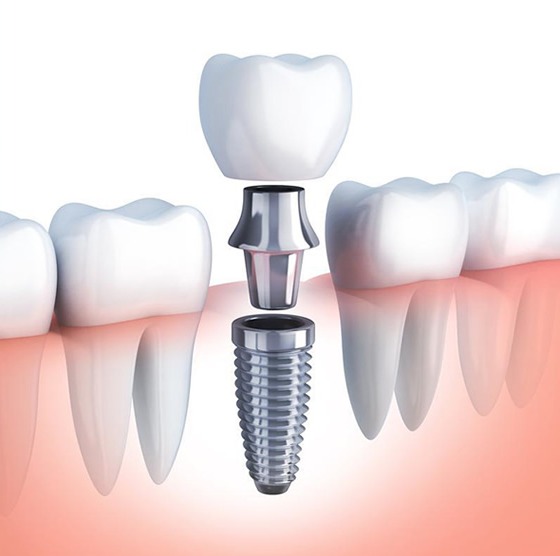
Implant-supported prostheses; after completing the process of osseointegration of titanium screws (artificial roots) surgically placed in the jawbone, they are planned to be fitted with special connecting pieces (abutments) for fixed crowns or removable dentures.Implant-supported systems are one of the most protective prosthetic alternatives that prevent the adjacent healthy teeth from being trimmed down. The titanium root mimics the load capacity of a natural tooth when fused with the jawbone. In cases of single tooth loss, zirconium or porcelain crowns are either screwed or adhered to the implant to secure them.
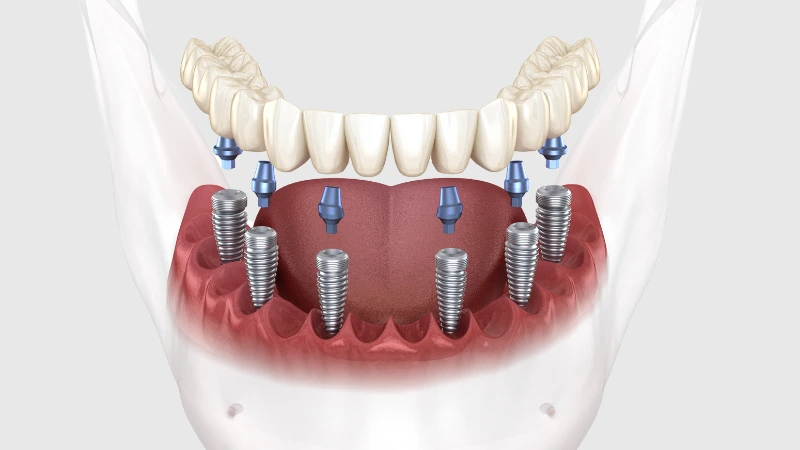
In cases of complete tooth loss, if patients do not wish to use a removable denture, a certain number of implants are placed in the upper and lower jaws (for example, with All-on-4 or All-on-6 systems), based on the dentist’s evaluation. Fixed zirconium/porcelain bridges that cannot be removed by the patient are then attached to these implants, providing the patient with a strong chewing force as if they were chewing with natural teeth.
Why is Control Examination Important in Prosthetic Dental Treatment?
The Importance of Regular Check-ups; correcting the areas in the palate where removable dentures cause bruising, examining the occlusal contacts of fixed dentures, and identifying possible inflammations in the gums without harming the prosthesis to prevent damage.The procedure for fitting a prosthesis does not end there; it marks the beginning of the phase where the oral tissues start to adapt to that material. Especially in users of removable full dentures (palate), the jawbone shows anatomical resorption over the years. When the bone erodes, the fit of the prosthesis with the tissue is compromised, and the prosthesis begins to move in the mouth. With check-ups by the dentist, a lining (feeding) material is placed inside the prosthesis to restore this fit.
In patients with fixed crowns or bridges, it is evaluated during 6-month visits whether the adhesive cement has dissolved and whether there are any leaks at the edges of the restoration. A height or leak noticed early on can be resolved with small clinical adjustments without the need for a complete replacement of the prosthesis.
Can Dental Prosthesis Treatment Be Applied Together with Other Dental Treatments?
Yes, it can be applied within a multidisciplinary approach. Prosthetic treatments are coordinated with root canal therapy (endodontics), gum health (periodontology), and jaw surgery, ensuring that the biological preparation of the surface where the prosthesis will sit is achieved.No prosthesis can be constructed over a crumbled and inflamed foundation. For example; if there is inflammation at the root tip of a tooth planned for capping, the doctor will first perform root canal treatment on that tooth. Once the health of the tooth is secured with the root canal treatment, the tooth is covered with a porcelain or zirconium crown to protect it from breaking.
In another scenario; if the fracture or crumbling limit of the tooth is well below the gum line, a minor tissue removal procedure (crown lengthening) is performed by gum specialists (periodontologists) to ensure accurate measurement can be made. The organization of all these different branches in Izmir Avrupadent supports completing procedures under a single clinical roof.
How is Personalized Planning Done in Prosthetic Dental Treatment?
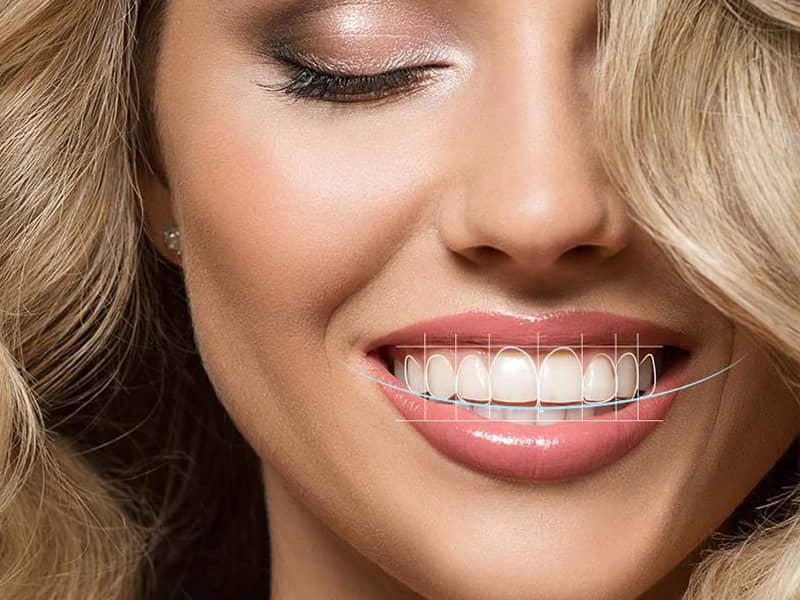
Custom Design for Individuals; the structure of the jaw joint of the hospital, lip support during smiling, facial shape (oval, square, etc.), gender and age characteristics are analyzed, and the colors, sizes, and arrangements of the dental forms are produced in the laboratory to be fully compatible with the anatomical features of that individual.There is no one-size-fits-all measurement in prosthetic design. The opening angle of each individual’s lower jaw, joint rotation, and lip distance during speech are unique. Especially in fixed porcelain applications in the front area and complete dentures, the shape of the artificial teeth used is proportionate to the person’s facial type. Softer-edged tooth forms are preferred for individuals with round facial contours, while more pronounced-edged teeth are produced for angular jaw structures.
Color selection is also a part of personalization. The eye sclera color and skin undertone are evaluated to determine the tooth color; very white and opaque teeth may not appear natural on the face, for this reason, the natural translucency of enamel and color transitions (from the gum area to the cutting edge) are applied to porcelain. After the underlying structures are prepared, the patient evaluates their own teeth in front of a mirror during the fitting session, and production is completed with the approved final version.
Prosthetic Dental Treatment hakkında sıkça sorulan sorular ve cevapları
Sabit ve hareketli olmak üzere Protez Diş Tedavisi kaça ayrılmaktadır?
Temel olarak hastanın kendisinin takıp çıkarabildiği hareketli yöntemler ve hekim tarafından dişe yapıştırılan sabit yöntemler olarak ikiye ayrılır.
Çiğneme zorluğu çekilmesi Protez Diş Tedavisi ihtiyacına işaret eden bir belirti midir?
Hastanın yemekleri koparamaması veya ezememesi, ağızdaki diş diziliminin bozulduğunu ve eksiklerin doldurulması gerektiğini gösteren temel bir teşhis bulgusudur.
Diş çekimi yaralarının tamamen iyileşmesi kalıcı Protez Diş Tedavisi ölçüsü için neden gereklidir?
Yara iyileşirken diş eti eriyip şekil değiştireceğinden, doku büzülerek son anatomik formunu almadan ölçü alınırsa üretilen materyal zamanla bollaşır.
Hareketli Protez Diş Tedavisi sürecinde çene kapanış yüksekliği balmumu şablonlarla mı kaydedilir?
Dişsiz kretler üzerine yerleştirilen mum şablonlar sayesinde hastanın üst ve alt çenesinin hangi aralıkta kenetleneceği (ısırma mesafesi) milimetrik kaydedilir.
İlk haftalarda oluşabilecek diş eti vuruk kızarıklıkları Protez Diş Tedavisi adaptasyonunun normal bir parçası mıdır?
Sert akrilik gövdenin yumuşak diş eti dokusuna yeni uyguladığı basınca bağlı olarak beliren lokal vuruklar, hekimin birkaç saniyelik ufak törpülemesiyle geçen süreçlerdir.
Tütün ürünleri kullanımı hareketli Protez Diş Tedavisi üzerindeki akrilik dokuya kötü koku hapseder mi?
Dumandaki katran plastik dişlerin mikro gözeneklerine işleyerek hem koyu lekelenmelere neden olur hem de yıkanarak kolay çıkmayan inatçı bir koku tabakası yaratır.
Avrupadent İzmir laboratuvar altyapısı Protez Diş Tedavisi üretim aşamalarındaki bekleme sürelerini hastanın konforu için kısaltır mı?
Şubelerimizle tam entegre çalışan dijital teknisyen ağımız sayesinde metal ve akrilik provaları arasındaki laboratuvar günleri optimize edilerek hastanın bir an önce dişlerine kavuşması hedeflenir.
Sadece bir diş eksikliğinde Protez Diş Tedavisi uygulanabilir mi?
Evet, tek diş eksikliklerinde boşluğun yanındaki dişlerden destek alınarak yapılan sabit köprüler veya implant üstü kuronlar bu tedavinin bir parçasıdır.
Diş eksikliğine bağlı olarak komşu dişlerin devrilmesi Protez Diş Tedavisi teşhisini gerektirir mi?
Boşluk olan bölgeye doğru eğilen ve araları açılan dişler dizilimi bozacağı için, o boşluğun daha fazla devrilmeyi önlemek adına hızla doldurulması gerekir.
Diş etlerinde kanama ve iltihap varken Protez Diş Tedavisi ölçüsü alınabilir mi?
Şiş (ödemli) diş etlerinden alınan ölçü, doku tamamen iyileşip indiğinde uyumsuzluk yaratacağı için öncelikle diş eti sağlığının kazanılması beklenir.
Mumlu dişli prova aşaması hareketli Protez Diş Tedavisi sürecinin hangi aşamasına denk gelir?
Kapanış yüksekliği alındıktan sonra, teknisyenin seçilen renkteki dişleri muma dizerek ağızda estetik hizalama ve form kontrolünün yapıldığı ana provadır.
Vuruk nedeniyle kliniğe gitmeden önce hareketli Protez Diş Tedavisi kullanımına devam etmek iz yerini belli eder mi?
Günlerce takılmamış bir plakta kızarıklık söneceği için, hekimin batan noktayı tam tespit edebilmesi adına kliniğe gelmeden hemen önce plağın takılı olması çok faydalıdır.
Güçlü hapşırma anlarında üst çenedeki hareketli Protez Diş Tedavisi vakumu anlık olarak esneyebilir mi?
Ağız içi hava basıncının aniden çok yüksek seviyelere ulaştığı şiddetli hapşırma veya öksürme anlarında vakum kırılabileceği için plağın elle hafifçe desteklenmesi faydalıdır.
Vuruk nedeniyle ağrı yaşayan hastalara Avrupadent İzmir randevu sıralamasında hareketli Protez Diş Tedavisi uyumlaması için öncelik tanır mı?
Yeni plağının vurması sebebiyle yemek yiyemeyen ve acı çeken misafirlerimizin durumu değerlendirilerek, acıyı rahatlatacak birkaç saniyelik o ufak törpüleme işlemi bekletilmeden devreye alınır.
Tam dişsizlik durumlarında hangi tür Protez Diş Tedavisi tercih edilir?
Ağızda hiç diş kalmadığında dokudan destek alan tam (damak) protezler veya çene kemiğine yerleştirilen yapay kök destekli sabit/hareketli sistemler tercih edilir.
Eski porselenlerin altından sızlama gelmesi Protez Diş Tedavisi yenileme tanısına girer mi?
Eskimiş kaplamaların kenarlarından sızıntı olması ve dişin çürümesi, mevcut yapının sökülerek yenisiyle değiştirilmesi teşhisini doğurur.
Çene kemiğinde batan sivrilikler varsa Protez Diş Tedavisi öncesi cerrahi düzeltme yapılır mı?
Özellikle tam damak işlemlerinden önce kemikteki dikensi çıkıntılar ufak bir törpüleme işlemiyle (preprotetik cerrahi) düzeltilerek zemin pürüzsüzleştirilir.
Mum provada hasta Protez Diş Tedavisi dişlerinin görünümünü değiştirme hakkına sahip midir?
Plak henüz fırınlanıp sert plastiğe (akriliğe) dönüşmediği için diş boyları, formu veya rengi hasta tarafından aynada incelenip istenirse anında değiştirilebilir.
Sabit Protez Diş Tedavisi takıldıktan sonra günlük fırçalama rutini günde en az iki kez aynen sürdürülmeli midir?
Kaplamaların dişle birleştiği diş eti kenarında plak birikip diş etini kanatmasın diye, doğal dişlerdeki gibi düzenli mekanik fırçalama disiplini kesinlikle aksatılmamalıdır.
Su içmek ağız kuruluğunu önlediği için hareketli Protez Diş Tedavisi vakumunun dokuya daha sıkı tutunmasını sağlar mı?
Plağın dokuya yapışmasını sağlayan ana unsur altındaki ince tükürük tabakasıdır; bu nedenle bol su içerek ağzı nemli tutmak plağın tutuculuk performansını zirveye taşır.
Contact Us for Denture Treatment in Izmir
Denture treatment is a method that involves the use of fixed or removable dentures to restore function and appearance in place of missing teeth. At AvrupaDent, this treatment is carried out by dentists within a treatment plan tailored to the patient's oral and dental health. You can contact us for detailed information regarding the treatment process.
İletişime Geçin
Get in touch
Avrupadent
-
Güncelleme tarihi:25 Sep 2026
Tooth loss in human health not only creates a visual deficiency; it also directly affects the chewing function, which is the first step of the digestive system. Dental prosthesis treatment comes into play exactly at this point, focusing on the restoration of the unity of the mouth and jaw. Thanks to the medical materials developed from the past to the present, these artificial teeth, which replace the lost tissues, have reached levels that are quite close to human anatomy in terms of tissue compatibility and functionality. If missing teeth are not replaced, sequential functional losses such as jawbone resorption, tilting of adjacent teeth, and occlusal disorders can occur. Prosthetic applications are designed to overcome these biomechanical imbalances.
The dental prosthesis treatment approaches applied in the Avrupadent clinics serving in the Izmir region are carried out while considering the unique jaw closure dynamics and face ratios of each individual. The main goal of the applications is to restore the missing function of the person, while preserving the health of the temporomandibular joint and ensuring the natural course of phonetic (speech) ability continues. The acrylic, ceramic, or zirconium-based materials used are selected as part of a special planning to be clinically compatible with the gum and surrounding tissues.
Hangi Prosthetic Dental Treatment Hizmetine İhtiyacın Var?
In What Situations is Dental Prosthesis Treatment Applied?
The gaps occurring in the jaw structure affect not only that area but also the dynamics of the entire jaw system. Other teeth that shift into the vacant areas gradually lose their functional positions over time, narrowing the chewing space. Prosthetic treatments come into play in various clinical scenarios to prevent this imbalance. The main conditions that lead patients to consult a dentist and create a need for prosthetics are as follows:
| Clinical Situation | Explanation and Functional Effect |
|---|---|
| Regional (Partial) Tooth Deficiency | The situation of losing one or several teeth located next to each other or in different positions in the jaw. |
| Total Tooth Loss | Loss of all teeth in the lower and/or upper jaw due to aging or advanced periodontitis. |
| Severe Material Loss | Requirement for a crown due to breakage or fracture that cannot support the filling material. |
| Bite and Occlusion Disorders | Condition of excessive load on the jaw joint (TMJ) caused by the loss of teeth leading to a decrease in vertical dimension. |
How is Prosthetic Dental Treatment Planned?
Success is evaluated through a multi-parameter assessment filter. The dentists at İzmir Avrupadent primarily examine the root supports of the natural teeth that have been left in the mouth during the planning phase, as well as the health of the gums. If the planned prosthesis will be supported by the existing teeth (such as a bridge or removable prosthesis), it is clinically necessary for the supporting teeth to possess bone structure that can carry this load.
Subsequently, the dynamics of the patient’s occlusion are analyzed. The way the upper and lower jaws interact, the position of the lips during speech, and the condition of the facial muscles are determined. The obtained digital or conventional measurements are sent to specialized dental laboratories. The planning is shaped not only by the dentist’s decision but also in accordance with the patient’s anatomical suitability, the time they can allocate for treatment, and their personal expectations.
Who Can Benefit from Prosthetic Dental Treatment?
The applicability of prosthetic restorations depends on the general health of the jaw tissues, not just on the age. Whether it is a young adult beginning treatment for a single tooth deficiency or an elderly individual who has lost all their teeth, deficiencies must be functionally replaced. However, in children and adolescents whose bone development is ongoing, different approaches (such as space maintainers or removable temporary devices) are generally preferred instead of fixed bridges or implant-supported prostheses.
Systemic diseases that the individual has (such as uncontrolled diabetes, etc.) can affect the process if an implant-supported prosthesis is being planned. In such cases, consultations with medical doctors are held, and the prosthesis construction stages are initiated after the medical condition is brought under control.
How is an Assessment Conducted Before Prosthetic Dental Treatment?
Measurements and designs taken without establishing a solid foundation for the prosthesis may result in dysfunction in the long term. Therefore, during the examination, the first check is whether the remaining teeth in the mouth are loose. If a tooth has a cyst or irreparable bone loss, it will be extracted prior to including it in the prosthetic plan. Teeth that can be saved are prepared as support bases for the prosthesis by being treated with root canal therapy or fillings.
Additionally, it is checked whether the opposing teeth have extended into the gap due to missing teeth. If this vertical space loss is detected, preliminary treatment procedures (leveling) are added to adjust the height of the planned prosthesis. After this clinical mapping is done, the appropriate material and type of prosthesis are determined.
What Types of Prostheses are Used in Dental Prosthetic Treatment?
The nature of tooth loss directly determines the type of prosthesis to be applied. Prosthetic applications, divided into three main groups as fixed, movable, and implant-supported, are further classified into different supporting materials and retention mechanisms:
- • Fixed Crown (Cap): It is the covering of a single tooth with a significant loss of substance using porcelain or zirconium, resembling a cap.
- • Fixed Bridge: It involves using healthy teeth on both sides of the gap caused by tooth loss as supports, filling the space in between with a porcelain body.
- • Movable Partial (Partial) Denture: These are structures that attach to existing teeth with clasps or precision attachments when too many teeth are missing to create a fixed bridge.
- • Movable Complete (Total) Denture: These are commonly referred to as palate dentures, which are supported by the tissue of the palate via suction forces when there are no teeth left in the mouth.
What is the Difference Between Fixed and Removable Prosthetics?
The choice of system has anatomical limitations. To create a fixed prosthetic, there must be natural teeth or implants that can bear the load on both sides of the gap. If the teeth in the very back of the jaw are lost and there are no supporting structures, then one would transition to removable prosthetics (hooked or clasped) that rely on the surrounding tissues for support. The structural differences between the two methods are classified below:
| Comparison Criteria | Fixed Prosthetics (Crown/Bridge) | Removable Prosthetics (Full/Partial) |
|---|---|---|
| Usage and Removal | It is fixed in the mouth, provides a natural tooth sensation. Can only be removed by a dentist. | Can be removed daily by the patient for cleaning or before sleep. |
| Support Mechanism | It only receives support from natural teeth or implant bodies. | In addition to natural teeth, it also receives support from the jawbone and palatine mucosa. |
| Care Style | Cleaned inside the mouth with brushes and floss threaders. | Washed outside the mouth with special brushes and cleaning tablets. |
| Volume and Size | It is of natural tooth dimensions, does not cover the palatal tissue. | Contains acrylic bases (palate) to ensure retention, is voluminous. |
How Is the Process of Prosthetic Tooth Treatment Carried Out?Treatment process; it progresses with the clinical preparation and shaping of the support teeth, taking measurements of the jaw closure, step-by-step realization of the infrastructure and porcelain trials in the dental laboratory, and the delivery of the prosthesis after approval of suitability.Procedures require coordinated work between the physician and dental technicians. If a fixed bridge or crown is to be made, a reduction (preparation) is performed under local anesthesia on the enamel tissues of the supporting teeth to create space for the thickness of porcelain (approximately 1-2 mm). After the teeth are prepared, precise measurements are taken with classical silicone materials or digital optical scanners. While porcelain is produced in the laboratory environment, temporary teeth are placed on the patient in the same session to protect the teeth and prevent sensitivity.
In removable complete or partial dentures, the process begins with taking measurements. A detailed map of the palate tissue is created. Wax templates are prepared on the models obtained from the measurements. With these wax templates, the patient’s vertical closure distance and lip support where the teeth will align are determined. During the tooth trial phase, the patient approves the color and arrangement of the teeth in front of the mirror. In the final stage, the wax form is converted into acrylic, and the prosthesis is delivered to the patient.
How Many Stages Can Prosthetic Dental Treatment Be Completed In?
Stages of Completion; Although they may vary depending on the quality of the planned prosthesis, fixed prostheses generally take 3-4 sessions (approximately 7-10 days), while removable prostheses are usually completed in an average of 4-5 sessions, including measurements, closure, and tooth fitting stages.Clinical stages are divided according to the technical requirements of the material. In fixed crown or bridge applications; the first stage involves tooth trimming and measurement acquisition, the second stage involves fitting a metal or zirconium framework, the third stage is the fitting of porcelain (matching the original color and form of the tooth), and the final stage is polishing (glaze) and permanent bonding (cementation).
In complete (total) prostheses, the process requires more detail because the lack of teeth results in lip support and occlusal height being built from scratch. The first and second measurement stages are organized with sessions including base fittings, wax-up tooth fittings, and finishing, scheduled at specific intervals. In the case management at Avrupadent, the treatment begins with a schedule determined according to the patient’s case.
What Should Be Considered Before Dental Prosthesis Treatment?
Patients should pay attention to the following before treatment; They should undergo preliminary treatments such as dental cleaning to prevent oral infections and bleeding, and inform their doctor about any existing chronic diseases (such as hypertension, heart disease, etc.) and medications they are taking in full detail.For the prosthesis to fit the tooth and gum perfectly, there should be no bleeding in the area where measurements are taken. If active gingivitis (gum inflammation) is present during the measurements, the tooth margins may not be clearly visible due to bleeding. This condition can cause the prosthesis produced in the laboratory not to fit the tooth properly. Therefore, it is clinically important for patients to maintain maximum oral hygiene before the procedure.
Additionally, since local anesthesia will be used in the procedures, patients are advised to come to the appointment on an empty stomach. Having the radiological examinations requested by the dentist prepared in advance ensures that the treatment plan can be initiated smoothly.
What Should Be Considered After Dental Prosthesis Treatment?
Fundamental considerations to keep in mind after the procedure; in the initial days, eat soft foods to help the muscles and tongue adapt to the new structure, avoid consuming food during the first few hours following the procedure to allow the bonding agents in fixed prosthetics to fully harden, and in the case of removable prosthetics, inform the doctor about any bruises that occur.The addition of a new volume to the oral structure means a new environment for the tongue, cheek, and lip muscles to adapt. For patients fitted with fixed crowns or bridges, it may take several days for the new tooth to habituate to chewing pressure. During this stage, a slight feeling of fatigue may be experienced in the teeth or jaw joint. However, if there is an excessive contact (high point) with the opposing tooth, an immediate dental check is necessary, as elevated restorations can cause trauma to the underlying tooth.
For patients with removable denture prosthetics, the adaptation process takes a bit longer (averaging 2-4 weeks). It is clinically normal for small pressure points (bruises) to form in the areas where the prosthetic sits against the palate during the first week. The patient should not stop wearing their prosthetic, and it is essential for them to attend appointments to have the bruised areas adjusted (conformed) by the dentist.
How Should Oral Care Be Performed When Using Dentures?
Prosthesis care; involves using special interface brushes or bridge floss to clean under the body of fixed prostheses (bridges), and for removable prostheses, it includes daily rinsing with special liquid cleaners and brushes designed for artificial teeth outside the gums.Prosthetic teeth do not decay; however, the natural tooth roots and the gum tissue surrounding the prostheses are quite defenseless against bacteria. If plaque accumulates along the junction lines where fixed crowns connect with the gums, gum retraction may begin, leading to the loss of natural tooth beneath the prosthesis due to decay. Brushing with fluoride toothpaste twice a day and using dental floss is a standard part of routine care.
Patients using removable (denture) prostheses should remove them at night while sleeping, as this benefits the tissues by allowing them to receive oxygen and rest. Removed prostheses should be stored in liquid (water or cleaning tablet solutions) to prevent deformation. Instead of abrasive toothpaste, liquid soaps that do not harm the acrylic surface or special cleaning pastes should be preferred for cleaning the prosthesis.
How is Measurement Taken in Prosthetic Dental Treatment?
How impressions are taken; traditionally can be done by applying elastic dental silicone and alginate materials with impression trays, as well as by using intraoral optical scanning cameras in current clinics to realize three-dimensional digital copying method.An impression is the basic map that determines how the artificial tooth will fit into the jawbone and with other teeth. In traditional impression techniques, the dentist waits for a fluid silicone paste that copies precise details around the prepared tooth to harden, placing a more viscous paste on top. This negative mold obtained is filled with plaster in the laboratory to create the patient’s jaw model (positive mold).
In modern prosthetic approaches, CAD/CAM technologies come into play, providing comfort for patients with gag reflex (nausea). With pen-sized cameras, all surfaces of the teeth are scanned and transferred to a digital medium within seconds. This method, which eliminates physical errors such as contraction and expansion of impression materials, increases the marginal fit of the prosthesis at a micron level.
What Materials Are Used in Prosthetic Tooth Treatment?
Basic dental materials used in treatment; in fixed prosthetics, zirconium dioxide blocks, metal-supported porcelain alloys, and e-max (lithium disilicate) glass ceramics are used; in removable prosthetics, acrylic resins (pink base) and supporting chrome-cobalt frameworks are utilized.Different biological materials are used according to the patient’s gum structure distribution and aesthetic expectations. In long bridges in the back area, porcelain with metal infrastructure that has the highest fracture resistance is a classic approach, while with the advancement of technology, zirconium-based restorations that combine aesthetic light transmittance and durability have come to the forefront. In the restoration of anterior teeth, full ceramic (e-max) applications that contain no metal/zirconium and are very close to the transparency of natural enamel are mostly preferred.
In removable dentures (both total and partial) that are placed and removed by the patient, pink acrylic (plastic-based) materials mimicking the gum tissue are used. In partial dentures, the metal frameworks embedded within these acrylic structures prevent the denture from flexing, increasing its durability and forming hooks (clasps) that ensure retention on existing natural teeth.
In which tooth deficiencies is prosthetic dental treatment evaluated?
Prosthetic rehabilitation is a solution model for all clinical scenarios ranging from a single deficiency in the human mouth to total deficiencies. The different types of deficiencies evaluated during the application are as follows:
\t- Single Tooth Deficiencies: This usually involves a tooth lost due to trauma or fracture, compensated by a 3-unit bridge supported by the two adjacent teeth or placing a porcelain crown on a single implant inserted into that gap.
\t
- Multiple and Free-End Tooth Deficiencies: In cases where the molars at the back of the jaw are lost, making it impossible to establish a fixed bridge, support is provided with partial dentures hooked onto other natural teeth.
\t
- Complete Tooth Deficiency: Cases where there are no natural teeth remaining in the upper or lower jaw, using total (palate) dentures that adhere to the tissues by suction or implant-supported fixed/movable bridges.
How Are Implant-Supported Prosthetics Planned?
Implant-supported prostheses; after completing the process of osseointegration of titanium screws (artificial roots) surgically placed in the jawbone, they are planned to be fitted with special connecting pieces (abutments) for fixed crowns or removable dentures.Implant-supported systems are one of the most protective prosthetic alternatives that prevent the adjacent healthy teeth from being trimmed down. The titanium root mimics the load capacity of a natural tooth when fused with the jawbone. In cases of single tooth loss, zirconium or porcelain crowns are either screwed or adhered to the implant to secure them.
In cases of complete tooth loss, if patients do not wish to use a removable denture, a certain number of implants are placed in the upper and lower jaws (for example, with All-on-4 or All-on-6 systems), based on the dentist’s evaluation. Fixed zirconium/porcelain bridges that cannot be removed by the patient are then attached to these implants, providing the patient with a strong chewing force as if they were chewing with natural teeth.
Why is Control Examination Important in Prosthetic Dental Treatment?
The Importance of Regular Check-ups; correcting the areas in the palate where removable dentures cause bruising, examining the occlusal contacts of fixed dentures, and identifying possible inflammations in the gums without harming the prosthesis to prevent damage.The procedure for fitting a prosthesis does not end there; it marks the beginning of the phase where the oral tissues start to adapt to that material. Especially in users of removable full dentures (palate), the jawbone shows anatomical resorption over the years. When the bone erodes, the fit of the prosthesis with the tissue is compromised, and the prosthesis begins to move in the mouth. With check-ups by the dentist, a lining (feeding) material is placed inside the prosthesis to restore this fit.
In patients with fixed crowns or bridges, it is evaluated during 6-month visits whether the adhesive cement has dissolved and whether there are any leaks at the edges of the restoration. A height or leak noticed early on can be resolved with small clinical adjustments without the need for a complete replacement of the prosthesis.
Can Dental Prosthesis Treatment Be Applied Together with Other Dental Treatments?
Yes, it can be applied within a multidisciplinary approach. Prosthetic treatments are coordinated with root canal therapy (endodontics), gum health (periodontology), and jaw surgery, ensuring that the biological preparation of the surface where the prosthesis will sit is achieved.No prosthesis can be constructed over a crumbled and inflamed foundation. For example; if there is inflammation at the root tip of a tooth planned for capping, the doctor will first perform root canal treatment on that tooth. Once the health of the tooth is secured with the root canal treatment, the tooth is covered with a porcelain or zirconium crown to protect it from breaking.
In another scenario; if the fracture or crumbling limit of the tooth is well below the gum line, a minor tissue removal procedure (crown lengthening) is performed by gum specialists (periodontologists) to ensure accurate measurement can be made. The organization of all these different branches in Izmir Avrupadent supports completing procedures under a single clinical roof.
How is Personalized Planning Done in Prosthetic Dental Treatment?
Custom Design for Individuals; the structure of the jaw joint of the hospital, lip support during smiling, facial shape (oval, square, etc.), gender and age characteristics are analyzed, and the colors, sizes, and arrangements of the dental forms are produced in the laboratory to be fully compatible with the anatomical features of that individual.There is no one-size-fits-all measurement in prosthetic design. The opening angle of each individual’s lower jaw, joint rotation, and lip distance during speech are unique. Especially in fixed porcelain applications in the front area and complete dentures, the shape of the artificial teeth used is proportionate to the person’s facial type. Softer-edged tooth forms are preferred for individuals with round facial contours, while more pronounced-edged teeth are produced for angular jaw structures.
Color selection is also a part of personalization. The eye sclera color and skin undertone are evaluated to determine the tooth color; very white and opaque teeth may not appear natural on the face, for this reason, the natural translucency of enamel and color transitions (from the gum area to the cutting edge) are applied to porcelain. After the underlying structures are prepared, the patient evaluates their own teeth in front of a mirror during the fitting session, and production is completed with the approved final version.
Procedures require coordinated work between the physician and dental technicians. If a fixed bridge or crown is to be made, a reduction (preparation) is performed under local anesthesia on the enamel tissues of the supporting teeth to create space for the thickness of porcelain (approximately 1-2 mm). After the teeth are prepared, precise measurements are taken with classical silicone materials or digital optical scanners. While porcelain is produced in the laboratory environment, temporary teeth are placed on the patient in the same session to protect the teeth and prevent sensitivity.
In removable complete or partial dentures, the process begins with taking measurements. A detailed map of the palate tissue is created. Wax templates are prepared on the models obtained from the measurements. With these wax templates, the patient’s vertical closure distance and lip support where the teeth will align are determined. During the tooth trial phase, the patient approves the color and arrangement of the teeth in front of the mirror. In the final stage, the wax form is converted into acrylic, and the prosthesis is delivered to the patient.
How Many Stages Can Prosthetic Dental Treatment Be Completed In?
Clinical stages are divided according to the technical requirements of the material. In fixed crown or bridge applications; the first stage involves tooth trimming and measurement acquisition, the second stage involves fitting a metal or zirconium framework, the third stage is the fitting of porcelain (matching the original color and form of the tooth), and the final stage is polishing (glaze) and permanent bonding (cementation).
In complete (total) prostheses, the process requires more detail because the lack of teeth results in lip support and occlusal height being built from scratch. The first and second measurement stages are organized with sessions including base fittings, wax-up tooth fittings, and finishing, scheduled at specific intervals. In the case management at Avrupadent, the treatment begins with a schedule determined according to the patient’s case.
What Should Be Considered Before Dental Prosthesis Treatment?
For the prosthesis to fit the tooth and gum perfectly, there should be no bleeding in the area where measurements are taken. If active gingivitis (gum inflammation) is present during the measurements, the tooth margins may not be clearly visible due to bleeding. This condition can cause the prosthesis produced in the laboratory not to fit the tooth properly. Therefore, it is clinically important for patients to maintain maximum oral hygiene before the procedure.
Additionally, since local anesthesia will be used in the procedures, patients are advised to come to the appointment on an empty stomach. Having the radiological examinations requested by the dentist prepared in advance ensures that the treatment plan can be initiated smoothly.
What Should Be Considered After Dental Prosthesis Treatment?
The addition of a new volume to the oral structure means a new environment for the tongue, cheek, and lip muscles to adapt. For patients fitted with fixed crowns or bridges, it may take several days for the new tooth to habituate to chewing pressure. During this stage, a slight feeling of fatigue may be experienced in the teeth or jaw joint. However, if there is an excessive contact (high point) with the opposing tooth, an immediate dental check is necessary, as elevated restorations can cause trauma to the underlying tooth.
For patients with removable denture prosthetics, the adaptation process takes a bit longer (averaging 2-4 weeks). It is clinically normal for small pressure points (bruises) to form in the areas where the prosthetic sits against the palate during the first week. The patient should not stop wearing their prosthetic, and it is essential for them to attend appointments to have the bruised areas adjusted (conformed) by the dentist.
How Should Oral Care Be Performed When Using Dentures?
Prosthetic teeth do not decay; however, the natural tooth roots and the gum tissue surrounding the prostheses are quite defenseless against bacteria. If plaque accumulates along the junction lines where fixed crowns connect with the gums, gum retraction may begin, leading to the loss of natural tooth beneath the prosthesis due to decay. Brushing with fluoride toothpaste twice a day and using dental floss is a standard part of routine care.
Patients using removable (denture) prostheses should remove them at night while sleeping, as this benefits the tissues by allowing them to receive oxygen and rest. Removed prostheses should be stored in liquid (water or cleaning tablet solutions) to prevent deformation. Instead of abrasive toothpaste, liquid soaps that do not harm the acrylic surface or special cleaning pastes should be preferred for cleaning the prosthesis.
How is Measurement Taken in Prosthetic Dental Treatment?
An impression is the basic map that determines how the artificial tooth will fit into the jawbone and with other teeth. In traditional impression techniques, the dentist waits for a fluid silicone paste that copies precise details around the prepared tooth to harden, placing a more viscous paste on top. This negative mold obtained is filled with plaster in the laboratory to create the patient’s jaw model (positive mold).
In modern prosthetic approaches, CAD/CAM technologies come into play, providing comfort for patients with gag reflex (nausea). With pen-sized cameras, all surfaces of the teeth are scanned and transferred to a digital medium within seconds. This method, which eliminates physical errors such as contraction and expansion of impression materials, increases the marginal fit of the prosthesis at a micron level.
What Materials Are Used in Prosthetic Tooth Treatment?
Different biological materials are used according to the patient’s gum structure distribution and aesthetic expectations. In long bridges in the back area, porcelain with metal infrastructure that has the highest fracture resistance is a classic approach, while with the advancement of technology, zirconium-based restorations that combine aesthetic light transmittance and durability have come to the forefront. In the restoration of anterior teeth, full ceramic (e-max) applications that contain no metal/zirconium and are very close to the transparency of natural enamel are mostly preferred.
In removable dentures (both total and partial) that are placed and removed by the patient, pink acrylic (plastic-based) materials mimicking the gum tissue are used. In partial dentures, the metal frameworks embedded within these acrylic structures prevent the denture from flexing, increasing its durability and forming hooks (clasps) that ensure retention on existing natural teeth.
In which tooth deficiencies is prosthetic dental treatment evaluated?
Prosthetic rehabilitation is a solution model for all clinical scenarios ranging from a single deficiency in the human mouth to total deficiencies. The different types of deficiencies evaluated during the application are as follows:
-
\t
- Single Tooth Deficiencies: This usually involves a tooth lost due to trauma or fracture, compensated by a 3-unit bridge supported by the two adjacent teeth or placing a porcelain crown on a single implant inserted into that gap.
- Multiple and Free-End Tooth Deficiencies: In cases where the molars at the back of the jaw are lost, making it impossible to establish a fixed bridge, support is provided with partial dentures hooked onto other natural teeth.
- Complete Tooth Deficiency: Cases where there are no natural teeth remaining in the upper or lower jaw, using total (palate) dentures that adhere to the tissues by suction or implant-supported fixed/movable bridges.
\t
\t
How Are Implant-Supported Prosthetics Planned?
Implant-supported systems are one of the most protective prosthetic alternatives that prevent the adjacent healthy teeth from being trimmed down. The titanium root mimics the load capacity of a natural tooth when fused with the jawbone. In cases of single tooth loss, zirconium or porcelain crowns are either screwed or adhered to the implant to secure them.
In cases of complete tooth loss, if patients do not wish to use a removable denture, a certain number of implants are placed in the upper and lower jaws (for example, with All-on-4 or All-on-6 systems), based on the dentist’s evaluation. Fixed zirconium/porcelain bridges that cannot be removed by the patient are then attached to these implants, providing the patient with a strong chewing force as if they were chewing with natural teeth.
Why is Control Examination Important in Prosthetic Dental Treatment?
The procedure for fitting a prosthesis does not end there; it marks the beginning of the phase where the oral tissues start to adapt to that material. Especially in users of removable full dentures (palate), the jawbone shows anatomical resorption over the years. When the bone erodes, the fit of the prosthesis with the tissue is compromised, and the prosthesis begins to move in the mouth. With check-ups by the dentist, a lining (feeding) material is placed inside the prosthesis to restore this fit.
In patients with fixed crowns or bridges, it is evaluated during 6-month visits whether the adhesive cement has dissolved and whether there are any leaks at the edges of the restoration. A height or leak noticed early on can be resolved with small clinical adjustments without the need for a complete replacement of the prosthesis.
Can Dental Prosthesis Treatment Be Applied Together with Other Dental Treatments?
No prosthesis can be constructed over a crumbled and inflamed foundation. For example; if there is inflammation at the root tip of a tooth planned for capping, the doctor will first perform root canal treatment on that tooth. Once the health of the tooth is secured with the root canal treatment, the tooth is covered with a porcelain or zirconium crown to protect it from breaking.
In another scenario; if the fracture or crumbling limit of the tooth is well below the gum line, a minor tissue removal procedure (crown lengthening) is performed by gum specialists (periodontologists) to ensure accurate measurement can be made. The organization of all these different branches in Izmir Avrupadent supports completing procedures under a single clinical roof.
How is Personalized Planning Done in Prosthetic Dental Treatment?
There is no one-size-fits-all measurement in prosthetic design. The opening angle of each individual’s lower jaw, joint rotation, and lip distance during speech are unique. Especially in fixed porcelain applications in the front area and complete dentures, the shape of the artificial teeth used is proportionate to the person’s facial type. Softer-edged tooth forms are preferred for individuals with round facial contours, while more pronounced-edged teeth are produced for angular jaw structures.
Color selection is also a part of personalization. The eye sclera color and skin undertone are evaluated to determine the tooth color; very white and opaque teeth may not appear natural on the face, for this reason, the natural translucency of enamel and color transitions (from the gum area to the cutting edge) are applied to porcelain. After the underlying structures are prepared, the patient evaluates their own teeth in front of a mirror during the fitting session, and production is completed with the approved final version.
Prosthetic Dental Treatment hakkında sıkça sorulan sorular ve cevapları
Sabit ve hareketli olmak üzere Protez Diş Tedavisi kaça ayrılmaktadır?
Temel olarak hastanın kendisinin takıp çıkarabildiği hareketli yöntemler ve hekim tarafından dişe yapıştırılan sabit yöntemler olarak ikiye ayrılır.
Çiğneme zorluğu çekilmesi Protez Diş Tedavisi ihtiyacına işaret eden bir belirti midir?
Hastanın yemekleri koparamaması veya ezememesi, ağızdaki diş diziliminin bozulduğunu ve eksiklerin doldurulması gerektiğini gösteren temel bir teşhis bulgusudur.
Diş çekimi yaralarının tamamen iyileşmesi kalıcı Protez Diş Tedavisi ölçüsü için neden gereklidir?
Yara iyileşirken diş eti eriyip şekil değiştireceğinden, doku büzülerek son anatomik formunu almadan ölçü alınırsa üretilen materyal zamanla bollaşır.
Hareketli Protez Diş Tedavisi sürecinde çene kapanış yüksekliği balmumu şablonlarla mı kaydedilir?
Dişsiz kretler üzerine yerleştirilen mum şablonlar sayesinde hastanın üst ve alt çenesinin hangi aralıkta kenetleneceği (ısırma mesafesi) milimetrik kaydedilir.
İlk haftalarda oluşabilecek diş eti vuruk kızarıklıkları Protez Diş Tedavisi adaptasyonunun normal bir parçası mıdır?
Sert akrilik gövdenin yumuşak diş eti dokusuna yeni uyguladığı basınca bağlı olarak beliren lokal vuruklar, hekimin birkaç saniyelik ufak törpülemesiyle geçen süreçlerdir.
Tütün ürünleri kullanımı hareketli Protez Diş Tedavisi üzerindeki akrilik dokuya kötü koku hapseder mi?
Dumandaki katran plastik dişlerin mikro gözeneklerine işleyerek hem koyu lekelenmelere neden olur hem de yıkanarak kolay çıkmayan inatçı bir koku tabakası yaratır.
Avrupadent İzmir laboratuvar altyapısı Protez Diş Tedavisi üretim aşamalarındaki bekleme sürelerini hastanın konforu için kısaltır mı?
Şubelerimizle tam entegre çalışan dijital teknisyen ağımız sayesinde metal ve akrilik provaları arasındaki laboratuvar günleri optimize edilerek hastanın bir an önce dişlerine kavuşması hedeflenir.
Sadece bir diş eksikliğinde Protez Diş Tedavisi uygulanabilir mi?
Evet, tek diş eksikliklerinde boşluğun yanındaki dişlerden destek alınarak yapılan sabit köprüler veya implant üstü kuronlar bu tedavinin bir parçasıdır.
Diş eksikliğine bağlı olarak komşu dişlerin devrilmesi Protez Diş Tedavisi teşhisini gerektirir mi?
Boşluk olan bölgeye doğru eğilen ve araları açılan dişler dizilimi bozacağı için, o boşluğun daha fazla devrilmeyi önlemek adına hızla doldurulması gerekir.
Diş etlerinde kanama ve iltihap varken Protez Diş Tedavisi ölçüsü alınabilir mi?
Şiş (ödemli) diş etlerinden alınan ölçü, doku tamamen iyileşip indiğinde uyumsuzluk yaratacağı için öncelikle diş eti sağlığının kazanılması beklenir.
Mumlu dişli prova aşaması hareketli Protez Diş Tedavisi sürecinin hangi aşamasına denk gelir?
Kapanış yüksekliği alındıktan sonra, teknisyenin seçilen renkteki dişleri muma dizerek ağızda estetik hizalama ve form kontrolünün yapıldığı ana provadır.
Vuruk nedeniyle kliniğe gitmeden önce hareketli Protez Diş Tedavisi kullanımına devam etmek iz yerini belli eder mi?
Günlerce takılmamış bir plakta kızarıklık söneceği için, hekimin batan noktayı tam tespit edebilmesi adına kliniğe gelmeden hemen önce plağın takılı olması çok faydalıdır.
Güçlü hapşırma anlarında üst çenedeki hareketli Protez Diş Tedavisi vakumu anlık olarak esneyebilir mi?
Ağız içi hava basıncının aniden çok yüksek seviyelere ulaştığı şiddetli hapşırma veya öksürme anlarında vakum kırılabileceği için plağın elle hafifçe desteklenmesi faydalıdır.
Vuruk nedeniyle ağrı yaşayan hastalara Avrupadent İzmir randevu sıralamasında hareketli Protez Diş Tedavisi uyumlaması için öncelik tanır mı?
Yeni plağının vurması sebebiyle yemek yiyemeyen ve acı çeken misafirlerimizin durumu değerlendirilerek, acıyı rahatlatacak birkaç saniyelik o ufak törpüleme işlemi bekletilmeden devreye alınır.
Tam dişsizlik durumlarında hangi tür Protez Diş Tedavisi tercih edilir?
Ağızda hiç diş kalmadığında dokudan destek alan tam (damak) protezler veya çene kemiğine yerleştirilen yapay kök destekli sabit/hareketli sistemler tercih edilir.
Eski porselenlerin altından sızlama gelmesi Protez Diş Tedavisi yenileme tanısına girer mi?
Eskimiş kaplamaların kenarlarından sızıntı olması ve dişin çürümesi, mevcut yapının sökülerek yenisiyle değiştirilmesi teşhisini doğurur.
Çene kemiğinde batan sivrilikler varsa Protez Diş Tedavisi öncesi cerrahi düzeltme yapılır mı?
Özellikle tam damak işlemlerinden önce kemikteki dikensi çıkıntılar ufak bir törpüleme işlemiyle (preprotetik cerrahi) düzeltilerek zemin pürüzsüzleştirilir.
Mum provada hasta Protez Diş Tedavisi dişlerinin görünümünü değiştirme hakkına sahip midir?
Plak henüz fırınlanıp sert plastiğe (akriliğe) dönüşmediği için diş boyları, formu veya rengi hasta tarafından aynada incelenip istenirse anında değiştirilebilir.
Sabit Protez Diş Tedavisi takıldıktan sonra günlük fırçalama rutini günde en az iki kez aynen sürdürülmeli midir?
Kaplamaların dişle birleştiği diş eti kenarında plak birikip diş etini kanatmasın diye, doğal dişlerdeki gibi düzenli mekanik fırçalama disiplini kesinlikle aksatılmamalıdır.
Su içmek ağız kuruluğunu önlediği için hareketli Protez Diş Tedavisi vakumunun dokuya daha sıkı tutunmasını sağlar mı?
Plağın dokuya yapışmasını sağlayan ana unsur altındaki ince tükürük tabakasıdır; bu nedenle bol su içerek ağzı nemli tutmak plağın tutuculuk performansını zirveye taşır.
Contact Us for Denture Treatment in Izmir
Denture treatment is a method that involves the use of fixed or removable dentures to restore function and appearance in place of missing teeth. At AvrupaDent, this treatment is carried out by dentists within a treatment plan tailored to the patient's oral and dental health. You can contact us for detailed information regarding the treatment process.İletişime Geçin
- Güncelleme tarihi:25 Sep 2026