
What is a Complete Denture?
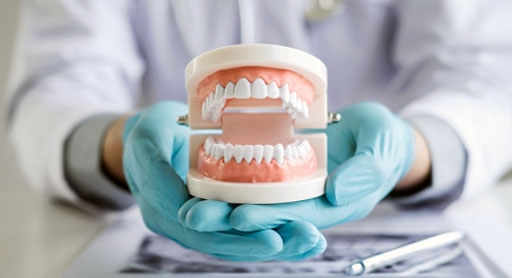
When there are no natural teeth left in the mouth, the person’s digestive function and facial proportions are fundamentally affected. The absence of teeth not only makes it impossible to chew food but also causes the lips and cheeks to sink inward, giving the face a more aged appearance. Complete dentures consist of a pink acrylic (mimicking gum tissue) base and artificial teeth arranged on this base. This system forms a retention (adhesion and cohesion) force by sitting perfectly on the tissue surface with the help of suction. This method, which does not require any surgical intervention, has been a traditional restoration type that has been applied for many years and provides tissue integrity from the outside.
At the Avrupadent clinics located in Izmir, complete denture planning is carried out in a way that fully integrates with the patient’s palate structure and facial ratios. In the treatments applied, the anatomical limits of the patient’s jawbone are copied millimetrically. This approach, aimed at reconstructing the individual’s chewing mechanism, also takes on the task of maintaining the balance of the jaw joint (temporomandibular joint) alongside meeting aesthetic expectations. By filling in the missing tissue in the mouth, it is aimed to enable the individual to continue face-to-face communication comfortably in their social life.
In Which Situations Is Complete Denture Applied?
The condition of complete toothlessness, which is the last point reached by tooth deficiencies, directly limits the individual’s nutrition and speaking ability. When there are no natural teeth available to support a fixed bridge, movable systems become a clinical necessity. The principal situations in which this type of restoration is planned can be examined as follows:
| Clinical Condition | Explanation and Functional Impact |
|---|---|
| Total Edentulism (Complete Toothlessness) | Absence of any natural tooth that will function in chewing or tearing, either in the upper or lower jaw. |
| Advanced Bone Resorption | Severe thinning and loss of volume in the jawbone associated with the long-term loss of teeth. |
| Surgical Contraindications | Cases where implants cannot be placed due to an individual’s systemic disorders (e.g., uncontrolled diabetes). |
| Loss of Lip Support | The need for filling the volume of the acrylic base formed in the lower third of the face in the condition of a collapse. |
How is a Complete Denture Made?
The process begins with an exact replication of the mucosa and bone tissue. The main element that will ensure the retention of the denture is the vacuum effect that will be created between the palate and the prosthesis. The doctor takes the first measurement without exceeding the boundaries where the muscles are attached. A special “spoon” is prepared in the laboratory based on this first measurement, and a “second precise measurement” is taken to clarify the boundaries. The precise measurement is a crucial step that determines the adaptation of the prosthesis to the tissue.
Then, wax bases are prepared on the obtained models. The doctor places these wax walls in the patient’s mouth to adjust the distance (vertical dimension) between the upper and lower jaws. At this stage, the patient’s lip support, facial profile, and smile line are recorded. Artificial teeth are set on the selected color and form on the wax template in the laboratory. After the aesthetic teeth trial is confirmed with the patient, the wax structure is converted into hard acrylic, and the prosthesis is delivered in its final form.
Who is Suitable for Full Dental Prosthesis?
In order to devise a prosthetic plan, the mucosa (palate) tissue covering the jawbone must be healthy and healed. It takes time for the tissues to completely adapt to their permanent form after extractions are performed on a new patient. Once this tissue formation is complete, procedures can be planned. Full prostheses generally come into clinical practice in cases where the bone volume has eroded significantly in both vertical and horizontal dimensions, and surgical grafting (bone powder) procedures might be too taxing for the patient.
Due to being economically more accessible compared to implant-supported systems, it is valued by a wide patient profile. On the other hand, in patients with severely reduced saliva production (xerostomia), it is particularly analyzed by the physician prior to treatment planning, as achieving a vacuum in the prosthesis on the palate may prove challenging.
How is an Evaluation Made Before Full Dentures?
In an edentulous mouth, the area where the denture will sit (ridge area) is of great importance. The physician tests whether the tissue is spongy (movable) or hard and retentive by palpating the gum tissue over the jawbone with their fingertips. If the bone is excessively thinned like a knife edge or if there are sharp bony projections (torus) in the palate, these structures can cause pain to the patient when the denture is installed. If such conditions are detected, minor surgical procedures like tissue conditioning (pre-prosthetic) should be performed to smooth the surface before proceeding to the main measurement phase.
Radiologically, panoramic X-rays are examined to check whether there are any retained tooth roots or cyst structures remaining in the bone. A fundamental rule is to leave no infected remnants under the denture. The viscosity of saliva is noted specifically during the evaluation phase as it provides the necessary cohesive force for the construction of the denture.
How is the Complete Denture Treatment Process Planned?
The clinical process is based on step-by-step construction of the hospital’s adaptation to the İzmir Avrupadent protocols. The most critical phase of planning is to regain the lost jaw height. A patient who has been edentulous for years tends to have an excessive closing inclination. The doctor determines the correct closing angle, where the facial muscles will not tire, and conveys the necessary directives to the laboratory.
While designing, the selection of artificial teeth is tailored to the patient’s age, skin tone, and gender. For men, slightly angular and larger shapes are planned, while oval and softer-edged teeth are preferred for female patients. During the process, the patient’s expectations are listened to, and each trial stage is organized to meet those expectations with biological realities.
What Stages Are Followed in the Making of Complete Dentures?
The use of the prosthesis is completed with a series of sessions requiring sensitivity. The medical steps followed in a standard total prosthesis manufacturing are as follows:
- ● First (Anatomical) Impression: The general shape of the jaw is extracted using standard spoons, and the initial data is presented to the laboratory.
- ● Second (Functional) Impression: The impression trays, specially produced for the patient, are used to record the limits of the patient’s swallowing and cheek movements with the use of viscous materials.
- ● Vertical Dimension (Occlusion) Determination: Using wax templates, the contact points of the upper and lower jaws are determined, and the lip support is adjusted.
- ● Dental (Aesthetic) Trial: The trial of the artificial teeth arranged on a wax base in the mouth, ensuring the color, arrangement, and speech control are achieved.
- ◆ Delivery and Adjustment: The insertion of the prosthesis made from hard acrylic (plastic) into the mouth and the necessary minor adjustments.
What Should Be Considered Before Full Denture?
The accuracy of the impression processes depends on the stable structure of the oral tissues. After tooth extraction, it takes an average of 4 to 8 weeks for the jawbone and gum to heal and take their final form. Prostheses produced with impressions taken before healing is complete may loosen in the palate as the tissues shrink weeks later. Therefore, tissue stability plays a critical role.
Additionally, during measurement, due to the volume of materials used, some patients may experience a gag reflex. It is a minor but important detail to arrive at the appointment partially hungry and to breathe rhythmically through the nose during the measurement to increase clinical comfort.
What to Pay Attention to After Total Denture?
The retention of a complete denture in the mouth is related to the cheek and lip muscles learning to hold it. It is very normal to feel a fullness in the lips, an increase in the amount of saliva, and slight speech distortions when first inserted. Especially trying to bite hard foods (like apples, bread, etc.) with the front teeth can cause the denture to lift at the back; therefore, foods should be cut into small pieces with a knife and chewed with the back teeth.
In the areas where the hard acrylic material fits with a soft tissue, small pressure sores (bruises) may occur in the first weeks. In this situation, the patient should not completely stop using the prosthesis; the doctor will want the patient to have the prosthesis in place to see where the pressure was applied. During the control sessions, these points will be smoothed microscopically, and the tissue will be relaxed.
How to Get Used to Full Dentures?
The longer the period without teeth lasts, the more the mouth muscles will adapt and stretch. When the prosthesis is placed, the cheeks and tongue will perceive this new structure as a foreign object and will show a tendency to push it out. This reflex will cease within an average of 2 to 4 weeks as the brain forms a new muscle memory. Especially, the lower prosthesis may shift more than the upper one due to the movements of the tongue; it is expected that the tongue will learn to hold the prosthesis in place over time.
The points of articulation for letters such as S, Ş, F, and V are areas where the tongue touches the teeth. In the early days, one may experience slurring or lisping with these sounds. Practicing speaking loudly and slowly in front of a mirror can speed up finding the correct position for the tongue. While chewing, one should avoid using only one side, as it can cause the prosthesis to lift on the other side. A balanced chewing habit involving both sides should be adopted.
How Should Full Denture Care Be Done?
Acrylic material has a micro-porous structure. Bacterial plaque and food residues can adhere to these pores. If the prosthesis is not cleaned regularly, hardened tartar-like deposits can form on it, leading to bad odors in the mouth. Standard toothpaste contains abrasive granules that can scratch the acrylic surface, making the prosthesis dull and creating an environment for bacteria to settle in these scratches. Only liquid soap and a prosthesis brush should be used for cleaning.
Using the prosthesis at night can cause the oral mucosa to be under continuous pressure, leading to the development of a fungal (candidiasis) infection. Therefore, it is necessary, from a clinical hygiene perspective, to keep it in a glass of drinking water or in effervescent prosthesis cleaning tablets that dissolve in water when removed during sleep. Placing a small towel on the sink floor during cleaning is a practical measure to prevent it from breaking if dropped.
In Which Situations Can Complete Dentures Be Preferred?
This traditional approach is highlighted as the primary option in situations where implant surgery cannot be performed or is not desired, while seeking a solution for edentulousness. The main scenarios where this option is preferred are as follows:
- Cases where the volume of the jawbone has deteriorated to a degree that does not allow the placement of an artificial root (implant), and the risks of bone grafting procedures are considered high.
- Situations where the patient’s overall health profile (issues with blood clotting, history of advanced radiotherapy, uncontrolled diabetes) would not tolerate surgical interventions.
- Due to economic factors, patients may seek a more accessible and quicker alternative instead of more complex implant-supported bridge systems.
- For patients whose bone structure is not yet suitable for implant treatments, a temporary aesthetic and functional restoration is provided during the period leading up to the implant treatments.
What Materials Are Used in Complete Dental Prosthetics?
Material selection is made considering the compatibility of the prosthesis with the tissue, its lightness, and its fracture resistance. Acrylic bases are polymerized (hardened) in a laboratory environment under heat and pressure, resulting in a rigid and durable form that fits exactly to the patient’s palate mold. It can crack due to impacts like blows since it does not flex; however, it is quite easy to repair in the laboratory.
Artificial teeth complete the aesthetic appearance. Nowadays, porcelain teeth are generally not preferred in removable complete dentures due to their excessive weight and the potential to significantly compress the underlying bone (accelerating its resorption). Instead, three or four layered nano-composite/acrylic teeth that provide aesthetic color layers, reflectiveness compatible with human enamel, and can mitigate chewing pressure are used.
At What Stage Can Complete Dentures Be Finished?
Since it is a precise and customized appliance, a trial of the next step is performed during each appointment. The first two sessions focus on taking measurements (anatomical and functional measurements). In the third session, the vertical closure and occlusal plane with wax walls from the lab are determined. During this time, lip support is analyzed together with the patient.
The fourth appointment is for the aesthetic trial with teeth. Artificial teeth arranged on a wax base are tested in the mouth, and the color of the teeth and the pronunciation of sounds in speech (especially the ‘F’ and ‘V’ sounds) are checked. After the patient and the dentist confirm the aesthetics, approval is given, and in the fifth session, the final denture, which has been converted to hard plastic (acrylic), is delivered to the patient.
Why is Control Examination Important in the Use of Complete Dentures?
Although the prosthesis fitted on the first day is produced flawlessly in a laboratory environment, as the movable oral muscles start to live with the prosthesis, pressure areas develop on the mucosa. Patients express this situation by saying, “my prosthesis is hitting.” Within the first few days after delivery, the physician finds and microscopically files these pressure points. It should not be expected to resolve on its own; clinical intervention should be provided to prevent wound enlargement.
Additionally, as years go by, the jawbone without a root enters a natural resorption process. As the bone resorbs, gaps form between the tissue and the prosthesis, causing the prosthesis to “loosen” and start moving while eating. During periodic visits, the physician ensures that the prosthesis tightly forms a vacuum according to the new palate structure by adding lining material (relining) to the inner part of the prosthesis.
What is the Difference Between Complete Dentures and Implant-Supported Prostheses?
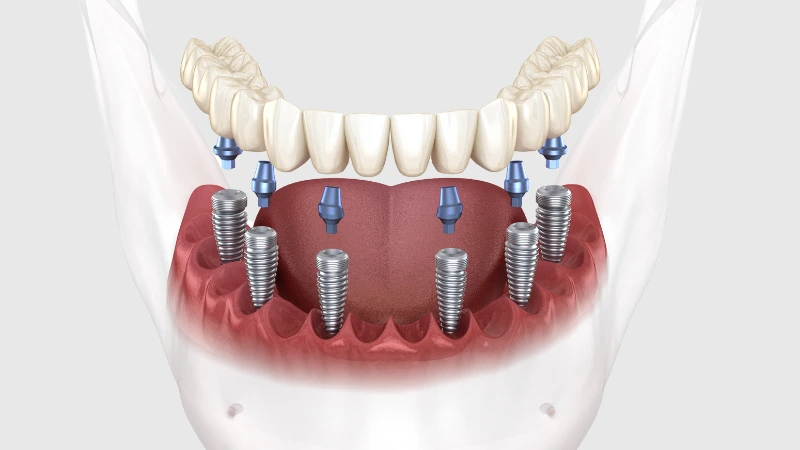
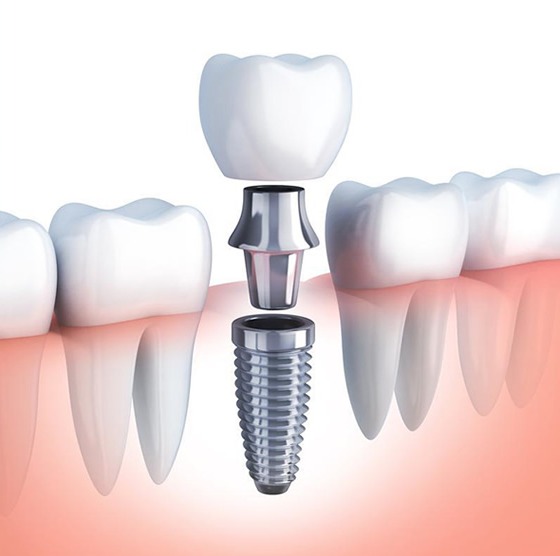
Due to the mobility of the tongue and the structure of the cheek muscles in the lower jaw, the suction retention of complete dentures (plates) may not always be at an ideal level. The denture can shift when the patient speaks or bites into a hard food. In contrast, in implant-supported systems (removable overdentures or directly screwed fixed bridges), the restoration is mechanically locked into the bone.
| Comparison Point | Complete Denture (Traditional) | Implant-Supported Denture |
|---|---|---|
| Retention Mechanism | It is supported only by tissue fitting and complete vacuum. | It receives locked support from titanium screws inside the bone. |
| Chewing Force | It is much lighter compared to natural teeth; it crushes the mucosa. | It can be made very close to natural teeth with high pressure molding. |
| Bone Resorption | Since there is no root to stimulate the bone from the inside, the jaw continues to dissolve over time. | The implant stops/slows down the dissolution by transmitting force from the inside to the jawbone. |
| Volume and Use | It can slightly reduce the sense of taste by completely covering the upper palate. | With a design that leaves the palate open (if fixed), it provides a natural sensation. |
What Factors Affect the Usage Process of Complete Dentures?
The ability of the prosthesis to be retained in the long term is determined by the biological changes of the patient and the anatomical constraints of the mouth. The factors shaping the process can be listed as follows:
| Affecting Factor | Clinical Reflection on the Process |
|---|---|
| Bone Resorption Rate | Over the years, the leveling of the alveolar ridge (bone) reduces the retention of the prosthesis by eliminating the retentive undercuts. |
| Dentures Quantity and Consistency | Sufficient and fluid denture creates a vacuum effect (adhesion) between the prosthesis and the palate; in dry mouth, the prosthesis tends to displace. |
| Weight Fluctuations | Rapid or excessive weight loss in an individual can loosen the fit of the prosthesis to the palate, as it will also thin the oral mucosa tissue. |
| Language Mobility and Muscle Activity | In those who have been edentulous for a long time, the tongue enlarges; when a prosthesis is placed, it can restrict the tongue and hyperactive tongue muscles can displace the lower prosthesis. |
How are Oral and Dental Functions Evaluated with Complete Dentures?
To achieve an aesthetic and functional prosthesis, all dynamics must be harmonious with each other. Very long planned teeth may cause the patient’s mouth to remain open continuously or lead to fatigue of the jaw muscles while closing. Conversely, teeth designed too short may lead to excessive closing of the jaw, causing creases at the corners of the lips and accumulation of moisture (cheilitis). The physician positions this vertical dimension according to the physiological rest space during the wax trial phase.
When evaluating phonetically (in terms of speech), the position of the teeth directly affects the pronunciation of the letters. If the front teeth are positioned too far back or too forward, letters like s, f, v, t cannot be pronounced correctly. During trial sessions, tests are conducted where the patient speaks loudly, and the dental arches are redesigned according to these phonetic constraints.
What Treatments Can Complete Dentures Be Planned With?
The oral tissue may not always be in a pristine and suitable form to support a prosthesis. If there are hard, sharp bony tuberosities on the surface of the jawbone (referred to as torus palatinus or mandibularis), the prosthesis will exert pressure on these points, crushing the tissue and causing sores. Before measuring procedures are carried out, these protrusions are smoothed out by oral surgeons, expanding the bed area and making it suitable.
In addition, for patients concerned about denture retention issues, even if a complete implant bridge system cannot be constructed, a transition can be made to an “overdenture” (implant-supported) system with two strategically placed mini-implants. This way, the prosthesis remains in a form that can be removed by the patient, while the locking system prevents it from dislodging during speaking or eating, thus supporting the treatment.