What is All-on-4 and All-on-6 Implant Treatment?
When tooth loss occurs in human anatomy, the jawbone in that area becomes functionally inactive, leading to a gradual reduction in volume (resorption) over time. Particularly, the sinus cavities located in the posterior regions and the inferior alveolar nerve canals approach the surface significantly with bone loss. Standard implant practices require prolonged bone formation operations to intervene in these areas. The All-on-4 and All-on-6 concepts provide an advanced biomechanical design that bypasses these anatomical constraints by utilizing specialized angles of 30 to 45 degrees in limited areas of the posterior regions while placing posts vertically in the dense bone areas of the anterior region.
At the Avrupadent clinics located in Izmir, the All-on-4 and All-on-6 procedures are evaluated within a broad functional framework that extends from the patient’s jaw profile to the chewing muscles. Thanks to this treatment approach, problems with retention created by removable (able to be taken out) denture prostheses are left behind, and patients are offered fixed restorations that provide the sensation of their own natural teeth. In the same day, both the completion of surgical procedures and the placement of temporary fixed prostheses (rapid loading) allow patients to continue their chewing, speaking, and aesthetic functions without being disconnected from their social life.
In Which Situations Are All-on-4 and All-on-6 Implant Treatments Evaluated?
When there is no structural support in the oral flora, chewing stress cannot be evenly distributed and deformations in the jaw joints begin. Doctors outline the medical pathway by analyzing the current clinical picture of the hospital. The fundamental anatomical conditions that prepare the ground for the application of these concepts in the clinic are as follows:
| Clinical Status | Explanation and Repair Reason |
|---|---|
| Total Toothlessness (Edentulism) | When there are no teeth left in the jaw and cases where the patient has physiological or psychological difficulties using a removable prosthesis. |
| Advanced Periodontal Destruction | Cases requiring the mandatory extraction of loose and inflamed teeth, despite having teeth in the mouth, due to loss of bone support. |
| Posterior Regional Bone Insufficiency | In cases where surgical protrusion in the upper jaw and the proximity of the nerve canal to the surface in the lower jaw prevent the addition of bone graft. |
| Nausea Reflex Elevation | Patients who experience severe swallowing and nausea reflex, making the use of movable dentures that cover the palate impossible. |
How is All-on-4 and All-on-6 Implant Treatment Planned?
The foundation of a successful operation relies on thoroughly obtained radiographic data. The doctor evaluates the patient’s bone density through tomographic sections. It will be clarified based on these bone evaluations which strategy to choose, either 4 implants (All-on-4) or 6 implants (All-on-6). In areas where bone density is high and the area is wide, 6 structures may be preferred, while in cases where the bone quantity is limited, 4 implants placed in an open manner will organize the load distribution.
During the planning phase, not only surgical actions are considered, but also the patient’s facial and smile aesthetics are put on the table. Restorative dentists calculate how much support the lips will provide for the length of the teeth and their compatibility during speech (phonetics). All gathered data is communicated to the laboratory team so that special temporary restorations, which will be screwed directly into the jaw after the operation, can be prepared in advance. This integrated planning ensures that the medical procedure progresses on a predictable route without surprises.
Who Might Be Suitable for All-on-4 and All-on-6 Implant Treatment?
Age is not a limiting factor in the rehabilitation of missing teeth; the primary determinants are the patient’s systemic recovery capacity and the current state of the jawbone. In elderly patients, these protocols can be comfortably applied as long as the medical values permit. In fact, these fixed systems become a medical necessity that directly enhances the quality of life for patients who complain about the discomfort of traditional denture prosthetics and have decreased dietary comfort.
For individuals with diabetes (sugar), hypertension, or cardiovascular disorders, the goal is to stabilize blood values by consulting with the attending physician. The dosages of medications that affect bone metabolism (such as bisphosphonates) or anticoagulants are adjusted under medical supervision, ensuring the biological limits of the operation are secured.
How is an Evaluation Conducted Before All-on-4 and All-on-6 Implant Treatment?
The success of the surgery depends on the clear diagnosis of the field before the operation. The doctor examines the irregularities, sharp edges, or diseased mucosal tissues on the jaw crest during the examination done with the fingertip (palpation). If there are any infected teeth in the patient’s mouth that cannot be saved completely, the level of infection spreading to the jawbone from the roots of these teeth is checked. If there are cystic areas that need to be cleaned in the bone, this situation directly affects the duration and shape of the operation planning.
Additionally, the movement of the patient’s temporomandibular joint (TMJ) is monitored. In patients who have been edentulous for a long time, the lower jaw typically experiences a positional shift more forward or upward. Restorative specialists take various physical measurements to calculate the ideal vertical dimension of the jaw (the height of closure). All these objective findings are fundamental reference points that determine the distance at which the new prosthesis will connect the upper and lower jaws.
What Diagnosis and Imaging Methods are Used in All-on-4 and All-on-6 Implant Treatments?
High-level radiological systems come into play in the clinic to clarify hidden limits in jaw anatomy and to create millimeter placements. The fundamental tools used in the diagnostic and planning phase are as follows:
- ● Dental Volumetric Tomography (CBCT): The main diagnostic device that reflects the bone thickness, density, sagging levels of the upper jaw sinus cavities, and the position of the lower jaw nerve line in three-dimensional millimeter slices.
- ● Panoramic Radiography: Two-dimensional films that form the first step of the treatment map by showing the general structure of the jaws and edentulous areas, and joint compatibility through a single wide view.
- ● Intraoral Optical Scanners: High-resolution scanners that provide the necessary data for the laboratory team to produce temporary prostheses by extracting a digital copy of the gum contours and the existing bone arch (3D measurements).
How Does the All-on-4 and All-on-6 Implant Treatment Process Progress?
The most prominent clinical advantage of these concepts is the principle of “immediate loading”. If the bone density is sufficient according to the physician’s measurements on the day of the operation, the previously prepared temporary acrylic restorations are screwed onto the artificial roots placed directly into the jaw. Thus, the patient does not leave the clinic without teeth, and the aesthetic integrity and light chewing function are regained on the same day.
The subsequent 3-month process (averaging 3 months for the lower jaw and sometimes 4-6 months for the upper jaw) is the phase where the titanium surfaces of the jawbone biologically integrate and the structures merge. During this time, the patient continues their life using temporary teeth but avoids consuming hard foods. Once the osseointegration is fully completed, more robust porcelain or zirconia-based permanent bridges, enriched with aesthetic details, are prepared in the laboratory and are integrated as permanent replacements for the temporaries.
What Steps are Followed in All-on-4 and All-on-6 Implant Treatments?
Operational steps carried out with clinic equipment are structured with a disciplined medical flow that centers on the comfort of the hospital. The basic roadmap followed on the implementation day is as follows:
-
\t
- • Anesthesia and Extraction: Numbing the treatment area with local or general anesthesia agents; then, if present, extracting problematic teeth in a non-traumatic manner.
- • Bone Restructuring: Scraping infections from extraction areas and smoothing the bone crest (sharp points) with special drills so that the prosthesis can seat properly.
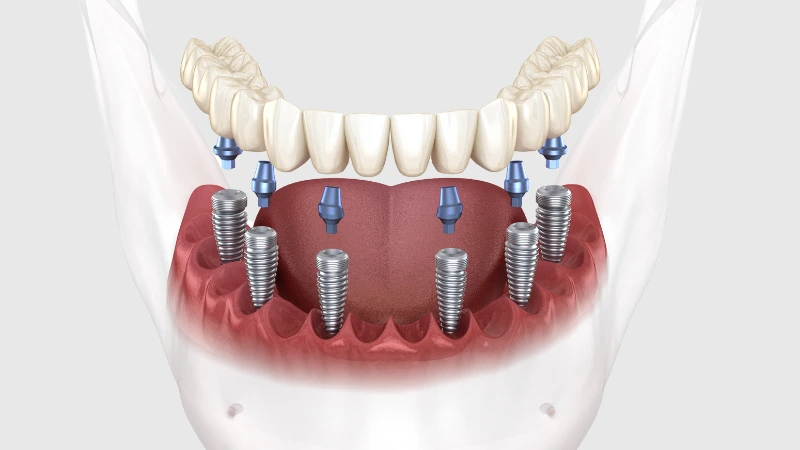
- • Root Placement: Placement of artificial roots at points determined by tomography guidance, perpendicularly to the front area while ensuring that the back areas are positioned at an angle (30-45 degrees) away from sinuses or nerves.
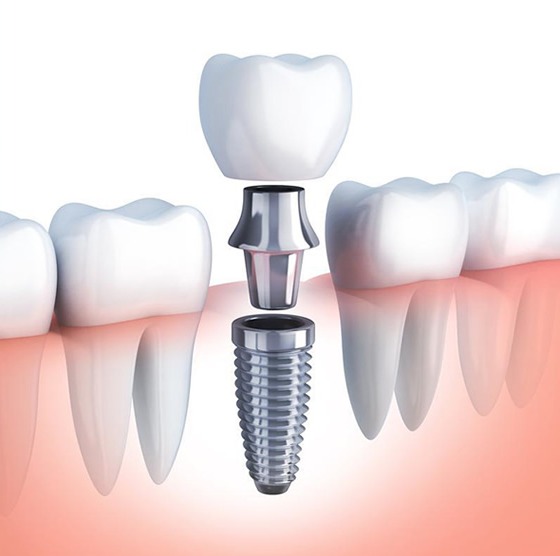
- • Multi-Unit Connections: Screwing special “multi-unit abutment” pieces to correct the directions of the positioned roots and to enable the prosthesis to be attached in a parallel manner.
- ▪ Attachment of Temporary Restoration: A few hours after the procedure, the custom temporary acrylic prosthesis is secured to the supporting structures with screws.
\t
\t
\t
What to Consider Before All-on-4 and All-on-6 Implant Treatment?
Keeping the microbial load in the surgical field at a minimum level supports tissue healing directly after the operation. If the patient has existing teeth in their mouth, it is expected that these teeth are carefully brushed to remove any food residues. For patients to whom local anesthesia will be applied, it is recommended to have a light and healthy breakfast on the morning of the operation to prevent fluctuations in blood sugar levels.
If the procedure is to be performed under sedation or general anesthesia while asleep, it is essential that no liquids or solid food are consumed for 6 to 8 hours prior to the procedure as required by medical protocols. The use of tobacco products, as they impair oxygenation of cells, should be limited at least one week prior to surgery to significantly enhance cellular repair and the comfort of the procedure.
What to Consider After All-on-4 and All-on-6 Implant Treatment?
After this comprehensive intervention on the jawbone, it is normal to observe mild to moderate swelling (edema) and small bruises in the cheek or lip area as a biological response of the tissues. Applying ice intermittently from the outside during the first 24-48 hours following the operation can help reduce this swelling. To prevent an increase in drainage from the wound areas, actions that create a vacuum effect, such as sucking, using straws, or forcefully rinsing the mouth, should be avoided.
The nutritional regimen is the most crucial step affecting the permanence of the treatment. While the temporary prostheses provide visual integrity, they are not as robust as actual permanent teeth. Applying excessive chewing force on temporary prostheses (such as cracking hazelnuts, tearing meat, etc.) can lead to both the breakage of the prosthesis and prevent the osseointegration of the artificial root in the underlying bone. A diet that includes foods like soup, puree, yogurt, and soft cooked vegetables, which do not strain the teeth, is essential during the healing period.
What is the Difference Between All-on-4 and All-on-6 Implant Treatment?
Both treatments have similar biomechanical principles that ensure the repair of edentulous jaws with fixed restorations. However, physicians adjust the strategy of the case based on bone quality. The distinctive features of these two methods in the clinic are as follows:
| Comparison Criteria | All-on-4 Concept | All-on-6 Concept |
|---|---|---|
| Number of Implants | A total of 4 titanium supports (2 front, 2 back) are found in one arch. | A total of 6 titanium supports (2 front, 4 back) are found in one arch. |
| Bone Volume Requirement | Applied in cases with severe bone loss in the back regions and high narrowing. | Applied in cases with sufficient bone width/length to accommodate additional implants in the rear sections. |
| Force Distribution | Chewing pressure is transmitted through 4 supports, making it quite sturdy. | Since there are more support points (legs), the chewing load on the bridge is distributed over a larger area. |
How is the Jawbone Evaluated in All-on-4 and All-on-6 Implant Treatment?
The foundation of these systems is to achieve a solid resistance by utilizing the areas where the bone is densest. The anterior jaw region is generally where the bone quality is high and erosion has occurred less. The physician creates a virtual model of the jaw using tomography software and virtually places the titanium roots to be used over this model.
Especially in the posterior regions, the nerve canal running beneath the lower jaw and the air (sinus) cavities in the upper jaw are critical anatomical barriers. If the bone is very close to these cavities, the physician angulates the roots by up to 30 or 45 degrees (increasing the angle) and anchors long titanium structures into the bone without hitting these barriers. This fine engineering calculation eliminates the necessity of adding bone powder (graft) even when the bone appears insufficient.
How Are Temporary and Permanent Prosthesis Processes Planned in All-on-4 and All-on-6 Implant Treatment?
Temporary prostheses made from measurements taken from the patient before the surgical procedure are fixed with screws within a few hours after the operation. These temporary teeth are intentionally made from softer acrylic; the aim is to avoid placing excessive chewing force on the roots embedded in the jawbone, allowing the bone to heal without disturbance. At the same time, these prostheses serve as a trial process for the patient to get accustomed to new tooth dimensions and the height of the bite (occlusion).
Once tissue repair is completed, the process transitions to the permanent prosthesis phase. The doctor evaluates the patient’s experience with the temporary prostheses, clarifying the colors, sizes, and shapes of the permanent restorations. Detailed measurements to be taken are sent to the laboratory, where restorations made of zirconium or metal-supported porcelain, which have significantly higher chewing stability and natural enamel-like aesthetic light reflections, are prepared and the process is completed by replacing the temporaries.
How Long Can All-on-4 and All-on-6 Implant Treatments Last?
Everything proceeds as planned on the day of the operation. If there are teeth that need to be extracted in the patient’s mouth, these teeth are removed, the bone is shaped, and titanium structures are placed in the designated openings. This surgical procedure generally takes about 1.5 to 2 hours for only one jaw (for example, just the lower jaw). Temporary prosthetics are placed a few hours after the operation finishing. In other words, the patient can enter the clinic in the morning and leave with new fixed teeth in the afternoon.
The main process is the internal (cellular) healing that is not noticeable from the outside. The jawbone tightly locks around the artificial root by producing new cells (osteointegration), which takes an average of 3 months in the lower jaw and 3 to 4 months in the upper jaw. If bone powder (graft) is used during the procedure, this period can extend up to 6 months. Once cellular locking is completed, measurements are taken and the production of permanent teeth is delivered at a laboratory pace of 2 weeks.
How is All-on-4 and All-on-6 Implant Treatment Evaluated in Complete Tooth Loss?
The jawbone of a patient who has no teeth left in their mouth continues to erode day by day. Traditional removable dentures cannot slow this erosion because they only cling to the gums; on the contrary, they can increase bone loss by putting pressure on the underlying tissue. Additionally, when the palate is closed, the patient experiences significant losses in perceiving the temperature or flavor of the food they eat.
Screw-retained (fixed) bridges installed with the All-on-4 or All-on-6 concept leave the palate open. Since the prosthesis is directly connected to the titanium roots in the jawbone, it does not shift; the patient can comfortably bite into foods such as apples and meat. The chewing force transmitted to the bone stimulates the bone cells, slowing the erosion process in the jaw. Thus, completely edentulous patients can return to the feeling of stable chewing they experienced in their youth from a medical standpoint.
How Should Oral and Dental Care Be Done After All-on-4 and All-on-6 Implant Treatment?
This system is designed to be screwed in such a way that the patient cannot remove it, and maintenance is performed inside the mouth just like natural teeth. There is a millimetric, washable space between the prosthetic body and the patient’s own gums. The accumulation of food residues in this intermediate area can lead to bone loss and infections known as “peri-implantitis” around the titanium roots over time. To prevent this condition, the use of oral irrigators that spray water under pressure is clinically recommended.
During restoration, avoid hard and abrasive (granular) tooth pastes; gels or low-particle pastes that do not scratch the prosthetic coating should be preferred. Additionally, the areas around the titanium parts corresponding to the supports of the bridge should be cleaned daily with specially hardened thick dental threads. Neglecting maintenance is the most significant risk factor that shortens the lifespan of the restoration.
Why Are Control Examinations Important in All-on-4 and All-on-6 Implant Treatment?
The applied system has a mechanical architecture and is subjected to millions of chewing cycles (impacts) over the years. Over time, microscopic loosenings may occur in those tiny screws that anchor the prosthesis to the jawbone. If the patient continues to chew in that area without noticing this looseness, excessive stress can build up on the artificial root inside and cause damage. During six-month or yearly clinical visits, doctors check and balance the tightness of these screws with special torque tools.
One other crucial aspect of control appointments is hygiene monitoring. Regardless of how well a patient takes care of their home care, tartar can accumulate in areas that cannot be reached. During periodic check-ups, doctors remove the bridge (fixed prosthesis) by unscrewing it from the screws in the mouth. The mucosa and titanium tips under the prosthesis are carefully cleaned and rinsed. The prosthesis is sterilized and screwed back in place, thus preventing surrounding infections.
Can All-on-4 and All-on-6 Implant Treatments Be Planned Together with Other Dental Treatments?
The medical philosophy of this treatment is based on “comprehensive restoration in a single surgical session.” When a patient comes to the clinic with 5 infected teeth that are loose in their lower jaw, the doctor does not opt to extract the teeth and wait for months. On the day of surgery, the infected teeth are carefully removed from their sockets. The infections (granulation tissues) in those sockets are meticulously scraped out and cleaned.
Afterward, while under the same anesthesia, the jawbone is shaped to fit perfectly onto the prosthetic base (alveoloplasty). If the bone density (quality) at the extraction points is suitable, new titanium roots are placed directly into those gaps or into adjacent healthy bone areas. Coordinating all these different branch procedures in a single session protects the patient from the fatigue of repeated operations.
How is Personalized Treatment Planning Done in All-on-4 and All-on-6 Implant Treatments?
Each individual’s bone resorption profile is completely different. While in one patient the upper jawbone may only have narrowed horizontally, in another patient there could be severe vertical (lengthwise) loss. In the practices of İzmir Avrupadent, the physician transfers these three-dimensional losses to computer programs. If the jawbone has severely resorbed, the upper part of the restoration is planned to be made in the patient’s own gum color (pink) acrylic or porcelain form, providing a full support (camouflage) for the lips.
The other side of the arch is muscle dynamics. The force applied by a large, male patient with biting strength (compressive stress) differs from that of a petite patient. If the patient’s jaw muscles are very strong or there is a history of teeth grinding (bruxism), the doctor balances the load distribution by opting for 6 titanium implants instead of 4 (All-on-6). The ceramics used are also designed according to this individual mechanical profile, selected from monoblock (single piece) and high-strength zirconiums.