
Does Fruit Juice Cause Tooth Decay in Children?
Consumption of fruit juice in children definitely causes tooth decay because of the high levels of free sugars (fructose) and natural fruit acids it contains, which rapidly lowers the pH level in the mouth, promoting the production of lactic acid by bacterial plaque. Frequent and prolonged consumption of liquid sugars prepares the ground for severe decay by dissolving the enamel layer.
There is a widespread perception among our society and parents that the terms “natural” and “healthy” generally hold synonymous meanings. Many families are aware of the harmful effects of sugary and carbonated beverages, keeping their children away from them, while they may freely offer fresh-squeezed or 100% natural labeled fruit juices as a source of vitamins. However, the science of biochemistry and dentistry proves that liquid forms of sugar, even if derived from organic fruit, have a destructive effect on the tooth enamel that is no different from that of a package of sugar. One of the most commonly encountered issues in the daily practice of clinics focused on children’s oral and dental health in Izmir is the sudden and aggressive erosion caused by this “liquid sugar” (fruit juice) consumption, which is done with the intent of healthy feeding, on milk teeth. To understand how fruit juice affects teeth, it is necessary to examine the fluidity of liquids in the mouth, the cellular form of sugar, and acidity levels from a comprehensive medical perspective.
Why Do Natural and Freshly Squeezed Fruit Juices Cause Tooth Decay?
Freshly squeezed fruit juices cause the entire structure of the fruit to break down, resulting in the fiber completely disintegrating and the natural fructose within the cells turning into a form of “free sugar” that can immediately attack teeth. This sugary liquid, lacking fiber, is quickly fermented by bacteria before it even reaches the teeth and turns into acid.
Eating an orange or an apple whole versus drinking its juice are two completely different actions for the digestive system and oral flora. When the fruit is intact, the fructose (fruit sugar) is trapped within cell walls and dense fibers. During the chewing process, a large amount of saliva is produced in the mouth, and the fibers prevent the sugar from adhering to the teeth. However, when the fruit’s juice is extracted (mechanically broken down), those protective fibers are thrown away as pulp. What remains is merely concentrated liquid, acid, and released fructose. To obtain a glass of orange juice, typically three or four oranges are juiced; this means that the sugar from four oranges goes directly into the child’s mouth in a liquid form, devoid of fiber. The bacteria that cause cavities in the mouth (Streptococcus mutans) absorb this sugary liquid within seconds and initiate a toxic lactic acid storm that erodes the enamel layer.
What Is the Difference Between Acid in Fruit Juice (Erosion) and Tooth Decay?
The erosion of acid occurs when the natural acids in fruit juice (citric acid, malic acid) come into direct contact with the tooth surface and thin the enamel; the process of sugar within the fruit juice being digested by bacteria and converted into lactic acid is referred to as tooth decay, where the tooth is hollowed from the inside out. Fruit juice triggers both types of destruction simultaneously.
The most dangerous aspect of fruit juice for milk teeth is that it has a “dual attack” mechanism. The first attack is chemical. Especially orange, tangerine, grapefruit, and apple juices have a very low pH value (high acidity). The moment these liquids enter the mouth, they come into contact with the tooth enamel, and the calcium crystals on the surface of the enamel begin to dissolve immediately. At this stage, bacteria have no role; it is a purely chemical dissolution (erosion). The second attack is biological. Bacteria adhere much more strongly to the enamel surface, which has been eroded and become spongy and porous. These bacteria use the fructose in the fruit juice as food and produce lactic acid. While acid erosion thins the tooth from the outside, bacterial activity drills into the tooth from the inside. This dual combination can lead to the breaking and crumbling of the tooth within just a few months, as the structure of milk teeth is already very thin and weak.
| Beverage Type | Average pH Value | Biochemical Effect on Tooth Enamel |
|---|---|---|
| Clean Drinking Water | 7.0 (Neutral) | Reduces acidity, balances the environment, does not harm enamel. |
| Pure Cow’s Milk / Formula Milk | 6.8 – 7.0 | Protective, but if it spoils overnight, it can curdle due to lactose. |
| Freshly Squeezed Orange Juice | 3.3 – 3.8 (Acidic) | Causes immediate chemical erosion and softens the enamel. |
| Packaged Fruit Juices | 2.8 – 3.4 (Very Acidic) | Creates severe calcium leaching (demineralization). |
Why is Fruit Juice Consumed with a Bottle or Sippy Cup More Dangerous?
Fruit juice consumed from a bottle or sippy cup can cause the liquid to pool around the upper front teeth for hours instead of directly reaching the back of the throat (esophagus). Because children sip these liquids over time, it exposes their teeth to a continuous acid bath, making it much more dangerous.
In the etiology of decay (causes of dental caries), both “what was drunk” and “how and for how long it was consumed” are very important. In medical terminology, there is a pH chart known as the “Stephan Curve.” If a child drinks a glass of juice from a regular glass and finishes it in a few minutes, the intraoral pH will drop, but the salivary glands can neutralize this acid within about 30-40 minutes, restoring the mouth to a safe neutral state. However, if the same juice is given in a bottle or a sippy cup, the child will sip it every ten minutes while playing in the park or watching cartoons (a grazing habit). This situation never allows the saliva to rinse the mouth. The teeth remain below a pH of 5.5 (the demineralization threshold) from morning until evening. Especially, designs of pacifier bottles direct the liquid towards the neck area of the upper teeth, causing these teeth to crumble like chalk.
Why Do Ready-to-Drink (Packaged) Fruit Juices Pose an Extra Risk for Milk Teeth?
Ready-to-drink (packaged) fruit juices contain preservatives like citric acid and ascorbic acid added to extend shelf life, and high fructose corn syrup (HFCS) as a concentrated added sugar to enhance flavor, making them much more aggressive, erosive, and cavity-causing than freshly squeezed juices.
Ready-to-drink beverages marketed as “natural fruit” or “vitamin-enriched” are actually products that are quite far from natural fruit due to their production processes. In freshly squeezed fruit juice, only the fruit’s own sugars and acids are present, whereas packaged products have additional acids and synthetic sugars added to balance their taste and prevent spoilage. Particularly, high fructose corn syrup (HFCS) is a type of carbohydrate that is favored and rapidly fermented by the Streptococcus mutans bacteria in the mouth. These bacteria absorb the artificial sugars in packaged fruit juices within seconds, leading to an incredible spike in lactic acid production. Moreover, the pH value of these beverages is generally around 3.0; thus, they act as a complete acid battery for tooth enamel. The boxed fruit juices that parents think are healthy for their children to consume as snacks are, from a dental perspective, one of the biggest triggers for childhood cavities.
- Additional Synthetic Sugars: The glucose/fructose syrups in boxed beverages maximize bacterial acid production.
- Preservative Acids: The added citric acids for shelf life immediately soften enamel, initiating erosion.
- Synthetic Flavors: They disrupt the natural stimulation of salivary glands, weakening the mouth’s self-cleaning reflex.
What Is the Difference Between Eating Fresh Fruit and Drinking Fruit Juice from a Cavity Perspective?
The difference between eating fresh fruit and drinking fruit juice; when fruit is fully chewed, the rich fibrous structure of the fruit triggers a chewing reflex, ensuring the release of abundant saliva, and prevents sugar from directly adhering to the tooth structure (by mechanically squeezing) since there is no fiber in fruit juice, allowing free sugar to rapidly create decay by bonding directly to the tooth enamel.
Eating an apple by biting into it is almost like a natural brushing session in terms of dental health. The skin of the apple and the hard pulp inside scrape the surface of the tooth during chewing and dislodge the accumulated soft bacterial plaque (biofilm) there. Additionally, the prolonged chewing action stimulates the salivary glands (parotid glands). Saliva is rich in bicarbonate that buffers acids and nourishes the enamel with the calcium and phosphate ions it contains. The fructose in the fruit is safely carried to the throat area as it is trapped in the fiber matrix and does not stay in the tooth for long. However, when you extract the juice from the same apple, the chewing action is eliminated, saliva secretion decreases, and the released liquid sugar adheres to the tooth like glue. In healthy nutrition diets for children, it is a medical recommendation to always present whole fruits that can be cooled and chewed rather than liquid.
Does Using a Straw Reduce the Erosive Effect of Fruit Juice?
Using a straw directs the liquid to the back of the mouth and throat without touching the front and sides of the mouth (on the teeth), which significantly reduces the duration of physical contact between the fruit juice and the teeth, making it a supportive method that seriously reduces the erosive effects of acids and sugar (especially on the front teeth).
For a liquid to wear down the enamel of teeth, it needs to remain on the surface for a while (saturation). Liquids consumed from a regular cup spread throughout the mouth by completely coating the lips and upper front teeth. Infants and small children tend to hold these liquids in their mouths for a while before swallowing (mouthing). Using a straw is a smart mechanism that completely bypasses this anatomical saturation. If the straw is placed against the back of the teeth (toward the tongue) and suction is applied, acidic and sugary fruit juice is sent directly to the digestive system without touching the protective enamel layer of the teeth. If fruit juice cannot be completely banned, it should definitely be consumed with a straw, and the cup should be immediately taken away from the child after they finish drinking; this is one of the simplest but most effective tactics that can be applied at home to maintain dental health.
How Should Parents in İzmir Limit Fruit Juice Consumption?
Parents in İzmir should limit fruit juice consumption by avoiding using these liquids as either a thirst quencher or a distraction tool (pacifier), and by keeping consumption to a limited amount alongside main meals (not exceeding half a cup per day) and ensuring that water is consumed immediately after fruit juice.
Childhood is the period where habits are formed as permanent behaviors. If a child is given a box of juice every time they are thirsty or when they cry, the child’s brain learns to satisfy the feeling of thirst not with water, but with a sweet carbohydrate. The fundamental rule explained to families in modern pediatric education processes implemented in the Izmir location is that the primary and sole option for liquid consumption should always be “clean drinking water.” If juice is to be given to the child, the timing of this is very important. During main meals (breakfast or dinner), the child’s overall flow rate is already at its peak, and the other foods they eat buffer (balance) the acidity of the juice. Therefore, juice should only be given in moderation with main meals; it should definitely not be preferred during snacks (in the park, in front of the television).
How Does Drinking Water Neutralize the Harmful Effects of Fruit Juice?
Drinking water mechanically washes away the acidic particles and free sugars remaining in the mouth after consuming juice, quickly raising the pH level, which has dropped due to acidity, to neutral (pH 7.0). This halts the cellular dissolution in the enamel surface within seconds and neutralizes harmful effects.
The oral flora is built on a wonderful balance. When a glass of acidic or sugary liquid is consumed, this balance immediately shifts towards acidity, initiating the demineralization process. To allow the teeth to neutralize this acid on their own, at least 30 minutes must pass without any additional sugar in the environment. However, offering the child a few sips of plain water right after the juice can reduce this time to just a few minutes. Water breaks the bonds of sugar molecules that are trying to form on the surface of the tooth enamel and, through fluid dynamics, sends them to the stomach, where they will be digested properly. In daily situations where it is impossible for the child to run and brush their teeth (at daycare, school, or while visiting), establishing the ritual of “mandatory water consumption after every sweet or acidic food” is the most practical and powerful protective tool in the hands of parents against decay.
Should Teeth Be Brushed Immediately After Consuming Fruit Juice?
Teeth should definitely not be brushed immediately after consuming fruit juice; because the natural acids in the drink temporarily soften the tooth enamel within seconds, and mechanical brushing performed immediately in this acidic environment (due to bristle stiffness) can lead to permanent abrasions and physical loss of material (erosions) in the softened enamel layer, making it hazardous.
One of the commonly misunderstood truths in dentistry and dental medicine is that after consuming something sweet or acidic, the teeth should be brushed within seconds. Especially when citrus juices like orange or lemon are consumed, the microscopic calcium crystals on the teeth chemically become loose and sponge-like. At that very moment, the tooth enamel is at its most vulnerable (fragile) stage. If a toothbrush is used on a tooth during this time, the weakened top layer that the acid has impacted is completely removed by the mechanical force of the toothbrush. This is referred to in medical jargon as a “combination of abrasion and erosion.” The correct medical protocol is to rinse the mouth only with clean water after consuming fruit juice or acidic food and to wait at least 30 to 45 minutes for the minerals in saliva to re-harden (remineralize) the tooth. Brushing can only be safely done after this duration.
How are Fruit Juice-Related Cavities Clinically Recognized?
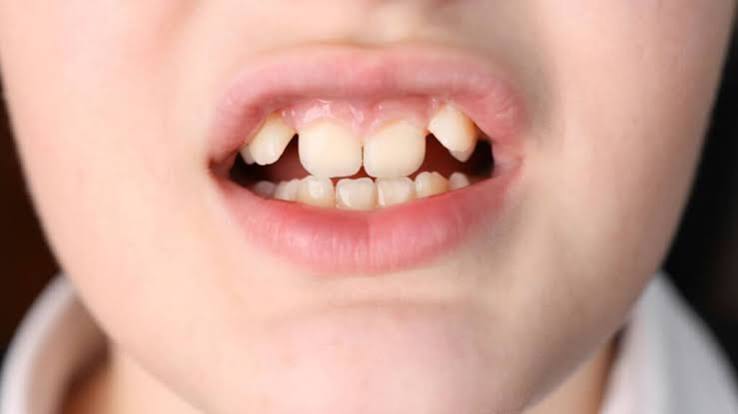
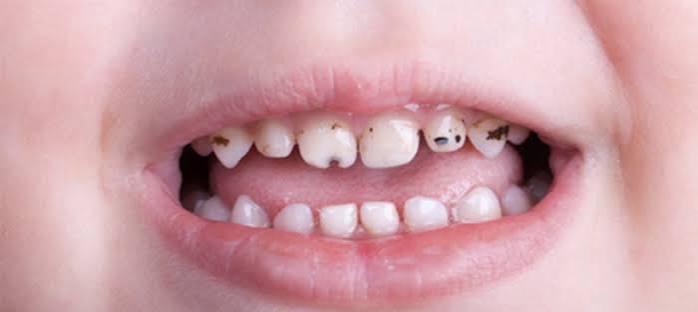
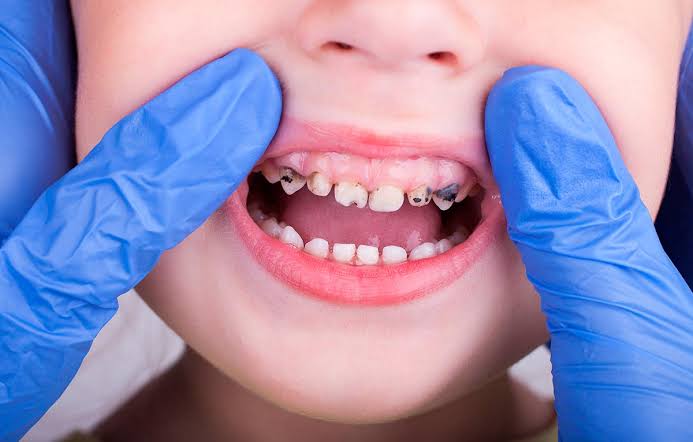
Fruit juice-related cavities are characterized by the appearance of dull, chalky white spots that do not respond to brushing in the area where the upper anterior teeth meet the gums, which gradually turn yellow/brown over time, creating horizontal (lateral) fracture lines or chipping in the tooth enamel. These symptoms are quite characteristic (specific to early childhood cavities).
Since the fruit juice is in liquid form, it starts from the broader areas where the liquid first contacts and pools rather than from the points where the teeth touch. When parents slightly lift the lips, they may see white spots that progress parallel to the gum line and appear like scratches or chalky stains on the enamel. As the dentin tissue (the underlying layer that provides the actual sensation of the tooth) begins to gradually expose in areas where these lesions are found, the child may grimace when they take a sip of new fruit juice or bite into a cold fruit (sensitivity). In later stages, the gums can become inflamed and bleed due to acid irritation; when parents try to brush this area, bleeding occurs immediately. All these visual and behavioral symptoms are clear clinical indicators that liquid sugar erosion is actively damaging the tooth.
| Observation Site | Physical / Behavioral Symptoms | Medical Condition / Erosion Stage |
|---|---|---|
| Upper Front Teeth Gum Margin | Opalescent (like porcelain) horizontal matte white lines. | Initial stage (Demineralization – enamel weakening). |
| Tooth Surface | Yellow/brown cavities, breaking off and crumbling of the tooth tip. | Advanced erosion (Cavitation – structural tissue collapse). |
| Eating and Drinking | Grimacing at cold or sweet items, refusing to drink. | Stimulation of nerve endings (Dentin sensitivity). |
What Skeletal Risks Does Consuming Fruit Juice at Night Pose?
Consuming fruit juice from a bottle at night can lead to deep abscesses and infections that erode the teeth down to the root level, causing these abscesses to disrupt the calcification of the permanent tooth follicle (the seed) located just below the jawbone in an acidic environment, which results in skeletal risks that cause the permanent teeth to emerge with yellow-brown congenital stains (Turner tooth).
Primary teeth serve as a biological guide for the permanent teeth beneath them. If a parent puts their child to sleep with a bottle filled with fruit juice at night, the severe and rapid decay that occurs in the teeth does not remain only on the visible enamel. The bacteria causing the decay enter the nerve (pulp) chamber at the center of the tooth and, progressing towards the root tip, create a pus pocket (abscess) inside the jawbone. If the enamel of the permanent tooth located just under that area is exposed to this acidic environment while being synthesized, the cells that produce enamel die. Years later, when that permanent tooth erupts, it will have areas with missing enamel or permanent discolorations. Additionally, if these extreme decays result in the premature extraction of the upper front teeth, it leads to narrowing in the upper jaw arch (anterior region) due to tissue loss and causes speech (articulation) disorders. A small dietary error can turn into a long-term orthodontic issue affecting the entire skeletal proportion.
How Are Liquid Sugar-Related Decays Evaluated at Avrupadent Clinics?
At Avrupadent clinics, liquid sugar-related decays are professionally addressed by visually diagnosing the microscopic opacities in the tooth with special light systems, analyzing the habits that cause the decay (bottle, fruit juice) through a detailed nutritional questionnaire given to the parents, and evaluating the intra-bone risks holistically with digital interface X-rays.
Our expert teams serving in Izmir analyze the child’s lifestyle and nutrition as a reflection rather than considering the disease as a single black spot (Etiological approach). Doctors measure the liquid carbohydrate exposure by obtaining the child’s food intake chart for the last 3 days from the parent (diet diary). During the examination, the enamel that has thinned is not scraped with traditional pointed instruments; instead, the tooth is completely dried with an air spray. Lesions resembling erosion (early erosion traces) that are not visible when wet are detected this way as they suddenly appear when the tooth dries. After a medical diagnosis is made, before starting clinical treatment for the decay (fillings or crowns), the doctor initiates an educational and medical consulting process to eliminate the root cause of the disease (frequent juice consumption).
How Do Pediatric Dentistry (Pedodontics) Specialists Treat These Decays?
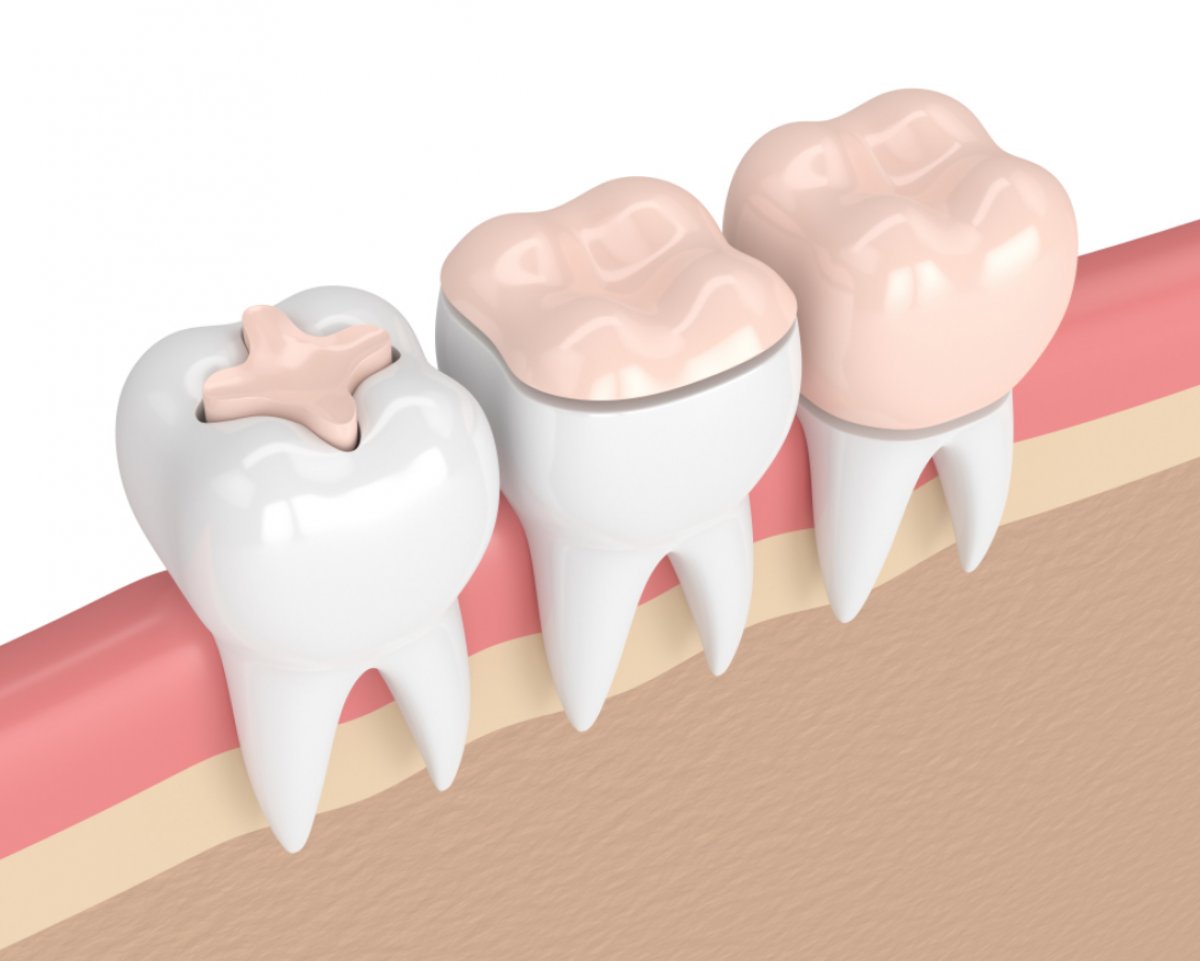
Pediatric Dentistry (Pedodontics) specialists restore the tissue without using drills by applying professional fluoride varnishes at the initial (stain) stage of these decays caused by liquid sugar; for severely crumbled anterior teeth with significant tissue loss, they repair them with biocompatible pediatric zirconium crowns or composite restorations to regain aesthetics and function.
The treatment protocol is shaped according to the degree of damage caused by fruit juice acid to the tooth. If the family has come to the clinic with an early diagnosis, the dentist triggers cellular repair (remineralization) by merely using protective agents for the tooth. However, if the upper front teeth have turned into brown craters and have been broken, restoring this aesthetic and functional loss is essential. Partial root canal treatments (amputation) are applied for deep cavities in primary teeth. Standard fillings cannot be made on teeth that have almost no retaining walls left due to liquid sugar; in such cases, non-porous “zirconium pediatric crowns” that cover the entire tooth like a cap are preferred. Zirconium provides excellent compatibility with the gum tissue and physically prevents cavity-causing bacteria from adhering to that tooth (forming plaque). If the child is too small to cooperate and the cavities are very widespread, all treatments are completed in a single session under safe anesthesia protocols.
How Should Children’s Daily Beverage Consumption Be According to 2026 Health Standards?
According to the 2026 health standards, children’s daily beverage consumption should primarily and solely consist of clean drinking water to maintain hydration (the body’s water balance); even fresh-squeezed fruit juices, flavored milks, or packaged beverages should be completely limited and excluded from routine liquid source. This approach is the fundamental basis of the protective vision of the discipline of Pediatric Dentistry (Pedodontics).
The medical community clarifies the rules regarding liquid intake as they update the nutrition protocols. During infancy, it is metabolically incorrect for the child to resort to fruit juice to quench their “thirst” following breast milk or formula. Fruits should be consumed whole and warm (in solid form) to ensure that gum massage and chewing stimulation occur. If fruit juice is to be given to the child, it should be planned only during the main meals, not exceeding half a glass, and the intake must be done with the help of a straw. Additionally, after consumption, water should be given to ensure that the oral cavity is neutralized. When these medical limitations and preventive health rules are applied, children’s milk teeth will not succumb to any acid attack (cavity) as long as there is no genetic anomaly, and when the time comes, they will safely make way for healthy permanent teeth.