What is bottle tooth decay and how can it be prevented in Izmir?
Bottle tooth decay in Izmir occurs when sugary liquids such as milk, formula, or fruit juice remain in the baby’s mouth while they fall asleep with a bottle. These sugary liquids are fermented by bacteria along with the decreased saliva flow during sleep, quickly eroding the upper front teeth. This damage can be prevented by stopping nighttime feeding and wiping the teeth with a damp cloth.
The infancy period is the most intensive phase for nutrition and growth physiology. Parents naturally prioritize feeding their babies with milk and formula for their physical development. However, these foods, which are extremely beneficial for the digestive system, cause very different reactions within the oral ecosystem. “Bottle tooth decay” or, as termed in medical literature, “Early Childhood Caries (ECC)”, is generally perceived in society as a genetic anomaly, but it is actually a result of environmental and behavioral mistakes. At the heart of the disease lies the extended exposure of tooth enamel to carbohydrates (lactose, the sugar found in milk) over long periods. In the parental education sessions held at the Avrupadent clinics located in Izmir, it is emphasized that this type of decay is much more aggressive, destructive, and progresses rapidly compared to all other tooth decays. The way to prevent bottle tooth decay is to reorganize the baby’s feeding routine according to their biological clock (sleep schedule).
What does bottle tooth decay (Early Childhood Caries) mean medically?
Cavities caused by bottle feeding in infants refers to a severe and specific early childhood tissue infection that develops due to improper nutrition and sleep routines in children under 71 months, starting with sudden calcium loss on the dental enamel and destroying the teeth down to the root level.
Previously attributed solely to bottle usage, this disease is now known in contemporary medical science as ‘Early Childhood Caries.’ This condition not only affects those who sleep with a bottle but also creates the same clinical picture in babies who fall asleep at the breast for a long time or have pacifiers dipped in honey or molasses. The most distinctive feature of the disease is its ‘widespread’ character, affecting all teeth in the mouth symmetrically rather than just one tooth. Since the enamel layer has not fully matured during infancy, it is highly susceptible to calcium and phosphate loss (demineralization). Bottle caries do not just act as an external stain on the teeth, but the acidic effect causes the entire tooth to soften structurally like a wafer, leading to its disintegration and erosion. This situation is a severe medical crisis that affects not only the child’s oral health but also their overall systemic development.
Why Does Using a Bottle at Night Cause Such Rapid Decay in Teeth?
Using a bottle during nighttime sleep slows down the functioning of salivary glands in human physiology, allowing liquids containing lactose from the bottle to pool around the teeth for hours. This prevents the bacteria from producing lactic acid without the beneficial saliva, leading to rapid decay of the teeth.
During the daytime, when a baby drinks milk from a bottle, the swallowing reflex is active. The salivary glands secrete a significant amount of fluid due to chewing and swallowing movements. Saliva contains bicarbonate, which neutralizes the acid and mechanically washes away the milk from the tooth surfaces, preventing it from staying on the teeth. However, when the baby falls asleep, the autonomic nervous system puts the body into rest, and the flow of saliva nearly comes to a halt. If the baby falls asleep while the bottle is in the mouth, the milk that leaks from the bottle accumulates in the mouth, creating a small pool. Since the rinsing saliva system is turned off, the Streptococcus mutans bacteria in the oral flora digest the sugar from the milk, producing acid for hours. The oral pH balance, which can recover in 30 minutes during the day, stays below 5.5 (the danger threshold) throughout the night, leaving the tooth enamel to dissolve in an acid bath until morning.
Why Does Bottle Decay First Affect the Upper Front Teeth?
Bottle decay primarily affects the upper front teeth because when a baby sucks, the tongue anatomically covers the lower front teeth like a protective cover, and the sweet liquid from the bottle hits the surfaces of the upper front teeth directly due to gravity, leading to pooling in that area for hours.
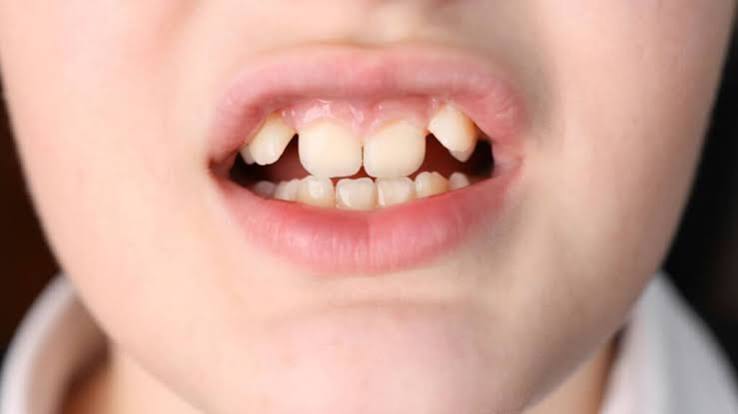
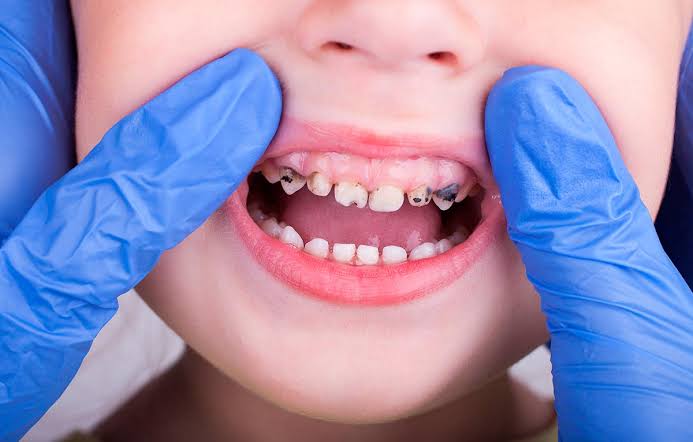
The most distinct diagnostic criterion for this disease is the unique anatomical arrangement (pattern) of the damage in the teeth. Lower anterior teeth generally remain completely healthy, while upper anterior teeth erode down to their roots. The biological mechanism behind this is entirely based on the baby’s sucking and swallowing reflex. When the baby sucks on a bottle or breast, the tongue extends forward and wraps around the lower incisors like a ring. At the same time, the salivary gland ducts of the lower jaw open right behind the lower anterior teeth. This allows the lower anterior teeth to be both physically protected by the tongue and continuously bathed in saliva. However, the upper anterior teeth (maxillary incisors) lack this protection entirely. The milk coming from the bottle flows directly onto the necks (cervical regions) of the upper teeth. Since acid production peaks in this area, carious lesions always begin to form first at the junctions where the upper anterior teeth meet the gum in a crescent shape and spread backward.
| Tooth Group | Severity / Risk of Caries | Biomechanical and Anatomical Reason |
|---|---|---|
| Upper Anterior Incisors | Very High (The first to be damaged) | The area most exposed to fluid directly, farthest from the tongue, and devoid of protection. |
| First Molars | High | Fluid can pool in the deep pits on the chewing surfaces. |
| Lower Anterior Incisors | Low (Generally remain healthy) | Right next to the ducts of the salivary glands and protected by the tongue. |
Does Breast Milk or Formula Milk Lead to Tooth Decay?
While breast milk or formula milk have perfect contents for the systemic immunity and development of babies, due to the high amount of natural sugar (lactose) they contain, they can directly contribute to tooth decay by feeding acid-producing bacteria during prolonged night feedings without cleaning the teeth.
There is a deep-rooted misconception in society that organic and natural foods do not harm teeth. Medicine universally accepts that breast milk is the most miraculous food for babies and protects them from diseases with the immunoglobulins it contains. However, the biochemistry in oral flora works differently. Decay-causing bacteria do not differentiate whether the sugar comes from a packaged biscuit or organic breast milk. For them, lactose is merely an energy source that can be converted to acid. Especially after the age of one, when other solid foods and new carbohydrates (the supplementary feeding period) are added to the child’s diet, the diversity and number of bacteria in the mouth increase. After this stage, prolonged night feedings or consumption of formula combined with carbohydrates consumed during the day initiates a destructive dissolution (demineralization) on the enamel surface. Therefore, instead of weaning, the proper medical precaution to take is to clean the baby’s tooth surface after breastfeeding.
How Do Families Recognize the Onset of Bottle Tooth Decay?
Families recognize the onset of bottle tooth decay by observing a dullness at the border area where the upper front teeth connect with the gums, characterized by the appearance of whitish patches or horizontal lines. Even if the tooth has not yet erupted, these opaque whiteness spots, which do not come off with brushing, are the first and clearest physical signs that the enamel tissue has started to lose calcium and dissolve.
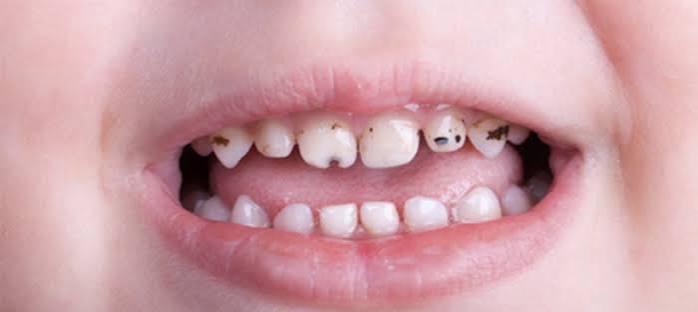
The most insidious aspect of the disease is that, in its initial stage, it does not cause pain and does not present itself as a black cavity. Parents often interpret the white spots at the base of the teeth as “remnants of milk left because of not brushing the teeth” or “excess calcium.” However, healthy tooth enamel is glassy, smooth, and semi-transparent. The enamel affected by acid attacks turns into a sponge-like structure, loses its light-reflecting properties, and becomes dull. If a dentist is consulted during this initial alarm phase, the tooth can be restored to its former health with fluoride treatments without any drill (milling) touching it. However, if this phase is missed, those pearly spots absorb pigments from food, turning yellow, and later shift to light brown. This weakening layer physically collapses and fractures when exposed to baby solid food. It becomes visibly brown or black craters.
How Does Dipping the Pacifier in Sweet Foods Affect Oral Flora?
Dipping the pacifier in sweet foods causes high-concentration viscous carbohydrates, such as honey, molasses, or jam, to be directly applied to the tooth surface, providing a massive fuel for acid production by Streptococcus mutans bacteria in the oral flora and instantly depleting the acid-neutralizing capacity, greatly accelerating enamel erosion.
The method of “sweetened pacifiers,” which parents often resort to in order to calm babies or alleviate fussiness, is one of the major traumatic causes encountered in pediatric dentistry. Honey and molasses are considered quite viscous by nature. Through the pacifier, these viscous sugars remain adhered to the surface of the teeth for hours. While the bulk of the liquid in normal liquid ingestion passes from the throat area to the stomach, the gooey sugar layer on the pacifier forms a thick biofilm (plaque) on the enamel. Furthermore, giving honey to infants under one year of age not only causes tooth decay but also carries the risk of serious systemic poisoning (botulism) due to the spores of “Clostridium botulinum” it contains. The purpose of the pacifier is solely to satisfy the physiological sucking reflex; using it as a means of transferring any food is strictly rejected by medical guidelines.
How Do Advanced Stage Bottle Teats Disrupt the General Development of the Child?
Advanced stage bottle teats severely disrupt development by stopping the secretion of growth hormone due to intense leakages caused by abscesses at the roots, interrupting nighttime sleep, causing the child to lose the ability to wean and reject solid foods (malnutrition), and continually engaging the immune system with infections, ultimately lowering the overall body resistance.
For a parent, blackened and shortened teeth are often regarded merely as a “cosmetic flaw”; however, in terms of the bodily system, this is a multifaceted failure. When it reaches the damaged nerves, it creates abscesses in the upper lip area or palate. Due to this chronic pain, the child cannot transition into a healthy deep sleep (NREM) stage. Since growth hormone is primarily secreted during sleep, children whose sleep is disturbed can experience reductions in their height and weight percentile curves (developmental delays). Additionally, a child with broken front teeth cannot bite into hard foods like apples; the chewing function is disrupted as the load shifts to the back teeth. A child fed continuously on purees or soft carbohydrates cannot obtain necessary vitamins, leading to digestive system problems (indigestion, gas). This reservoir of bacteria in the tooth root poses a continuous threat of infection throughout the body, reaching from the heart to the kidneys.
What is the Approach to Pediatric Dentistry (Pedodontics) in İzmir Avrupadent?
The approach of İzmir Avrupadent in Pediatric Dentistry (Pedodontics) includes not just addressing pain or cavities when they occur in babies, but also integrating the first teeth into a preventive program. It provides families with specialized nutritional guidance aimed at stopping diseases before they even start, and employs non-traumatic diagnostic methods to protect the child’s psychology.
In our clinic infrastructure operating in İzmir, we adopt a “preventive architect” approach rather than a “fixer” approach. In an extremely aggressive condition like bottle caries, prolonged waiting can lead to irreparable losses. Our doctors communicate transparently about the biochemical reasons for the current medical condition, making parents partners (collaborators) in the treatment without judgment regarding bottle use and night feeding. A baby is not placed in the car seat alone; they are examined knee-to-knee with parents, maintaining eye contact. In situations where X-rays are necessary, quick results are obtained using low-dose digital sensors. Depending on the risk of caries, the child’s clinical visit periods are automatically tracked by the system every 3 or 6 months. This holistic approach is the fundamental guarantee for raising a healthy generation.
How is Bottle Caries Diagnosed at İzmir Avrupadent Clinics?
The diagnosis of bottle caries at İzmir Avrupadent clinics is made during an examination where the baby is safely seated in a knee-to-knee position with the doctor and parents. Under special clinical lights, the teeth are dried to visually identify demineralizations (matting) of the enamel, and the family’s feeding and sleeping routines are mapped using a scientific questionnaire.
For babies at a very young age (typically 1-2 years), contact with a clinical device is a major source of fear. Therefore, the diagnostic process should not be performed with traditional sharp dental tools (by scraping with a probe); because touching a weakened enamel with a hard tool can lead to that area breaking down (perforating). The doctor only dries the teeth’s surface with an air-suction device (pneumatic). Early signs of decay that are hidden when wet reveal themselves as dull matte spots when dried. At the same time, detailed questions are directed at parents about how many times the child took a bottle during the day, what they drank at night if they woke up, the condition of the pacifier, and water intake, conducting a “Cavity Risk Assessment” (CAMBRA). The diagnosis is about mapping the behavioral error that creates that decay, not just seeing the decay in the mouth.
At What Age and How Should Bottle Feeding Be Gradually Stopped?
Bottle feeding should be gradually reduced as the child approaches the end of their first year, when their swallowing and sucking reflexes mature, and the milk in the bottle should be diluted over time to eventually turn entirely into water, transitioning to sippy cups that accelerate liquid ingestion, while medically and psychologically it should be completely concluded by the age of two at the latest.
The sudden cessation of breastfeeding (cold turkey method) can lead to tantrums, loss of trust, and resistance to sleep in the baby. The most effective medical method for weaning off bottle use is the “gradual dilution” technique. If the child drinks 150 ml of milk at night, the parent should mix 30 ml of water into the milk for the first few days. In the following days, the water ratio should be gradually increased (while reducing the milk), and over the weeks, the content of the bottle should almost completely turn into pure water. Pure water has no significant effect on thirst and waking up for a tasteless (plain) water will gradually eliminate the baby’s desire for the bottle by reducing motivation. During this process, the bottle must be removed as a sleep transition object; instead, new and healthy sleep rituals such as a plush toy or reading a story should be established.
What Hygiene Steps Should Be Taken at Home If Night Feeding Cannot Be Stopped?
If night feeding cannot be stopped at home, after the baby finishes its milk or formula, a few sips of clean water should be given to reduce oral acidity, and the surfaces of the teeth should be carefully wiped with a damp gauze wrapped around a finger or a silicone brush by the parent, physically cleaning the plaque from the teeth.
Sometimes, due to the infant’s growth or a specific systemic condition, nighttime feeding may be necessary as advised by a pediatrician. In such cases, the parent’s role is to minimize the duration of contact between the milk and the teeth and the process of acid production. A few sips of water given after a bottle helps wash away the lactose (milk sugar) left on the teeth, guiding it to the throat area, and performs the mechanical rinsing task that the baby is unable to do. However, simply giving water is not enough. Bacteria form a sticky film on the tooth surface (pellicle layer). Gently wiping the front teeth, the inner lips, and the inner cheeks with a clean and damp cloth or a finger-mounted silicone brush, taking advantage of the baby’s sleepiness, instantly breaks down plaque buildup and prevents acid secretion at its source.
Why is the Transition to a Sippy Cup Important in Cavity Prevention?
Transitioning to a sippy cup for cavity prevention is important because the anatomical design of these cups allows the child to transfer liquid directly to the throat without letting it pool around the teeth, thus facilitating the evolution of the oral muscles (swallowing reflex) into their adult form, which dramatically reduces the duration of contact between the tooth surfaces and sugary liquids.
Around one year of age, it marks a turning point in the oral and swallowing physiology of babies. The bottle nipple allows the baby to accumulate liquid in the front part of the mouth before swallowing, around the teeth. Sippy cups or straw cups are designed to direct the liquid further back in the mouth, straight to the base of the tongue and the throat. This small anatomical difference creates a massive change in cavity formation. Liquid directly enters the stomach without hitting the neck portions of the teeth and the gums. Additionally, prolonged use of a bottle can lead to the deepening of the baby’s hard palate and narrowing of the upper jaw (creating a V-shaped jaw structure), whereas the use of a cup allows for the normal functioning of the lip, cheek, and tongue muscles, preserving both the skeletal structure and the integrity of the enamel.
| Physiological Feature | Bottle (0-12 Months) | Sippy Cup / Straw (12+ Months) |
|---|---|---|
| Direction of Liquid | It accumulates in the front part of the mouth, over the teeth. | It is directed straight to the back of the mouth, to the throat. |
| Risk of Cavities | Very high due to prolonged contact with the teeth. | It is considered quite low due to the short duration of contact. |
| Orthodontic Effect | Narrows the upper jaw with long-term use (suction pressure). | Supports the natural development of cheek and tongue muscles. |
Why Should Pediatric Dentistry Check-Ups in Infancy Not Be Neglected?
During infancy, Pediatric Dentistry (Pedodontics) check-ups should never be neglected, as aggressive tissue decay processes, such as bottle tooth decay, can progress very quickly. These issues can be detected at the initial stage (white spot stage), allowing for the protective minerals in the enamel to be strengthened, thus stopping the decay without any surgical intervention (drilling).
The biggest advantage of preventive dentistry is time management. Because the enamel layer in primary teeth is thin, diseases do not progress as slowly as they do in adult teeth. The time between a tooth becoming dull and completely breaking down to the root can sometimes be just a few months. It is very difficult for parents to notice these microscopic mineral losses at home. Regular dental check-ups every six months ensure that the plaque (biofilm) on the teeth can be mapped out with special dyes or lights. The dentist can measure the child’s susceptibility to decay and chemically strengthen the enamel’s acid resistance (calcium structure) with fluoride varnishes. This regular monitoring mechanism is the fundamental assurance not only for teeth but also for the child’s jaw development and psychological well-being (away from dental phobia) in later years.
How Do Pediatric Dentistry (Pedodontics) Specialists Treat Bottle Tooth Decay?
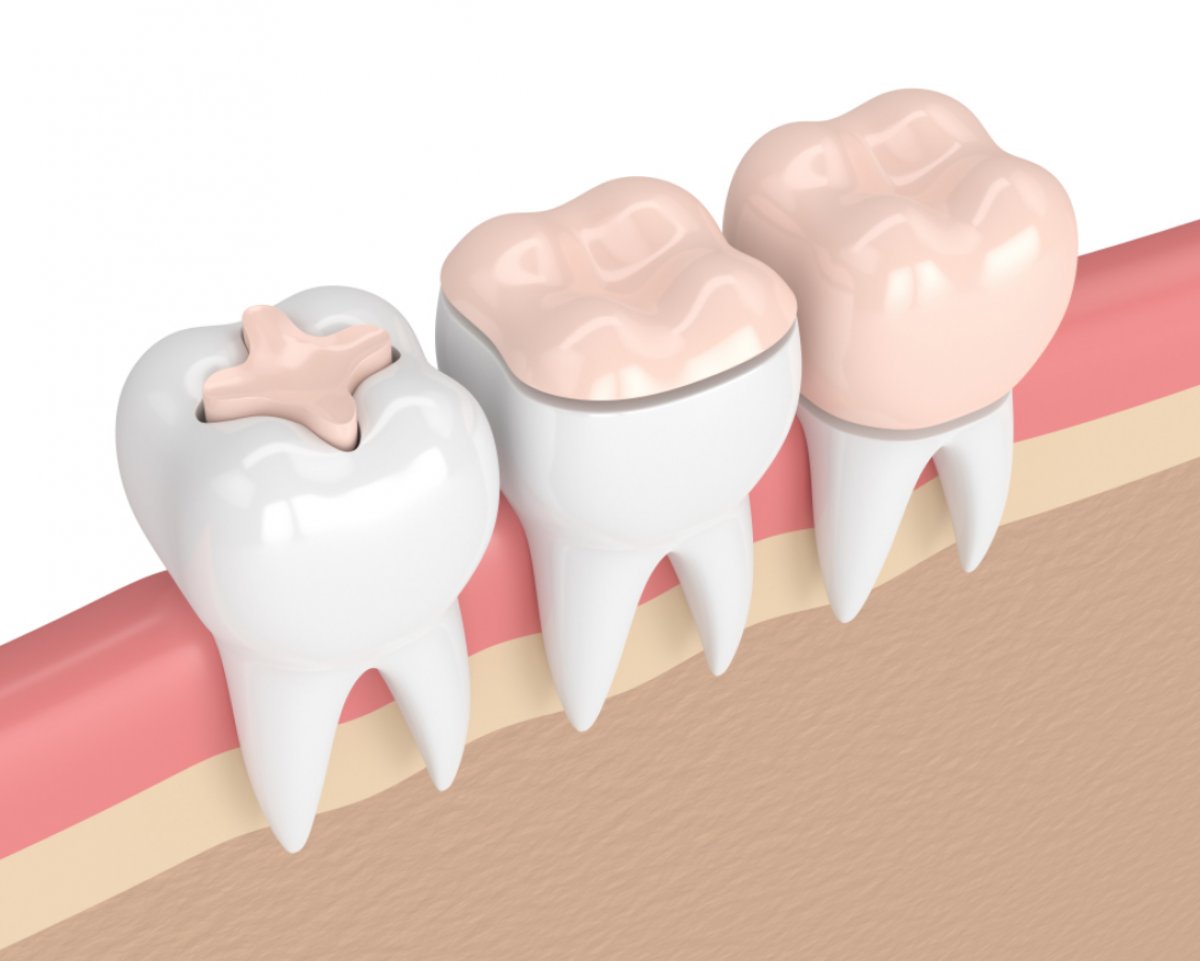
Pediatric Dentistry (Pedodontics) specialists treat bottle tooth decay by applying restorative fluoride varnishes without using drills according to the stage of the disease, restoring decayed teeth with biocompatible glass ionomer fillings, or applying pediatric zirconia crowns in more severe cases where significant material loss has occurred, ensuring the tooth remains functional until it naturally falls out.
The treatment protocol is shaped entirely according to the depth of destruction and the child’s psychological adjustment (cooperation). In newly formed (at the enamel level) spots, medical agents that pump calcium into the tooth are applied to promote natural cellular repair (remineralization). If fractures and yellow/brown cavities have formed in the tooth, the decayed tissue is carefully cleaned with burrs. Because children’s saliva production is high, “glass ionomer cements,” which tolerate moisture and continuously release fluoride to nourish the tooth, are preferred as filling materials. In the worst-case scenarios, where the decay has reached the nerves and only a small piece of the root remains, the inner canal(s) of the tooth is cleaned, and “zirconium crowns for children” are placed, restoring the child’s lost aesthetic smile and functional capabilities. In cases where the child refuses treatment in the chair and abscesses are very common, all treatments are completed safely in one session under general anesthesia or sedation.
What Should Be Done to Replace Milk Teeth Lost Due to Bottle Tooth Decay?
To replace milk teeth lost due to bottle tooth decay, fixed or removable dental prostheses (devices) that are prepared under the supervision of a physician should be made, appropriate to the child’s oral anatomy, in order to correct the child’s speech articulation (phonetics), restore chewing function, and prevent psychosocial self-esteem problems that may arise from early loss of front teeth.
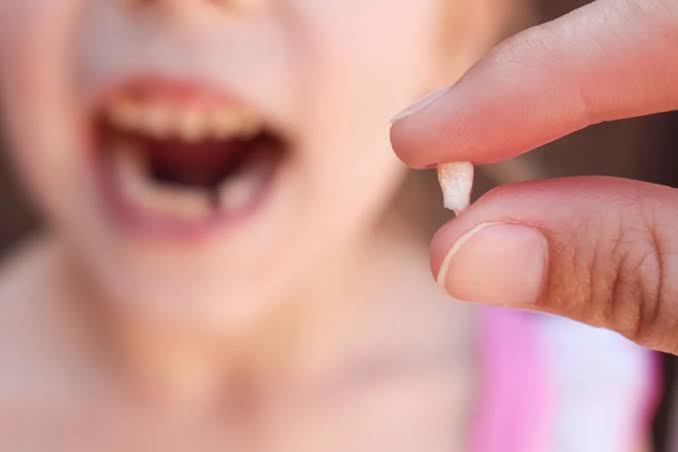
Sometimes the infection spreads to the jawbone so much that trying to keep it in the dental arch means acid leaking into the underlying permanent tooth bud (follicle) and damaging it. In such a case, the milk tooth must be extracted. However, during childhood, it is not just a matter of aesthetics and function; it is a part of growth. If you consider that a 3-year-old child’s upper front 4 teeth have been extracted; this child will not be able to pronounce letters like (s, f, v, t) correctly, will constantly stick their tongue out from that gap (lisping), and will not be able to chew food properly. They may become withdrawn due to their appearance among friends in a preschool setting. To prevent these traumas, “pediatric aesthetic space maintainers” are applied, which are fixed to the back teeth and contain naturally appearing artificial teeth in the front. These devices serve as an anatomical, functional, and aesthetic bridge in the child’s mouth until the permanent teeth erupt, perfectly supporting the process.
What is the Biological Effect of Continuous Flow Rate on Bottle Feeding?
The biological effect of the continuous flow rate on bottle feeding is the fact that the fast flow during the day slows down and comes to a halt when transitioning to sleep at night; it draws the bicarbonates that neutralize the acid inside the milk and the calcium ions that repair the enamel from the tooth surface, leaving the milk sugar vulnerable to acid erosion (decay) until the morning.
Saliva is a natural defense mechanism in the mouth. When food and drinks are consumed throughout the day, the salivary glands immediately activate, raising the mouth’s pH level above the danger threshold of 5.5. However, the autonomic nervous system also halts saliva production when the individual falls into deep sleep, just like it slows the heartbeat. If a baby sleeps without cleaning their teeth after drinking milk from a bottle, the milk remains on the teeth like a film layer. Bacteria quickly consume sugars in this milk and produce lactic acid as a byproduct. Since there is no salivary flow to wash away this acid, it directly attacks the tooth enamel. This state of biological and mechanical defenselessness is the clearest scientific explanation of why bottle feeding results in such aggressive decay patterns, especially after night feedings.
What Burdens Does Early Diagnosis Save Families From in Pediatric Processes?
Early diagnosis helps identify caries at just the demineralization stage, preventing the decay of teeth, the infection from reaching the nerves, and the child from experiencing painful crises, completely relieving the family from the stressful psychological burdens of difficult root canal treatments, the need for crowns, and lengthy surgeries requiring general anesthesia.