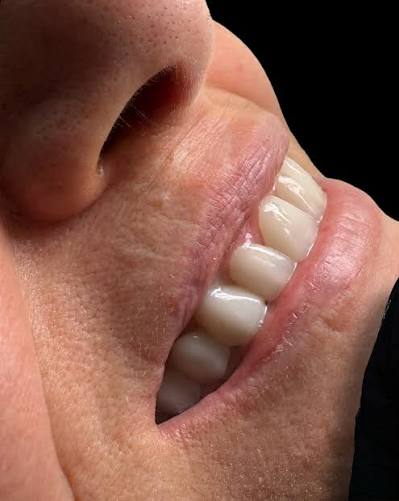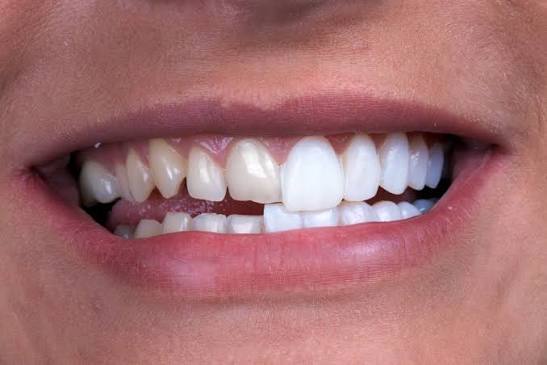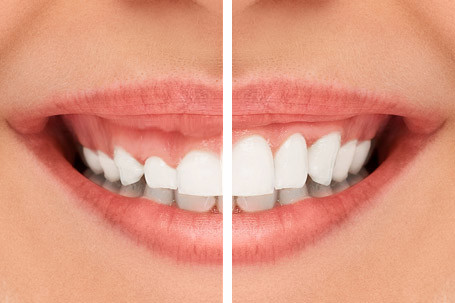
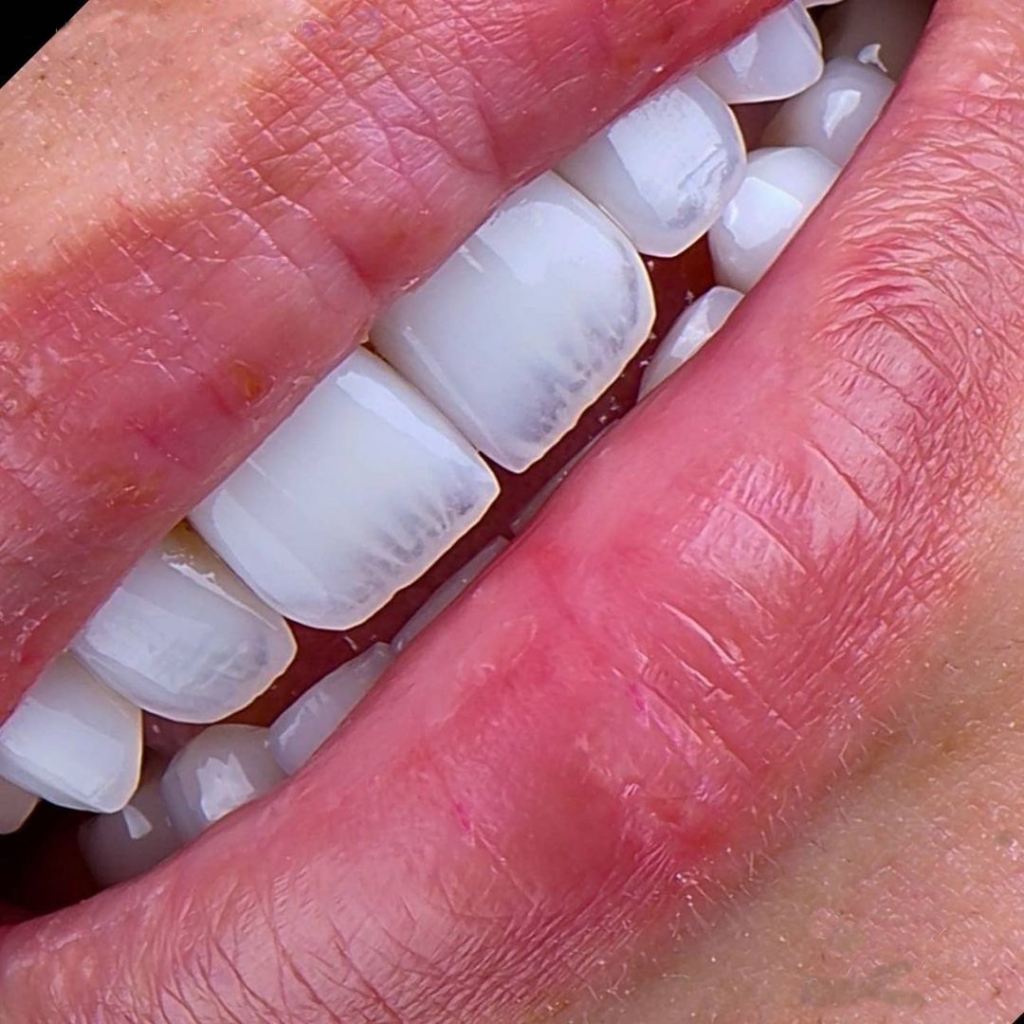
In Which Situations Can E-Max Veneers Be Preferred?E-Max veneers can be preferred in restorative situations where high translucency (light permeability) is sought in the anterior teeth, they do not contain a metal infrastructure, have a high biocompatibility with a crystallized glass ceramic structure reflecting the optical properties of the enamel tissue, and where chewing forces remain within regional limits.
The process of repairing form asymmetries in the jaw and chin anatomy with respect to dental enamel wear or minimal material loss has undergone significant evolution in dental materials science in accordance with medical protocols. The opaque, light-blocking skeletal structure of traditional metal-supported crowns limits the satisfaction of aesthetic expectations in certain clinical scenarios. In this context, the lithium disilicate-based E-Max systems, with their monoblock crystalline structure and the adhesive bond they create with tissues, are frequently regarded as a valuable material group in prosthetic dentistry. The innovative approaches in Aesthetic Dentistry in the sector integrate the biocompatible features of these glass ceramic systems into clinical workflows.Each prosthetic material has its own unique physical resistance limits and optical properties. The material planned for a dental restoration is determined by the clinician based on the position of the tooth within the arch, the severity of the occlusal (chewing) pressure it will bear, and the patient’s tissue biotype. In the examinations conducted in the clinical protocols at Avrupadent, the patient’s gum health and the rate of material loss are analyzed in detail.
What Chemical Components Does E-Max Veneer Comprise?E-Max crowns are a completely ceramic biomaterial produced by homogeneously pressing or milling lithium disilicate (Li2Si2O5) crystals within a special glass matrix, possessing high fracture resistance.
E-Max systems, classified as glass ceramics in dental technology, have a flexible production infrastructure that can be processed both by pressing methods and CAD/CAM digital milling devices. The lithium disilicate crystals, which form the basis of the material, grow in fibrous morphology within the glass matrix, allowing mechanical stresses to be halted by the crystal tips and restricting the propagation of cracks. This microstructure creates a skeleton that resists chewing forces by tolerating the brittle nature of glass.
The absence of metals chemically prevents the material from corroding or changing color in the areas where it contacts the gum tissue. The gum tissue establishes a high adhesive compatibility with the surface of the E-Max glass ceramic, allowing the maintenance of healthy pink aesthetic boundaries. The dense crystalline structure of the material also establishes a chemical bond with fine porcelain powders processed in the laboratory, facilitating the simulation of the natural tooth enamel’s multilayered structure in a lab environment.
Why Are E-Max Crowns Important in Anterior Teeth?
E-Max crowns in anterior teeth are important because they provide high translucency that optically mimics the opalescence and fluorescence properties of natural tooth enamel, deeply reflecting the underlying dentin tone, and not creating an artificial opacity in flash photography.The focus of aesthetic dentistry, the anterior incisors and canine teeth are anatomical areas that absorb and reflect the light coming from outside. If a restoration to be positioned in this area is opaque, it can lead to the perception that the tooth is lifeless or a prosthetic. Thanks to the high translucency indices of E-Max glass-ceramics, light enters the material, filtering through the dentin layer and exiting the outside. This optical circuit preserves the depth perception of the tooth.
Especially in cases where the preservation of the translucent incisal edge tissues is required, the light scattering capacity of E-Max material offers an aesthetic advantage for individuals, particularly in younger age groups. The subtle translucent tones at the cutting edges of the tooth can be processed homogeneously in the laboratory stage. In this way, the optical boundary between a restored tooth and a neighboring natural tooth disappears, making the material harder to detect.
Optical and Physical Properties E-Max (Glass Ceramic) Crown Traditional Metal Supported Crown Light Transmittance Very high, it absorbs and transmits light just like natural enamel. None due to the metal substructure; it completely blocks light. Aesthetic Depth Its multilayered structure replicates the three-dimensional depth perception of natural teeth. It presents a matte appearance due to opaque and flat color reflection. Gum Margin Condition Being metal-free, it does not cause color change or gray reflection in the gums. Over time, it may cause gray/purple lines in the gums due to metal corrosion.
In Which Clinical Situations is E-Max Preferred Over Zirconium?
Clinical scenarios where E-Max is preferred over zirconium include situations with mild substance loss in the anterior region of the tooth, not requiring high resistance multiple units like posterior bridge spaces, and singular restorations where transparency is desired.In prosthetic dentistry, zirconium and E-Max materials are complementary biocompatible ceramics that respond to different clinical needs. Zirconium is positioned in areas requiring strength due to its high fracture resistance and ability to support long bridge structures; while E-Max stands out in aesthetic single crowns, veneers, and inlay/onlay fillings that operate within the mechanical resistance limits of aesthetic expectations.
When a front tooth located in the anterior region requires coverage and has undergone root canal treatment (not naturally dark in color), the dense opacity of zirconium can create an unnecessary whiteness. In such cases, E-Max glass ceramic can be preferred to achieve an optical match that suits the tooth’s own transparent structure. The dentist plans to use E-Max in localizations where it is determined that the material’s fracture resistance will be sufficient, by examining the patient’s occlusal forces and the functioning of the jaw joint.
How Do E-Max Crowns Integrate with Tooth Structure?
E-Max crowns create a chemical and micromechanical adhesive lock with the tooth through the application of acid etching to the inner surfaces and the help of silane bonding agents, using resin cements applied to the tooth.The lifespan of a prosthetic restoration within the mouth is related to the quality of the sealing of the intermediate surface formed by the hardness of the material itself with the tooth. Classic cements adhere through mechanical compression, while lithium disilicate ceramics bond chemically to the tooth according to the principles of adhesive dentistry. The internal surface of the E-Max crown that comes from the laboratory is treated with acid to expose the crystal ends within the glass matrix at a microscopic level.
In a clinical setting, the enamel and dentin tissue of the tooth are acid-etched and saturated with bonding agents. When the crown is seated on the tooth, the resin-based cement penetrates these microscopic pores and the crystals that are exposed from the porcelain, polymerizing under blue light. This chemical bonding prevents the interface line between the tooth and the crown from being breached, thus stopping bacteria or debris from penetrating. This way, the risk of secondary decay in the tissues beneath the crown is minimized and chewing forces are transmitted evenly to the tooth root.
In Which Dental Problems Can E-Max Crowns Be Planned?
E-Max crowns can be planned for slightly compromised teeth with minor substance loss in the anterior region, for single teeth with slight discoloration, for correcting form asymmetries, and in aesthetic cases where the crown length needs to be extended.In restorative dentistry, the indications of E-Max systems cover aesthetic-focused single teeth. Full ceramic E-Max crowns are applied when the composite fillings are insufficient in large-volume decayed anterior teeth, where it is necessary to protect the entire tooth. Additionally, to create an aesthetically harmonious smile line, this material provides the dentist with design flexibility in extending short teeth or correcting asymmetries at the edge angles.
However, in cases where the dental structure is healthy but only exhibits minor deviations in form or position, thinner E-Max veneers can also be produced without the need for complete tooth reduction. This flexibility aids in preserving healthy dental tissue while adhering to the principles of preventive dentistry, providing patients with long-term, aesthetically satisfying prosthetic solutions.
What is the Level of Gum Harmony for E-Max Crowns?
The gum harmony of E-Max crowns is high; since they do not have a metal framework and are not susceptible to corrosion, they do not cause discoloration at the gum line, supporting the healthy appearance of the pink gums by establishing a biocompatible relationship with the tissue surface.The overall aesthetics of a smile are measured not only by the shape and color of the white teeth but also by the symmetry and health of the gum tissue surrounding them. In older metal-supported porcelain crowns, the metals in the underlying structure could oxidize over time, causing ion leakage into the gum tissue and resulting in the formation of purple or gray lines in the cervical area. This was one of the factors that compromised the naturalness of pink aesthetics.
Since E-Max systems are entirely glass ceramic, they do not react with body fluids and do not release toxic substances. The gums maintain their healthy pink color by adhering to the porous and biocompatible surface of the E-Max crown. When the finishing limits under the restoration are adjusted with precision, the risk of inflammation or retraction in the tissue is minimized. This high tissue tolerance creates a natural transition area at the junction of the crown and the gums.
What are the Limits of Using E-Max in Treated Teeth?
Teeth that have undergone root canal treatment may become fragile over time due to internal fluid loss and can take on a darker color tone; if the color of these teeth has turned a very dark gray or black, care should be taken as the high translucency of E-Max crowns may not fully mask this darkness underneath.After root canal treatment, the dentin layer of the teeth loses moisture and becomes mechanically weakened. When there is a need to make a crown on such a tooth, both the protection of the tooth and aesthetic restoration are targeted. E-Max glass ceramics can be used for single anterior teeth that have undergone root canal treatment; however, if the tooth has turned a dark shade, the high translucency feature of E-Max may cause a slight reflection of that darkness from underneath.
In such clinical scenarios, crowns with zirconium infrastructure that have high opacity or materials reinforced with special opaque layers may be preferred. In cases of root canal treated teeth where the root color is light or medium tones, applying E-Max can achieve both sufficient strength and aesthetic success.
Is E-Max Preferred in Cases of Bruxism (Teeth Grinding)?
In individuals with bruxism (nighttime teeth grinding and clenching) habits, the excessive vertical and horizontal pressures exerted by the jaw muscles can pose a risk of fracture on glass ceramic structures, so in these patients, alternatives with higher durability should be chosen instead of E-Max, or protective splints should be used.Bruxism in the oral and jaw mechanism is a parafunctional habit that applies stress beyond normal chewing forces on the teeth. While the fracture resistance of E-Max glass ceramics is sufficient for normal functional loads in the anterior and posterior regions, it may show fragility against the intense mechanical pressure created by involuntary teeth grinding activities during sleep.
Therefore, if E-Max is to be used in the aesthetic anterior region for patients diagnosed with bruxism, it is essential to support the treatment with a night guard (splint). In the case of molars in the posterior region, planning alternatives such as zirconium, which has high fracture resistance, is considered a more appropriate approach for clinical safety in individuals with bruxism.
How is E-Max Planning Conducted in Avrupadent Processes?
The E-Max planning process at Avrupadent clinics involves detailed clinical and radiological examinations, obtaining three-dimensional digital measurements using intraoral scanners, simulating optical compatibility with smile design software, and following customized prosthetic production steps for the patient.In institutional medical service standards, it is essential to draw a personalized roadmap suitable for the patient’s anatomical structure and occlusal dynamics. During the initial examination in Avrupadent process management, the health of the gum tissue is stabilized, and the patient’s jaw closure relationship is analyzed. By examining the rate of substance loss in the teeth and the degree of darkness of the color, it is scientifically tested whether the E-Max glass ceramic material can offer aesthetics and functionality in this case.
After a decision is made, the three-dimensional digital model of the mouth is obtained using intraoral optical scanners without using traditional impression materials. E-Max restorations designed in a computer environment using CAD/CAM technologies are produced by pressing or milling in the laboratory. In the trial stage, after checking color compatibility, margin tightness, and phonetic performance, the process is completed by integrating with adhesive cements onto the tooth.
What Are the Frequently Asked Questions?
1. What is the main difference between E-Max crowns and zirconium?
E-Max is made of lithium silicate ceramic, which has very high light transmittance and aesthetic translucence; zirconium, on the other hand, has much higher mechanical strength and fracture resistance due to its crystalline structure.
2. Can E-Max crowns be applied to back teeth?
They can be applied aesthetically in the anterior region and smaller molars; however, caution should be taken in the larger molar areas where chewing loads are intense due to the risk of fracture, or zirconium should be preferred.
3. Does the color of E-Max crowns change over time?
Thanks to its high-temperature fired and glazed, non-porous surface structure, it does not absorb colorants like tea, coffee, or tobacco, and maintains its initial hue for many years.
4. Can E-Max be used on root-treated teeth?
If the tooth’s own root color is not dark, E-Max can be used on single anterior root-treated teeth; however, if the color is very dark gray, opaque base materials may be a more suitable option to conceal the underlying tone.
5. Do E-Max crowns cause gum recession?
The material is completely biocompatible and does not react with bodily fluids; gum recession is not caused by the material but results from incorrect brushing or periodontal diseases.
6. Is E-Max the same as leaf porcelain?
E-Max is the name of a material; laminate is a thin form of this material that is applied only to the front surface of the tooth. E-Max can be used for both laminate construction and full dental crowns.
7. Can those with teeth grinding habits get E-Max?
In patients with bruxism, there is a risk of E-Max restorations breaking due to high pressure; if applied in these patients, the use of a night guard is essential.
8. How is an E-Max crown made?
The crown with its inner surface polished with special acids is chemically and micromechanically bonded to the tooth enamel using adhesive resin cements.
9. Are teeth reduced excessively during the procedure?
Thanks to the fine structure of E-Max glass ceramics, the reduction made from tooth tissue is kept to a minimal level compared to metal-supported crowns.
10. How do E-Max crowns look under light?
Since they replicate the reflection characteristics of natural tooth enamel, they exhibit a natural appearance under sunlight or artificial light without looking artificial.
11. Can a single front tooth be restored with an E-Max crown?
In the laboratory, the degree of transparency of the adjacent natural teeth, the polishing of the surface, and color gradients can be replicated in such a way that it will match even a single tooth.
12. What is the durability period of E-Max crowns?
If oral hygiene is maintained, dental floss and interproximal brushes are used, and trauma from hard-shelled foods breaking the crowns is avoided, they can be used for many years.
13. Can individuals with metal sensitivity prefer E-Max?
Since it has a completely metal-free, glass ceramic based structure, it is a biocompatible alternative for patients sensitive to metal alloys.
14. How many sessions does the E-Max production process take?
After the initial examination and digital scanning session, the fittings are usually completed within 2 to 3 sessions along with laboratory production times, and are permanently bonded to the tooth.
15. What criteria are used to select E-Max according to Avrupadent standards?
The dynamics of the patient’s bite, the health of the gums, aesthetic expectations, and the extent of substance loss in the teeth are evaluated through digital scans and the selection is made based on objective medical facts.
The process of repairing form asymmetries in the jaw and chin anatomy with respect to dental enamel wear or minimal material loss has undergone significant evolution in dental materials science in accordance with medical protocols. The opaque, light-blocking skeletal structure of traditional metal-supported crowns limits the satisfaction of aesthetic expectations in certain clinical scenarios. In this context, the lithium disilicate-based E-Max systems, with their monoblock crystalline structure and the adhesive bond they create with tissues, are frequently regarded as a valuable material group in prosthetic dentistry. The innovative approaches in Aesthetic Dentistry in the sector integrate the biocompatible features of these glass ceramic systems into clinical workflows.
Each prosthetic material has its own unique physical resistance limits and optical properties. The material planned for a dental restoration is determined by the clinician based on the position of the tooth within the arch, the severity of the occlusal (chewing) pressure it will bear, and the patient’s tissue biotype. In the examinations conducted in the clinical protocols at Avrupadent, the patient’s gum health and the rate of material loss are analyzed in detail.
What Chemical Components Does E-Max Veneer Comprise?E-Max crowns are a completely ceramic biomaterial produced by homogeneously pressing or milling lithium disilicate (Li2Si2O5) crystals within a special glass matrix, possessing high fracture resistance.
E-Max systems, classified as glass ceramics in dental technology, have a flexible production infrastructure that can be processed both by pressing methods and CAD/CAM digital milling devices. The lithium disilicate crystals, which form the basis of the material, grow in fibrous morphology within the glass matrix, allowing mechanical stresses to be halted by the crystal tips and restricting the propagation of cracks. This microstructure creates a skeleton that resists chewing forces by tolerating the brittle nature of glass.
The absence of metals chemically prevents the material from corroding or changing color in the areas where it contacts the gum tissue. The gum tissue establishes a high adhesive compatibility with the surface of the E-Max glass ceramic, allowing the maintenance of healthy pink aesthetic boundaries. The dense crystalline structure of the material also establishes a chemical bond with fine porcelain powders processed in the laboratory, facilitating the simulation of the natural tooth enamel’s multilayered structure in a lab environment.
Why Are E-Max Crowns Important in Anterior Teeth?
The focus of aesthetic dentistry, the anterior incisors and canine teeth are anatomical areas that absorb and reflect the light coming from outside. If a restoration to be positioned in this area is opaque, it can lead to the perception that the tooth is lifeless or a prosthetic. Thanks to the high translucency indices of E-Max glass-ceramics, light enters the material, filtering through the dentin layer and exiting the outside. This optical circuit preserves the depth perception of the tooth.
Especially in cases where the preservation of the translucent incisal edge tissues is required, the light scattering capacity of E-Max material offers an aesthetic advantage for individuals, particularly in younger age groups. The subtle translucent tones at the cutting edges of the tooth can be processed homogeneously in the laboratory stage. In this way, the optical boundary between a restored tooth and a neighboring natural tooth disappears, making the material harder to detect.
| Optical and Physical Properties | E-Max (Glass Ceramic) Crown | Traditional Metal Supported Crown |
|---|---|---|
| Light Transmittance | Very high, it absorbs and transmits light just like natural enamel. | None due to the metal substructure; it completely blocks light. |
| Aesthetic Depth | Its multilayered structure replicates the three-dimensional depth perception of natural teeth. | It presents a matte appearance due to opaque and flat color reflection. |
| Gum Margin Condition | Being metal-free, it does not cause color change or gray reflection in the gums. | Over time, it may cause gray/purple lines in the gums due to metal corrosion. |
In Which Clinical Situations is E-Max Preferred Over Zirconium?
In prosthetic dentistry, zirconium and E-Max materials are complementary biocompatible ceramics that respond to different clinical needs. Zirconium is positioned in areas requiring strength due to its high fracture resistance and ability to support long bridge structures; while E-Max stands out in aesthetic single crowns, veneers, and inlay/onlay fillings that operate within the mechanical resistance limits of aesthetic expectations.
When a front tooth located in the anterior region requires coverage and has undergone root canal treatment (not naturally dark in color), the dense opacity of zirconium can create an unnecessary whiteness. In such cases, E-Max glass ceramic can be preferred to achieve an optical match that suits the tooth’s own transparent structure. The dentist plans to use E-Max in localizations where it is determined that the material’s fracture resistance will be sufficient, by examining the patient’s occlusal forces and the functioning of the jaw joint.
How Do E-Max Crowns Integrate with Tooth Structure?
The lifespan of a prosthetic restoration within the mouth is related to the quality of the sealing of the intermediate surface formed by the hardness of the material itself with the tooth. Classic cements adhere through mechanical compression, while lithium disilicate ceramics bond chemically to the tooth according to the principles of adhesive dentistry. The internal surface of the E-Max crown that comes from the laboratory is treated with acid to expose the crystal ends within the glass matrix at a microscopic level.
In a clinical setting, the enamel and dentin tissue of the tooth are acid-etched and saturated with bonding agents. When the crown is seated on the tooth, the resin-based cement penetrates these microscopic pores and the crystals that are exposed from the porcelain, polymerizing under blue light. This chemical bonding prevents the interface line between the tooth and the crown from being breached, thus stopping bacteria or debris from penetrating. This way, the risk of secondary decay in the tissues beneath the crown is minimized and chewing forces are transmitted evenly to the tooth root.
In Which Dental Problems Can E-Max Crowns Be Planned?
In restorative dentistry, the indications of E-Max systems cover aesthetic-focused single teeth. Full ceramic E-Max crowns are applied when the composite fillings are insufficient in large-volume decayed anterior teeth, where it is necessary to protect the entire tooth. Additionally, to create an aesthetically harmonious smile line, this material provides the dentist with design flexibility in extending short teeth or correcting asymmetries at the edge angles.
However, in cases where the dental structure is healthy but only exhibits minor deviations in form or position, thinner E-Max veneers can also be produced without the need for complete tooth reduction. This flexibility aids in preserving healthy dental tissue while adhering to the principles of preventive dentistry, providing patients with long-term, aesthetically satisfying prosthetic solutions.
What is the Level of Gum Harmony for E-Max Crowns?
The overall aesthetics of a smile are measured not only by the shape and color of the white teeth but also by the symmetry and health of the gum tissue surrounding them. In older metal-supported porcelain crowns, the metals in the underlying structure could oxidize over time, causing ion leakage into the gum tissue and resulting in the formation of purple or gray lines in the cervical area. This was one of the factors that compromised the naturalness of pink aesthetics.
Since E-Max systems are entirely glass ceramic, they do not react with body fluids and do not release toxic substances. The gums maintain their healthy pink color by adhering to the porous and biocompatible surface of the E-Max crown. When the finishing limits under the restoration are adjusted with precision, the risk of inflammation or retraction in the tissue is minimized. This high tissue tolerance creates a natural transition area at the junction of the crown and the gums.
What are the Limits of Using E-Max in Treated Teeth?
After root canal treatment, the dentin layer of the teeth loses moisture and becomes mechanically weakened. When there is a need to make a crown on such a tooth, both the protection of the tooth and aesthetic restoration are targeted. E-Max glass ceramics can be used for single anterior teeth that have undergone root canal treatment; however, if the tooth has turned a dark shade, the high translucency feature of E-Max may cause a slight reflection of that darkness from underneath.
In such clinical scenarios, crowns with zirconium infrastructure that have high opacity or materials reinforced with special opaque layers may be preferred. In cases of root canal treated teeth where the root color is light or medium tones, applying E-Max can achieve both sufficient strength and aesthetic success.
Is E-Max Preferred in Cases of Bruxism (Teeth Grinding)?
Bruxism in the oral and jaw mechanism is a parafunctional habit that applies stress beyond normal chewing forces on the teeth. While the fracture resistance of E-Max glass ceramics is sufficient for normal functional loads in the anterior and posterior regions, it may show fragility against the intense mechanical pressure created by involuntary teeth grinding activities during sleep.
Therefore, if E-Max is to be used in the aesthetic anterior region for patients diagnosed with bruxism, it is essential to support the treatment with a night guard (splint). In the case of molars in the posterior region, planning alternatives such as zirconium, which has high fracture resistance, is considered a more appropriate approach for clinical safety in individuals with bruxism.
How is E-Max Planning Conducted in Avrupadent Processes?
In institutional medical service standards, it is essential to draw a personalized roadmap suitable for the patient’s anatomical structure and occlusal dynamics. During the initial examination in Avrupadent process management, the health of the gum tissue is stabilized, and the patient’s jaw closure relationship is analyzed. By examining the rate of substance loss in the teeth and the degree of darkness of the color, it is scientifically tested whether the E-Max glass ceramic material can offer aesthetics and functionality in this case.
After a decision is made, the three-dimensional digital model of the mouth is obtained using intraoral optical scanners without using traditional impression materials. E-Max restorations designed in a computer environment using CAD/CAM technologies are produced by pressing or milling in the laboratory. In the trial stage, after checking color compatibility, margin tightness, and phonetic performance, the process is completed by integrating with adhesive cements onto the tooth.
What Are the Frequently Asked Questions?
1. What is the main difference between E-Max crowns and zirconium?
E-Max is made of lithium silicate ceramic, which has very high light transmittance and aesthetic translucence; zirconium, on the other hand, has much higher mechanical strength and fracture resistance due to its crystalline structure.
2. Can E-Max crowns be applied to back teeth?
They can be applied aesthetically in the anterior region and smaller molars; however, caution should be taken in the larger molar areas where chewing loads are intense due to the risk of fracture, or zirconium should be preferred.
3. Does the color of E-Max crowns change over time?
Thanks to its high-temperature fired and glazed, non-porous surface structure, it does not absorb colorants like tea, coffee, or tobacco, and maintains its initial hue for many years.
4. Can E-Max be used on root-treated teeth?
If the tooth’s own root color is not dark, E-Max can be used on single anterior root-treated teeth; however, if the color is very dark gray, opaque base materials may be a more suitable option to conceal the underlying tone.
5. Do E-Max crowns cause gum recession?
The material is completely biocompatible and does not react with bodily fluids; gum recession is not caused by the material but results from incorrect brushing or periodontal diseases.
6. Is E-Max the same as leaf porcelain?
E-Max is the name of a material; laminate is a thin form of this material that is applied only to the front surface of the tooth. E-Max can be used for both laminate construction and full dental crowns.
7. Can those with teeth grinding habits get E-Max?
In patients with bruxism, there is a risk of E-Max restorations breaking due to high pressure; if applied in these patients, the use of a night guard is essential.
8. How is an E-Max crown made?
The crown with its inner surface polished with special acids is chemically and micromechanically bonded to the tooth enamel using adhesive resin cements.
9. Are teeth reduced excessively during the procedure?
Thanks to the fine structure of E-Max glass ceramics, the reduction made from tooth tissue is kept to a minimal level compared to metal-supported crowns.
10. How do E-Max crowns look under light?
Since they replicate the reflection characteristics of natural tooth enamel, they exhibit a natural appearance under sunlight or artificial light without looking artificial.
11. Can a single front tooth be restored with an E-Max crown?
In the laboratory, the degree of transparency of the adjacent natural teeth, the polishing of the surface, and color gradients can be replicated in such a way that it will match even a single tooth.
12. What is the durability period of E-Max crowns?
If oral hygiene is maintained, dental floss and interproximal brushes are used, and trauma from hard-shelled foods breaking the crowns is avoided, they can be used for many years.
13. Can individuals with metal sensitivity prefer E-Max?
Since it has a completely metal-free, glass ceramic based structure, it is a biocompatible alternative for patients sensitive to metal alloys.
14. How many sessions does the E-Max production process take?
After the initial examination and digital scanning session, the fittings are usually completed within 2 to 3 sessions along with laboratory production times, and are permanently bonded to the tooth.
15. What criteria are used to select E-Max according to Avrupadent standards?
The dynamics of the patient’s bite, the health of the gums, aesthetic expectations, and the extent of substance loss in the teeth are evaluated through digital scans and the selection is made based on objective medical facts.