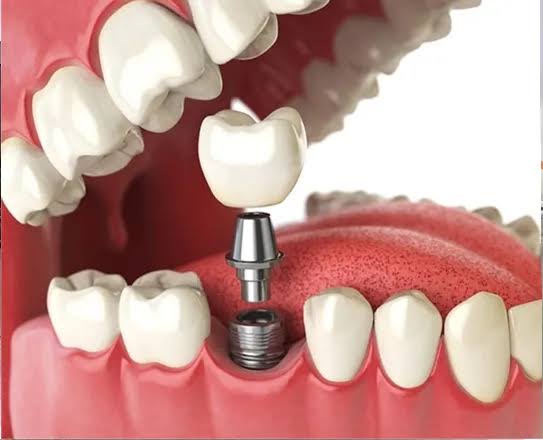
The timing of implant placement after tooth extraction varies according to individual health status and the structure of the jawbone. The doctor may place the implant immediately after the extraction; this helps prevent bone loss. However, immediate implant placement can involve slightly more risk initially. Early implant placement can be performed about 4-8 weeks after the extraction, while delayed implant placement generally requires waiting 3 months or longer. This way, the healing of the bone is ensured, allowing for stronger retention of the implant. The timing of the procedure is determined by the evaluation of the dentist.
How is Immediate Implant Placement Compared to Delayed Placement?
After tooth extraction, there are noticeable differences between immediate implant application and delayed placement methods in the implant placement process. Both methods have their advantages and disadvantages; therefore, the choice is made based on the patient’s bone condition, overall health, and oral needs. Immediate implant placement can accelerate the treatment process and reduce bone loss, while delayed placement can enhance the implant’s integration with the bone, potentially increasing the success rate.
Advantages of Immediate Implant Placement:
- Treatment duration is shorter
- Risk of bone loss is reduced
- Fewer surgical procedures are performed
Disadvantages of Immediate Implant Placement:
- Risk of implant failure is higher
- Not suitable for every patient
- May require additional interventions
Advantages of Delayed Implant Placement:
- Success rate is higher
- Healing area can be assessed
- Risk of complications decreases
Disadvantages of delayed implant placement:
- Treatment duration extends
- Multiple surgical interventions may be required
- There is a risk of bone loss
What Factors Influence the Optimal Timing for Implants After Tooth Extraction?
There are many factors that determine the optimal timing for implants after tooth extraction. The accurate assessment of these factors directly affects the success of the implant. First and foremost, the quality and quantity of the bone is crucial. Following tooth extraction, as the bone begins to resorb, there is a reduction in bone volume, which can decrease the stability of the implant. To prevent this loss, bone grafts and regeneration procedures help maintain bone volume post-extraction:
- Bone quality and quantity
- Presence of infection or periodontal diseases
- The patient’s overall health status and healing capacity
Infection and periodontal diseases are also significant factors that need to be considered. If there is an active infection or periodontal disease in the tooth extraction area, it can decrease the success of the implant. Implants placed without waiting for the infection to heal carry a high risk of failure. Additionally, the patient’s overall health condition is an essential element affecting the healing process and the implant’s success. For example, factors like smoking and diabetes can reduce healing capacity.
How Does the Type of Tooth Extraction Affect Implant Timing?
The type of tooth extraction directly affects the timing of implant placement; this period varies depending on the healing speed in the area and the health of the bone based on the shape of the extraction procedure. Differences between simple and surgical extractions are important for determining when the implant will be placed:
- Simple extractions
- Minimum damage to surrounding tissues
- Performed under local anesthesia
- Healing process is faster
- Possibility of immediate or early implant placement
- Surgical extractions
- Extraction of buried or broken teeth
- Requires more intervention in the jawbone
- Longer healing process
- Usually a waiting period of 3 months for implants
In simple extractions, a shorter healing process allows for the early placement of the implant; this way, both aesthetic and functional outcomes can be achieved. In surgical extractions, however, it is suggested to wait longer for tissue healing. This situation helps place the implant on a more solid foundation and increases the long-term success rate.
What Are the Risks of Delaying Implant Placement After Tooth Extraction?
Delaying implant placement after tooth extraction can lead to serious consequences that may negatively impact treatment success. If not intervened early, issues such as bone loss and gum retraction become evident, making it difficult to place the implant in a healthy manner:
- Bone loss
- Gum retraction
- Weakening of implant stability
- Aesthetic issues
- Need for additional treatments
After the extraction, the lower jawbone begins to noticeably shrink within the first six months. During this period, the bone volume and density decrease; thus, the solid bone structure that would provide adequate support for the implant is lost. The gums also recede, following this bone loss, negatively affecting aesthetic appearance. Particularly in the front tooth region, this recession can disrupt natural smile aesthetics and may lead to the visibility of implant components.
For the implant to be placed securely and stably, a sufficient amount of bone is required. When bone loss occurs, it becomes challenging to place the implant safely, and initial stability cannot be achieved. In this case, additional procedures such as bone grafting may be necessary, complicating the treatment process. Especially in cases of advanced bone loss, the success rate of implant treatment decreases, and a longer, more arduous treatment process may be required for the patient.
How Can You Determine the Best Timing for Your Dental Implant Procedure?
To determine the optimal timing for the dental implant procedure, factors such as the patient’s individual health status, oral structure, and jawbone quality must be taken into account. Establishing the right timing for the implant procedure requires a detailed assessment and the use of modern technologies. This process ensures the successful placement of the implant and provides long-term functional health.
Factors Considered in the Personal Evaluation:
-
\t
- Medical history
- Oral health
- Jawbone quality
\t
\t
Diagnostic Tools and Technological Support:
-
\t
- CBCT (Cone Beam Computed Tomography) scans
- Digital implant planning software
- Artificial intelligence analyses
- Resonance frequency analysis (RFA)
- Computer-assisted surgery (CAS)
\t
\t
\t
\t