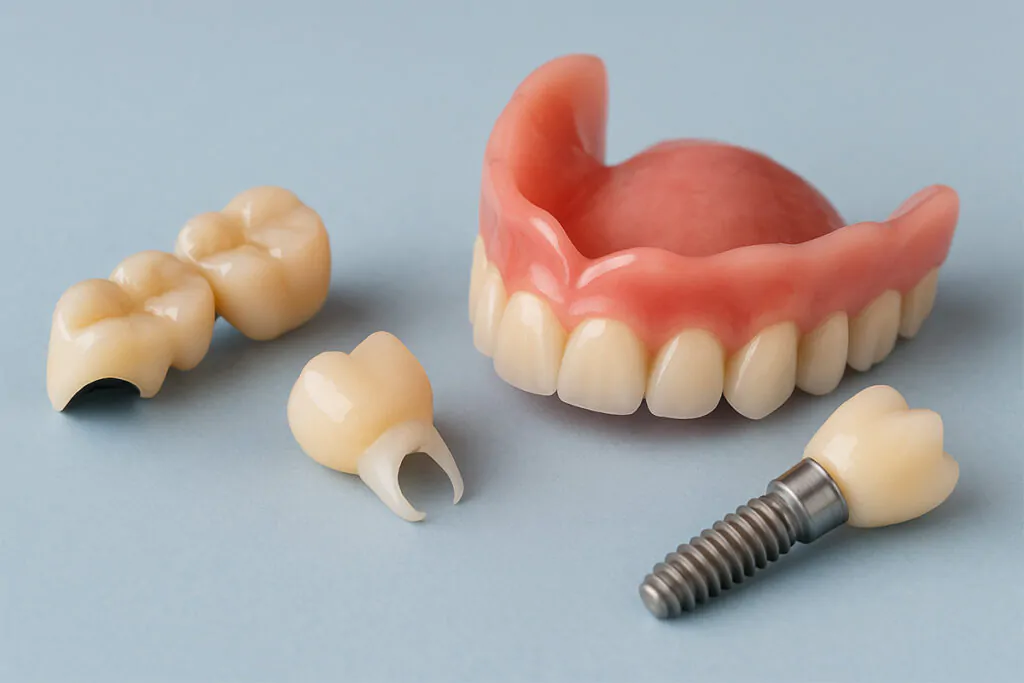
Prosthetic dental treatment encompasses the methods of dentistry applied to restore the functions and aesthetic appearance of missing or damaged teeth. In these treatments, specially prepared artificial materials such as crowns, bridges, removable dentures, or dental implants are used to replace lost teeth or tissues. The application process begins with a detailed examination and planning based on the patient’s oral structure and needs, followed by steps according to the chosen method until the restoration is complete. The main goal is to improve oral health and functions while providing a natural appearance.
What Does Prosthetic Dental Treatment Actually Mean?
Prosthetic dental treatment, or as it is referred to by specialists, prosthodontics, is a special branch of dentistry. It deals with the replacement of lost or functionally impaired teeth and oral tissues. These losses can occur due to reasons such as decay, fracture, or gum disease.
The purpose of treatment is not just to replace missing teeth. It also aims to ensure the patient can eat comfortably, speak clearly, enhance aesthetic appearance, and improve overall oral health. For this purpose, specially designed compatible artificial materials are used. These treatments can fix not only single teeth but also gum tissues, jawbones, and even larger tissue losses on the face in some cases.
Who is a Specialist in Prosthetic Dental Treatment?
The specialists who perform these treatments are called “prosthodontists.” Prosthodontists are individuals who, after graduating from dental school, receive an additional 3-4 years of training in this field. This extra training provides them with much deeper knowledge and skills concerning the repair of teeth and oral tissues.
Prosthodontists, while they can perform some procedures that general dentists do, their true areas of expertise involve more complex situations. They are specifically trained in areas such as treatments involving multiple teeth, challenging therapies both aesthetically and functionally, implant applications, complete or partial dentures, and issues related to the jaw joint.
What is the Education of a Prosthetic Dentistry Specialist?
In order for a dentist to become a prosthodontist, they must complete a fairly intensive specialization program after their general dentistry education. These programs typically last 3 to 4 years and are offered at institutions that have been accredited for their compliance with international standards.
During this process, specialist candidates learn all prosthetic methods, such as crowns, bridges, implants, and removable dentures, in great detail. They also get specialized training in topics like aesthetic dentistry, the relationships of the teeth’s occlusion, jaw joint disorders, and even the correction of facial defects using prosthetics. In short, they become adept at the art of replacing deficiencies in the mouth.
What Does Prosthetic Dentistry Aim to Achieve?
The primary goal of prosthetic dentistry is to enhance the quality of life for patients. Following this, restoring functionality comes next. This means enabling the patient to chew and speak comfortably. The fundamental functions disrupted by missing teeth are corrected with the prostheses created.
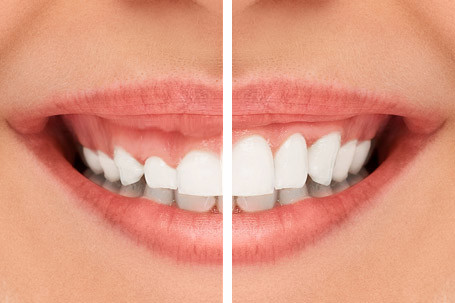
Another important goal is to improve aesthetics. Missing, broken, or discolored teeth negatively affect a person’s smile and self-confidence. By creating restorations that resemble natural teeth with prosthetic treatments, the patient’s aesthetic concerns are alleviated, aiming for a beautiful smile.
What Are the Health Benefits of Prosthetic Dentistry?
In addition to aesthetics and functionality, prosthetic treatments aim to protect oral health and enhance patient comfort. Pain or sensitivity caused by damaged teeth is alleviated. Discomfort caused by ill-fitting prosthetics is eliminated. A well-made prosthesis should function without causing discomfort in the mouth.
Additionally, placing a prosthetic tooth in place of missing teeth prevents neighboring teeth from shifting into the gap. Implants preserve bone, and crowns strengthen weakened teeth. By ensuring a balanced distribution of biting forces, other teeth and the jaw joint are protected. All of these combined enhance the patient’s overall quality of life.
What is a Crown in Prosthetic Dental Treatment?
A crown, commonly known as a dental cap, is a type of restoration that completely covers a single tooth, resembling a cap over it. It is often used to protect and strengthen teeth that have been weakened due to significant decay, fractures, or root canal treatment.
In cases where we are not satisfied with the shape or color of a tooth, a crown can also be made for aesthetic purposes. Crowns are also used to create teeth over implants. They can be made from various materials such as porcelain, zirconium, or metal-supported porcelain. The choice of material is determined based on the location of the tooth and the desired aesthetics.
How Do Bridges Work in Prosthetic Dental Treatment?
Bridges are fixed prosthetics used when there is one or more missing teeth. As the name implies, they bridge the gap left by the missing tooth, supported by the healthy teeth (or implants) on either side of the space.
These supporting teeth are referred to as “abutments”. The part of the bridge that mimics the missing tooth is called the “pontic”. To create a bridge, the supporting teeth usually need to be slightly reduced in size. Just like crowns, bridges can also be made from different materials, filling the gaps of missing teeth while improving both aesthetics and chewing.
What Are the Types of Removable Prosthetics in Prosthetic Dental Treatment?
Removable prosthetics are the “false teeth” that can be applied and removed by the patient. There are two main types. The first is complete dentures, which are used when there are no teeth left in the mouth. They are made separately for the upper and lower jaw and are generally made from acrylic material. They receive support from the palate and the jawbone.
The second type is partial dentures, which are used when there are a few missing teeth in the mouth. These prosthetics fill in the gaps of missing teeth while holding onto the existing healthy teeth with hooks called clasps or more aesthetic precise attachments. They are generally made by adding acrylic gum and teeth to a metal framework.
Why Are Dental Implants Preferred in Prosthetic Dental Treatment?
Dental implants are artificial roots made of titanium that mimic the roots of missing teeth. They are surgically placed into the jawbone and fuse with it over time. This provides a very solid foundation for the crowns, bridges, or prosthetics that will be placed on top.
The most significant advantage of implants is that they can replace missing teeth without touching the neighboring healthy teeth. Additionally, they prevent the resorption of the jawbone and offer chewing sensations and aesthetics closest to natural teeth. They are often the best option for those seeking a fixed and comfortable solution.
When Are Veneers (Laminates) Used in Prosthetic Dental Treatment?
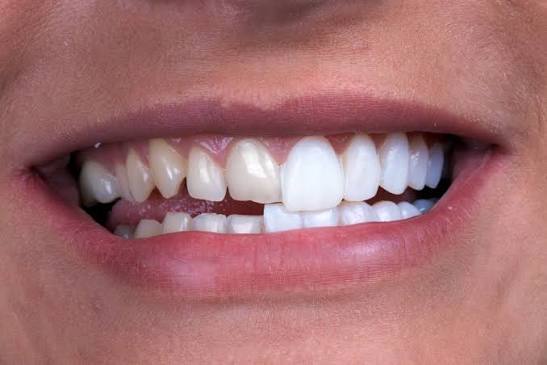
Veneers, or laminate porcelain, are very thin restorations used specifically to improve the appearance of front teeth. They are generally made of porcelain and are custom-made specifically for the front surface of the tooth.
Veneers are preferred mainly to address aesthetic issues. They can conceal persistent discoloration on teeth, alter the shape or size of teeth (for example, elongating short teeth), close small gaps between teeth, or correct slight misalignments. They can generally be applied with minimal tooth reduction or sometimes with no reduction at all.
What is the Difference Between Inlay and Onlay in Prosthetic Dental Treatment?
Inlays and onlays are more conservative fillings used to restore teeth that have been damaged due to decay or fracture, but do not cover the entire tooth like crowns. They are prepared in a laboratory and bonded to the tooth. They are generally considered a more durable alternative to large fillings.
The fundamental difference lies in the area they cover. An inlay is placed between the cusps (the bumps on the chewing surface) of the tooth, while an onlay covers a larger area and one or more cusps. They can be made from tooth-colored materials such as porcelain or composite, making them aesthetic. They minimize the loss of healthy tooth structure.
How Does the Prosthetic Dental Treatment Process Begin?
Every prosthetic treatment starts with a careful examination and planning. In the first appointment, your dentist or prosthodontist thoroughly assesses your oral health. They examine your teeth, gums, jaw structure, and how your teeth fit together. Usually, X-rays or sometimes three-dimensional tomography (CBCT) are requested.
Your complaints, expectations from the treatment, and overall health status (if you have chronic diseases, medications you are taking) are evaluated. A diagnosis is made based on all this information, and a personalized treatment plan is prepared for you. This plan includes what treatment is suitable, alternatives, how long it will take, and its cost. Treatment begins after discussing the plan with you and obtaining your approval.
How is Preparation and Measurement Done in Prosthetic Dental Treatment?
After the treatment plan is approved, the preparation phase begins. If a crown or bridge is to be made, the relevant teeth are carefully diminished to accommodate the prosthesis. If an implant is planned, a surgical procedure will be performed to place the implant. Sometimes, additional procedures such as dental cleaning or filling may be necessary before treatment.
Once the preparation is complete, measurements are taken to ensure that the prosthesis will fit perfectly in the mouth. In the past, this process was done using wax and paste-like materials placed in the mouth. Now, digital measurement methods are commonly used. Devices known as intraoral scanners transmit three-dimensional images of the teeth to a computer. This method is both more comfortable and provides more accurate results.
What is the Laboratory Phase in Prosthetic Dental Treatment?
The next step after taking measurements is the laboratory phase where the prosthesis will be produced. The measurements or digital data are sent to dental technicians who specialize in this field. Following the dentist’s instructions, the technicians use precise devices and special materials to create the crown, bridge, or prosthesis for you.
During this process, especially if your teeth have been shortened or are in the frontal area, temporary prostheses may be placed until your permanent prostheses are ready. These temporaries help to maintain aesthetic appearance and assist in shaping the gums. The laboratory process can vary from a few days to a few weeks, depending on the type of prosthesis to be made.
How is the Prosthesis Installed in Prosthetic Dental Treatment?
The prosthesis that comes from the laboratory is first tested in your mouth. This is called a try-in. Your dentist checks if the color, shape, and fit of the prosthesis with your teeth and gums are correct. Additionally, the occlusion relationship with your opposing teeth is also examined. If small adjustments are necessary, they are made at this stage.
In the case of fixed prostheses (such as crowns, bridges, and veneers), they are permanently crafted for your teeth using special materials. Implant-supported prostheses are either constructed or fixed onto implants with small screws. Removable prostheses are placed in the mouth, any points of contact are adjusted, and instructions on how to use and maintain them are provided.
What Materials Are Used in Prosthetic Dental Treatment?
Many different materials are used in prosthetic treatments. The selection varies according to where the prosthesis will be placed, the desired aesthetics, durability, and budget. For example, metal alloys (such as gold or others) are very durable. They are generally used as support behind teeth or under porcelain veneers.
Porcelain (ceramic) is preferred in situations where high aesthetic expectations exist, especially for front teeth, due to its tooth-colored appearance. Crowns, bridges, and veneers can be made of porcelain. It offers a very similar appearance to natural teeth but is somewhat more fragile than metals.
Where Are Zirconium and Composite Used in Prosthetic Dental Treatment?
Zirconium is a special type of ceramic that is both very strong and tooth-colored. Thanks to this property, it can be safely used for crowns and bridges on both front and back teeth. Since it does not contain metal, it is aesthetically advantageous.
Composite resins are essentially filling materials that match the color of teeth. They can sometimes also be used in the production of inlays, onlays, or veneers. They are more economical than porcelain, but their color may change over time. Acrylic is generally used in the pink gum parts of removable prostheses, while titanium is used in the construction of dental implants due to its biocompatibility.
What Is the Role of Technology in Prosthetic Dental Treatment?
Technology has significantly changed and advanced prosthetic dental treatment in recent years. Especially thanks to digital technologies, treatments have become more precise, faster, and more comfortable for patients. One of these is intraoral scanners. Instead of the paste-like materials previously used for measurements, a small camera captures three-dimensional images of the teeth.
Another important technology is CAD/CAM systems. This stands for computer-aided design and manufacturing. Using images obtained from the intraoral scanner, prosthetics are designed on a computer (CAD) and then produced according to this design with special devices (CAM). This way, it is sometimes possible to complete restorations like crowns in a single appointment.
What Does 3D Imaging Provide in Prosthetic Dental Treatment?
Three-dimensional imaging techniques, particularly Cone Beam Computed Tomography (CBCT), provide great convenience in prosthetic treatments. Especially if an implant is to be placed, it allows us to see crucial structures in great detail, such as the height, width, and quality of the jawbone, as well as the nerves running through it.
With this detailed imaging, the most accurate and safest placement of implants can be planned. Additionally, with methods called digital smile design, it is possible to view the finished state of the treatment on a computer screen before starting treatment and to show it to the patient. This also helps in better managing expectations.
What Does the Success of Prosthetic Dental Treatment Depend On?
For a prosthetic treatment to function smoothly for many years, several factors must come together. The first step to success is accurate diagnosis and good planning. It is very important to fully understand what the problem is and to choose the treatment method that is most suitable for you.
In addition, the experience and knowledge of the treating physician, the quality of the materials used, and the skill of the dental technician preparing the prosthesis directly affect the outcome. Quality materials and craftsmanship ensure that the prosthesis is both more aesthetic and more durable. The harmony between the physician and the technician is also critical for success.
What Are the Patient Factors in Prosthetic Dental Treatment?
The role of the patient is as crucial as that of the physician and technician in the success of the treatment. The most important patient factor is oral hygiene. No matter how well the treatment is performed, if the teeth and prostheses are not cleaned regularly and properly, problems can arise. Plaque accumulation can lead to cavities, gum diseases, or implant infections.
The patient’s overall health status is also important. For example, uncontrolled diabetes can slow healing. Smoking adversely affects especially implant success. Additionally, habits such as teeth grinding or clenching can harm the prostheses. Therefore, these types of conditions must also be brought under control.
How Should Oral Care Be After Prosthetic Dental Treatment?
After the treatment, great care must be taken for oral care to protect the health of the newly placed prostheses and remaining natural teeth. Teeth and fixed prostheses should be brushed with fluoride toothpaste at least twice a day. The edges where the prostheses meet the gum should be cleaned thoroughly.
Brushing alone is not enough. Spaces between the teeth, under bridges, and around implants must be cleaned with dental floss, interdental brushes, or special threads. Plaque accumulates the most in these areas. Your dentist will show you the most suitable cleaning methods and tools. Mouth rinses can also be helpful but do not replace mechanical cleaning.
How to Care for Removable Dentures in Prosthetic Dental Treatment?
Those who use removable dentures need to pay special attention to their care. Dentures should be removed after every meal and cleaned under water to get rid of any food residue. Once a day, they should also be thoroughly cleaned with a special denture brush and denture cleaning tablets or unscented liquid soap. Regular toothpaste can scratch the dentures.
It is generally recommended to remove the dentures at night and store them in clean water. This prevents the dentures from drying out and allows the oral tissues to rest. Since dentures are sensitive to dropping, being careful while cleaning, such as filling the sink with water, reduces the risk of breakage.
Why is Nutrition and Check-ups Important After Prosthetic Dental Treatment?
After treatment, especially in the initial period or for certain sensitive restorations (such as veneers), it may be necessary to pay a little attention to eating habits. It is advisable to avoid very hard or sticky foods. Eating food in small pieces and trying to chew on both sides can extend the lifespan of the dentures.
Another topic that is as important as oral care is regular visits to the dentist. Usually, these check-ups occur every six months, during which both your natural teeth and dentures are examined, professional cleaning is carried out, and potential problems are detected before they escalate. These check-ups ensure the long-term success of your treatment.