Can Dental Implants Be Preferred Instead of Removable Prostheses?
To compensate for tooth loss within the mouth, traditional removable dentures (plates) have been used for many years, but they can present usability challenges for some individuals. Instabilities experienced during chewing, the denture shifting during speech, or sensitivity created on the gum surface can lead patients to seek alternatives. At this point, modern implantology practices, which are part of dental disciplines, are considered among medical alternatives that offer more stable prosthetic solutions compared to removable dentures.
The choice of prosthetic solution for individuals with toothlessness depends on the anatomical structure of the jawbone, the general systemic health condition, and personal expectations. During examinations conducted at Avrupadent clinics or similar health centers, the disadvantages of removable appliances are compared in detail with the biomechanical advantages provided by structures fixed to the jawbone. This guide will address whether artificial root systems can be preferred instead of removable plate prostheses, under what conditions this change can be planned, and the functioning of clinical processes within the framework of scientific criteria.
Can Implant Treatment Be Planned Instead of Removable Prostheses?
The use of removable appliances in the rehabilitation of tooth loss has long been a standard method; however, due to the gradual resorption of the jawbone, the fit and retention of these prostheses on the palate may decrease over time. In this case, artificial roots implanted in the bone can provide the patient with a stable chewing infrastructure. The alternatives offered by the Implantology discipline involve medical approaches aimed at improving the patient’s daily life comfort.
When planning treatment, the vertical and horizontal volume of the patient’s jawbone is examined. If the bone tissue is not sufficient to support a fixed bridge system, grafting procedures or systems that stabilize the removable prosthesis with a limited number of support points, known as “overdenture” (retentive/dome), are considered. This way, the movement issues caused by the palate prosthesis can be largely controlled.
What Are the Disadvantages of Traditional Removable Dentures?
Classic complete or partial removable dentures rely heavily on the suction created by their fit and soft tissue compatibility. Especially when the lower jaw ridges erode over time, tongue movements can cause the prosthesis to shift, making it difficult to consume hard or fibrous foods. This situation can negatively impact individuals’ dietary habits and subsequently their digestive system.
However, the acrylic structures covering the palatal portion of removable dentures can inhibit taste sensitivity by covering the taste buds on the upper jaw. Additionally, the pressure exerted by the denture on the gums does not mechanically slow down the cellular degradation of the underlying jawbone; instead, in some cases, it may increase pressure-related tissue loss. Individuals facing such disadvantages are exploring alternatives with artificial root support for fixed solutions.
In Which Cases Can Fixed Solutions Be Preferred Over Removable Dentures?
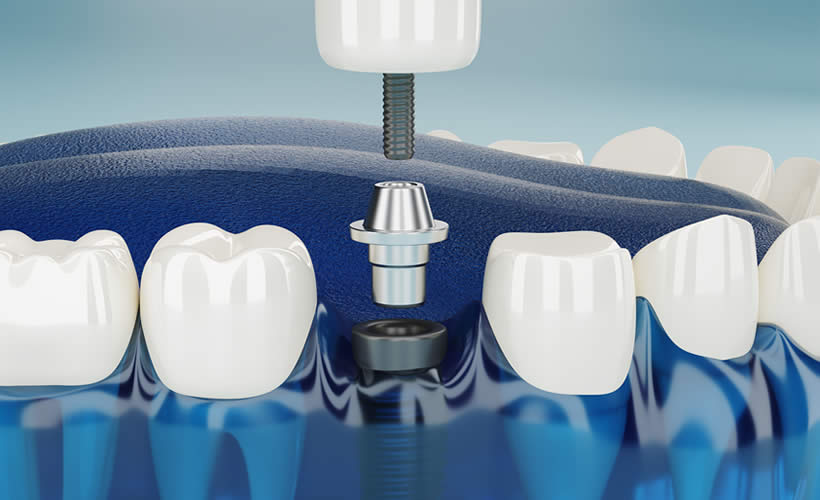
Fixed prosthetic solutions are bridge or crown systems that can be cleaned and used like original teeth, which cannot be removed from the patient’s mouth. Even in cases of complete tooth loss, a fully fixed bridge prosthesis can be designed with 4 to 6 titanium units placed in strategic areas of the jaw. This approach eliminates the need for the patient to use a removable palate.
During clinical examination, doctors examine the density of the bone and the distances between nerves and sinuses using three-dimensional dental tomography. If anatomical limits allow, considering the patient’s requests, a transition plan from removable denture stages to fixed prosthetic designs can be made. This transition is a step that supports the individual’s self-confidence in social life and chewing efficiency.
How Do Semi-Fixed (Implant-Supported) Removable Systems Work?
In cases where bone loss is very advanced and full fixed bridge construction requires significant bone augmentation (grafting), implant-supported removable systems, known as overdentures, offer a practical alternative. Artificial roots, ranging from 2 to 4, are placed in the front part of the jaw and are connected to the prosthesis base via mechanisms such as clips, balls, or bars.
In this system, the prosthesis can be removed at night for cleaning purposes by the patient; however, when inside the mouth, it does not move, slip, or make noise while eating or speaking. Compared to traditional dentures, it provides the patient with a much higher level of comfort because some of the chewing pressure is directly transmitted to the jawbone.
| Prosthetic Approach | Retention Mechanism | Oral Stability Condition |
|---|---|---|
| Traditional Removable Prosthesis | Only mucosal contact, suction effect, and anatomical ridge compatibility. | May exhibit movement or dislocation depending on the tongue and muscle movements. |
| Partial Fixed (Implant-Supported) System | Mechanical locks (clips) inside the prosthesis connected to titanium units in the jawbone. | Stays stationary when locked inside the mouth and does not shift while chewing. |
| Completely Fixed Prosthesis (All-on-4/6) | A bridge fixed by screws into multiple implants placed in the jawbone. | It is completely stable, cannot be removed by the patient, and functions like natural teeth. |
How Does the Volume of the Jawbone Affect the Decision for Prosthetic Change?
For individuals who have been edentulous for many years and have been using removable dentures, the pressure and lack of stimulation on the bone tissue can lead to gradual resorption over time. When the height and thickness of the bone decrease, the placement of standard-sized artificial roots directly in that area may be anatomically constrained. This situation brings the need for bone augmentation (volume increase) to the agenda in treatment decision-making.
If the patient does not wish to undergo advanced surgical operations, mini or standard-quality semi-fixed systems can be planned to be placed in the regions where a small amount of bone remnants are suitable. The physician maps the boundaries of the bone by examining three-dimensional tomography data and offers the patient the most appropriate prosthetic alternative based on anatomical realities.
How Does the Transition Process to Implants Work While Using Removable Dentures?
It is clinically feasible for an individual who previously used a removable palatal prosthesis to transition to an artificial root-supported system. In the first step, the physician examines the health of the mucosa inside the patient’s mouth and the current condition of the jawbone. If there are sensitive areas where the removable prosthesis has exerted pressure or caused irritation, measures are taken to rest these tissues and restore their health before the surgical phase.
In surgical procedures, titanium implants are positioned in the jawbone according to the planned concept. During the healing period, the patient is supported with soft liners inside the existing removable prosthesis to avoid any discomfort. Once cellular integration is completed, new fixed or partially fixed structures are placed to finalize the process.
What are the contributions of Implantology Applications to Comfort and Quality of Life?
The psychological concerns created by removable prostheses can lead individuals to withdraw from social life and avoid eating in crowded places. Thanks to implantology solutions, teeth anchored to the jawbone create a natural tooth feel, helping to overcome these types of psychological barriers.
An increase in dietary variety allows patients to comfortably consume foods rich in protein, fiber, and vitamins. Strengthening the initial stage of the digestive system also contributes to overall body health. At Avrupadent clinics, these types of comfort-focused transformation plans are meticulously addressed according to patients’ individual anatomical profiles.
What are Frequently Asked Questions?
1. Can anyone using removable dentures transition to this system?
Almost anyone with suitable general systemic health and jawbone deemed adequate by the dentist, or who can be supported with grafting, can transition to this system.
2. Can I get implants instead of making a completely new denture since my denture is very old?
Yes, instead of renewing your old denture, you can plan a fixed or partially fixed prosthetic solution supported by artificial roots according to the condition of your jawbone.
3. Should procedures be performed after the wounds caused by removable dentures have healed?
Yes, the healing of the mucosa areas that have been injured and irritated by the denture is considered a prerequisite for the smooth progress of the surgical phase.
4. Do removable dentures truly not move when eating?
Removable (overdenture) systems do not move while in the mouth because they are mechanically locked onto the units in the jawbone, providing chewing comfort.
5. How many units are needed to stabilize the entire jaw?
For the design of a fixed bridge, it is standard to plan 4 to 6 titanium units in the lower jaw and 6 to 8 units in the upper jaw.
6. Can these solutions be preferred instead of a removable denture at an older age?
Chronological age alone is not a barrier; if the individual’s systemic health condition allows for surgery, these options can still be preferred at older ages.
7. Will there be a situation of being without teeth during the transition process?
While waiting for bone fusion, appropriate temporary denture applications are included in the medical planning to ensure patients do not disconnect from their social life.
8. Can these systems be applied if bone loss is significant?
In cases of advanced bone loss, it can be applied by adding bone powder (graft) or planning special open concepts (All-on-4, etc.).
9. Should partial fixed dentures be removed at night while sleeping?
It is recommended to remove the dentures at night to allow the soft tissue underneath to rest and to ensure hygiene.
10. Will there be an increase in taste perception with a palate prosthesis?
In designs where the fixed or palatal section is left open, the sense of taste is felt more clearly compared to traditional dentures, as the hard palate is not covered.
11. Are cleaning and maintenance routines more difficult compared to removable dentures?
While fixed systems are cleaned with dental brushes just like natural teeth, in partial fixed systems, the prosthesis is removed and both the oral cavity and the prosthesis are cleaned separately.
12. Why is the treatment cost different from removable dentures?
The cost profile differs because it involves surgical operations, biocompatible titanium materials, and precise laboratory work.
13. Will speech disorders during conversation be corrected with this change?
Fixed crowns designed to match the original dental arrangement support the clear pronunciation of phonetic sounds by regulating the tongue’s range of motion.
14. Can individuals with diabetes make this change?
Patients with diabetes, whose blood sugar levels are stabilized (regulated) under the supervision of medical doctors, can be planned with necessary consultation approvals.
15. How is this evaluation carried out according to Europadent standards?
In clinical examinations, the patient’s expectations and radiological data are examined to draw the safest roadmap for transitioning from a removable prosthesis to a fixed system.