How is Aesthetic Dental Treatment Planned?
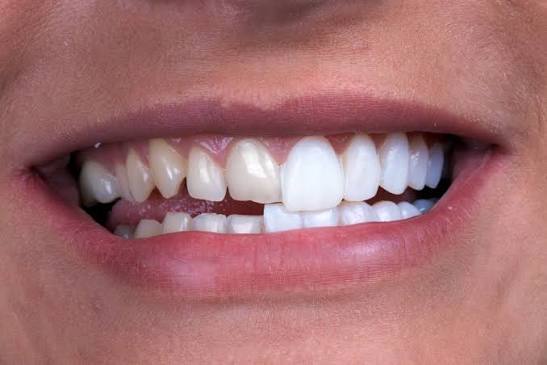
The restorative processes that reconstruct the asymmetries, form deformities, and color differences in the mouth, teeth, and jaw structure are based on the detailed planning capabilities of modern clinical disciplines according to medical principles. Every individual’s facial anatomy, lip movements, tooth arrangement, and periodontal (gum) structure are entirely different from one another. By blending these specific variables, the creation of restorations that support biological health and provide a visually harmonious look tailored to the individual forms the core of Aesthetic Dentistry practice.
In the past years, dental practices were primarily focused on compensating for functional losses, while today, material science and digital imaging technologies allow for a clear mapping of the entire plan even at the early stages of the process. Before performing a surgical intervention or prosthetic preparation (tooth reduction), designing the targeted outcome on computer screens and even physically testing it in the patient’s mouth (mock-up) enhances the medical reliability of the planning phase. This process is an interactive medical assessment phase where the patient’s expectations and anatomical and physiological realities converge at a point. In this guide we prepared, the steps of digital smile design, planning criteria for aesthetic treatments, material selection, and how the clinical calendar is organized are approached with an objective perspective.
How Are the Patient’s Expectations Analyzed Before Aesthetic Dental Treatment?
The hospital’s expectations are analyzed in detail during the initial examination session by listening to how the person wants to express themselves, the asymmetries causing discomfort, and the dental form they are aiming for. In these evaluations, the individual’s social life and speaking habits are also assessed to establish a common language of communication within the limits of medical feasibility.
Just as there is a starting point for every medical procedure, the first step for aesthetic restorations is to take a record of the hospital’s clinical history (anamnesis) and psychosocial expectations. The physician identifies whether the individual has complaints about the color or shape of their teeth, or from excessive visibility of the gums when they smile. During the analysis of expectations, the physician clarifies which changes can be anatomically applied, taking into account the functional limits of the teeth (occlusal closure, joint health).
Some patients request pronounced and angular tooth shapes, while others may prefer a more natural, rounded, and translucent structure. At this stage, the physician processes the patient’s requests through a medical filter of the requirements of facial anatomy. Ensuring a transparent communication process enables both parties to foresee the structure that will emerge at the end of the treatment.
How Are Digital Aesthetic Design Software Integrated Into the Planning Phase?
Digital aesthetic design software is integrated into the planning phase by transferring three-dimensional measurements obtained from intraoral optical scanners and high-resolution facial photographs into the computer environment. This integration provides the ability to model the teeth’s millimeter dimensions in a virtual environment and to visualize different aesthetic variations on the screen.
In traditional dentistry, planning typically takes shape in the mind of the dentist and in the hands of the technician, while digital concepts transform this process into a visual and measurable platform. Clinical photographs (photographs) taken in rest, during conversation, and while smiling broadly are stacked over 3D intraoral scans (CAD) in the digital medium. This way, it becomes possible to mathematically transfer how much the lips surround the teeth and the visibility level of the gums to a geometric layout.
In this virtual design created through software, the width and length of each tooth are recalibrated according to reference points on the face. This digital infrastructure used in Esthetic Dentistry planning helps the dentist clearly determine before the procedure how much preparation (enamel reduction) is needed from the tooth structure or at what level the gum will be pulled.
How is the Mathematical Harmony Between Facial Proportions and Tooth Shapes Calculated?
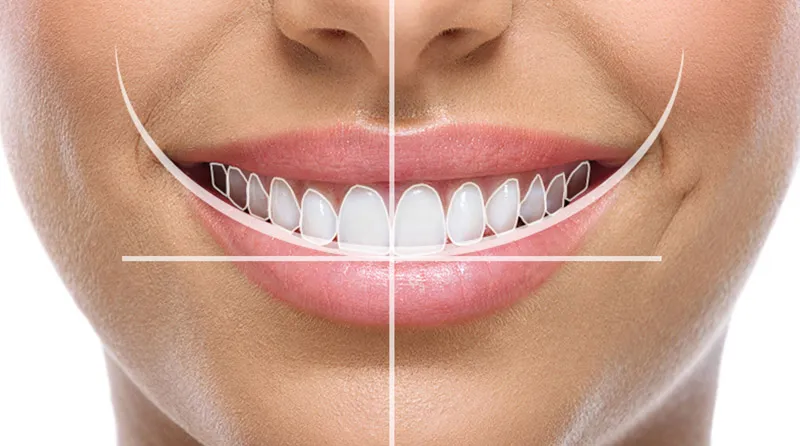
Mathematical harmony is calculated based on horizontal lines passing through the pupils (pupillary line), the wings of the nose, the corners of the lips, and the vertical midline of the face according to the rules of the golden ratio. This calculation is a fundamental medical criterion that determines the compatibility of tooth widths and lengths with the individual’s facial oval.
The human face is based on certain geometric and proportional rules. In aesthetic planning, the vertical midline of the face is primarily determined. The junction point of the two upper anterior teeth (centrals) must be in perfect parallelism with this midline. The imaginary line connecting the tips of the teeth is positioned parallel to the horizontal line passing through the pupils, adding a balanced expression to the face.
However, the sizes of the teeth shape themselves according to the “Golden Ratio” (1.618). From the front view, the width of the first incisor follows a specific mathematical reduction relative to the adjacent second incisor and the canine. Simultaneously, whether the face is square, round, oval, or triangular directly affects the edge contours of the porcelain teeth to be designed. Sharp-edged faces integrate more angular forms, while round-edged faces incorporate oval tooth shapes to achieve anatomical harmony.
| Anatomical Reference Point | Its Role and Function in Planning |
|---|---|
| Facial Midline | Helps to create left-right symmetry on the face by determining the center of the front teeth. |
| Pupillary Line | This is the basic parallel reference that balances the horizontal plane (level) of the teeth and gums. |
| Lower Lip Arc | During smiling, the incisal edges of the upper teeth are ensured to follow this arc. |
| Facial Shape (Oval, Square, Triangle) | Determines the corner shapes of the porcelain to be applied (sharp or soft-edged). |
Why is Oral Health Assessment Prioritized Before Treatment?
Oral health assessment is essential to ensure that the porcelain or composite materials to be used rest on a healthy biological foundation and exhibit long-term durability. Aesthetic procedures initiated without treating gum inflammations or tooth decay risk the biological integrity underneath.
Addressing aesthetic concerns always comes after establishing biological health in dental practice. Even the highest level ceramic restoration placed on a bleeding, swollen, or inflamed gum will fail in a short period. Therefore, the first step in the planning of a patient involving aesthetics is to control periodontal (gum) health.
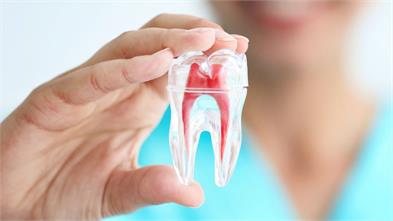
In this preparation process, after ensuring general hygiene, if there are teeth with inflammation at the root tip, the root canal treatments are refreshed, and old fillings causing leaks are removed and cleaned. Ensuring that the biological substrate is healthy, bloodless, and stable is a fundamental medical necessity for aesthetic restorations to establish a non-leaking chemical bond with the tooth tissue.
What Needs Does the Mock-Up (Try-On) Application Address in the Treatment Map?
The Mock-Up (Try-On) application addresses the need to visualize the result by copying the design prepared on the computer into the mouth with temporary materials, without making any abrasion or cutting on the patient’s teeth. This step prepares the ground for agreement between the dentist and the patient on the design.
Transforming the virtual design prepared in a digital environment into a physical reality is one of the most reassuring stages of Aesthetic Dentistry processes. A model is prepared in the laboratory from wax according to measurements taken from the patient. A silicone mold obtained from this model is filled with temporary acrylic material and applied directly on the patient’s own teeth.
Within a few minutes, thanks to this material that hardens, the patient experiences in front of a mirror how their teeth will harmonize with their lips, speech, and face after treatment. This is a stage where there has not yet been any medical procedure performed on the teeth, making it reversible. If the patient has requests for revisions regarding the length, shape, or width of the teeth, notes are taken during this trial, and the final design is revised based on this data.
What Criteria Are Used to Select Restorative Materials?
Restorative materials are selected according to the patient’s chewing forces, bruxism condition, the width of the gap to be closed, and the required level of light transmissibility. If translucency is a priority in the anterior region, laminate is preferred, while in posterior regions, if chewing resistance is high, materials with zirconium infrastructure can be planned.
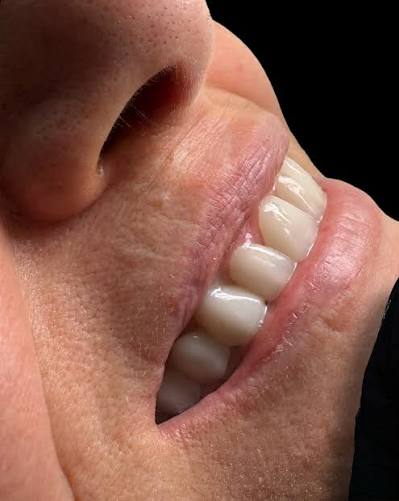
The materials science of aesthetic restorations requires a case-specific approach. Porcelain laminates (leaf porcelains) consist of extremely thin glass ceramics that are applied only to the front surfaces of the teeth and mimic natural dental enamel. It is the first choice in anterior cases due to aesthetic advantages, especially when there is minimal enamel loss and minor discolorations or small gaps will be addressed.
However, if the patient has a malocclusion, severely clenches their teeth during sleep, or has significant material loss in their teeth, the risk of fracture with thin laminates arises. In clinical situations where such biomechanical resistance is sought, zirconium or full ceramic crowns, which enclose the entire surface of the tooth and have very high structural rigidity, are included in the planning. The dentist integrates the correct material into the system by balancing aesthetic expectations with mechanical durability.
| Material Type | Planning Criteria and Areas of Use |
|---|---|
| Porcelain Laminate (Veneer) | Minimum adjustments required for the front teeth, color, and slight shape variations. |
| Zirconium Crown | Teeth requiring resistance where chewing force is high or significant material loss is present. |
| Full Ceramic (E-max etc.) | Restorations in the front area where aesthetic expectations are at the highest level, seeking natural translucency. |
| Composite Bonding | Aesthetic restoration of small gaps or minor fractures without cutting the tooth in a single session. |
How is the Balance of Pink Aesthetics and White Aesthetics Established?
The balance of pink and white aesthetics is established by aiming for the symmetrical appearance of the white surface area of the teeth and the pink gum tissue surrounding these teeth. Gum levels are aligned with medical devices and the porcelain teeth are planned to be placed in harmony with this new framework.
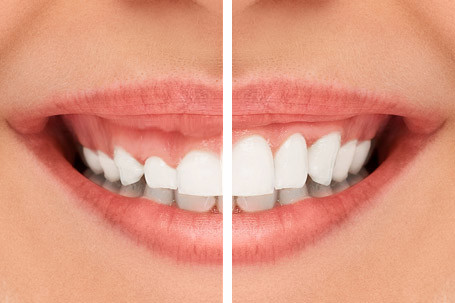
Simply covering the teeth with aesthetic materials is not sufficient for overall visual harmony. What reveals the beauty of the porcelain (white aesthetic) is the gums that aesthetically and symmetrically wrap them (pink aesthetic). For patients with a “Gummy Smile” (excess gum visibility while smiling) or asymmetrical gum heights, periodontal shaping is initially included in the planning.
Using technologies like laser or cautery, the gum borders (zenith points) are moved millimetrically upwards, and the lengths of the teeth are extended. After the healing period of the relevant tissue has been completed, the joining points of the gum and porcelain achieve a natural and harmonious line. This balance is one of the fundamental cornerstones that form the principles of overall harmony (symmetry) in planning.
In Which Situations is the Orthodontic Preparation Phase Included in the Plan?
The orthodontic preparation phase is included in cases where the misalignment or positioning of the teeth is severe, and when a direct porcelain coating poses a risk of excessive tissue loss in the tooth. This process creates a healthy foundation by aligning the teeth properly.
The discipline of preventive dentistry advocates preventing unnecessary wear of healthy dental tissues. Attempting to align a tooth that is positioned quite far back or forward within the jawbone using only porcelain requires cutting a significant amount of enamel and dentin tissue from that tooth. This may lead to the nerve of the tooth becoming exposed (necessitating root canal treatment).
To eliminate this risk, prior to aesthetic restorations, short-term transparent aligners or wire treatments are applied to gradually move the roots of the teeth to the position they should hold within the bone. When the teeth are in line with the anatomical arrangement, the amount of tissue that needs to be removed for the porcelain application is reduced to a minimal level. The joint consultation of the orthodontist and aesthetic dentist in the planning stage lays the foundation for this process.
How is the Treatment Schedule and Session Intervals Organized?
The treatment schedule and session intervals are organized according to the number of procedures to be performed, healing periods, and laboratory production phases. To avoid affecting the patient’s social life, the length of each session and the waiting days in between are turned into a detailed timeline.
An aesthetic treatment process may take several days or weeks depending on the number of teeth involved in the procedure. If only gum alignment (gingivoplasty) is to be performed, a certain waiting period is necessary for the tissue to achieve a healthy form. After the tooth cutting is done, temporary teeth are applied immediately to prevent sensitivity in the patient’s mouth and to maintain the aesthetic appearance when transitioning to the measurement phase.
The preparation of permanent porcelains in the laboratory generally requires trials spread over several days, depending on the technician’s fine craftsmanship (foundation trial, dentin trial). The physician ensures that the process proceeds within a predictable medical flow by presenting the dates of these trials and the estimated delivery time during the planning phase.
What Protocols Are Followed During the Planning Phase at Avrupadent?
During the planning phase at Avrupadent, protocols such as examining the patient’s medical history, conducting 3D radiological imaging, obtaining digital intraoral scans, and following sterilization guidelines are adhered to. This process ensures the development of a roadmap based on objective and medical realities.
The standard of a clinic’s medical success is measured by the meticulousness of the diagnosis and data collection phase prior to starting treatment. In Avrupadent processes, the patient’s chewing muscles, jaw joint movements, and existing gum health are comprehensively addressed during the first appointment. The digital data obtained about the patient is shared concurrently with CAD/CAM-supported laboratory systems to ensure the design is based on scientific measurements.
All implemented plans are structured within limits that will not strain the patient’s oral structure and will not disrupt functionality. By tracking the biocompatibility certificates of the ceramic blocks or composite agents to be used, it is ensured that not only aesthetics but also a healthy restorative integrity is established by thoroughly following clinical operational standards.
What are Frequently Asked Questions?
1. Is discomfort felt during the mock-up of the smile design?
The mock-up process is completely comfortable as it does not require any grinding, cutting, or anesthesia, and is applied by placing a temporary material on the tooth surface.
2. How is facial symmetry evaluated during the planning phase?
Digital photos taken from anatomical reference points such as the pupils, lip corners, and the midline of the face are transferred to software to measure mathematical parallels.
3. Is tooth cleaning mandatory before aesthetic treatment?
Cleaning tartar and plaques in the oral flora is a medical prerequisite to achieve a healthy gum contour and ensure precise measurements.
4. What is the difference between digital impressions and traditional impression materials?
Digital impressions are taken with intraoral cameras to prevent the gag reflex and are transferred to the laboratory with zero errors, unlike traditional silicone materials that leave room for distortion.
5. Can aesthetic planning be done for patients who grind their teeth at night?
For bruxism patients, durable materials are chosen to prevent porcelain breakage, and the use of a night splint is included in the treatment plan.
6. Why is pink aesthetic planning (gum alignment) important?
To correctly showcase the lengths and shapes of the teeth, a symmetrical gum contour is essential; otherwise, just having white teeth is insufficient for aesthetic integrity.
7. Is the patient’s age taken into account when creating a treatment schedule?
Especially for young patients in their adolescent period, as bone development and gum maturation are ongoing, permanent aesthetic restorations are postponed until growth is complete (e.g., age 18).
8. Can orthodontic treatment be combined with aesthetic planning?
In cases of severe malocclusion, teeth are initially aligned with clear aligners or braces to prevent excessive tissue loss, followed by planning aesthetic restoration (like laminates, etc.).
9. How is the color of the porcelain selected?
The patient’s skin tone, age group, the color tones of existing teeth, and the patient’s expectations are blended to determine the color using color scales or digital spectrophotometer devices.
10. Is there a margin of error in digital smile design?
Digital systems measure at the micron level, minimizing human errors and targeting a perfect match between the designed prosthesis and the virtual design.
11. Are jaw joint issues examined during planning?
Yes, by examining lower jaw movements and joint health, any uneven load on the new porcelains and potential damage to the joint is medically prevented.
12. Can old porcelain crowns be included in the new aesthetic plan?
Existing old crowns are removed to ensure aesthetic and functional integrity and are replanned to be compatible with the materials and colors of the new restorations.
13. Are temporary teeth used during the treatment period?
After preparing the teeth (reduction), temporary teeth are applied in the same session until the laboratory process is complete to ensure the patient does not experience sensitivity and to prevent aesthetic loss.
14. Does aesthetic planning only cover the front teeth?
While the focus is usually on the front teeth in the smile line (up to premolars), the back teeth are also functionally included in the planning to maintain chewing balance and overall symmetry.
15. How long does treatment follow-up take under Avrupadent standards?
After the restorations are delivered, routine check-ups and radiological follow-ups are usually planned in the first week and at six-month intervals to check tissue compatibility.