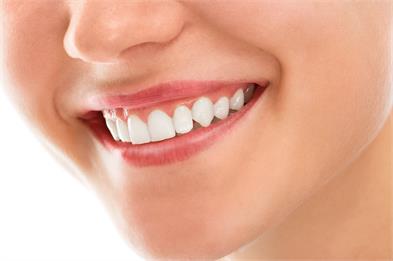
How is Tooth Color and Shape Determined?
In restorative procedures around the mouth and jaw, the visual and biological compatibility aimed for is not limited to merely restoring functional chewing capacity. The restorations should not give an artificial addition feel when viewed from the outside; they should be perceived as an extension of the individual’s own organic tissues, which is a fundamental focus of the Aesthetic Dentistry discipline. In the past few years, patients’ monotonous expectations to have only “white” and “smooth” teeth have transitioned to complex design processes that reflect the correct light and harmonize with personal expressions, characterized by specific details tailored to the face. The selection of color and form is a delicate balancing act of medical science where the rules of optical physics and anatomy come together, rather than just randomly choosing a code from a catalog.
When determining an individual’s tooth color, not only the dye scale of laboratory materials but also the warm or cool undertones reflected by the skin color and the natural brightness of the sclera of the eye are considered a reference point. While determining form, the vertical and horizontal axes of the face, the structure of the chin, and the prominence of the cheekbones guide the process. All these variables shape how the teeth should be positioned in terms of width and length within the overall framework of the face. This comprehensive clinical guide addresses in detail the medical requirements behind color and form selection, the effects of light science on materials, the reflections of age and gender in design, and how these sensitive values are organized within the Avrupadent processes.
What Biological Factors Play a Role in Tooth Color Selection?
The primary biological factors that play a role in tooth color selection are the patient’s skin tone, hair color, lip thickness, and the physiological tissue changes brought about by age group. These factors shape the brightness (value), saturation (chroma), and hue values that a tooth should possess, aiming to prevent an unnatural and lifeless appearance of the restoration within the facial context.
In dental practice, color is evaluated as a three-dimensional concept. Hue expresses the basic color of the tooth (yellowish, reddish, or grayish); saturation indicates how intense this color is. Brightness (value) relates to how light or dark (on the black-white axis) the color is perceived. The human eye is most sensitive to brightness (value) when deciding whether a tooth is aesthetically pleasing. A porcelain with very high brightness (extremely white) creates an artificial impression by contrasting with the other tissues of the face.
In order to achieve biological harmony, the individual’s natural pigmentation is taken into account. For individuals with dark skin tones, since the contrast between the skin and the teeth will already be high, selecting very white shades for the teeth leads to excessive brightness in the mouth and increases the perception of prosthetics. In such cases, warmer and more saturated (cream/beige undertone) colors are preferred to balance the contrast. For individuals with light skin tones, since the color of the teeth can easily blend with the surrounding tissues, a slightly higher brightness (value) level is maintained to ensure the teeth are noticeable within the face.
Why is Eye Sclera Color an Important Reference in Determining Tooth Whiteness?
The color of the eye sclera plays an important role in determining the brightness level of the teeth, as it is the most natural white reference area on the face. It is one of the fundamental optical rules that the brightness level of the tooth color should not be chosen higher (brighter) than the whiteness of the individual’s eye sclera, protecting the harmony in facial symmetry and limiting the teeth from becoming an artificial focal point on the face.
During a smile, the attention of the person opposite often draws a triangle between the eyes and the mouth area. If the whiteness of the restorative materials inside the mouth exceeds the brightness of the eye sclera, the focus shifts solely to the teeth. This situation can cause the restoration to reflect more light than is appropriate in the environment and create a sense of visual discomfort for the individual. In ideal clinical planning, the targeted whiteness scale is selected at the same value as the eye sclera or at a saturation that is half a tone lower.
This reference serves as a medical guide, especially for individuals in older age groups. As we age, the natural brightness of the eye loses some intensity. When excessively white (for example, in bleach tones) ceramics are applied to these patients merely to create a younger appearance, the biological harmony between the face and teeth is lost. Preventing this optical mismatch constitutes one of the most meticulous stages of the evaluations in Aesthetic Dentistry.
How is the Facial Skeleton Analyzed While Selecting Tooth Shape?
When selecting tooth shape, the facial skeleton is classified into oval, square, round, or triangular lines by examining the forehead width, the prominence of the cheekbones, and the curvature of the jawline. This classification ensures that the edge lines of the new porcelain teeth are designed in a way that completes the facial oval with mathematical symmetry regarding width and length ratios.
In the dental literature, there is a general anatomical approach that states the tooth shape is an inverted (anti-symmetric) miniature of the facial shape. The shape of the face directly determines the character of the prosthetic tooth to be applied. The dentist maps the boundaries of the face digitally or visually by taking frontal photos of the patient.
- Oval Facial Shape: In oval faces with soft transitions, the corner parts of the porcelain teeth (incisal embrasures) are rounded to support the natural curvature of the face.
- Square/Rectangular Facial Shape: In square face types where the jaw muscles (masseter) are prominent, the incisal edges of the teeth are designed to be flatter, while the corners are more pronounced (royally angled).
- Facial Form: In a jaw structure that narrows towards the tip of the chin, a morphology is adopted where the neck areas of the teeth are narrower and the cutting edges slightly wider.
If these parameters are ignored, for instance, placing very sharp-edged square-shaped teeth in an overly round form will result in the teeth appearing small and mismatched in the mouth. The guidance of facial form in the design stage is an indispensable medical necessity for overall harmony.
How Do Gender Characteristics Reflect on Tooth Shaping Process?
Gender characteristics influence the softness or sharpness of the angles of the teeth, the length difference of the two front incisors (centrals) compared to the lateral teeth, and by affecting the curved tissues on the surfaces of the teeth, they direct the tooth form to exhibit either a feminine or masculine expression.
As with many areas of human anatomy, gender differences also manifest in dental morphology. In a feminine tooth arrangement, the two front central (middle incisors) teeth are generally noticeably longer and more pronounced than the adjacent lateral teeth. The corners of these teeth are more openly rounded and have softer lines. The tips of canine teeth are more rounded rather than pointed, transitioning with a softer curve (radius). This structuring adds a more delicate, dynamic, and youthful expression to the face.
When masculine tooth forms are planned, the lengths of the central and lateral teeth are maintained at closer levels. The cutting edges of the teeth progress in an almost straight line, and their angles are much more distinct and angular. Canine teeth are designed to be voluminous and harder. This type of arrangement emphasizes a strong characteristic. Depending on individuals’ expectations, these standards may sometimes be flexible; however, gender characteristics are always among the data forming the main map in the fundamental design philosophy.
How Does Age Affect the Incisal Edges and Color of Teeth?
Age factors cause the incisal edges of the teeth to flatten due to mechanical wear over the years, reduce translucency levels, and lead to the exposure of the underlying yellowish dentin color as the enamel becomes thinner. In the design process, considering the patient’s age, it is aimed to create a youthful perception by modeling translucent and mobile incisal edges instead of these worn tissues.
In younger individuals, tooth enamel is thick and micro-wave-like (mamelon structure). In the incisal edges of the anterior teeth, there is a noticeable translucency with a bluish tint and a ‘halo effect.’ Over the years, mechanical activities such as chewing, speaking, and brushing lead to the wearing down and abrasion of this thin translucent layer. Over time, teeth become flat, block-like, and shorter. Additionally, the thinning of enamel causes the dentin layer, which gives the tooth its internal color, to be reflected more from the outside, making the teeth appear yellower.
When restorative planning is made for individuals in middle and older age groups, tooth heights (crown lengths) are generally slightly extended according to references from younger years. Special glass ceramic powders are added to the incisal edges of porcelain materials to recreate the illusion of translucency. The tooth color is also brightened by removing the dullness that age brings, resulting in a lighter tone. Analyzing the age factor in this way is the key secret to the dynamism that the treatment adds to the patient.
What Limits the Smile Line and Lip Curve Tooth Dimensions?
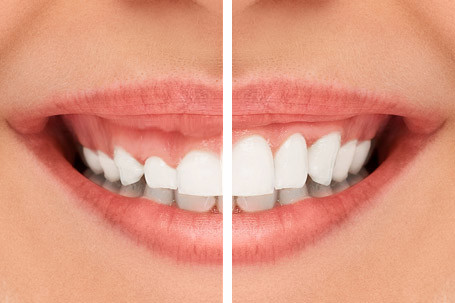
The smile line (smile arc) is an anatomical limit that requires the incisal edges of the upper front teeth to follow the inner curvature of the lower lip in a parallel manner during smiling, determining the lengths of the teeth. Violation of this curve leads to teeth appearing foreign to the face and causes asymmetry in facial movements.
When a person smiles naturally, the lower lip typically creates an arc that resembles the letter “U.” In the aesthetically ideal arrangement, the imaginary line connecting the incisal edges of the central, lateral, and canine teeth in the upper jaw should be followed perfectly parallel by this arc of the lower lip. If the lengths of the teeth are designed to be aligned (as a straight line), it results in a mismatch between the lip curve and the tooth curve, which is referred to as “reverse smile esthetics.” Reverse smile esthetics give the person an unhappy, tired, and aged expression.
The position of the upper lip also determines how much of the teeth will be visible. When the lips are at rest (slightly parted), it is considered ideal for the upper incisors to be visible by approximately 2 to 3 millimeters. The practitioner should measure the allowance for lip movement (the hypermobility condition) in millimeters while designing the tooth length and limit the restorations from exceeding the lip boundary.
| Smile Arc Type | Anatomical Appearance | Created Aesthetic Perception |
|---|---|---|
| Parallel Arc | The edges of the upper teeth symmetrically follow the arc of the lower lip. | A youthful, dynamic, and natural appearance in complete harmony with the face. |
| Flat Arc | The edges of the anterior teeth and canine teeth are at the same level. | A severe, aged, and lifeless expression; a perception far from natural (dentures). |
| Reverse Arc | A sequence where the central teeth are shorter than the lateral teeth (intrabucally). | A profile indicating an unhappy, asymmetric appearance and biomechanical issues. |
How is the Ideal Tooth Shape Achieved Using Optical Illusions?
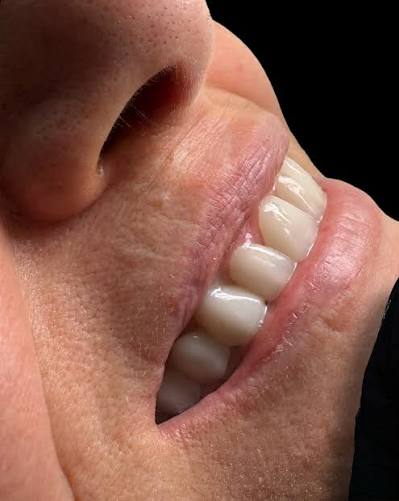
Optical illusions are tricks of perception that idealize the form of a tooth by making a wider tooth appear thinner or a shorter tooth appear longer, through vertical or horizontal lines applied to the surface of porcelain restorations and differences in light reflection areas (line angle), all without physically touching the tooth.
Sometimes, the extent of narrowness or gaps in a patient’s jaw structure does not allow for an ideal-sized tooth to be created. For example, in a case with excessive spacing between teeth, to close the gap, the teeth may be forced to be designed very wide on the horizontal axis. However, this width can lead to the tooth taking on a crude, aesthetically unpleasing square shape. At this point, dental technicians apply the rules of optical illusions.
When the ridge lines reflecting light on the surface of porcelain are brought closer together towards the center, the eye perceives only this central light area; the sides remain in darkness, creating a shadow effect that makes the tooth appear much thinner and more elegant. Similarly, when vertical surface grooves (development lines) are applied to a short tooth, the eye is tricked into perceiving the tooth as longer on the vertical axis. These illusions are powerful medical art techniques used to achieve aesthetic balance in restricted anatomical areas.
At What Stage Do Character Analysis and Individual Expectations Come Into Play in Design?
Character analysis and individual expectations are integrated into the treatment plan from the very first examination session. Whether the patient has an inward gaze, is calm or outward-focused, or has a dynamic social profile, these factors are used as guiding data in determining the subtle morphological changes to be made in the shape of the teeth (sharp lines or soft forms).
In dental applications, the “biopsychosocial” approach examines not only the physiological aspects of treatment but also its impact on the individual’s psychology. Individuals with a round, energetic, and dominant character often seek more pronounced, voluminous, and dominant forms for their teeth. Conversely, individuals with a calmer and more introverted character typically adopt a more subdued, rounded, and soft arrangement that does not draw attention.
During the planning phase, the doctor’s transparent communication with the patient ensures a common ground between expectations and feasibility limits. The extremely bright and large tooth arrangements referred to as the “Hollywood Smile” do not clash with any character type or facial shape. For this reason, the patient’s social identity is included in analyses to harmonize with the energy of the new smile to be designed.
How Do Digital Color Measurement Devices (Spectrophotometers) Work in Clinical Settings?
Digital color measurement devices (spectrophotometers) are technological equipment that convert the return reflection spectra of LED lights emitted at specific wavelengths directed at the tooth surface into numerical (objective) data, independent of the ambient light.
In classical methods, the selection of tooth color operated on the doctor’s use of a standard color palette to approach the patient’s tooth and make decisions by eye. However, the human eye’s color perception can be misled by factors such as the current level of fatigue, whether the light inside the clinic is fluorescent or daylight, and even the color of the patient’s clothing (metamerism effect). The spectrophotometers developed to overcome this visual illusion process thousands of data points on the tooth within seconds.
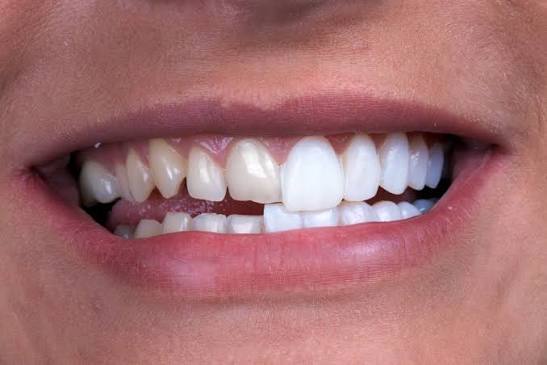
The tip of the device is brought into contact with the tooth, and the device converts into a digital report to transfer the color code of each region by separately analyzing the neck, middle, and cutting edges of the tooth. In cases where it is extremely difficult to match the color, such as the adaptation of a single tooth to adjacent teeth (for instance, making a crown on a single central tooth), the numerical data provided by digital devices guarantees the integration with neighboring teeth at a clinical level.
What Standards Are Followed in Planning Tooth Color and Shape in Avrupadent Processes?
In the clinical operations of Avrupadent, color and shape planning is conducted according to standards involving the acquisition of the patient’s three-dimensional optical scans, facial analysis performed with high-resolution clinical photographs, and the integration of this data in digital design software to present a “Mock-Up” (physical prototype of the virtual design) to the patient before treatment.
The success of restorative processes is made possible through transparent medical communication that eliminates surprises. At Avrupadent standards, after listening to the patient’s expectations, the facial geometry is transferred to the digital environment. Ideal tooth shapes, determined according to the golden ratio rules through software, are virtually designed based on the patient’s existing dental measurements. In the color selection phase, the skin undertones and eye whites of the patient are determined through a joint consultation between the physician and the laboratory technician.
This designed shape is applied directly over the patient’s own teeth using a temporary acrylic material without any medical procedures or shaving being performed yet (Mock-Up). The patient tests the length, width, and appearance of their new teeth in front of a mirror. Any revision requests regarding the shape are corrected immediately. This high-standard data sharing between the clinic and the laboratory supports keeping the treatment result within safe limits both aesthetically and functionally.
What Are Frequently Asked Questions?
1. Will my requests be considered when determining the dental form?
Yes, the design process is shaped around your aesthetic expectations (more rounded, sharper, etc.); however, your doctor presents you with the ideal options by filtering these requests through the biological compatibility with your function and facial proportions.
2. Can everyone have very white (Bleach tone) color applied?
The whitest tones in the color scale may not suit everyone; overly white shades can create an unnatural contrast in individuals with darker skin or older age groups, so more balanced tones suited to skin and eye color are recommended medically.
3. How much can my teeth be extended?
The amount of teeth extension depends on the contour of your lower lip and whether the teeth touch the lip when producing sounds like ‘F’ and ‘V’; exceeding these biological limits may lead to speech disorders.
4. Is the mock-up (trial) procedure permanent?
No, the mock-up is purely temporary and reversible. It consists of testing material applied to the tooth surface to show how the new form will look in the mouth, which can be removed after a few minutes.
5. Which is more natural-looking: zirconium or e-max (glass ceramic)?
Both materials provide excellent compatibility with the gum tissue since they are metal-free. However, e-max (lithium disilicate) offers results optically closer to natural tooth enamel in terms of light transmissibility and translucency.
6. Can clinical lighting be misleading in color selection?
Different light sources in clinics (fluorescent, etc.) can lead to a different perception of color (metamerism). To avoid this, color selection is done under medical lamps that emit light closest to natural daylight or with digital spectrophotometer devices.
7. Are the dental designs of male and female patients different?
Yes, gender characteristics guide the design. For women, softer angled, and medium two teeth with distinct oval forms are preferred; while for men, straighter lines, angular, and more masculine forms are used.
8. What role do canine teeth play in aesthetic dentistry?
Canine teeth support the corners of the lips, define the facial profile, and guide the chewing movements; the proper shaping of these teeth directly affects the character of the smile and joint health.
9. Can aesthetic form be given if I have crooked teeth?
In cases of mild crowding, teeth can be aligned and contoured with porcelain restorations. However, in cases of severe crowding, to avoid excessive cutting of healthy dental tissue, short-term orthodontic (wire/bracket) alignment procedures are included first.
10. Can the color of my natural teeth be significantly lightened with whitening?
With office-type whitening procedures, the natural color of the tooth can be lightened by a few shades. However, if there are very deep dark stains due to genetics or antibiotic use, it may be necessary to consider thin porcelain laminates to achieve the desired color.
11. How does the level of the gum affect form design?
If the gum line is asymmetrical or very droopy, the length of the tooth cannot be adjusted correctly and appears short/square. In these cases, gum contouring with lasers (pink aesthetics) is performed to set the tooth length within the ideal framework.
12. Can the color be changed after restoration?
The color of porcelain, zirconium, or laminate restorations that are fired and made as permanent for the tooth in the laboratory cannot be lightened or darkened afterwards. Therefore, the approval phase during trials is very important.
13. Are composite materials used in form alteration?
Yes, composite bonding applications are a quite practical and protective medical method applied without touching the teeth to extend the form of the teeth, close gaps, or repair minor cracks in a single session.
Can a young tooth form be made for patients aged 14?
Physiologically, when the length of over-erupted and shortened teeth is extended slightly and transparency is added to their tips, the patient can be given a youthful expression; however, this length must not exceed joint tolerances and lip mechanics.
Who is responsible for color selection according to European standards?
Color selection is a joint decision-making process that combines the physician’s medical data (skin tone, optical values) with the patient’s request; the patient’s consent is obtained during mock-ups and laboratory trials before the design is approved.