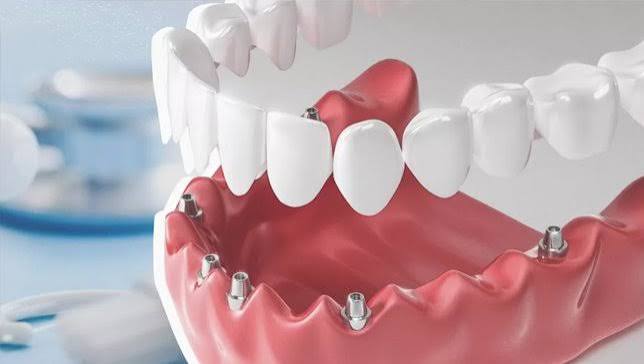
When are temporary teeth placed in implant treatment?
In implant treatment, temporary teeth are placed towards the end of the average 2 to 6 month cellular waiting period required for the healing of the jawbone, immediately after the surgical operation is completed. This timing is not dependent on a standard protocol but is determined by the dentist based on medical criteria such as the density of the patient’s jawbone, the retention strength of the titanium material to the bone (primary stability), and overall anatomical findings inside the mouth.
These surgical interventions applied to address tooth deficiencies require respect for the biological adaptation cycle of the human body. It is expected that the structure placed in the jawbone fully integrates with bone cells (osseointegration) to withstand the chewing forces that will act upon it. During the time until this process is completed, temporary restorations are produced from specific medical materials to ensure that the patient can maintain their social life and protect the tissue profile. The decision of which patient will receive temporary teeth at which stage is made based on clinical experiences and objective radiological measurements.
At which stage is temporary tooth application for implant treatment carried out in Izmir?
In the implant treatment carried out in Izmir, the application of temporary teeth occurs immediately after the surgical session where the medical roots are placed in the jawbone (immediate loading) or at certain stages of the bone healing phase in the months following the surgery. The stage at which it will be applied is planned based on anatomical and physiological data by calculating the cellular load that the relevant tissue can carry according to the results of three-dimensional dental tomography.
In the processes carried out at İzmir Avrupadent clinics, the individual anatomical response of the hospital is prioritized before everything. In the regional planning of the treatment, the patient’s age, the position of the missing tooth, and the existing tissue quality are analyzed as a whole. Especially for patients at the İzmir location, the progression of the temporary tooth process is explained in a clear manner from the moment of the first examination. Since waiting times can vary from person to person, the timing of the procedure is directly proportional to the biological healing capacity of the bone.
Why is Temporary Tooth Use Considered Necessary During Implantology Process?
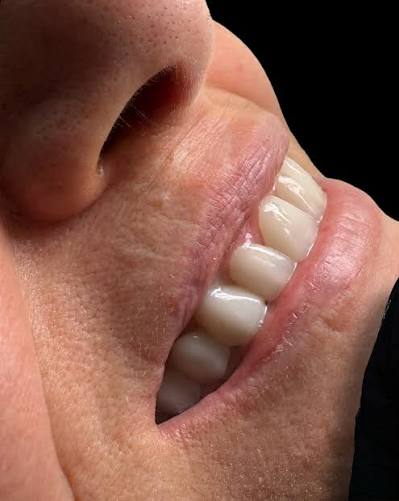
The use of a temporary tooth is deemed necessary to cover the visual gap caused by tooth loss, prevent the collapse of lip and cheek tissues, and support phonetic (speech) functions in the patient’s social life. At the same time, it provides direct biological guidance for the soft tissue (gum) to take on a natural arch form suitable for the permanent prosthesis while healing in the surgically treated area.
Implantology aims not only to complete a missing root but also to reconstruct the soft and hard tissues above that root in their anatomical form. After tooth extraction or surgical intervention, the gums gradually tend to change shape over time. Temporary teeth act as a scaffold, ensuring that the gum heals in the correct position and thickness. The table below summarizes the main purposes of temporary teeth use.
| Functional Area | Medical Necessity and Expected Effect |
|---|---|
| Tissue Guidance (Gum Shaping) | Guides the healing of the natural tooth socket in a way that allows compatibility with the permanent prosthesis. |
| Phonetic (Speech) Integrity | Ensures the correct pronunciation of letters (especially the sounds f, v, and s) by supporting tongue and lip movements. |
| Aesthetic and Social Adaptation | Allows the individual to continue their social life by masking the anterior region tooth deficiency throughout the treatment process. |
| Chewing System Balance | Preserves vertical dimension and occlusion (closure) by preventing the opposing teeth from overextending into the gap. |
What Medical Criteria Must be Met for Immediate Loading Temporary Teeth?
Immediate-loading temporary teeth are dependent on achieving a high degree of mechanical compression (torque) of titanium in the jawbone during the surgical procedure, ensuring sufficient bone width in the patient, and the absence of any active infection in the relevant area. If the measured primary stability (initial retention) value falls below medical reference limits, the immediate loading protocol is canceled by the physician, and a standard healing schedule is initiated.
This protocol, referred to as immediate loading, is applied in specific situations where certain anatomical conditions are fully met. Although it is preferred due to aesthetic requirements in cases of anterior tooth loss, the biocompatibility of the surgical area always takes precedence over aesthetics. In cases where the jaw bone is spongy or there is inflammatory tissue (granulation tissue) in the area after tooth extraction, placing a tooth early can disrupt the treatment course by transmitting micro-movements (harmful pressure) to the healing bone cells.
- Sufficient Primary Stability: High resistance measured at the moment of placing the material in the jawbone.
- Bone Quality: The trabecular structure of the bone must be dense and compact.
- Force Distribution: The relevant area must be in a position that is not exposed to excessive biting forces (especially in the posterior regions).
- Systemic Health: There should be no systemic disorders, such as uncontrolled diabetes, that slow down tissue healing.
What Differences Exist Between Temporary Tooth Applications in Upper and Lower Jaw Treatments?
The main difference between temporary tooth applications in upper and lower jaw treatments is that the upper jawbone is anatomically more porous (spongy), requiring a longer planned process for cellular integration, and there is a need to maintain the temporary prosthetics under chewing pressure for a longer duration. In contrast, since the lower jawbone has a denser (cortical) structure, surgical stabilization can be achieved more quickly.
In human anatomy, the lower jaw (mandible) is equipped with movable and powerful muscles, while the upper jaw (maxilla) is fixed to the skull and has a softer structure containing air cavities known as sinuses. This structural difference directly affects the osseointegration rate of bone cells with the titanium surface. Therefore, maintaining temporary teeth in a passive position (so they do not receive biting forces) in the upper jaw requires a greater medical sensitivity compared to the lower jaw.
When Are Temporary Teeth Installed in Cases with Bone Powder (Graft)?
In cases where bone powder (graft) is added, the temporary tooth is typically placed after the average 4 to 6 months required for the biological integration, vascularization, and hardening of the powder with the patient’s own tissue has been completed. Early placement of temporary prosthetics that will apply pressure to the weak areas where the graft has been applied is not preferred, as it may disrupt the newly forming bone infrastructure.
Anatomical resorption occurring in areas that have been edentulous for many years is attempted to be repaired with bone grafts. This repair is a cellular process; the biological material added from the outside is encapsulated by the body’s own cells and transformed back into original bone. At this critical stage, if mechanical force is applied, the formation of connective tissue instead of bone cells can be observed. However, specific temporary systems such as the ‘Maryland bridge’, which do not exert pressure on the surgical area and rely on support from neighboring teeth, can be used in cases deemed appropriate by the physician.
Do Temporary Teeth Replace Permanent Porcelain or Zirconium Teeth?
The structural materials of temporary teeth do not replace permanent porcelain or zirconium teeth in terms of mechanical durability and lifespan; they are only used temporarily to ensure aesthetic integrity and protect the tissue during the treatment process. Generally made from light materials based on acrylic or resin, they cannot withstand the main chewing forces and do not have the anatomical functionality provided by permanent teeth.
Temporary teeth are produced from durable ceramics or zirconium blocks fired at high temperatures, while temporary restorations are quickly shaped from softer laboratory materials in a clinical or laboratory setting. It is a clinical error to consider the process complete with temporary teeth just because patients find their aesthetic appearance satisfactory. Temporary materials wear down over time, change color, and can lead to bacterial seepage in the underlying surgical area. Comparative technical details are presented in the table below.
| Criterion | Temporary Teeth | Permanent Teeth (Zirconium / Porcelain) |
|---|---|---|
| Manufacturing Material | Acrylic, composite resin, or light polymers. | Medical zirconium, E-max, or porcelain supported by metal. |
| Mechanical Durability | Weak against hard chewing forces, can break. | Durable against natural biting and chewing forces of the human jaw. |
| Usage Period | Designed only for the healing period (2-6 months). | Produced aiming for long-term biological integration. |
| Surface Smoothness | More prone to bacterial plaque retention, can discolor. | Resistant to plaque accumulation due to high polishing and glaze structure. |
What Should the Daily Nutrition Regimen Be While Using Temporary Teeth?
When using temporary dentures, the daily diet should consist of foods that are puree-like, soft, and do not require strong chewing forces. Foods such as apples, simit, or nuts that can harden, have shells, or need to be bitten off should definitely not be consumed, as they can transmit uneven chewing pressure (micro-mobility) to the surgical area below. This is a fundamental rule for the patient to ensure healthy and normal progress of bone fusion.
The greatest area of responsibility that falls on the patient during the treatment process is nutrition. The primary function of the temporary tooth is not to chew food but to guide the tissue biologically. If the chewing action is carried out with these teeth, the mechanical force applied from outside can disrupt the integration process by being transmitted to the titanium material that is still trying to bond to the bone. Therefore, dietary habits should be temporarily rearranged according to the physician’s directives.
- Soft Diet: Foods that do not require chewing, such as vegetable purees, soups, well-cooked soft foods, and yogurt should be preferred.
- Regional Protection: The eating process should, if possible, be performed using the natural teeth on the opposite side of the area where the temporary tooth is located.
- Temperature Control: Consumption of excessively hot or cold foods in the first days following the surgical procedure should be balanced, as it can increase tissue sensitivity.
How Should the Care of Temporary Dentures be Conducted?
The care of temporary dentures should be done daily using soft nylon toothbrushes, with gentle brushing movements that do not apply excessive pressure, and with the cleaning aids recommended by the physician. To protect the gums from infections, it is essential to prevent the accumulation of bacterial plaque or food residue around the temporary structure, as part of a mandatory hygiene protocol for maintaining surrounding tissue health.
As in natural teeth, food debris can easily accumulate on temporary materials. Since acrylic-based temporary surfaces are more porous than porcelain, they are more prone to plaque retention. Care should be taken not to create trauma to the surgical area while brushing, and it is recommended to move the toothbrush in a single direction from the tooth gum to the tooth. Additionally, if prescribed by a physician, special medical rinses during the healing period should be used as supportive agents to prevent gum inflammation (gingivitis).
What is the Importance of Temporary Tooth Application in Aesthetic Losses in the Anterior Area?
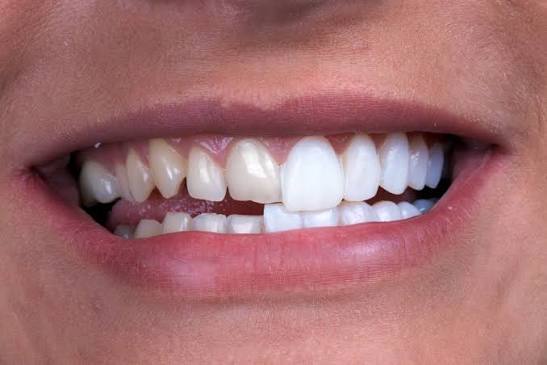
The importance of temporary tooth applications in aesthetic losses in the anterior area; it helps the individual maintain the pronunciation of letters during speech (phonetics), prevents the lip profile from sagging, supports facial symmetry, and facilitates healthy adaptation to social life psychologically. These medical devices, which prevent the visibility of anterior tooth loss during the healing period, have a positive effect on the patient’s motivation for treatment.
The anterior region is anatomically the center of facial aesthetics, the design of smiles, and facial expressions in communication. A tooth loss in this area not only affects aesthetics but also causes disturbances in the sounds produced when the tongue contacts the teeth. Temporary tooth applications prevent the patient from isolating themselves from their surroundings during the months when the treatment process is prolonged. These applications are considered not only functional supporters in the dental literature but also as ‘psychosocial supporters’.
How is the Temporary Tooth Adaptation Process Monitored in Europadent Clinics?
The temporary tooth adaptation process in Avrupadent clinics, which operate solely in the İzmir location, is objectively followed according to the 2026 healthcare regulations through periodic doctor check-ups, as well as repeated digital radiographic examinations (tomography) and clinical examination of the soft tissue when necessary. The functional relationship established with the temporary structure is monitored through regular appointments to check for inflammation (redness, infection) in surrounding tissues, ensuring the safety of the surgical area.
In the processes of Avrupadent, patients are not left unattended after receiving the temporary dentures. Generally, the first control session is organized one or two weeks after the delivery of the temporary prosthesis to examine the compatibility of the soft tissue (gum). The clinician tests whether the material negatively affects the bone integration process by applying mechanical pressure. If any wearing or high occlusion is detected in the temporary prosthesis, adjustments are immediately made in the laboratory or clinical settings to balance the pressure.
How is the transition to permanent teeth ensured after the waiting period is complete?
After the bone healing and cellular waiting period is completed, the temporary teeth are carefully removed in a clinical setting, and precise measurements are taken from the healed gum using digital scanners or traditional silicone materials to initiate the transition process to permanent teeth. After it is radiologically confirmed that the titanium framework is biologically fully integrated in accordance with the Implantology discipline, the main zirconium or porcelain dentures prepared in the laboratory are placed on the patient.
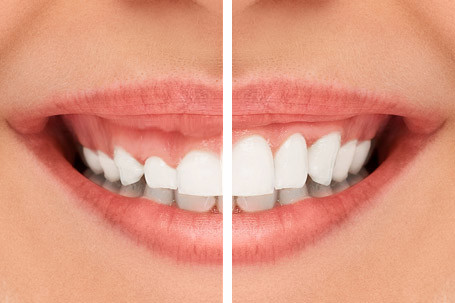
The transitional stage of the treatment plan provides the results of the prosthetic (crown) process. Thanks to the guidance of the tissue supported by the temporary tooth, the gum achieves an ideal “U” shape that will fit perfectly to the edges of the permanent porcelain teeth. New teeth produced in the laboratory are subjected to functional trials based on the patient’s jaw movements, facial shape, and the color palette of adjacent teeth. After confirming that there is no imbalance in occlusion and that the chewing forces are evenly distributed, the permanent assembly of the original teeth is performed, completing the treatment protocol.