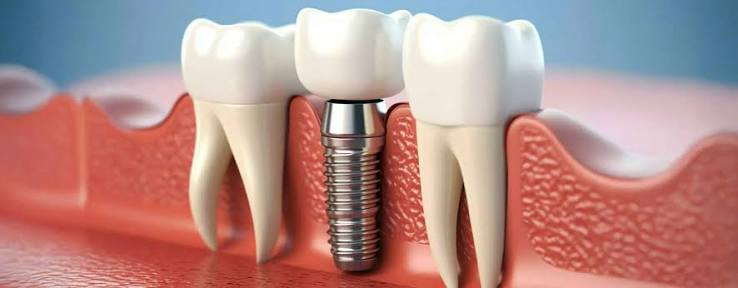
How is Implant Treatment Applied in Total Edentulism in Izmir?
Implant treatment in total edentulism in Izmir involves detailed radiological tomography to measure the existing volume and three-dimensional anatomical structure of the individual’s jawbone. Based on the obtained data, the most biomechanically suitable fixed (All-on concepts) or removable (overdenture) prosthetic systems are identified, and the planned medical titanium roots are placed in the jawbone under sterile clinical conditions. The process concludes with the monitoring of the biological waiting schedule necessary for the complete integration of titanium material with the jawbone cells (osseointegration), followed by the attachment of completely fabricated jaw prostheses prepared in the laboratory to these prosthetic structures.
Total edentulism is not only the loss of chewing and speaking functions for individuals, but also the occurrence of defects in the facial profile and loss of skeletal support in the tissues of the lips and cheeks. The jaw anatomy of a patient who has lost all of their teeth requires much more complex biological adaptations compared to a patient who has lost a single tooth. Therefore, the medical method to be applied necessitates the establishment of a static infrastructure that will balanced support the entire oral cavity. This treatment protocol, aimed at restoring the function closest to the individual’s natural anatomy, requires the integrated collaboration of the dental specialties of maxillofacial surgery and prosthetics.
How is the Total Edentulism Examination Conducted at Avrupadent Clinics in Izmir?
Full toothlessness examination at İzmir Avrupadent clinics; detailed inquiry into the patient’s general medical and systemic history (anamnesis), physical examination of oral mucosa and gum health, and mapping of the width, height, and trabecular (hardness) density of the jawbones in millimeters using dental volumetric tomography (CBCT).
The initial examination phase forms the foundation of surgical success and patient safety. It is expected that individuals who have been edentulous for a long time or have used removable (palate) dentures for years will exhibit physiological resorption of the jawbone. The level of this resorption and the adequacy of distance to nerve canals (mandibular canal) or sinus cavities can only be clearly determined through three-dimensional imaging systems. In Avrupadent processes, the shape of the treatment to be applied to the patient is discussed transparently in light of this radiological data. If there are periodontal diseases or tissue pathologies, the primary focus will be on addressing these medical issues.
| Clinical Criterion | Medical Purpose and Importance |
|---|---|
| Bone Density Detection | Assessment of the bone density of the jaw to predict the surgical stability (torque) capacity. |
| Vertical Size Analysis | Measuring the distance between the tip of the nose and the chin to calculate how much the inclined facial profile will be supported. |
| Mapping of Anatomical Boundaries | Identifying nerve pathways and cavities (sinuses) to clarify surgical safety margins. |
| Mucosa and Soft Tissue Quality | Evaluating the structural thickness of the tissue (keratinized tissue) that will surround the titanium material. |
How Does Complete Jawbone Loss (Resorption) Affect the Treatment Process?
Complete jawbone loss (resorption) in the case of total edentulism triggers a reduction in the volume of existing bone, leading to a narrowing of the anatomical area where medical roots will be placed, thus compelling advanced surgical methods such as bone grafting or the preference for open placement (All-on) concepts, directly shaping treatment planning.
Natural teeth send mechanical signals to the jawbone during the chewing process, ensuring the renewal of bone cells. With the loss of all teeth, this signal disappears, and the body begins to resorb the bone tissue in that area at the cellular level. In cases of complete edentulousness lasting for years, the upper jaw tends to shrink while the lower jaw shows a tendency to flatten horizontally. When the structure of the bone reaches a millimetric thinness, standard vertical surgical procedures become anatomically risky. To maintain the safety of the treatment process, doctors decide to either reshape the bone or refer to open systems that will best utilize the existing bone.
What Are the Differences Between Fixed and Removable Implant-Supported Prosthesis Options?
Fixed prosthesis options are restorations that are directly screwed or bonded onto 6 to 8 titanium roots placed in the jawbone and cannot be removed by the patient; removable dentures (overdentures) are supported palatal prostheses that hold onto 2 to 4 roots with clip or bar systems, which the patient can easily remove for daily cleaning.
The main difference between the options is the comfort of use, ease of cleaning, and the need for lip support. In cases of complete edentulousness where the bone level is sufficient and there is no significant collapse on the facial profile, fixed prostheses are preferred as they provide the closest function to the feeling of natural teeth. However, if advanced bone loss is present and it is necessary to fill the soft tissue defect from the nasal base to the chin with a pink acrylic structure, removable (overdenture) systems provide a more suitable profile support medically. Despite being removable, they do not shift or drop in the mouth like classic palatal dentures thanks to the mechanical locking systems inside; they only become free from their sockets when the patient wishes.
Why are All-on-4 and All-on-6 Concepts Preferred in cases of Complete Toothlessness?
The All-on-4 and All-on-6 concepts are preferred in cases where surgical intervention cannot be performed due to advanced bone resorption in the posterior jaw areas and sagging sinus anatomy, thanks to titanium implants placed at angles of 30 to 45 degrees to the healthy bone in the anterior region, allowing for a fixed prosthesis for the entire jaw without the need for advanced bone (graft) surgeries.
Bone loss in the posterior areas (where molars exist) usually requires sinus floor elevation (sinus lifting) and grafting of dense bone powder. These additional surgical procedures can extend the treatment duration by months. In All-on concepts based on biomechanical calculations, sufficient and dense bone volume in the anterior parts of the jaw is utilized. The implants placed with a backward inclination support the back extensions of the bridge (cantilever), distributing the chewing force evenly over a larger area. These concepts offer a blood-based medical approach away from anatomical risks while shortening the treatment timeline.
| Comparison Parameter | Traditional Multiple Surgery | All-on (Open System) Concept |
|---|---|---|
| Required Body Count | Usually 6 to 8 for a fixed full jaw. | With custom design, 4 or 6 per jaw. |
| Advanced Surgery (Sinus/Graft) | Often necessary in cases of posterior area resorption. | With open placement, anatomical barriers are overcome, usually not needed. |
| Force Distribution | Vertical forces are countered evenly. | Open structure maximizes resistance by forming a biomechanical polygon. |
How Do Advanced Age and Systemic Diseases Limit Complete Denture Treatment?
Advanced age and accompanying systemic diseases (uncontrolled diabetes, advanced osteoporosis, cardiovascular disorders) can slow the individual’s tissue healing rate, alter the dynamics of thrombosis during surgery, and affect bone remodeling metabolism, thus limiting complete denture surgeries or making them entirely dependent on medical consultations.
Complete toothlessness cases are generally observed in the elderly, and these individuals often have polypharmacy (the use of multiple medications). The most sensitive issues in dental practices involve anticoagulant medications and bone-protective (bisphosphonate) treatments. Any surgical procedure to be applied to the jaw creates a certain stress and healing burden on the body, even under local anesthesia. In diabetic patients with a high blood sugar level (HbA1c > 7), the bone healing process is delayed, and the surgical operation is postponed until the disease is regulated (brought under control). These restrictions are not meant to deprive the patient of treatment, but are international medical standards applied to ensure a safe and uncomplicated progression of the process.
When is Bone Powder (Graft) Application Needed in Complete Toothlessness Cases?
In cases of complete toothlessness, bone powder (graft) applications are needed when the thickness of the jawbone, as seen in radiological tomography examinations, is reduced to the extent that it cannot surround the titanium body completely (usually less than 1-2 mm) due to horizontal or vertical resorption, and when the anatomical integrity cannot be maintained. These biomaterials regenerate the biomechanical safety area by filling the missing volume.
Biocompatible graft materials (human, animal, or synthetic sources), when integrated into the body, do not constitute a bone by themselves; however, they act as a biological scaffold (matrix) to assist the body in forming new viable bone tissue by infiltrating the patient’s own bone cells (osteoconduction). It is common for patients who have used prostheses for many years to have cases where the alveolar crest (the peak of the bone) is as thin as a knife’s edge. Since the titanium root left exposed beneath the gum tissue may lead to severe infections in the future, the physician must thicken these weak areas using grafts and barrier membranes (membranes) either simultaneously with or prior to the surgical procedure.
How Long Does the Healing (Osseointegration) Period Last After Surgery?
The healing (osseointegration) period after surgery lasts approximately 2 to 3 months for the lower jaw, depending on the patient’s bone structure, surgical technique applied, and additional bone grafting procedures, while it lasts between 3 to 6 months for the upper jaw due to its more spongy structure. This period is the necessary biological time for the bone cells to completely envelop the titanium surface, providing a mechanical resistance to the structure.
In treatment protocols, the waiting period is an inflexible rule. When the titanium body is first placed, it stabilizes within the bone through a physical compression (primary stability). However, the real success of the treatment is based on the biological cells of the body accepting this material and adhering to the micro-pores on its surface (secondary stability). Increasing chewing forces on the upper structure before the healing process is completed can result in the breakage of this sensitive cellular bond, leading the tissue to respond with a fibrous (soft) attachment; this is defined in medical literature as process loss (failure).
How Is Aesthetic and Chewing Function Provided During the Healing Process with Temporary Prostheses?
In the aesthetic and chewing function during the improvement process; fixed (immediate) temporary acrylic prostheses that are installed on the same day in suitable cases where surgical stability is high, or by using classic removable complete dentures (plates) that have been minimally relieved internally without applying pressure to the surgical area, this is ensured. The goal is to prevent the patient from disconnecting from social life while the bone heals and to maintain phonetic (speech) integrity.
The most delicate phase of complete toothlessness treatment is this waiting phase that lasts for months. If, as in All-on concepts, sufficient compressive strength (torque value) is not achieved at the time of surgery, temporary fixed teeth made of lightweight materials can be installed on the same day. However, the patient is strictly advised not to consume hard and tearing foods with these teeth; only soft pureed diets should be applied. In cases where the bone is weak and additional grafting procedures are performed, fixed temporaries cannot be used; the patient’s existing or newly made removable denture will be supported with special soft liners to avoid applying pressure on the healing surgical sites.
What Clinical Steps Does the Planning of the Permanent Prosthetic Process Include?
The planning of the permanent prosthetic process; after the bone integration is confirmed radiologically, involves taking the three-dimensional measurement of the entire jaw with digital or traditional methods, trying on zirconium or hybrid inner skeletons prepared in the laboratory within the oral cavity, balancing the vertical facial dimension (occlusal height), and aligning aesthetic expectations, followed by the steps of securing the permanent teeth either by screwing or cementing.
The construction of prosthetics that cover the entire arch (full-arch restorations) requires much more complex biomechanical calculations than the creation of a single tooth. During the measurement process, the patient’s previous occlusal vertical dimension is determined, and the jaw height, which has been lost over the years, is restored to its healthy form (actual muscle length). The infrastructure produced in a laboratory environment using computer-aided design (CAD/CAM) systems is tested in the mouth during fitting sessions by the dentist. Lip support, the emission of sibilant sounds (s, z, ş) during speech, and the smile line are evaluated. Once it is confirmed that everything meets medical standards, the prosthetics are secured to the supporting bodies with medical torque wrenches.
How Should Long-Term Oral Care Be Maintained in the Context of Implantology at Avrupadent Treatments?
Long-term oral care emphasized within the scope of the Implantology discipline at Avrupadent treatments; is based on principles such as performing mechanical cleaning at least twice a day with soft brushes, regularly removing bacteria accumulated in the sub-bridge sections of full jaw prostheses using specially produced thick dental floss (superfloss) and pressured mouth rinses every day.
Although all full arch prosthetics are made from bacteria-resistant materials like porcelain or zirconium, the unseen interfacial areas where the prosthetics join the jawbone and gums are susceptible to food accumulation. The bacteria in the oral flora can colonize in these accumulations, leading to a destructive infection termed ‘peri-implantitis’ that can erode the bone around the titanium roots. The secret to long-term success lies as much in the quality of the surgery performed by the dentist as it does in the patient’s commitment to maintaining hygiene under the prosthesis.
- Cleaning Under the Bridge: Special dental threads with hardened tips should be used to clean the spaces beneath the prostheses.
- Use of Oral Irrigator: Devices that break up plaque in hard-to-reach areas, using the force of water, should be added to the daily routine.
- Brushing Technique: All surfaces of the prosthesis should be gently brushed using atraumatic techniques that do not harm the gum tissue.
How are Follow-up Routine Check-ups Organized After Treatment at Avrupadent Clinics?
In clinics located in Izmir, the Implantology department organizes routine check-ups after treatment by performing the mechanical testing of bite balance (occlusion) in the first month and the radiological measurements of bone levels in the sixth month; in the following years, the clinical compatibility of the prosthesis with supporting tissues is continuously monitored through regular bi-monthly or yearly appointments.
The completion of the treatment of total edentulous cases does not mean that the patient’s clinical needs have ended. The human jaw is a dynamic and adaptable structure that changes over time. Over the years, small abrasions or occlusal discrepancies may develop on the surfaces of porcelain teeth or in opposing jaws, depending on the natural chewing forces. During control examinations, the physician measures the distribution of these mechanical forces using special articulation papers and makes millimetric adjustments when necessary. Minor looseness that can occur in the internal screws holding fixed prostheses is detected early, ensuring that necessary technical adjustments are made. This professional and systematic follow-up mechanism is a fundamental preventive health policy adopted to preserve the functional integrity of the applied medical treatment planning for many years.