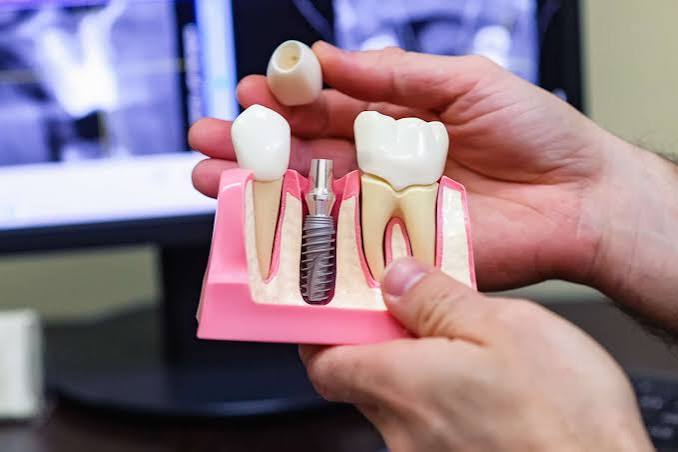
Can an implant be done in one day?
Performing an implant in one day is possible under medical conditions where the patient’s jawbone has sufficient volume and density, there is no active infection in the area of the tooth to be extracted, and the implanted medical titanium root achieves a high initial stability value. When these specific anatomical and physiological conditions are fully met, temporary teeth can be placed on the same day of the surgical operation to preserve the aesthetic and functional integrity of the patient.
In traditional dentistry practices, when a tooth is extracted, it is necessary to wait for months for that area to heal with bone formation, and then an artificial root is placed, followed by a bone healing (osseointegration) phase that also lasts for months. Advances in modern medicine and biomechanical engineering have managed to securely minimize these waiting times in some specific cases where tissue biology allows. This protocol, known in the literature as ‘immediate loading’, provides significant support for patients’ psychological and social adaptations by eliminating the period they spend without teeth. However, it should not be forgotten that this procedure is not a standard protocol applicable to ‘everyone and every situation’, but is entirely dependent on the objective results of clinical findings.
How is Implant Treatment Applied in One Day in Izmir?
The implant treatment in İzmir is performed in one day; it involves placing medical titanium material into the jawbone, which has been approved for surgical suitability through detailed three-dimensional tomography analyses, followed immediately by the fixation of light temporary prostheses prepared in a clinical or laboratory environment. This procedure is a medical protocol that minimizes the patient’s period of being toothless while adhering to strict biomechanical rules.
In the current treatment processes applied at the İzmir location, the procedure begins with the patient’s entry into the clinic. If a tooth needs to be extracted, it is done using atraumatic methods without causing any damage to the jawbone (especially the bony wall facing the lip). The extraction socket is cleaned of infection with special medical solutions. Then, the pre-planned titanium implant is positioned at the prescribed width and depth in the jawbone. Once the titanium implant securely attaches within the bone, an aesthetic temporary tooth is placed on top. In the İzmir Avrupadent clinics, this process is meticulously managed in operating rooms, where the sterilization chain is maintained from start to finish under the coordination of specialized medical personnel.
What Medical Criteria Does Immediate Tooth Placement Depend On?
Immediate tooth placement (immediate loading) depends on the mechanical compression (torque) resistance demonstrated by the placement devices being above high medical standards, the patient’s bone structure being of a cortical (hard) character, and the absence of active bone resorption or granulation tissue in the relevant area. If these values are not sufficient during surgery, immediate tooth placement will be abandoned.
In medical science, it is essential to act according to the tissue’s response rather than challenging human biology. Even in an operation planned for tooth placement in a single day, the final decision is made at the time of surgery. If the jawbone is softer than expected or does not maintain the desired rigidity in the medical body bone socket, it cannot be subjected to chewing forces with a tooth placed on it. Because even the slightest disturbance (micro-mobility) can prevent the bone cells from integrating with the titanium surface, leading to the failure of the procedure (resulting in tissue rejection). Therefore, medical safety criteria always take precedence over aesthetic concerns.
| Assessment Parameter | Traditional Waiting Protocol | Same-Day (Immediate) Loading |
|---|---|---|
| Applicability | Applicable with confidence in all bone types and in every case. | Only applicable in specific cases with high bone density and volume. |
| Temporary Tooth Status | Usually, removable (palatal) temporaries are used until the wound heals, or that area is left empty. | On the day of surgery, a fixed and aesthetic temporary crown is placed. |
| Tissue Protection | During long waiting periods, slight flattening may occur in the gum tissue. | The immediately placed tooth guides the gum to form in its natural shape (tooth arch formation). |
What is the Purpose of Temporary Teeth Used in Treatments Done in One Day?
The primary purpose of temporary teeth used in treatments conducted in a day is to close the aesthetic gap created by a missing tooth, support the patient’s overall speech (phonetic) functionality, and shape the surrounding gum tissue in a natural form suitable for permanent porcelain teeth. These teeth are not designed to withstand chewing forces, but rather to provide anatomical guidance to the tissue during the healing process.
Especially in cases of tooth loss in the anterior region, it can be psychologically exhausting for patients to continue their social lives without teeth. Lightweight temporary teeth made of acrylic or composite base, applied on the same day, completely eliminate this visual concern. However, functionally, the design of these teeth is created in a way that they do not come into full contact with the opposing teeth (outside of occlusion). This is because the purpose is not to eat using this tooth, but only to fill the visual gap and prevent pressure from going to the underlying surgical area. The temporary tooth serves as an aesthetic protective umbrella covering the healing wound area.
Who Cannot Have Same-Day Implants? In Which Situations Is the Process Delayed?
Same-day implants cannot be performed on those with severe bone resorption in the jawbone, on individuals with acute abscess or inflamed (granulation) tissue at the affected tooth root, on diabetes patients who are not under control, and on individuals with severe teeth grinding (bruxism) habits. In the presence of these medical risk factors, the standard waiting protocol, which can take months for the surgical area to heal naturally, is initiated to ensure tissue safety.
The need for bone grafting cannot accelerate the speed of an intervention beyond the long-term tissue health. If there is a chronic infection (cyst) in the socket from which the tooth is extracted, it is expected that this infection is completely cleared and the area transforms into sterile bone tissue. Any type of medical material placed in an infected area can lead to the direct transfer of bacteria into the bone. Similarly, placing a fixed temporary crown in a patient who grinds their teeth intensely while sleeping can result in the newly placed structure being moved by involuntary forces during the night. The doctor delays and stages the process by analyzing the patient’s systemic medical condition.
- Advanced Bone Loss: Performing procedures on narrow areas requiring bone grafting on the same day is risky.
- Active Infection: Immediate intervention is not performed in areas with a cyst or active pus at the root tip.
- Uncontrolled Diabetes: Due to irregularities in blood sugar slowing wound healing, standard and safe protocols are preferred.
- Severe Bruxism: The habit of grinding teeth imposes damaging mechanical stresses on fresh surgical areas.
Why is the Density of the Jawbone Important in a One-Day Implant Procedure?
The density of the jawbone in a one-day implant procedure is extremely important because it directly provides the initial mechanical resistance (primary stability) needed to withstand chewing forces and tongue movements against the inserted medical structure. Since titanium material will not hold tightly in soft or spongy bone tissue, even a slight vibration caused by the temporary tooth being placed on the same day can disrupt cellular integration and lead to the loss of the procedure.
In human anatomy, the densities of the lower and upper jaw bones are different from each other. The lower jawbone (mandible) has a thick and hard (cortical) structure that evolved to withstand the forces exerted by muscles. This hard structure provides high stability by gripping the inserted material like a vice and increases the success rate of dental implant procedures performed the same day. However, the upper jaw (maxilla) is generally softer due to the air spaces and trabecular (spongy) nature inside. It is more challenging for the titanium body to reach high compressive forces in this area. The dentist radiologically evaluates the hardness of the bone through Hounsfield units and shapes the decision for the operation according to these objective density data.
How is Tooth Extraction and Titanium Implant Placement Done in the Same Session?
Tooth extraction and placement of a titanium implant can be done in the same session by using an atraumatic (very delicate) technique to extract the problematic tooth without damaging the bone walls around it, disinfecting the gap with medical solutions, and then placing the artificial root into this prepared gap (socket) with the appropriate angle. If deemed necessary, the surrounding gaps are supported with biocompatible bone powders to prevent tissue collapse.
This clinical approach is combined with the principle of “socket preservation” found in the medical literature. When the natural tooth root is removed from the bone, a millimetric space is created in that gap. The physician ensures mechanical resistance by placing the medical body deeper into this gap, at the location where the healthy bone begins (apical area). When the titanium body, which is narrower than the natural tooth root, is placed, the remaining gaps around it are filled with sterilized bone grafts from human or animal sources. Thus, the resorption of the bone on the lip side is prevented, allowing for both the problematic tooth to be removed and a new structural foundation to be established in a single appointment.
How is the Treatment Decision Made on the Same Day at İzmir Avrupadent Clinics?
The treatment decision on the same day at İzmir Avrupadent clinics is made by examining the patient’s systemic medical history, measuring the jaw structure in three-dimensional tomographies with millimeter accuracy, and evaluating objective bone retention (torque) data during the surgical operation by a team of specialist physicians. This decision is made transparently within the framework of evidence-based medical practices, respecting the biological limits of the patient.
In the processes at Avrupadent, requests focused on aesthetics or saving time cannot override medical safety standards. Even if all radiological evaluations conducted in the relevant area show that the width, height, and safe distance from nerve pathways are sufficient for the same day procedure, the cellular vascularization status at the time of the operation ultimately determines the final decision. Each step of the process is communicated to the patient with visual data. This objective and rule-based approach aims not only to save the day but also to ensure that the chewing system created remains healthy for many years.
What Should be the Nutrition Pattern After Implant Treatment in One Day?
The nutrition pattern after implant treatment on the same day should consist only of soft foods that do not require chewing force until the cellular integration (osseointegration) between the bone and titanium material is fully realized; it must consist of puree-like, warm foods. It is essential to avoid any tearing, heating, or crushing of hard foods in the area where the temporary tooth is located, as this is necessary for the bone cells to perform repair without being subjected to shock.
The compatibility of the hospital after treatment is the most important factor determining surgical success. The teeth placed on the same day are not only a chewing tool but also an aesthetic guide. If the patient consumes foods that require tearing and grinding, such as apples, bagels, or meat, the mechanical pressure created is directly transmitted to the new structure inside the bone. These micro-vibrations disrupt the connections of the bone cells (osteoblasts) attempting to wrap the titanium surface. The body responds by developing a defense mechanism against this vibration, covering the material with soft connective tissue (fibrous tissue) instead of hard bone. This situation signifies that the tissue rejects the structure. Therefore, strictly adhering to dietary restrictions is a medical necessity.
| Safe to Consume Foods | Foods Absolutely Prohibited |
|---|---|
| Vegetable purees, clear soups, yogurt, kefir. | Dried fruits (hazelnuts, pistachios, walnuts). |
| Oatmeal, soft-boiled eggs. | Foods requiring tearing such as bagels, crusty bread, and apples. |
| Well-cooked pasta and fish that do not require chewing. | Sticky foods like caramel, gum, and Turkish delight. |
| Bananas, soft fruits that have been pureed. | Excessively hot or excessively cold carbonated drinks. |
How to Maintain Oral Care and Hygiene When Teeth Are Placed on the Same Day?
On the same day, when the denture is placed, oral care and hygiene are ensured by gentle brushing movements with very soft bristled (surgical) toothbrushes that do not apply pressure to the surgical area, using the medical chlorhexidine-based mouthwashes recommended by the doctor, and establishing a careful cleaning routine to prevent bacterial plaque formation around the prosthesis. Protecting the wound site from bacterial infection is the most vital step for uninterrupted cellular healing.
Temporarily placed teeth are generally made from laboratory acrylics and have a more porous microscopic surface compared to porcelain. This porous structure holds food residues and bacterial plaque more easily. If the junction (collar) area where the gum connects to the newly placed temporary tooth is not cleaned well, bacteria that accumulate there can settle on the wound lips, causing gum inflammation (mucositis). Inflamed gums prevent the underlying bone from healing properly. Therefore, patients should not skip the brushing process but should gently slide the toothbrush over the tooth without pushing it into the wound area. Additionally, using alcohol-free and doctor-approved plaque-preventing mouthwashes is a complementary element in disinfecting the surgical area.
When to Transition to Permanent Porcelain or Zirconia Teeth?
Permanent porcelain or zirconia teeth can be transitioned to after the biological integration of titanium roots with the jawbone (osseointegration) is confirmed through radiological films and clinical stability tests, typically 2 to 3 months for the lower jaw and 3 to 6 months for the upper jaw. In the current Implantology discipline, after this physiological waiting period has passed, temporary teeth are removed and precise measurements for permanent prosthetics are taken to begin laboratory production.
Temporary teeth fitted the same day are not as durable as permanent teeth, as they are not designed for long-term use and are prone to wear due to their material structure. Once the titanium surface is completely enveloped by bone cells and the structure biomechanically becomes part of the jaw, it indicates that it is time to load the porcelain or zirconium structures that will perform the actual chewing function. The three-dimensional optical scan of the gum arch shaped by the temporary tooth over months is taken. In the laboratory, the permanent teeth produced according to the patient’s facial form, midline, and lip support are permanently fixed to a solid infrastructure with special medical screws or restoratives.
What is the Role of Digital Planning in Implantology in One Day (Tomography and Scanners)?
In one day, the role of digital planning in Implantology applications allows for the mapping of jaw anatomy in a virtual environment through three-dimensional tomography and optical intraoral scanners, enabling the surgical procedure and the temporary tooth to be planned to millimeter accuracy before the operation. This technology eliminates anatomical surprises and makes it possible to achieve a perfect fit in the same session.
Especially in cases of complete jaw reconstruction (All-on-4 / All-on-6), the greatest force behind being able to fit prosthetic teeth in a single day is digital workflow. The doctor virtually performs the surgery on a computer screen by combining tomography and intraoral scanning data. It is determined at which angle the medical roots will enter the bone and at what depth they will stop. According to this virtual plan, “surgical guide plates” are printed using three-dimensional medical printers. On the day of the surgery, this guide plate is placed in the patient, and the doctor can reach the bone only through the openings allowed by this plate. Thus, the procedure can be carried out without cutting the gum (non-invasive), the operation time is incredibly shortened, and the temporary tooth that has been pre-manufactured by the same software is locked into place with millimeter precision as soon as the surgery ends.
How Should Post-Treatment Routine Clinical Check-Ups Be Organized?
Post-treatment routine clinical check-ups should be organized to clinically monitor tissue healing in the first week following the surgical operation, and to evaluate the stability of bone levels through radiological films in the first and sixth months. In the following years, examinations conducted at six-month intervals will involve the objective measurement of surrounding gum health, plaque accumulation, and occlusion balance by the physician.
As with all applied medical procedures, maintaining the long-term functionality of this newly established biomechanical system in the mouth relies not only on the hygiene at home but also on the professional follow-up by the physician. Physiological wear on natural teeth can gradually change the occlusion (the point of bite). This change can cause excessive, disproportionate loading on the porcelain tooth. During routine check-ups, the physician identifies these early contacts using special articulation papers to adjust them and equalize the force. Additionally, any invisible looseness that may occur in the mechanical internal screws that hold the prostheses can be detected during these appointments and fixed with appropriate torque (tightening) tools. These preventive health checks are the most important part of sustaining the quality of the procedure over the years.