What is Pediatric Dentistry (Pedodontics)? What Treatments Does It Include?
Pediatric dentistry (pedodontics) is a specialization that monitors the healthy development of individuals’ primary and permanent teeth during the period from infancy to the end of adolescence (ages 0-15). This field manages preventive and therapeutic methods for caries, trauma, or developmental disorders that may occur. It encompasses treatments for caries, preventive applications (fluoride and fissure sealants), space maintainers, management of dental traumas, and early orthodontic evaluations.
The infancy and childhood period is a phase characterized by the fastest growth and change in the maxillofacial anatomy, akin to all systems in the human body. Children’s dental structures, the flexibility of the jawbone, and the mineralization rate of the enamel layer of teeth are subject to entirely different physiological rules compared to adults. During this period, not only primary teeth are present in the mouth; there are also permanent tooth buds developing just beneath the primary teeth. The primary goal of the pediatric dentistry discipline is to not only treat existing teeth but also to ensure the future health of the child’s permanent tooth arrangement. Current pediatric dentistry protocols implemented in Izmir focus on supporting this development with preventive measures before dental diseases arise.
When Should Oral Health Screenings for Infants and Children Start in Izmir?
In Izmir, oral health screenings for infants and children should begin with the eruption of the first milk tooth (usually around the 6th month) or at the latest on the child’s first birthday. The main purpose of these early examinations is to provide parents with education on proper nutrition and oral care, aiming to prevent “bottle tooth decay” before the clinical signs of early childhood caries develop.
There is a common misconception in society that children should not be taken to the dentist until all their teeth have erupted or fallen out. However, according to the preventive dentistry approach adopted in Izmir Avrupadent, the child’s first visit to the clinic should not be due to a problem or complaint. The first visit serves as a session to educate the family on how to manage the disturbances during the teething phase, the appropriate amount of toothpaste and toothbrush to use, and related topics. Children who become acquainted with the clinical environment at an early age and are examined only with a mirror without any medical intervention are less likely to develop “dentist anxiety” (dental phobia) as they grow older.
What Are the Basic Functions of Milk Teeth in the Mouth?
The basic functions of milk teeth in the mouth include mechanically breaking down the food necessary for the child’s growth and development, ensuring the correct pronunciation of sounds during speech (phonetics), promoting the three-dimensional growth of the jawbones, and most importantly, serving as a natural “space maintainer” providing anatomical guidance until the permanent teeth come through.
“Neglecting the treatment of milk teeth with the thought that ‘if they fall out, new ones will come’ is one of the biggest mistakes encountered in the field of pedodontics. Milk teeth total 20 in number and generally begin to emerge at around 6 months, completing around 2.5 to 3 years of age. The enamel of these teeth is much thinner than that of adult teeth and is more susceptible to acidic bacteria. When a child loses a milk tooth prematurely due to decay, they not only struggle to chew food; the neighboring teeth shift into the gap, obstructing the path for the permanent successor tooth below. This situation makes complex and lengthy orthodontic treatments necessary during adolescence.
| Physiological Function | Medical Issues Experienced in Case of Early Loss |
|---|---|
| Nutrition (Chewing) | Digestive and growth retardation due to insufficient food being chewed. |
| Guidance for Permanent Teeth | The permanent tooth remaining buried due to the neighboring teeth falling into the gap and failing to find a place to emerge. |
| Jawbone Development | Narrowing of the jaw arch and asymmetry due to reduced mechanical stimulation (chewing). |
| Phonetic (Speech) Development | Particularly difficulties in pronouncing sounds like s, f, v due to loss of front teeth. |
How Do Cavities in Milk Teeth Affect Permanent Teeth?
Cavities that occur on primary teeth can disrupt the calcification process of the developing permanent tooth bud (follicle) in the underlying jawbone by allowing the infection to advance directly to the root tip of the tooth. This can lead to structural enamel defects (Turner teeth) or malformations in the permanent teeth, adversely affecting their health.
There is a very thin bony boundary anatomically between the roots of the primary tooth and the formation sac of the permanent tooth. If a cavity in the primary tooth is untreated, bacteria descend through the nerve canal to the root tip and create a chronic infection (abscess) there. This infection environment is quite acidic. The enamel layer of the permanent tooth attempts to develop precisely within this acidic environment. Years later, when the permanent tooth erupts into the mouth, brown-yellow spots, pits, or enamel deficiencies are observed. The only way to prevent this permanent damage is to limit the cavities in the primary teeth with fillings or pediatric root canal treatments while they are still in the initial stage.
What is Bottle Caries in Infancy and How is it Prevented?
Bottle caries in infancy is a common type of cavity that occurs as a result of babies falling asleep with a bottle containing sugary milk, formula, or juice, which rapidly damages all primary teeth starting from the back surfaces of the front teeth. To prevent this condition, the baby’s teeth should be wiped with a clean, damp gauze or finger brush immediately after nighttime feedings, and the habit of sleeping with a bottle should be broken.
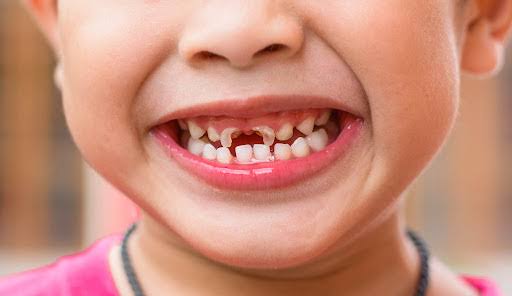
During sleep, the flow rate in the human body decreases significantly. Saliva is the most important physiological defense that neutralizes the acid in the mouth. When a baby sleeps with a bottle containing milk or formula, this liquid accumulates around the teeth for hours. Because the saliva’s neutralizing effect is insufficient, the lactose (milk sugar) in the liquid is quickly converted into acid by bacteria in the oral flora. The enamel of baby teeth is not able to withstand this acid attack and begins to crumble like chalk. Early childhood cavities can be easily prevented with parents’ conscious nighttime hygiene practices before they turn into severe infections that threaten the baby’s nutrition, sleep, and overall health.
Which Teeth are Treated with Fissure Sealant (Protective Coating)?
Fissure sealant application is typically performed on the first permanent molars that erupt around the age of 6, as well as on the chewing surfaces of other molars that emerge in the following years, which have deep and narrow grooves (fissures). Since these anatomical grooves are so narrow that toothbrush bristles cannot reach them, they are filled with clear or white liquid resins to completely prevent food accumulation and bacterial retention in those areas.
In childhood, the majority of cavities start on the chewing surfaces of the teeth. When examined under a microscope, the surfaces of primary molars are filled with grooves and pits. Since the enamel of new emerging primary teeth is not yet fully matured, they are very susceptible to bacterial acids. In the clinics of Izmir Avrupadent, under the protocols of Pediatric Dentistry (Pedodontics), these teeth are covered with fissure sealants that are visible or not visible in the mouth. The tooth surface is coated with a liquid material, seemingly as if a medical varnish is applied, without any grinding (cutting), and then it is hardened with a special light. This way, those deep grooves are transformed into a flat surface, allowing the child to clean their teeth much more easily with standard brushing.
| Area of Advantage | Contribution to Pediatric Process |
|---|---|
| Tissue Protection | The tooth enamel is not ground in any way, preventing material loss. |
| Cavity (Decay) Prevention | Closes narrow cracks where bacteria could settle with a physical barrier. |
| Child Psychology | Since no drill (bur) is used, there is no noise or vibration, preventing fear in the child. |
| Long-Term Stability | Ensures that the first permanent teeth remain cavity-free by increasing the effectiveness of brushing. |
How Does Fluoride Application Support Teeth Enamel in Children?
Fluoride application in children helps chemically support dental enamel by enabling fluoride ions to combine with weak hydroxyapatite crystals in the tooth enamel layer to form much more durable fluoroapatite crystals, protecting it against acid attacks and caries. Topically applied fluoride gels or varnishes have the ability to halt the initial stage of micro-caries (white spot lesions) by speeding up a cellular repair process called remineralization.
Fluoride applications are the most effective caries preventive medical procedure that is endorsed by international health organizations and is an indispensable part of modern pediatric dentistry. Depending on the child’s caries risk profile (low, moderate, or high), fluoride varnish application is performed at specific intervals (usually every 6 months) by a specialist. This process involves drying the teeth and applying a medical varnish with small brushes. The gel or varnish remains on the tooth surface and gradually releases the fluoride needed by the enamel into the tissue. Thus, the mineral loss from the enamel (demineralization) that occurs when the child consumes sugary or acidic foods is quickly repaired with the help of fluoride.
What Protective Measures Are Used When Primary Teeth Are Lost Early?
When primary teeth are lost early, protective passive appliances called “space maintainers” are applied to prevent the nearby teeth from tilting into the gap and to block the path for the coming permanent tooth to erupt. These medical wires or plates anatomically maintain the distance from the size of the jawbone to the existing space until the permanent tooth is ready to emerge.
One of the most important physiological functions of milk teeth is their role as “natural space maintainers.” However, if a milk tooth needs to be extracted due to severe decay or trauma before the eruption of the permanent tooth (for example, three years before the permanent tooth erupts), neighboring teeth will shift millimetrically (mesialization) into the gap. The tooth on the opposite arch also will lean into the gap. When it’s time for the permanent tooth to erupt, it cannot find a place; it remains impacted or erupts in an angled manner from the gum/lip side. Space maintainers are prepared in fixed or removable forms that can be adjusted by the clinic. Fixed space maintainers consist of small metal bands that are attached to the adjacent tooth, causing no discomfort; in cases of multiple missing teeth, removable (palatal) maintainers are preferred, supporting the child’s chewing function simultaneously.
How Is Children’s Dental Fear (Dental Phobia) Managed in İzmir Avrupadent Clinics?
In İzmir Avrupadent clinics, children’s fear of the dentist (dental phobia) is managed through communication methods suitable for child psychology, such as the “Tell-Show-Do” technique, introducing medical instruments with child-friendly analogies, and creating a safe environment in the clinic without any coercion. In children who cannot manage their anxiety levels or show no adjustment, alternatives for conscious sedation under the supervision of a physician are also evaluated.
Children’s anxiety about medical environments is a very common defense mechanism. In European practices, the priority is to ensure the child’s adaptation to the clinic. In initial sessions, no injections or devices that produce frightening sounds are generally used. The physician introduces the water to be used as a simple metaphor such as “tooth rinsing fountain” and the air-blowing tool as “air blower,” first showing these tools on the child’s finger and then applying them to the tooth. Clinic designs suitable for children are used to overcome the fear of the white coat. However, in some cases requiring medical urgency or in very young children (where cooperation cannot be established), to prevent the treatment from turning into trauma, methods of medical anesthesia (sedation) are employed under the supervision of anesthesiologists so that the child can achieve healthy teeth without remembering anything.
How is Root Canal Treatment (Amputation) Performed on Baby Teeth?
Root canal treatment (amputation) applied to baby teeth is performed when the nerve and blood vessel network (pulp) in the crown (upper) part of the tooth has been inflamed due to a fracture, but the nerves in the root part are still healthy; this involves cleaning only the diseased pulp tissue in the upper part and placing medical substances in the root canals to preserve the vitality of the tooth (in the roots) and extending the time the tooth remains in the mouth by placing a filling or a child crown on top.
One of the questions parents frequently ask is whether milk teeth have nerves. Milk teeth, just like permanent teeth, have nerve canals, and a crack reaching these nerves can lead to severe nighttime pain. If the infection remains limited to the upper chamber, amputation (partial root canal treatment) is preferred, allowing the living root nerves to be preserved while leaving them to the biological cycle of root resorption. However, if the infection has reached the very tip of the roots, the entire root canals are cleaned, as is the case in adults (pulpectomy). The filling materials used in milk teeth are, unlike those in permanent teeth, special biocompatible materials that can dissolve (be resorbed) together with the eroding root of the underlying permanent tooth.
When Is Tooth Extraction a Medical Necessity in Children?
Tooth extraction in children is a medical necessity in specific anatomical and infectious conditions where the tooth has lost so much tissue that no filling or crown can be applied, where chronic abscess and infection at the root tip threaten the underlying permanent tooth bud, and when physiological root resorption does not occur, causing the milk tooth to remain without allowing the underlying permanent tooth to erupt properly (angular).
The main philosophy of preventive dentistry is to keep teeth in the mouth; however, if a tooth begins to harm the child’s overall health or jaw development, it should be intentionally extracted by the dentist. For example, if a permanent tooth has erupted behind (towards the palate) or in front (towards the lip) and even though the milk tooth above it is loose, it is still not erupting (persistent milk tooth), that tooth should be extracted immediately to prevent orthodontic problems. If there are continually forming large cystic structures (fistulous mouths) at the root of the tooth that do not resolve with antibiotics, that tooth should be extracted to prevent the infection from affecting the child’s overall health through the bloodstream, and the resulting space should be supported with space maintainers.
- Advanced Degree Tissue Loss: Teeth that have only the root remaining, with no walls to hold filling material.
- Orthodontic Barriers: Milk teeth that prevent permanent teeth from erupting and do not fall out over time.
- Chronic Infection: Abscesses that have spread to the point where root canal treatment cannot be performed, eroding the root of the lower tooth.
How Should the Initial Intervention Be for Children with Broken or Knocked-Out Teeth Due to Trauma?
The initial intervention for children with a broken or completely knocked-out tooth due to trauma should involve calming the child, finding the broken or knocked-out tooth piece without touching the root (holding only the crown), gently rinsing it underwater if dirty, and urgently contacting a pediatric dentistry specialist within the first hour while preserving the tooth in cold milk, saline solution, or the child’s own saliva.
Due to childhood mobility (e.g., park accidents, falling off bikes), anterior teeth trauma is very common. The broken tooth piece can often be reattached with excellent aesthetics using special adhesives. A more severe scenario is if the tooth completely dislodges along with its root (avulsion). In such cases, the parent’s awareness determines the fate of the tooth. Living cells (periodontal ligaments) surrounding the tooth root are what connect it to the jawbone. For these cells to remain viable, the tooth must not remain dry (it should not be wrapped in a paper towel) and must be kept in an ideal storage solution (cold milk is the best home option). A permanent tooth that is transported to a doctor under the right conditions can be reinserted into its socket (reimplantation), stabilized with surrounding teeth, and is largely salvageable.
How Does Thumb Sucking and Pacifier Use Affect Jaw Development?
The use of thumb sucking and prolonged pacifier use can cause continuous and vertical mechanical pressure on the upper jaw (palate) by the thumb or pacifier; this leads to the narrowing of the upper jaw in a “V” shape (narrow palate), pushing the upper front teeth forward (protrusion) and creating a gap in the front when the upper and lower teeth come together (open bite), severely disrupting skeletal jaw development.
In infants, the sucking reflex is a physiological and comforting need. However, after 2.5 – 3 years of age, these habits must be terminated. The child’s thumb pushes the upper teeth outward and the lower teeth inward for hours (especially during nighttime sleep). This continuous orthodontic force can cause permanent deformation of the skeleton during that critical developmental period. In the case called open bite, even when the child clenches their back teeth, a large gap remains between the front teeth where a thumb can fit, leading to the tongue’s protrusion (lisping). Doctors primarily resort to psychological suggestions to break these habits; if unsuccessful, physical barriers such as “habit-breaking” devices (braces) are used to prevent the thumb or tongue from entering that area.
What Are the Approaches to Dental Treatment for Children with Special Needs?
Dental treatment approaches for children with special needs (those with mental, physical, or developmental syndromes) begin with a multidisciplinary plan that considers the patient’s systemic medical condition. In situations where the child cannot cooperate (adapt) in a clinical setting, and where sudden reflex actions jeopardize procedural safety, general anesthesia or deep sedation methods are implemented under the supervision of anesthesia specialists in fully equipped operating rooms to complete all oral treatments in a single session.
Children with medical conditions such as autism spectrum disorder, cerebral palsy, or Down syndrome often have rapidly deteriorating oral hygiene due to difficulties in motor skills or medication side effects. It is usually impossible for these individuals to remain still in the dentist’s chair and endure long sessions. At the fully equipped Pediatric Dentistry departments located in Izmir, a detailed medical history meeting is primarily conducted with the family. When a decision for general anesthesia is made, all extractions, root canals, fillings, and fluoride treatments on the child’s mouth are completed within a few hours of a single sleep process. Ensuring that the child does not experience pain or psychological trauma is the greatest benefit of these procedures.
| Method | Medical Content | Advantage |
|---|---|---|
| Behavioral Guidance | Short sessions, visual illustrations, desensitization (acclimatization). | Provides psychological reinforcement for compliant patients who do not require anesthesia. |
| Conscious Sedation | Nitrous oxide (laughing gas) inhaled through the nose or oral medications. | Suppresses anxiety and the nausea reflex, the child does not lose consciousness but relaxes. |
| General Anesthesia | Complete sedation procedure in a fully equipped hospital environment. | Ensures the procedure is completed safely and in one session for patients with reflexive responses and severe mental issues. |
What is the Role of Dietary Habits in Pediatric Dental Health?
The role of dietary habits in pediatric dental health is that the consumption of frequent and sticky carbohydrates (sugary, starchy) maintains high acidity levels in the oral flora, leading to rapid mineral loss and decay (demineralization) of the thinner and more susceptible milk tooth enamel. In contrast, water, cheese, and fiber-rich foods consumed in between meals serve as a biochemical balancing mechanism that buffers acidity, thereby protecting dental health.
Tooth decay in childhood is not a disease; it is entirely a behavioral and nutrition-focused outcome. Decay-causing bacteria (streptococcus mutans) are present in the mouth, but they cannot produce acid from diet. When children frequently consume sugary drinks or packaged foods throughout the day, the acid levels in their mouths remain at levels that can erode their teeth. The most important rule emphasized in the dietary education provided to families at İzmir Avrupadent clinics is not the amount of sugar, but the “frequency of consumption” and the time food stays in the mouth (sticky foods are more dangerous). Eating sweets immediately after main meals is much less harmful compared to sweets spread throughout the day; this is because acid produced during the main meal is primarily released. Rinsing the mouth with water or eating a small piece of cheese after consumption is a strong protective measure that neutralizes acid pH.
How Should Oral Care Routine be Planned During Adolescence?
The oral care routine during adolescence (ages 12-15) should be planned as a transition from parental control of brushing in childhood to the individual’s own independent responsibility. The daily use of fluoride toothpaste (with high ppm levels) and dental floss should be integrated, and mechanical hygiene should be implemented much more rigorously to prevent changing hormonal balances leading to gum inflammation (puberty gingivitis).