How Often Should Regular Dental Checkups Be Conducted for Children?
Regular dental checkups for children should be conducted, on average, every six months, depending on the child’s oral development rate, genetic risk profile, and dietary habits, within the framework of general medical standards. However, for children with a high risk of decay, systemic health issues, or special needs, this interval can be reduced to three or four months based on the dentist’s objective assessment.
The childhood period, where growth and development are most intense, is the stage during which changes in the human body should be monitored most closely. The widening of the jawbones, the process of primary teeth falling out to make way for permanent teeth, and the biological needs that arise during this period differ entirely from the static nature of adult dentistry. While dramatic changes might not occur in the oral structure of an adult in a span of six months; the emergence of a new tooth in a child’s mouth during the same time frame, the reaching of existing decay to the nerves, leading to an abscess, or the clear manifestation of skeletal constriction can take quite a long time. Therefore, the clinical follow-up intervals for children are not just an emergency plan to be consulted when problems arise, but rather a proactive health policy that prevents diseases at their source.
When Should Babies in Izmir Have Their First Dental Visit?
In Izmir, babies’ first dental visit should typically take place between the sixth month and the first birthday, coinciding with the emergence of the first primary tooth in the baby’s mouth. This initial meeting is critical as it ensures that parents receive training on preventive nutrition and proper mechanical cleaning before cavities develop.
In traditional practices, there is generally a tendency not to consult a doctor until all of a child’s teeth have erupted; however, this is incompatible with current preventive dentistry understanding. According to the standards adopted in the İzmir Avrupadent clinics, the 1-year examination is not a treatment session but rather a guidance and information process. While the baby is held in a knee-to-knee position with their parent for security, a visual assessment is made by the doctor only with the help of a mirror. The structure of the first erupting primary teeth, as well as the functional status of the lip and tongue frenulum, are examined. Parents are practically informed about the limitations of bottle usage and how to clean the teeth after nighttime feedings, thus laying a healthy foundation for future clinical follow-ups.
Why are Routine Six-Month Check-Ups a Medical Necessity in Childhood?
Routine six-month check-ups during childhood are a medical necessity to prevent a very fine surface of the enamel of primary teeth, which is structurally fragile and prone to acidic erosion, from becoming infested by microscopic decay reaching nerves and causing abscesses. Early diagnosis stops tissue loss before it becomes extensive.
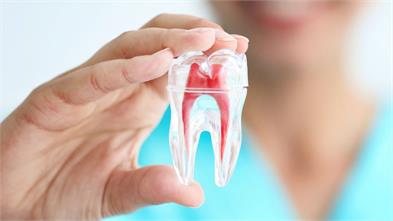
The process of a cavity starting from an adult tooth and reaching the nerve (pulp) can sometimes take years. However, the cellular structure in primary teeth is completely different. The enamel of primary teeth is about half as thick as that of adult teeth, and the pulp chamber is very close to the tooth’s outer surface. When combined with a sugary and carbohydrate-rich diet, a slight change in color or a chip on the surface can turn into a deep cavity crater within just a few months. A professional examination performed by the dentist at intervals of six months allows detection when the cavity is still at the ‘white spot lesion’ (demineralization) stage. A tooth caught at this stage can be completely restored without using any drills (burs) by simply applying fluoride supplements for cellular repair (remineralization).
| Anatomical Feature | Primary Tooth Reaction | Permanent Tooth Reaction |
|---|---|---|
| Thickness of Enamel | Very thin, quickly dissolves by acids. | Thicker, has higher structural resistance to acids. |
| Pulp (Nerve Chamber) Size | Wide and close to the surface; cavities reach the nerve very quickly. | Deeper; it takes time for cavities to reach the nerve. |
| Cavity Progression Rate | Extremely aggressive and fast (can abscess within months). | Follows a slow and chronic course (can extend over years). |
How Are Examination Intervals Planned for Children at High Risk of Cavities?
Examination intervals for children at high risk of cavities; after the objective analysis of the child’s eating habits, dental quality, and oral hygiene compliance by the physician, instead of the standard six-month periods, follow-ups are generally scheduled in tighter intervals of three or four months, planned with preventive procedures supported by minerals like fluoride.
Standard rules in medical planning cannot be applied with the same flexibility for everyone. While some children have extremely poor tooth brushing habits, their diets (frequently sugary, packaged foods, fruit juices) are entirely cavity-causing (carogenic). Moreover, plaque formation occurs much faster and is more destructive in children with genetically low buffering capacity in their dental structure (the ability to neutralize acid). If the physician finds multiple cavities or fillings in the child’s mouth, the child is classified into the “high risk” category. Leaving these children without clinical follow-up for six months would mean the emergence of new cavities in the mouth. For this reason, appointment intervals are tightened to increase professional oversight over oral flora.
How to Prevent Early Childhood (Bottle) Cavities with Regular Follow-Up?
Early childhood cavities are medically prevented during regular follow-ups by the physician informing parents about the dangers of nighttime feeding (bottle sleeping), detecting early-stage white spot lesions (demineralizations) on the child’s teeth, and instilling a cleaning discipline that should be performed with finger brushes after feeding.
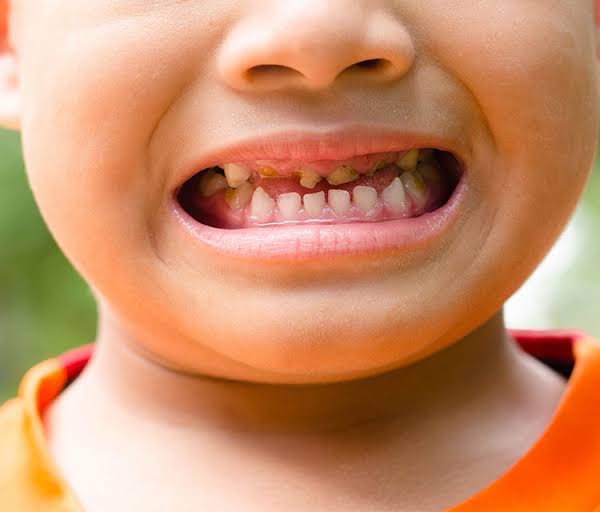
During sleep, the secretion of saliva in the human body decreases to its lowest level. When a baby falls asleep with a bottle containing sugary or natural lactose (milk sugar) in their mouth, it leads to the pooling of these liquids on the dental surfaces for hours. Because there is no buffering effect of saliva, bacteria instantly convert the sugar into acid. All milk teeth, particularly the upper front incisors, begin to crumble like chalk due to the bottle’s effect. In regular clinical check-ups, dullness in the enamel is observed before these crumbling starts. The doctor urgently warns the family to stop nighttime bottle use, emphasizes wiping the teeth with a damp cloth, and ensures that pacifiers are not dipped in sweet foods to prevent this destructive syndrome.
How Do Regular Clinical Check-Ups Affect Children’s Psychology (Dental Phobia)?
Regular clinical check-ups have a very positive effect on children’s psychology by encoding the clinical environment not as a painful intervention area, but as a safe and routine play space. Pain-free sessions conducted only with a mirror or using protective fluoride create a foundation that prevents the development of dental fear (dental phobia) in the future.
Human psychology interprets environmental factors through past experiences. If a child’s first contact with the dentist occurs during a painful and distressing moment, all subsequent actions will remain in the child’s mind as a “necessity and threat.” However, a child who visits a clinic every six months without any complaint will thrive on colorful chairs, the stories told by the dentist, and painless examinations. Pediatric Dentistry (Pedodontics) specialists involve the child in the process with the “Tell-Show-Do” technique. This process, which turns the water-suction device into a “water gun” and the suction device into an “electric vacuum cleaner” through play, increases the child’s self-confidence. Even when the need for a real filling arises in later years, the child, who is already confident in the clinical environment and the dentist, easily adapts to treatment without any resistance or phobia.
What Preventive Treatments Are Conducted in Pediatric Dentistry?
Pediatric Dentistry (Pedodontics) includes primary preventive medical procedures such as fluoride varnish treatments that chemically strengthen tooth enamel against acids and sealant applications that physically prevent bacterial colonization by sealing deep anatomical pits on the chewing surfaces of molars. These applications stop the onset of tooth decay.
The framework of health legislation in 2026 emphasizes preventive dentistry as a far more valuable medical approach than treating a disease after it has developed. Tooth decay is not fate; it is a preventable bacterial infection. The application of fluoride varnish involves a medical coating that is applied to the surface of dried teeth with a special brush. This coating combines with the tooth enamel, turning it into an insoluble (fluorapatite) structure. Sealants are applied to the pits (canyons) of large primary molars, which are only erupted at ages 6 and 12, using a drill (cutter) without altering the tooth’s structure. When these narrow grooves that toothbrush bristles cannot reach are sealed, it becomes impossible for food debris to get trapped, allowing the tooth to remain decay-free for many years.
What Issues Does Early Loss of Primary Teeth Cause in Jaw Development?
The early loss of primary teeth due to decay or trauma causes the neighboring teeth around the extraction site to shift toward that area, narrowing the arch of the jaw and blocking the eruption (emergence) of the underlying permanent tooth, leading to skeletal and orthodontic problems such as impaction or displacement of the permanent tooth.
The primary function of primary teeth is not just for chewing; their main role is to serve as a “natural reservation area” (placeholder) for the permanent teeth that are developing in the jawbone beneath them. For instance, if a primary tooth needs to be extracted at the age of 7, when a permanent tooth should erupt at the age of 11, the remaining teeth will shift forward into the gap, while the teeth in front will slide backward. As a result, the gap completely closes. When the time comes for the lower permanent tooth to try to come through but finds no pathway, it may erupt either toward the palate or the lip side in a forceful manner. If this risk is anticipated during regular check-ups, the dentist will apply a simple wire called a “space maintainer” to the extracted tooth site and mechanically prevent this narrowing in the dental arch.
| Effects of Early Loss | Physiological Result | Medical Precautions Taken |
|---|---|---|
| Shifting of Adjacent Teeth | Creates narrowing in the dental arch (arch length). | Fixed or removable space maintainer appliances. |
| Loss of Eruption Guidance | The permanent tooth remains impacted or erupts (from a different direction). | Regular radiological (X-ray) monitoring and area protection. |
| Loss of Chewing Function | Asymmetry of the jaw related to unilateral chewing and muscle development. | If there are multiple losses, functional pediatric prostheses. |
How are Orthodontic Needs Evaluated During Mixed Dentition Period?
During the eruption phase of mixed dentition (ages 6-12), orthodontic needs are evaluated by determining jaw constrictions or skeletal asymmetries through panoramic X-rays and clinical examinations, where both erupted milk teeth and newly erupted permanent teeth coexist. By utilizing the growth potential, early intervention opportunities are provided.
Waiting for all teeth to be lost and for the child to reach the age of 13-14 for orthodontic (braces) treatment is considered a delayed approach not accepted in modern skeletal analyses. The jaw bones are extremely soft and flexible between the ages of 7 and 10. If it is diagnosed during regular doctor check-ups that the child’s lower jaw is positioned very far back (retrognathia) or that the upper jaw is very narrow, “preventive orthodontics” comes into play. With the help of a simple removable plate or facial mask, the direction of jaw growth can be easily manipulated (guided). In these ages, unresolvable skeletal disorders can only be remedied with advanced surgical interventions (orthognathic surgery) once bone development has ceased. Therefore, routine follow-ups are essential, as they are the golden age where the child’s facial aesthetics is sculpted like a work of art.
At What Ages Should Fluoride and Fissure Sealant Applications Be Followed Up?
Fluoride applications should be regularly monitored every six months starting from the eruption of milk teeth, according to the child’s cavity risk profile; fissure sealant procedures should be followed up around age 6, when the first permanent molars are visible, and subsequently at age 12 when the second permanent molars have erupted.
Dental development progresses according to a schedule. Around the age of 6, it is generally a misleading phase for parents because the first permanent molars (6-year molars) erupt instead of a milk tooth falling out (breaking through the gum directly). Parents often mistake this for a milk tooth and neglect care. This critical threshold is the main appointment where fissure sealants should be introduced. Later, around 11-12 years of age, the second permanent molars (12-year molars) come in, and the same protective procedures are applied to them. Fluoride varnish procedures are not dependent on a specific tooth extraction age; to keep the enamel layer consistently ready for acid attacks, they are refreshed by being applied to all tooth surfaces once every six months as a standard part of regular check-up sessions.
Can Home Oral Care Substitute for Clinical Check-ups?
While home oral care and mechanical brushing are vital necessities to remove soft bacterial plaque, they can never replace clinical examinations conducted with professional equipment that ensure the detection of initial caries hidden between teeth, tooth stone cleaning, and skeletal development analysis. The two processes complement each other.
It is essential for parents to brush their children’s teeth with fluoride toothpaste twice a day, as it is the most fundamental measure against cavities. However, the human eye and toothbrush are not sufficient for this purpose. Especially, while the surfaces where two teeth contact each other may look completely white from the outside, the inner part may have already decayed. These interproximal cavities can only be detected with special ‘bite-wing’ X-rays that the dentist will take in a clinical setting. Additionally, dental calculus formed by the deposition of minerals in the tooth structure cannot be removed with brushing; it can only be safely cleaned by ultrasonic cleaners used by the dentist. The belief that a regularly brushing child does not need to see a dentist is a medical misconception that delays diagnosis.
How is the Frequency of Check-ups Adjusted for Children with Systemic or Special Needs?
For children with systemic diseases or differences in physical or mental development (special needs), the frequency of check-ups is often adjusted to shorter intervals of two or three months as a result of the dentist’s multidisciplinary assessment, due to the significantly higher risks of cavities associated with their motor skill challenges or the medications they use.
Maintaining oral hygiene at home is quite difficult for children with medical conditions such as autism spectrum disorder, cerebral palsy, or Down syndrome. A child’s refusal to brush their teeth, poor hand coordination (motor skills), or reliance on a soft diet (purees) can accelerate the formation of severe cavities. Additionally, many medications used regularly for chronic illnesses come in syrup form and contain a significant amount of sugar. The occurrence of severe cavities in these children leads to the necessity for general anesthesia or deep sedation for dental treatment. To minimize this need for anesthesia, these children are classified into the “high cavity risk” group and are closely monitored by the dentist under a monthly or quarterly schedule (preventive fluoride, reinforcement of brushing) to prevent the development of diseases.
How Are Pediatric Patient Follow-ups Organized at İzmir Avrupadent Clinics?
At İzmir Avrupadent clinics, pediatric patient follow-ups are professionally organized by systematically recording them through personalized medical files created in accordance with the quality standards of the 2026 health regulations, and automatically informing families via communication channels at designated times, taking into account the child’s individual cavity risk and developmental stage.