
The number of implants required for a completely edentulous jaw varies based on the individual’s needs and the preferred treatment method. If a fixed prosthesis is planned for a completely edentulous patient, the All-on-4 technique is generally preferred, using only four implants to provide adequate support. This technique offers a more economical solution with fewer implants. Alternatively, for implant-supported overdentures, two implants may suffice to ensure stability in the lower jaw. However, in some cases, placing additional implants may be preferred to enhance the durability and stability of the prosthesis.
How Does the Type of Prosthesis Affect the Required Number of Implants?
The type of prosthesis significantly influences the number of implants placed in the jawbone, thereby impacting the patient’s comfort, the durability of the prosthesis, and aesthetic appearance. Fixed complete dentures and removable overdentures offer different approaches regarding the number of implants needed.
In fixed prostheses like All-on-4, implants are positioned vertically in the front and leveled in the back to enhance bone support. This application provides a permanent solution for edentulous patients, and a temporary fixed prosthesis can be constructed during the implant placement. For some patients, four implants may be sufficient based on the jaw structure, while in some cases, more implants may be placed to ensure the longevity of the prosthesis.
For removable overdentures in the lower jaw, generally two implants are sufficient, providing more stability compared to traditional dentures. In the upper jaw, where bone density is typically lower, four or six implants may yield better results. This type of prosthesis can be removed by the patient, offering ease of cleaning and enhancing chewing comfort.
What Are the Recommended Number of Implants for Upper (Maxilla) and Lower (Mandibula) Jaws?
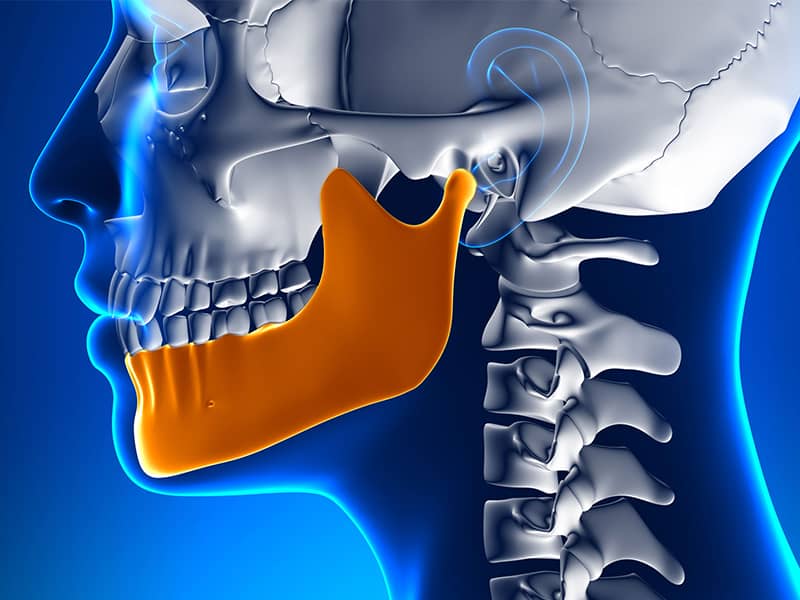
The number of implants required in the upper (maxilla) and lower (mandible) jaws varies depending on the bone density, anatomical constraints, and the type of prosthesis to be applied. Since the upper jaw generally has a softer bone structure, it requires more implants for stability. The lower jaw, having denser bone structure, requires fewer implants for stability:
Upper Jaw (Maxilla)
- Full fixed prosthesis 6-8 implants
- All-on-4 technique 4 implants
Lower Jaw (Mandible)
- Full fixed prosthesis 4-6 implants
- Implant-supported prosthesis (overdenture) 2 implants
In the upper jaw, sinus lift procedures or open implant placement techniques may be necessary as sinuses can complicate the implant placement process. In the lower jaw, care should be taken during implant applications in areas close to the inferior alveolar nerve.
How Do Advanced Techniques Like the All-on-4 Concept Reduce the Number of Implants?
The All-on-4 concept offers an effective and economical solution by reducing the number of implants needed for complete dentures for edentulous jaws. This technique ensures that a full dental prosthesis is stable and functional by using only four implants. Placing the implants in an open manner allows for more bone support while preserving anatomical structures, facilitating the long-term use of the implants. This contributes to the balanced distribution of chewing forces:
- Two implants placed vertically in the front section
- Two implants at an angle of 30°-45° in the back section
- Avoidance of anatomical structures like maxillary sinuses, inferior alveolar nerve
- Equal distribution of torsional forces
- Longer implant usage
The biomechanical advantages of the All-on-4 technique stand out by optimizing the load distribution of exposed implants. Studies show that this method does not create additional stress compared to vertical implants when combined with stable prosthetics. It has been determined that the length of the moment arm also plays an important role in prosthetic stability. These factors provide an economical solution for edentulous arches while increasing patient comfort.
The clinical outcomes of All-on-4 support the reliability of the technique. Research indicates that four implants applied to the lower arch can endure for a long time and provide high success rates over a 5-10 year period.
What Are the Advantages and Limitations of Using Fewer Implants in Complete Arch Restorations?
Using fewer implants in complete arch restorations offers several significant advantages and limitations. This method provides many benefits such as shorter treatment times and lower costs for patients. It is particularly advantageous for patients seeking an economical solution, and the reduction in surgical procedure duration may increase demand for treatment. However, despite these advantages, some limitations must also be taken into account.
Advantages
- Short surgical duration
- Lower cost
- Reduced need for bone grafting
- Rapid prosthetic use
Limitations
- Increased risk of load distribution
- Cantilever length limitations
- Increased maintenance requirements
How Should Patients and Clinics Decide on the Optimal Number of Implants?
When determining the optimal implant size, a treatment process tailored to the patient’s personal needs and jaw structure is followed. In this process, clinics consider important factors such as the patient’s health history and aesthetic expectations, while also evaluating budget and type of prosthesis. Clinics take various criteria into account to offer the most suitable solution for the patient’s needs:
- Health status: Diabetes, osteoporosis, smoking
- Oral condition: Bone structure, gum health
- Chewing forces: Distribution of force
- Type of prosthesis: Fixed or removable options
- Aesthetic requirements: Smile design, tooth alignment
- Financial factors: The patient’s budget
- Risk factors: Teeth grinding, jaw structure
During the treatment process, factors that could particularly affect the success of the implant, such as the patient’s general health status, are also evaluated. The clinic plans the placement of implants considering chewing forces and aesthetic requirements, presenting a treatment that meets the patient’s expectations. During the treatment process, intraoral examination, radiographic assessment, and detailed analyses are conducted.