In orthodontics, a removable appliance is one that the person takes out and puts back in, while a fixed appliance is bonded to the teeth and can be removed only by the dentist; this is the main difference between the types of orthodontic appliances. Removable appliances are mostly used in growing children for mild to moderate problems, whereas fixed appliances are used more widely because they can move teeth one by one. The dentist decides which one is suitable after an examination and measurements.
What is an orthodontic appliance
An appliance is the general name for any intraoral, and sometimes extraoral, device used in orthodontic treatment to move teeth or jaws, guide them, or hold them in their new position. In everyday speech it is also called “braces”, but an appliance is a broader concept. Some appliances only straighten the teeth, while others guide the growth of the jaw or increase its width.
The short answer to the question of which types of appliances exist in orthodontics is this: removable appliances, fixed appliances, expansion screw appliances and functional appliances. In addition there are retainers, which keep the teeth in place at the end of treatment. Avrupadent’s services include metal brackets, clear aligners and space maintainers; which of them suits you is decided by the dentist at the examination.
Removable appliance
A removable appliance is a device with an acrylic body and, most often, wire parts, which can be taken out of the mouth and put back in. It applies light pressure to the teeth and makes small movements. Because it is taken out while eating and brushing, it is easy to clean; however, its effect depends on wearing it for the recommended time every day.
The main features of a removable appliance are as follows:
- Because it can be taken out, it does not get in the way during meals and tooth brushing.
- It is suitable for small and limited tooth movements, tilted front teeth and guiding jaw development.
- It depends on patient cooperation; when it is not worn, treatment does not progress.
- Its ability to move each tooth separately and precisely is limited.
Because it can be lost or broken, it must always be kept in its case when taken out; an appliance wrapped in a napkin or put in a pocket is often lost.
Fixed appliance
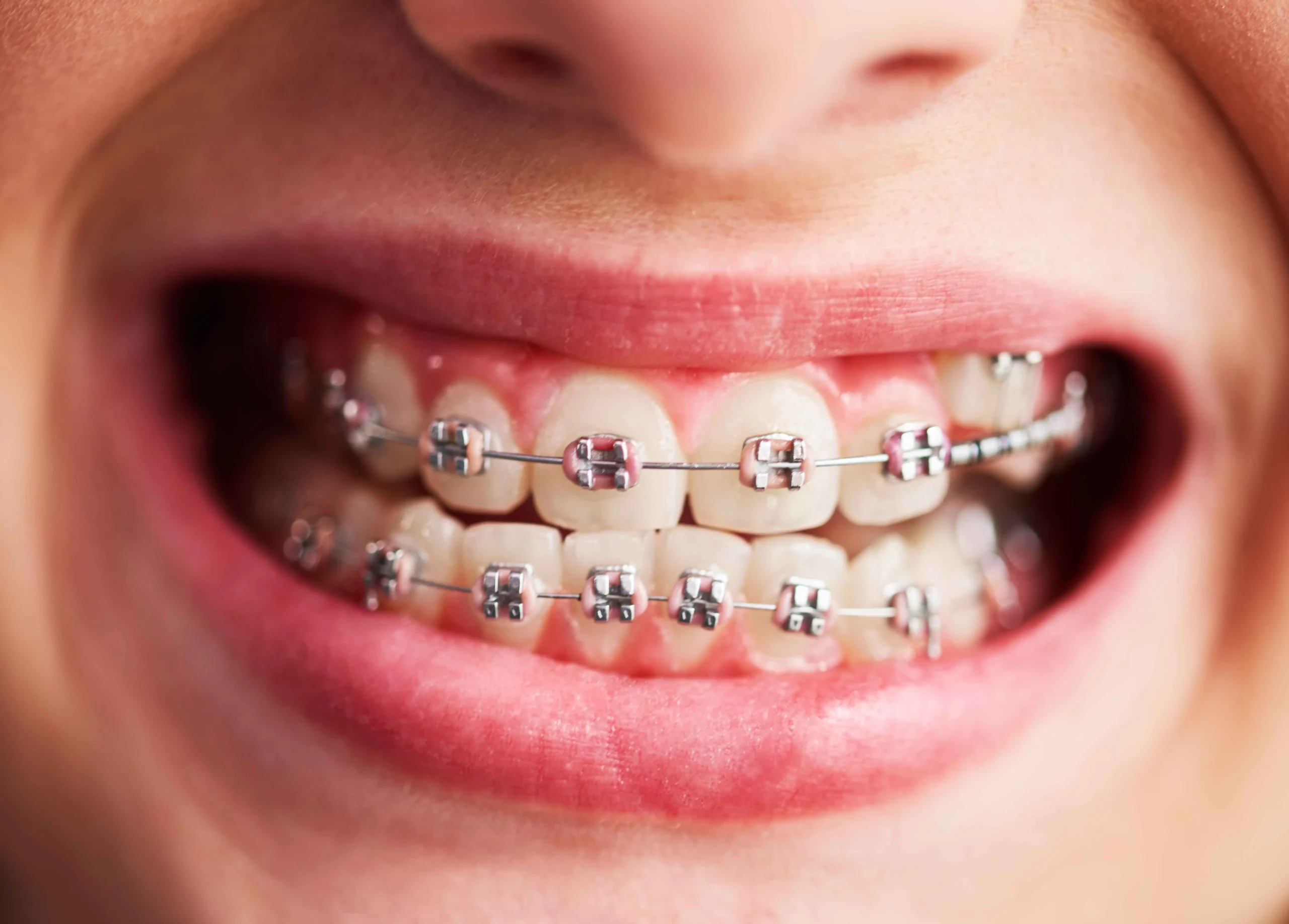
A fixed appliance consists of brackets bonded onto the teeth and the wires that connect them, and it stays in the mouth until treatment is finished. Because it can move teeth one by one and in three dimensions, it is used for more complex problems such as crowding, bite problems and gaps between teeth. Avrupadent’s services include metal bracket treatment.
- It does not need to be put on every day, because the person cannot take it out; for this reason patient cooperation causes fewer problems.
- It can move the teeth in many directions in a controlled way.
- Food builds up easily, so oral hygiene must be done more carefully.
- Small problems such as a poking wire or a loose bracket can occur; the dentist fixes them at a check-up.
After treatment is completed, a retainer is mostly used to maintain the new position of the teeth. When orthodontic treatment and implant planning come up together, the order matters; we explained this in the article may orthodontics be needed before an implant.
Comparison of removable and fixed appliances
The table below gives a general framework to see the difference between a removable and a fixed appliance side by side. The final choice is made together with the dentist after an oral examination and measurements.
| Topic | Removable appliance | Fixed appliance |
|---|---|---|
| How it works | Applies light pressure to the teeth with an acrylic plate and wire parts | Brackets and wires bonded to the teeth move them step by step |
| Who it suits | Growing children; mild and limited problems | Children, teenagers and adults with crowding, gaps and bite problems |
| How it is used | The person puts it in and takes it out; it must be worn for the set time | Stays fixed in the mouth until treatment ends |
| Treatment duration | Varies with the type of problem; generally used for a limited aim | Generally a longer and planned process |
| Care | The appliance is taken out and cleaned separately, and kept in its case | Teeth and brackets are cleaned with a toothbrush, interdental brush and dental floss |
| Point to watch | Ineffective if forgotten or not worn | Hard and sticky foods can detach a bracket |
| Check-ups | Regular adjustment and check-ups | Regular wire and bracket check-ups |
The rows in the table are not strict rules, they show general tendencies. The same person may use a removable appliance in one period and a fixed appliance in the next.
Screw appliance for jaw expansion
The answer to how a screw appliance works is simple: the small screw in the middle of the appliance is turned at set intervals, and the two halves of the upper jaw are slowly moved apart. In this way the jaw widens, there is more room for the teeth, and the fit between the upper and lower jaw improves. It can be removable or fixed; in children the fixed type is commonly used.
The dentist decides how much and how often the screw is turned; it should not be changed on your own. In the first days there may be a feeling of pressure, a slight change in speech and more saliva; these are mostly got used to over time. Forgetting to turn it or turning it too much disturbs the course of treatment, so it is recommended that families follow the schedule together.
Who a screw appliance is applied to and when it is needed is decided by looking at findings such as the jaw structure, how well the teeth fit and a crossbite. You can find the general approach in children’s dentistry on the page what is pediatric dentistry (pedodontics).
Who is a functional appliance applied to
A functional appliance is used to guide the position and development of the jaws relative to each other, and it is generally applied to children and teenagers whose jaw growth is still continuing. When the lower jaw lags behind or the upper jaw sits forward, it aims to guide jaw development by using the way the muscles work. For this reason the answer to the question of what age a functional appliance is used at is not a number but the growth period.
After growth is complete, the jaw structure cannot be changed with this appliance; at that point the problems are handled through the teeth with a fixed appliance or, if needed, with surgery. For this reason, an early examination for families who suspect a jaw mismatch helps the dentist catch the right time. For the timing of the examination you can look at the article a child’s first dental examination.
Functional appliances are mostly removable and work depending on how long they are worn; so the child using the appliance regularly is the most important condition of treatment. The family’s task is to support wearing the appliance every day for the recommended time.
Who are removable and fixed appliances suitable for
Who the two types suit varies with the size of the problem, the person’s age and cooperation. In general the following framework applies:
- Removable appliance: In growing children when small tooth tilts, jaw expansion and guiding development are needed; in people who can use a removable device regularly.
- Fixed appliance: When the position of each tooth needs correcting, in crowded, gapped or bite-disturbed cases; in children, teenagers and adults.
- Clear aligner: Considered when appearance is a priority and for people who can use a removable device with discipline. Avrupadent’s services also include clear aligner treatment.
In some people the two are used together or one after the other. For example, the jaw is first widened with a removable appliance, and then the final position of the teeth is arranged with a fixed appliance.
What to watch after it is fitted
In the first days after the appliance is fitted, sensitivity in the teeth, irritation of the tongue and cheek, and a temporary change in speech are normal. These symptoms generally fade within a few days.
- In the first days prefer soft foods; avoid hard, sticky foods and chewing gum.
- Give up habits such as nail biting and chewing pens; the appliance may be damaged.
- For poking and sores, use the protective wax recommended by the dentist.
- If a wire breaks, a bracket comes off or the appliance is broken, let the clinic know without waiting for the appointment.
- For children who play sports, a protective mouthguard should be asked about with the dentist because of the risk of impact.
How to care for the appliance
Care of the appliance varies with its type; however, the common rule is that the mouth and appliance are cleaned every day. Plaque that builds up on the appliance increases the risk of both decay and gum inflammation.
- Removable appliance: It is taken out after every meal and rinsed with cold or lukewarm water; it is gently cleaned with a soft brush. It is not put in hot water, because the acrylic can lose its shape.
- Fixed appliance: The area around the brackets is cleaned with brushing after meals, an interdental brush and, if needed, an oral irrigator.
- General: Use of fluoride toothpaste and regular tartar cleaning are continued as the dentist recommends.
- Storage: A removable appliance is kept in its case when not in use and stored away from pets.
Check-up appointments
Check-up appointments are needed to see that treatment is going as planned and to adjust the appliance when necessary. With a removable appliance the screw, spring or plate is adjusted; with a fixed appliance the wire is changed, the brackets are checked and, if needed, auxiliary parts such as elastics are added. If check-ups are missed, treatment may take longer, and with a fixed appliance problems such as a poking wire may occur.
The dentist sets the check-up interval according to your treatment. For the general importance of regular check-ups in children, take a look at the page how often should regular dental check-ups be done in children.
What the dentist looks at when choosing the type of appliance
When choosing the type of appliance, the dentist looks not only at the teeth but also at the jaw structure, facial profile, growth status and the person’s care habits. At the examination the following are assessed:
- Age and growth period: Whether jaw growth is continuing is decisive for functional and expansion appliances.
- Type of problem: Crowding, gaps, crossbite, open bite or jaw mismatch need different approaches.
- Tooth and gum health: Active decay and gum problems are treated before the appliance is fitted.
- Cooperation and care: People who will wear a removable appliance regularly are separated from those who should prefer a fixed appliance.
- Expectation and aesthetics: Concern about appearance can affect the choice of treatment type.
- Treatment goal: Is the aim only correction, or guiding jaw development?
For this assessment, an examination, an impression or intraoral scan and, if needed, an X-ray are used. Sharing the plan with you is part of the dentist’s job; it is natural to ask about the advantages and limits of the options.
Applying for an examination
If you have doubts about the alignment of the teeth, the fit of the jaws or the bite in your child or yourself, an orthodontic examination is needed to decide on the type of appliance. Avrupadent’s branches are in the Çiğli, Balçova, Buca, Gaziemir and Konak districts of İzmir. For appointments and questions you can reach Avrupadent through the contact page.