

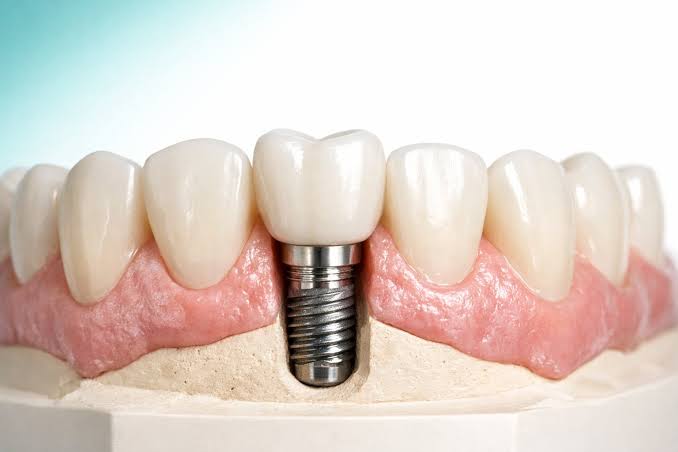
Can the implant-supported prosthesis be removed?
In the field of jaw surgery, titanium root treatments are transferred to the expertise of prosthetic dentistry after completing the osteointegration (bone bonding) stage. The structure that primarily performs the functions of chewing, speech (phonation), and aesthetics is not the screw in the jawbone; rather, it is the restorations that are medically attached to that screw. The question “Can the implant-supported prosthesis be removed?” that arises in the minds of individuals during clinical research processes holds significant medical importance in understanding the long-term use of the treatment, maintaining oral hygiene, and the flexibility of the system against future technical needs.
Can the implant-supported prosthesis be removed and how is it stabilized?
According to dental medicine literature, prosthetic restorations are categorized into two main categories based on biomechanical connection mechanisms. The first category consists of “removable implant-supported prostheses” (overdentures) applied in cases where the patient has significant anatomical tissue loss and the jawbone has severely degraded. These systems receive support from two to four titanium roots placed into the jawbone and are stabilized by the passage of the internal grooves of the prosthesis over the jaw-holding supports (attachments). After meals, the patient can stretch and remove this prosthesis by themselves for cleaning.
The second category consists of “fixed implant-supported prostheses” that directly simulate the natural outer tooth. Zirconium or porcelain crowns and bridges in this group are permanently attached to the titanium root either by screws or with medical cements (binders). Attempting to dislodge a fixed restoration by the patient at home is physically impossible; such forces can cause significant structural damage both to the material of the prosthesis and to the cellular connection between the underlying titanium root and the bone.
How Do Removable Implant-Supported Prostheses Function?
In individuals experiencing total edentulism and those whose jawbone has significantly eroded vertically, traditional dentures often encounter issues such as movement and impact. To eliminate the retention weakness created by tissue-supported dentures, the planned removable systems (overdentures) derive support not from mucosa but directly from the titanium roots in the jawbone.
| Attachment (Connection) Type | Mechanical Working Principle | Clinical Usage Feature |
|---|---|---|
| Ball Attachment | There is a spherical piece at the tip of the titanium root, and the teflon socket inside the prosthesis securely grips this sphere. | Cleaning is easy; the procedure for attaching and removing offers a practical feel with a snap-on mechanism. |
| Locator Attachment | These are holders in the shape of a cylinder with a lower profile. The degree of retention can be adjusted with nylon rings in different colors. | In cases where the vertical bone distance is limited, it is advantageous to provide aesthetic volume. |
| Bar Retaining System | The titanium roots placed are connected to each other with a metal rod (bar), and the prosthesis sits on this rod like a clip. | The force is distributed homogeneously to the entire jaw and exhibits high stabilization against lateral forces (shear). |
Can Fixed Implant-supported Prostheses Be Removed by the Patient at Home?
Fixed prosthetic systems are designed to simulate the biomechanical functions of natural teeth continuously, as understood from their name. To withstand the pressures generated by the chewing system, the internal structures (abutment and screws) that connect the prosthesis to the titanium root are tightened with special clinical torque wrenches. It is impossible for the patient to intervene from outside in this closed system.
If an individual feels discomfort (for example, food impaction, looseness, or odor) underneath a fixed prosthesis, they should not attempt to move the prosthesis on their own. Applying such force can traumatize the bone in the neck region of the titanium screw, potentially leading to cellular bond rupture (disruption of osseointegration). Medical procedures require the patient to consult a specialist dentist without delay, and for the dentist to evaluate the relevant restoration in a controlled clinical environment.
What Are the Differences Between the Clinical Removal Processes of Screw and Cemented Prostheses?Screw-retained prostheses can be removed by the physician within minutes without damaging the prosthesis, as they are connected by a micro screw that goes beyond the chewing surface, after removing the filling material from the screw socket. However, cemented prostheses require the special instruments of the cementing technician to be broken during removal, and the porcelain restoration may be damaged during this process.
In fixed prosthetic dentistry, there are two fundamental medical systems that connect the superstructure to the titanium root. The choice of which system to prefer depends on the depth of the titanium root in the jawbone, the vertical dimension of the patient’s occlusion, and the aesthetic location. The clinical answer to the question, “Can the implant-superstructure prosthesis be removed?” will differ based on this type of connection.Medical Connection Systems and Implant Dynamics:1. Screw-Retained Systems: In this method, there is a small access hole on the chewing (occlusal) or internal surface of the prosthesis. The crown is fastened to an intermediary piece called an abutment or directly to a titanium root with a small screw. The top hole is sealed with composite filling. Years later, when it is necessary to clean or inspect the underside of the prosthesis, the doctor simply opens the composite filling, loosens the screw, and removes the prosthesis as a single piece. After the procedure, the prosthesis is reattached in the same manner. Its maintenance is an extremely convenient system.
2. Cemented Systems: In this method, an abutment is screwed onto the titanium root. The prosthesis, prepared in the laboratory, is secured to this abutment using medical cements, much like a crown is applied to a natural tooth. Since there is no screw hole on top, it provides a completely aesthetic appearance. However, in the event of a potential problem, it is difficult for the doctor to disassemble this prosthesis as it involves breaking the connection of the strong cementers; often, the prosthesis may need to be cut or broken away from its place and then reproduced in the laboratory.
How are the Selection and Maintenance Procedures of Implant-Supported Prosthetics Planned in Avrupadent Clinics?
Medical organizations like Avrupadent, operating in Izmir, plan restorations suitable for anatomical structures in conjunction with multidisciplinary assessment protocols. The connection type of the prosthesis (screw-retained or cemented) is determined in three dimensions via digital jaw scans. During annual maintenance sessions, the doctors remove screw-retained prostheses, clean the underlying cavities with ultrasonic baths to eliminate microbial agents, and restore them in place.In modern clinical practice, jaw surgery and prosthetic design are not considered isolated processes. The ease of maintaining a prosthesis after years is dependent on the angle at which the screw was placed during the surgical phase. If titanium material has been placed too deeply into the bone, when a screw-retained prosthesis is created, the screw hole will align with the front surface of the tooth (visible part), leading to aesthetic deterioration. In such cases, institutional doctors resort to systems of cementation (constructing) to ensure anatomical compatibility.
Corporate medical organizations operate periodic clinical follow-up (maintenance) processes as an organic extension of the treatment. During monthly or yearly checks for screw-retained prostheses, having the doctor remove the prosthesis within 10-15 minutes, clean it in a laboratory setting, and polish it for reattachment is the most rational physiological approach to limit the development of peri-implantitis (surrounding tissue inflammation). This removable medical design offers the patient a predictable and manageable long-term usage option.
What Are the Medical Conditions That Require Removal of Prosthetic Restorations by a Doctor?
The removal of fixed restorations by a doctor in a clinical setting is necessary in medical conditions such as loosening of abutment screws, breakage occurring in porcelain or zirconium bodies, controlling inflammatory (peri-implantitis) damage in surrounding mucosa and bone, or the prosthetic rearrangement of receding forms in the anatomical gum over time.The idea that the lifespan of fixed prostheses will never change position contradicts the dynamic nature of biological systems. Chewing forces (occlusal stresses) create cumulative fatigue on the system over the years. One of the most common clinical needs is ‘screw loosening.’ The internal screws holding the prosthesis may bend due to micro-vibrations. When the patient feels a slight discomfort or movement in the tooth, the doctor removes the prosthesis, adjusts the torque setting of the screw, and stabilizes the system again.
Another medical necessity is the radical changes in the health of the gum (mucosa). If the patient’s oral hygiene is inadequate and dental calculus (tartar) accumulates under the prosthesis, leading to bone loss, it is essential for the doctor to remove the prosthesis to clean the area thoroughly (graft) and treat the tissue. When the prosthesis is removed, the surgical area is examined directly to ensure microbial cleanliness, and once the tissue health is restored, the prosthesis is reattached.
How Should Individuals Using Removable Dentures (Overdentures) Perform Daily Cleaning and Care Procedures?Patients using removable dentures should remove them by loosening the locking mechanisms after every main meal and before going to bed at night. The removed denture should be cleaned under running water using non-abrasive brushes and liquid soaps; while the titanium attachments (ball or bar retainers) remaining in the mouth should be gently brushed with a standard toothbrush to remove microbial plaque.
The physiological advantage of removable implant-supported prostheses is their superior cleanliness ability for the patient. Cleaning the cavities beneath fixed prostheses requires great attention, whereas in removable prostheses, the material outside the mouth can be easily cleaned from all angles. However, it is essential that this mechanical cleaning routine does not shorten the lifespan of the attachments (retention clips).It is not recommended to use regular toothpaste on prostheses washed outside the mouth. The abrasive particles contained in the pastes can scratch the acrylic or composite surface of the prosthesis microscopically over time, leading to dullness and bacterial retention. The titanium caps remaining inside the mouth are quite porous; food particles and plaque that accumulate around these pieces can be removed by circular movements with soft-bristled brushes, keeping the gum inflammation (gingivitis) under control.
Does Removing the Prosthesis Damage the Titanium Root Structure or Jawbone?
Controlled removal procedures performed by a physician in a clinical setting using appropriate medical torque wrenches do not damage the titanium root beneath or the jawbone surrounding it (osteointegration). However, patients using removable prostheses may cause retention loss over time by applying unilateral and disproportionate force when removing the prosthesis from the mouth, thus exceeding the limits of the plastic sockets of the attachments.The removal of fixed prostheses under the supervision of a physician is a medical action appropriate to the design of the system. Opening the lock by turning the screw inside does not exert any horizontal or vertical shear force on the biological bond between the bone and the titanium surface. While the titanium root remains firmly in the jawbone (ankylosis), only the cover on top can be removed.
In removable dentures, the patient’s hand manipulation comes into play. When the prosthesis is being taken out, the force must be evenly directed upwards from both sides. Simply holding and pulling from the right side can cause the nylon (Teflon) retaining rubber inside the prosthesis to be crushed in one direction. These plastic retainers (o-ring or locator rings) are, in any case, parts that wear out over time and can be quickly replaced during routine check-ups in the clinic every 6-12 months, ensuring the prosthesis returns to its initial tight fit.
How Do Climate and Dietary Factors in the İzmir Region Affect the Cleaning and Removal Needs of Prostheses?
The consumption of olive oil, fiber-rich (artichoke, celery), and hard-seeded (fig, boyoz) foods common in İzmir tends to accumulate in the connectors of prosthetic restorations or the locking mechanisms of removable dentures. These regional dietary dynamics increase patients’ need for daily mechanical washing with superfloss threads, making the clinician’s routine disassembly and cleaning intervals more critical.The oral flora is a biochemical environment that is directly shaped by regional dietary habits. The long-term consumption of fiber-rich foods specific to the Aegean region can leave fiber residues behind in the subshells of fixed prostheses or behind the bar retainers of removable dentures. These residues, in contact with saliva, can turn into organic acids, causing irritation (inflammation) in the surrounding gum mucosa.
Especially in patients with screw-retained fixed prostheses, having these prostheses removed and their lower parts cleaned in a clinical environment during six-month doctor appointments helps eliminate stubborn tartar accumulated from local diets. Dentists modify disassembly/care intervals based on the patient’s oral hygiene performance, considering their dietary habits and plaque formation tendencies.
Why Are Long-Term Maintenance and Routine Doctor Visits Medically Important?
The ability of artificial systems placed in the jawbone to maintain biological stability for many years relies on monitoring the occlusal (bite) wear of prostheses, early detection of micro-screw loosenings, and the removal of plaque at the mucosal level with medical instruments. Clinical maintenance sessions are aimed at limiting cellular damage while preserving mechanical and physiological balance at the initial phase.A common misconception among the public is that the process ends entirely after jaw surgery and the fitting of porcelain teeth. However, the oral environment is a living, evolving ecosystem. As a person’s natural teeth wear down over the years, zirconium or porcelain prostheses do not wear down. This situation leads to a disruption of the contact balance (occlusion) over time. The broken balance increases the load applied to the prosthesis.
Regular doctor visits are medical check-up sessions that detect these imbalances before they cause tissue damage. The doctor tests pressure points with colored pressure sheets and may need to remove the prosthesis to refresh polishing procedures. Plaque on the neck of the prosthesis is cleaned using special Teflon tools that do not scratch the titanium surface. This multidisciplinary maintenance approach is the fundamental rule for the patient to use the prosthetic system comfortably within a biological harmony akin to their natural organs.
In fixed prosthetic dentistry, there are two fundamental medical systems that connect the superstructure to the titanium root. The choice of which system to prefer depends on the depth of the titanium root in the jawbone, the vertical dimension of the patient’s occlusion, and the aesthetic location. The clinical answer to the question, “Can the implant-superstructure prosthesis be removed?” will differ based on this type of connection.
1. Screw-Retained Systems: In this method, there is a small access hole on the chewing (occlusal) or internal surface of the prosthesis. The crown is fastened to an intermediary piece called an abutment or directly to a titanium root with a small screw. The top hole is sealed with composite filling. Years later, when it is necessary to clean or inspect the underside of the prosthesis, the doctor simply opens the composite filling, loosens the screw, and removes the prosthesis as a single piece. After the procedure, the prosthesis is reattached in the same manner. Its maintenance is an extremely convenient system.
2. Cemented Systems: In this method, an abutment is screwed onto the titanium root. The prosthesis, prepared in the laboratory, is secured to this abutment using medical cements, much like a crown is applied to a natural tooth. Since there is no screw hole on top, it provides a completely aesthetic appearance. However, in the event of a potential problem, it is difficult for the doctor to disassemble this prosthesis as it involves breaking the connection of the strong cementers; often, the prosthesis may need to be cut or broken away from its place and then reproduced in the laboratory.
How are the Selection and Maintenance Procedures of Implant-Supported Prosthetics Planned in Avrupadent Clinics?
In modern clinical practice, jaw surgery and prosthetic design are not considered isolated processes. The ease of maintaining a prosthesis after years is dependent on the angle at which the screw was placed during the surgical phase. If titanium material has been placed too deeply into the bone, when a screw-retained prosthesis is created, the screw hole will align with the front surface of the tooth (visible part), leading to aesthetic deterioration. In such cases, institutional doctors resort to systems of cementation (constructing) to ensure anatomical compatibility.
Corporate medical organizations operate periodic clinical follow-up (maintenance) processes as an organic extension of the treatment. During monthly or yearly checks for screw-retained prostheses, having the doctor remove the prosthesis within 10-15 minutes, clean it in a laboratory setting, and polish it for reattachment is the most rational physiological approach to limit the development of peri-implantitis (surrounding tissue inflammation). This removable medical design offers the patient a predictable and manageable long-term usage option.
What Are the Medical Conditions That Require Removal of Prosthetic Restorations by a Doctor?
The idea that the lifespan of fixed prostheses will never change position contradicts the dynamic nature of biological systems. Chewing forces (occlusal stresses) create cumulative fatigue on the system over the years. One of the most common clinical needs is ‘screw loosening.’ The internal screws holding the prosthesis may bend due to micro-vibrations. When the patient feels a slight discomfort or movement in the tooth, the doctor removes the prosthesis, adjusts the torque setting of the screw, and stabilizes the system again.
Another medical necessity is the radical changes in the health of the gum (mucosa). If the patient’s oral hygiene is inadequate and dental calculus (tartar) accumulates under the prosthesis, leading to bone loss, it is essential for the doctor to remove the prosthesis to clean the area thoroughly (graft) and treat the tissue. When the prosthesis is removed, the surgical area is examined directly to ensure microbial cleanliness, and once the tissue health is restored, the prosthesis is reattached.
How Should Individuals Using Removable Dentures (Overdentures) Perform Daily Cleaning and Care Procedures?Patients using removable dentures should remove them by loosening the locking mechanisms after every main meal and before going to bed at night. The removed denture should be cleaned under running water using non-abrasive brushes and liquid soaps; while the titanium attachments (ball or bar retainers) remaining in the mouth should be gently brushed with a standard toothbrush to remove microbial plaque.
The physiological advantage of removable implant-supported prostheses is their superior cleanliness ability for the patient. Cleaning the cavities beneath fixed prostheses requires great attention, whereas in removable prostheses, the material outside the mouth can be easily cleaned from all angles. However, it is essential that this mechanical cleaning routine does not shorten the lifespan of the attachments (retention clips).It is not recommended to use regular toothpaste on prostheses washed outside the mouth. The abrasive particles contained in the pastes can scratch the acrylic or composite surface of the prosthesis microscopically over time, leading to dullness and bacterial retention. The titanium caps remaining inside the mouth are quite porous; food particles and plaque that accumulate around these pieces can be removed by circular movements with soft-bristled brushes, keeping the gum inflammation (gingivitis) under control.
Does Removing the Prosthesis Damage the Titanium Root Structure or Jawbone?
Controlled removal procedures performed by a physician in a clinical setting using appropriate medical torque wrenches do not damage the titanium root beneath or the jawbone surrounding it (osteointegration). However, patients using removable prostheses may cause retention loss over time by applying unilateral and disproportionate force when removing the prosthesis from the mouth, thus exceeding the limits of the plastic sockets of the attachments.The removal of fixed prostheses under the supervision of a physician is a medical action appropriate to the design of the system. Opening the lock by turning the screw inside does not exert any horizontal or vertical shear force on the biological bond between the bone and the titanium surface. While the titanium root remains firmly in the jawbone (ankylosis), only the cover on top can be removed.
In removable dentures, the patient’s hand manipulation comes into play. When the prosthesis is being taken out, the force must be evenly directed upwards from both sides. Simply holding and pulling from the right side can cause the nylon (Teflon) retaining rubber inside the prosthesis to be crushed in one direction. These plastic retainers (o-ring or locator rings) are, in any case, parts that wear out over time and can be quickly replaced during routine check-ups in the clinic every 6-12 months, ensuring the prosthesis returns to its initial tight fit.
How Do Climate and Dietary Factors in the İzmir Region Affect the Cleaning and Removal Needs of Prostheses?
The consumption of olive oil, fiber-rich (artichoke, celery), and hard-seeded (fig, boyoz) foods common in İzmir tends to accumulate in the connectors of prosthetic restorations or the locking mechanisms of removable dentures. These regional dietary dynamics increase patients’ need for daily mechanical washing with superfloss threads, making the clinician’s routine disassembly and cleaning intervals more critical.The oral flora is a biochemical environment that is directly shaped by regional dietary habits. The long-term consumption of fiber-rich foods specific to the Aegean region can leave fiber residues behind in the subshells of fixed prostheses or behind the bar retainers of removable dentures. These residues, in contact with saliva, can turn into organic acids, causing irritation (inflammation) in the surrounding gum mucosa.
Especially in patients with screw-retained fixed prostheses, having these prostheses removed and their lower parts cleaned in a clinical environment during six-month doctor appointments helps eliminate stubborn tartar accumulated from local diets. Dentists modify disassembly/care intervals based on the patient’s oral hygiene performance, considering their dietary habits and plaque formation tendencies.
Why Are Long-Term Maintenance and Routine Doctor Visits Medically Important?
The ability of artificial systems placed in the jawbone to maintain biological stability for many years relies on monitoring the occlusal (bite) wear of prostheses, early detection of micro-screw loosenings, and the removal of plaque at the mucosal level with medical instruments. Clinical maintenance sessions are aimed at limiting cellular damage while preserving mechanical and physiological balance at the initial phase.A common misconception among the public is that the process ends entirely after jaw surgery and the fitting of porcelain teeth. However, the oral environment is a living, evolving ecosystem. As a person’s natural teeth wear down over the years, zirconium or porcelain prostheses do not wear down. This situation leads to a disruption of the contact balance (occlusion) over time. The broken balance increases the load applied to the prosthesis.
Regular doctor visits are medical check-up sessions that detect these imbalances before they cause tissue damage. The doctor tests pressure points with colored pressure sheets and may need to remove the prosthesis to refresh polishing procedures. Plaque on the neck of the prosthesis is cleaned using special Teflon tools that do not scratch the titanium surface. This multidisciplinary maintenance approach is the fundamental rule for the patient to use the prosthetic system comfortably within a biological harmony akin to their natural organs.
The physiological advantage of removable implant-supported prostheses is their superior cleanliness ability for the patient. Cleaning the cavities beneath fixed prostheses requires great attention, whereas in removable prostheses, the material outside the mouth can be easily cleaned from all angles. However, it is essential that this mechanical cleaning routine does not shorten the lifespan of the attachments (retention clips).
It is not recommended to use regular toothpaste on prostheses washed outside the mouth. The abrasive particles contained in the pastes can scratch the acrylic or composite surface of the prosthesis microscopically over time, leading to dullness and bacterial retention. The titanium caps remaining inside the mouth are quite porous; food particles and plaque that accumulate around these pieces can be removed by circular movements with soft-bristled brushes, keeping the gum inflammation (gingivitis) under control.
Does Removing the Prosthesis Damage the Titanium Root Structure or Jawbone?
The removal of fixed prostheses under the supervision of a physician is a medical action appropriate to the design of the system. Opening the lock by turning the screw inside does not exert any horizontal or vertical shear force on the biological bond between the bone and the titanium surface. While the titanium root remains firmly in the jawbone (ankylosis), only the cover on top can be removed.
In removable dentures, the patient’s hand manipulation comes into play. When the prosthesis is being taken out, the force must be evenly directed upwards from both sides. Simply holding and pulling from the right side can cause the nylon (Teflon) retaining rubber inside the prosthesis to be crushed in one direction. These plastic retainers (o-ring or locator rings) are, in any case, parts that wear out over time and can be quickly replaced during routine check-ups in the clinic every 6-12 months, ensuring the prosthesis returns to its initial tight fit.
How Do Climate and Dietary Factors in the İzmir Region Affect the Cleaning and Removal Needs of Prostheses?
The oral flora is a biochemical environment that is directly shaped by regional dietary habits. The long-term consumption of fiber-rich foods specific to the Aegean region can leave fiber residues behind in the subshells of fixed prostheses or behind the bar retainers of removable dentures. These residues, in contact with saliva, can turn into organic acids, causing irritation (inflammation) in the surrounding gum mucosa.
Especially in patients with screw-retained fixed prostheses, having these prostheses removed and their lower parts cleaned in a clinical environment during six-month doctor appointments helps eliminate stubborn tartar accumulated from local diets. Dentists modify disassembly/care intervals based on the patient’s oral hygiene performance, considering their dietary habits and plaque formation tendencies.
Why Are Long-Term Maintenance and Routine Doctor Visits Medically Important?
A common misconception among the public is that the process ends entirely after jaw surgery and the fitting of porcelain teeth. However, the oral environment is a living, evolving ecosystem. As a person’s natural teeth wear down over the years, zirconium or porcelain prostheses do not wear down. This situation leads to a disruption of the contact balance (occlusion) over time. The broken balance increases the load applied to the prosthesis.
Regular doctor visits are medical check-up sessions that detect these imbalances before they cause tissue damage. The doctor tests pressure points with colored pressure sheets and may need to remove the prosthesis to refresh polishing procedures. Plaque on the neck of the prosthesis is cleaned using special Teflon tools that do not scratch the titanium surface. This multidisciplinary maintenance approach is the fundamental rule for the patient to use the prosthetic system comfortably within a biological harmony akin to their natural organs.
Other Blogs
What is a dental crown, and in which situations is it done?
How do inlay and onlay fillings differ from a normal filling?
When Does Oral and Dental Health Begin in Children?
When Does Oral and Dental Health in Children Begin? Oral and dental health in children begins with the formation of milk tooth buds while the baby is still in the womb and turns into an active care process immediately after birth with the cleaning of the palate in the toothless period. With the emergence of […]

When Do Babies Get Their First Tooth?
When Do Babies Get Their First Tooth? The first tooth in babies usually appears between the sixth and eighth months, breaking through the gums of the lower incisors to emerge into the mouth. However, this physiological timeline is entirely dependent on genetic factors; while some babies may see their first teeth as early as four […]
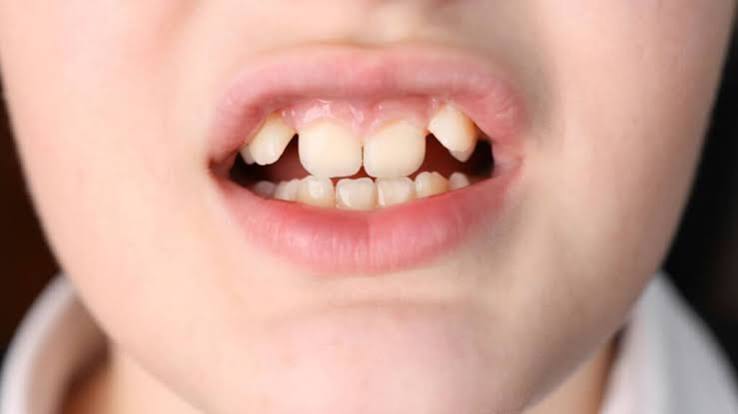
Why Are Dental Check-Ups Important for Children?
Why Are Dental Check-Ups Important for Children? Dental check-ups for children are extremely important for ensuring that oral, dental, and jaw development progresses healthily, identifying and stopping dental issues at the initial stage, and preventing potential skeletal disorders by taking advantage of growth potential. These check-ups form the basis of preventive health strategies that are […]
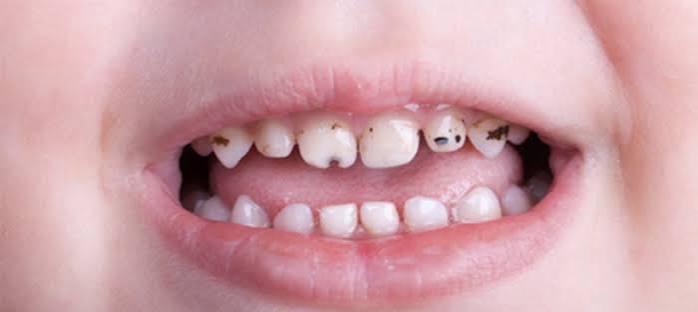
What Causes Tooth Decay in Children?
What Causes Tooth Decay in Children? Tooth decay in children occurs when cariogenic (decay-causing) bacteria present in the oral flora ferment the sugary and carbohydrate-rich foods consumed, producing lactic acid. Over time, this acid demineralizes the calcium and phosphate minerals in the tooth enamel (demineralization), and due to insufficient oral hygiene, this destructive process surpasses […]
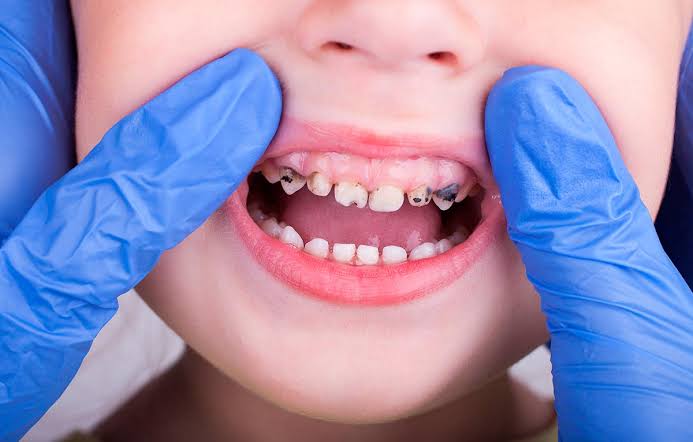
How Can Dental Caries in Children Be Prevented?
How to Prevent Tooth Decay in Children in Izmir? In Izmir, the prevention of tooth decay in children is achieved through regular fluoride mechanical brushing under parental supervision, a conscious dietary regimen that limits carbohydrate and sugar intake, and the implementation of professional preventive dental measures such as periodic application of fissure sealants and fluoride […]
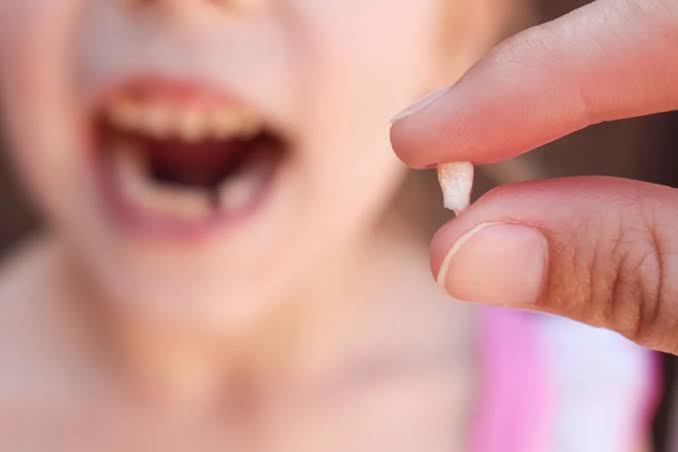
Why Do Milk Teeth Decay?
Why do baby teeth decay in Izmir? Baby teeth in Izmir are more prone to decay due to several factors. The enamel layer is anatomically thinner and richer in organic matter compared to permanent teeth, the bacteria in the oral flora ferment refined sugars to produce acids, and childhood nutrition/hygiene habits support this acid attack. […]