

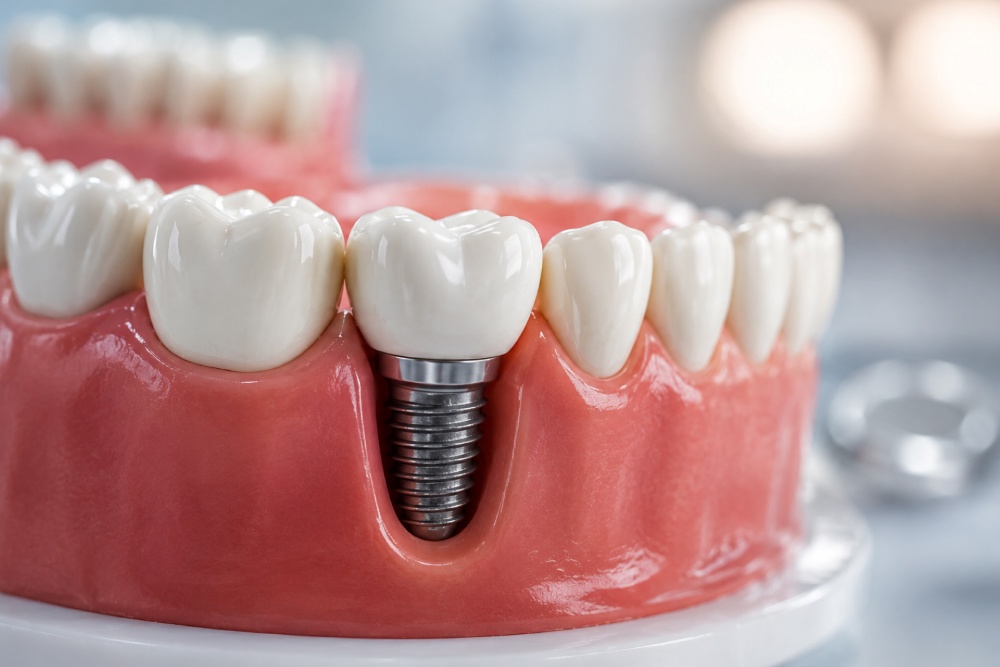
Can Orthodontics Be Required Before Implants in İzmir and In Which Medical Cases Is It Planned?
The lifespan of titanium materials in the jawbone depends on the direction of the biting forces acting upon them. If a gap has narrowed and the surgeon must place the screw in the confined area with an angle, the forces created during biting (occlusal stress) exert lateral pressure on the neck area of the screw. The most destructive forces that can erode bone are these lateral forces coming from an eccentric direction. The primary clinical function of orthodontic treatment is to extract adjacent teeth to allow the screw to be placed into the bone at a perfect ninety-degree vertical angle in the thickest bone area.
Particularly the early loss of lower number six (first molar) teeth is one of the most common anatomical deformities encountered in society. When this tooth is lost, the following number seven (second molar) tooth tends to tilt towards the front with intense severity. The root of a tooth that has tipped forward occupies the bone area beneath the gap. While it may appear that there is space above the gum tissue when viewed from the outside, the inner part of the bone has been covered by the tipped root. Using orthodontic wires or plates, this tipped root is pushed back (to a vertical position), thus opening a corridor for the titanium screw to advance within the bone.
Why Do Adjacent Teeth Tilt Into the Gap During Tooth Loss?
Natural tooth alignment resembles a locking stone system. Each tooth supports its adjacent tooth by making contact, while at the same time, the upper teeth engage with the lower teeth to lock vertical movements. The delicate connective tissue fibers known as the “periodontal ligament” hold the tooth within the gum and bone, providing microscopic movement capability.
When a deficiency occurs, this sensitive locking mechanism is disrupted. The back teeth have a physiological tendency to migrate towards the midline of the mouth (anterior) constantly. When a tooth in front is extracted, the braking mechanism is removed, causing the tooth behind it to lean into the empty space. If a tooth in the upper jaw is extracted, the corresponding lower jaw tooth begins to extend millimeter by millimeter into the oral cavity because it finds no obstacle opposite it (eruption). This silent progression over the years ultimately occupies the area for any prosthetic restoration to be performed in that region.
How is Orthodontics and Jaw Surgery Planning Conducted in Avrupadent Clinics?
The multidisciplinary approach in medicine requires each branch to combine its data into a common treatment pool. For example, the jaw surgeon needs a horizontal distance of 8 millimeters to place the titanium screw. The orthodontist reports to the patient how long it will take to open that 8 millimeter gap and which appliances will be used.
- Data Collection: The dental alignment situation is scanned in three dimensions using intraoral (mouth interior) optical cameras.
- Virtual Setup (Pre-Visualization): Orthodontic software simulates the upright position that the teeth will take months later. Doctors check that when the teeth reach this upright position, the roots will not collide.
- Prosthetic Approval: The size of the titanium screw to be placed and the zirconium crown that will sit on it are adjusted to fit the gap opened in the virtual environment, and biomechanical compatibility is tested. Once all these digital tests are approved, the patient’s clinical treatment is initiated.
How Does Orthodontic Wire or Clear Plate Treatment Prepare the Ground for Titanium Root Application?
Orthodontic movement is not just the displacement of teeth, but the process of remodeling the bone surrounding the teeth. When a force is applied to a tooth, the bone cells (osteoclasts) on the direction of the force dissolve the bone to create a path for the tooth, while the cells (osteoblasts) on the opposite side produce new bone tissue to fill the remaining gap. This dynamic cellular activity continues for months.
This bone shaping process provides a significant physiological contribution to the surgical area. As the teeth move, the blood circulation (vascularization) and cellular activity of the jawbone in that region rise to quite high levels. When orthodontic treatment is completed and titanium material is placed in that area, the already active and well-vascularized bone tissue wraps the artificial material much quicker and sturdier, positively supporting the osteointegration (bonding to bone) period.
What Physiological Issues Can Occur With Artificial Root Placement Without Sufficient Space?Placing an artificial root in a narrow area by forcing anatomical boundaries can lead to physical damage to neighboring natural tooth roots, cause jawbone erosion due to the misdirection of chewing forces, and result in the emergence of prosthetic crowns that are disproportionate, difficult to clean, and prone to plaque accumulation from an aesthetic standpoint.
In jaw surgery, the importance of millimeter gaps is critical. The diameter of a standard titanium screw is approximately 4 millimeters. It is a medical rule to maintain a minimum of 1.5 – 2 millimeters of healthy bone between the natural tooth roots on either side of the screw. Otherwise, the threads of the screw may push against or press on the neighboring tooth root. If the root of a damaged natural tooth experiences necrosis, it may lose vitality over time and ultimately be lost.Anatomical and Prosthetic Risks of Intervention in Narrow AreasRisk Factor Physiological and Mechanical Consequences Root Fracture Damage to the adjacent natural tooth root, leading to infection and possibly requiring root canal treatment or extraction. Uncleanable Interfaces A porcelain crown compressed into a tight space leaves no room for dental floss between the teeth; accumulated plaque triggers inflammation of the gum (peri-implantitis). Leverage Effect When a vertical tooth structure is attempted over a screw placed in a narrow space, the biting force can crush the screw, causing micro-fractures (dissolution) in the bone.
How Do Occlusal Disorders Affect the Lifespan of Prosthetic Materials?
The disproportion or cross-contact of the lower and upper jaw teeth (malocclusion) causes forces during chewing, measured in kilograms, to exert asymmetrical and destructive pressure on titanium materials. These unbalanced horizontal forces initiate resorption (dissolution) of the supporting bone around the artificial root, seriously jeopardizing the long-term maintenance of the system.All teeth in an individual’s mouth are programmed to counteract each other in order to distribute loads. If a patient has a general orthodontic disorder (such as deep bite, open bite, or crossbite), the energy produced by the jaw muscles cannot be transmitted to the correct surfaces. Natural teeth can tolerate some of these opposing forces through their surrounding elastic connective tissue (periodontal ligament).
However, titanium materials placed in the jawbone are directly integrated into the bone (ankylosis); they have no capacity for elasticity or shock absorption. When a constant cross or early contact force is applied to this material due to an orthodontic disorder, this force is transmitted directly to the surrounding cortical bone. Bone tissue exposed to excessive load tends to withdraw from that area (resorb) to protect itself. Therefore, in individuals with occlusal disorders, establishing an ideal jaw relationship with the help of braces or clear aligners prior to surgical intervention serves as a primary medical shield that protects the planned prosthetic investment.
Can Orthodontic Movement Be Achieved After Titanium Roots Are Placed in the Jawbone?
It is physiologically impossible to move titanium materials that have completed the osteointegration (bonding) process with the jawbone through orthodontic wires or plates. Since the flexible connective tissue (ligament) present in natural teeth is not found in artificial roots, the titanium structure remains stable; this biological reality necessitates that orthodontic corrections must be completed absolutely before surgical procedures.
One of the fundamental rules of dental biology is the mechanism of orthodontic movement. When force is applied to a natural tooth with a wire, the cells in the tiny gap (periodontal space) between the tooth and the bone move. However, when a titanium screw is placed in the bone, it has become a solid entity with no gaps or tissues in between. No matter how strong the wire you attach to this material, it will not shift even a fraction of a millimeter.This physiological constraint precisely defines the course of treatment planning: First, natural teeth that can move with wires or transparent plates are brought to their ideal positions, followed by the clarification of gaps, and finally, titanium screws are placed in those ideal gaps. If this sequence is reversed, the artificial root, which is fixed in place, turns into an insurmountable concrete pillar that blocks the movement path of other teeth, becoming an obstacle to orthodontic treatment.
Exceptional Cases Where Titanium Roots Assist Orthodontics:
Although artificial roots cannot be moved, doctors sometimes utilize this “immobility” feature as an orthodontic advantage. When it is necessary to retract all molars or move a very stubborn tooth, a solid titanium screw placed into the jawbone serves as an excellent “skeletal anchorage (support)” point to which orthodontic elastics and wires can be attached. While the screw remains fixed, all other teeth can be retracted in the desired direction using the support obtained from it.How is an Orthodontic Decision Made for Multiple Tooth Losses in Izmir Location?
In medical organizations providing services under corporate norms in Izmir, when multiple tooth losses are evaluated, the patient’s age profile, bone metabolism, and prosthetic expectations are intertwined. As a result of cephalometric and volumetric analyses conducted by an orthodontic specialist on digital models, objective data is reported regarding how long and to what anatomical extent the wires or transparent plates can gain volume in the surgical area.In many cases where significant tooth loss has occurred, the balance within the mouth can become completely chaotic. Teeth may tilt in different directions, leaving small and impractical gaps between them. The solution to such complex scenarios requires a collaborative consultation process (collective intelligence) rather than the initiative of a single physician. Medical boards manipulate digital measurements taken from the patient’s mouth on a computer screen to try different scenarios.
For instance; rather than leaving three natural teeth, which have three millimeters of space between them, separated and placing thin artificial roots in between, it is a much more rational medical approach to bring those three natural teeth together using orthodontic forces and place two solid titanium roots in the remaining healthy, broad space. When making a decision; the duration of the procedure, the patient’s social life, and the potential for compliance with treatment are taken into consideration to outline the most advantageous medical route.
Are Transparent Plate (Invisalign, etc.) Treatments Sufficient for Surgical Preparation?
For minor to moderate tooth rotations, correction of vertical extensions, and ensuring the parallelism of roots, transparent plate technologies are a highly competent and comfortable medical alternative for surgical preparation. However, when advanced root movements or severe skeletal discrepancies are involved, it may be essential to resort to the mechanical strength of traditional metal or porcelain bracket (wire) systems.In recent years, transparent plate systems, which are one of the biggest innovations in digital dentistry, have fundamentally changed the approach of adult patients to orthodontic treatments. These plates eliminate the aesthetic concerns created by wires and, thanks to three-dimensional software, move teeth to the planned millimetric positions week by week.
The greatest clinical advantage of transparent aligners during the preparation phase for implants is that the dentist can design everything digitally from the very beginning. The dentist commands, “I need exactly 8.5 millimeters of space in this area,” and the aligners push the teeth until that gap is opened. Additionally, the patient can remove the aligners to easily brush their teeth, ensuring oral hygiene is maintained and that the mucosa of the gum, where a surgical procedure will be performed later, remains inflammation-free (healthy). However, in complex biomechanical situations where the root of the tooth needs to be moved independently from its body with very wide openings, fixed-wire treatments may provide clearer results due to their biophysical retention.
How Long Does Orthodontic Treatment Before Surgery Last in Adults?While orthodontic treatment in localized (regional) adjustments where only one or two neighboring teeth are misaligned generally completes within a short period of three to six months; in extensive skeletal or dental malocclusions, where the entire jaw closure needs to be rearranged, this duration can extend to a biological timeline of twelve to twenty-four months.
The bone density of adult patients is higher compared to the younger individuals in their growing phase. In denser (harder) bone, the cellular breakdown-regeneration cycle progresses relatively slower. Therefore, the mechanical forces applied to the teeth in adults are lighter but held for a longer duration, ensuring that the bone remodels without being damaged (without undergoing necrosis).A large number of patients carry the anxiety of ‘I will have just one tooth missing, and I will have to wear braces for months’. However, treatments referred to as regional (minor) orthodontics focus solely on that missing area. For instance, in the process of uprighting a single tilted molar, with a small device or transparent plate placed on the tooth, that root can be pulled back within a few months, and a rapid transition to the surgical phase is ensured. Comprehensive periods are valid for major orthodontic rehabilitations that concern the entire mouth.
What is the Schedule for Transition to Surgical Phase After Orthodontic Appliances are Removed?
After the teeth are brought to the targeted position, a short retention phase is expected for the jawbone to stabilize in that new form. Subsequently, the surgical procedure is performed without wasting time, and titanium material is placed into the bone; this early intervention helps to medically prevent the reopening of the gap due to the tendency of the teeth to relapse (return) to their original position.Teeth that are displaced by orthodontic forces carry a tendency to return (relapse) to their previous positions until the surrounding bone fully hardens. When the wires or transparent plates are removed, the periodontal fibers in that area are in a tense state. It is the dentist’s medical priority to maintain the opened gap.
For this reason, as soon as orthodontic treatment is completed (or very close to its completion), the oral surgeon intervenes to place the titanium screw in that gap. As titanium integrates with the root bone (while fusing), it physically occupies the gap, creating an anatomical barrier for the neighboring teeth to tilt back into that area. Once the biological waiting period of months is over and a permanent porcelain or zirconium crown is placed on top, the tooth alignment in that area reaches a permanent and stable physiological balance, leaning on each other like a keystone.
In jaw surgery, the importance of millimeter gaps is critical. The diameter of a standard titanium screw is approximately 4 millimeters. It is a medical rule to maintain a minimum of 1.5 – 2 millimeters of healthy bone between the natural tooth roots on either side of the screw. Otherwise, the threads of the screw may push against or press on the neighboring tooth root. If the root of a damaged natural tooth experiences necrosis, it may lose vitality over time and ultimately be lost.
| Risk Factor | Physiological and Mechanical Consequences |
|---|---|
| Root Fracture | Damage to the adjacent natural tooth root, leading to infection and possibly requiring root canal treatment or extraction. |
| Uncleanable Interfaces | A porcelain crown compressed into a tight space leaves no room for dental floss between the teeth; accumulated plaque triggers inflammation of the gum (peri-implantitis). |
| Leverage Effect | When a vertical tooth structure is attempted over a screw placed in a narrow space, the biting force can crush the screw, causing micro-fractures (dissolution) in the bone. |
How Do Occlusal Disorders Affect the Lifespan of Prosthetic Materials?
All teeth in an individual’s mouth are programmed to counteract each other in order to distribute loads. If a patient has a general orthodontic disorder (such as deep bite, open bite, or crossbite), the energy produced by the jaw muscles cannot be transmitted to the correct surfaces. Natural teeth can tolerate some of these opposing forces through their surrounding elastic connective tissue (periodontal ligament).
However, titanium materials placed in the jawbone are directly integrated into the bone (ankylosis); they have no capacity for elasticity or shock absorption. When a constant cross or early contact force is applied to this material due to an orthodontic disorder, this force is transmitted directly to the surrounding cortical bone. Bone tissue exposed to excessive load tends to withdraw from that area (resorb) to protect itself. Therefore, in individuals with occlusal disorders, establishing an ideal jaw relationship with the help of braces or clear aligners prior to surgical intervention serves as a primary medical shield that protects the planned prosthetic investment.
Can Orthodontic Movement Be Achieved After Titanium Roots Are Placed in the Jawbone?
One of the fundamental rules of dental biology is the mechanism of orthodontic movement. When force is applied to a natural tooth with a wire, the cells in the tiny gap (periodontal space) between the tooth and the bone move. However, when a titanium screw is placed in the bone, it has become a solid entity with no gaps or tissues in between. No matter how strong the wire you attach to this material, it will not shift even a fraction of a millimeter.
This physiological constraint precisely defines the course of treatment planning: First, natural teeth that can move with wires or transparent plates are brought to their ideal positions, followed by the clarification of gaps, and finally, titanium screws are placed in those ideal gaps. If this sequence is reversed, the artificial root, which is fixed in place, turns into an insurmountable concrete pillar that blocks the movement path of other teeth, becoming an obstacle to orthodontic treatment.
Although artificial roots cannot be moved, doctors sometimes utilize this “immobility” feature as an orthodontic advantage. When it is necessary to retract all molars or move a very stubborn tooth, a solid titanium screw placed into the jawbone serves as an excellent “skeletal anchorage (support)” point to which orthodontic elastics and wires can be attached. While the screw remains fixed, all other teeth can be retracted in the desired direction using the support obtained from it.
How is an Orthodontic Decision Made for Multiple Tooth Losses in Izmir Location?
In many cases where significant tooth loss has occurred, the balance within the mouth can become completely chaotic. Teeth may tilt in different directions, leaving small and impractical gaps between them. The solution to such complex scenarios requires a collaborative consultation process (collective intelligence) rather than the initiative of a single physician. Medical boards manipulate digital measurements taken from the patient’s mouth on a computer screen to try different scenarios.
For instance; rather than leaving three natural teeth, which have three millimeters of space between them, separated and placing thin artificial roots in between, it is a much more rational medical approach to bring those three natural teeth together using orthodontic forces and place two solid titanium roots in the remaining healthy, broad space. When making a decision; the duration of the procedure, the patient’s social life, and the potential for compliance with treatment are taken into consideration to outline the most advantageous medical route.
Are Transparent Plate (Invisalign, etc.) Treatments Sufficient for Surgical Preparation?
In recent years, transparent plate systems, which are one of the biggest innovations in digital dentistry, have fundamentally changed the approach of adult patients to orthodontic treatments. These plates eliminate the aesthetic concerns created by wires and, thanks to three-dimensional software, move teeth to the planned millimetric positions week by week.
The greatest clinical advantage of transparent aligners during the preparation phase for implants is that the dentist can design everything digitally from the very beginning. The dentist commands, “I need exactly 8.5 millimeters of space in this area,” and the aligners push the teeth until that gap is opened. Additionally, the patient can remove the aligners to easily brush their teeth, ensuring oral hygiene is maintained and that the mucosa of the gum, where a surgical procedure will be performed later, remains inflammation-free (healthy). However, in complex biomechanical situations where the root of the tooth needs to be moved independently from its body with very wide openings, fixed-wire treatments may provide clearer results due to their biophysical retention.
How Long Does Orthodontic Treatment Before Surgery Last in Adults?While orthodontic treatment in localized (regional) adjustments where only one or two neighboring teeth are misaligned generally completes within a short period of three to six months; in extensive skeletal or dental malocclusions, where the entire jaw closure needs to be rearranged, this duration can extend to a biological timeline of twelve to twenty-four months.
The bone density of adult patients is higher compared to the younger individuals in their growing phase. In denser (harder) bone, the cellular breakdown-regeneration cycle progresses relatively slower. Therefore, the mechanical forces applied to the teeth in adults are lighter but held for a longer duration, ensuring that the bone remodels without being damaged (without undergoing necrosis).A large number of patients carry the anxiety of ‘I will have just one tooth missing, and I will have to wear braces for months’. However, treatments referred to as regional (minor) orthodontics focus solely on that missing area. For instance, in the process of uprighting a single tilted molar, with a small device or transparent plate placed on the tooth, that root can be pulled back within a few months, and a rapid transition to the surgical phase is ensured. Comprehensive periods are valid for major orthodontic rehabilitations that concern the entire mouth.
What is the Schedule for Transition to Surgical Phase After Orthodontic Appliances are Removed?
After the teeth are brought to the targeted position, a short retention phase is expected for the jawbone to stabilize in that new form. Subsequently, the surgical procedure is performed without wasting time, and titanium material is placed into the bone; this early intervention helps to medically prevent the reopening of the gap due to the tendency of the teeth to relapse (return) to their original position.Teeth that are displaced by orthodontic forces carry a tendency to return (relapse) to their previous positions until the surrounding bone fully hardens. When the wires or transparent plates are removed, the periodontal fibers in that area are in a tense state. It is the dentist’s medical priority to maintain the opened gap.
For this reason, as soon as orthodontic treatment is completed (or very close to its completion), the oral surgeon intervenes to place the titanium screw in that gap. As titanium integrates with the root bone (while fusing), it physically occupies the gap, creating an anatomical barrier for the neighboring teeth to tilt back into that area. Once the biological waiting period of months is over and a permanent porcelain or zirconium crown is placed on top, the tooth alignment in that area reaches a permanent and stable physiological balance, leaning on each other like a keystone.
The bone density of adult patients is higher compared to the younger individuals in their growing phase. In denser (harder) bone, the cellular breakdown-regeneration cycle progresses relatively slower. Therefore, the mechanical forces applied to the teeth in adults are lighter but held for a longer duration, ensuring that the bone remodels without being damaged (without undergoing necrosis).
A large number of patients carry the anxiety of ‘I will have just one tooth missing, and I will have to wear braces for months’. However, treatments referred to as regional (minor) orthodontics focus solely on that missing area. For instance, in the process of uprighting a single tilted molar, with a small device or transparent plate placed on the tooth, that root can be pulled back within a few months, and a rapid transition to the surgical phase is ensured. Comprehensive periods are valid for major orthodontic rehabilitations that concern the entire mouth.
What is the Schedule for Transition to Surgical Phase After Orthodontic Appliances are Removed?
Teeth that are displaced by orthodontic forces carry a tendency to return (relapse) to their previous positions until the surrounding bone fully hardens. When the wires or transparent plates are removed, the periodontal fibers in that area are in a tense state. It is the dentist’s medical priority to maintain the opened gap.
For this reason, as soon as orthodontic treatment is completed (or very close to its completion), the oral surgeon intervenes to place the titanium screw in that gap. As titanium integrates with the root bone (while fusing), it physically occupies the gap, creating an anatomical barrier for the neighboring teeth to tilt back into that area. Once the biological waiting period of months is over and a permanent porcelain or zirconium crown is placed on top, the tooth alignment in that area reaches a permanent and stable physiological balance, leaning on each other like a keystone.
Other Blogs
What is a dental crown, and in which situations is it done?
How do inlay and onlay fillings differ from a normal filling?
Why Are Dental Check-Ups Important for Children?
Why Are Dental Check-Ups Important for Children? Dental check-ups for children are extremely important for ensuring that oral, dental, and jaw development progresses healthily, identifying and stopping dental issues at the initial stage, and preventing potential skeletal disorders by taking advantage of growth potential. These check-ups form the basis of preventive health strategies that are […]
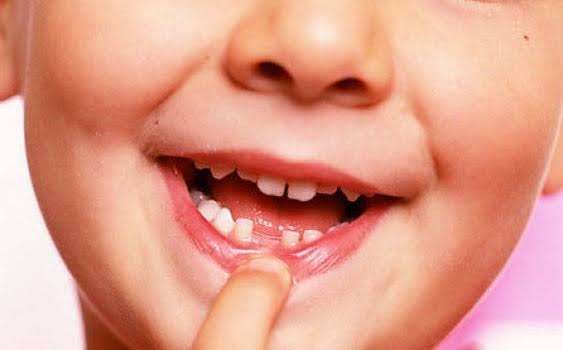
When Does Oral and Dental Health Begin in Children?
When Does Oral and Dental Health in Children Begin? Oral and dental health in children begins with the formation of milk tooth buds while the baby is still in the womb and turns into an active care process immediately after birth with the cleaning of the palate in the toothless period. With the emergence of […]

When Do Babies Get Their First Tooth?
When Do Babies Get Their First Tooth? The first tooth in babies usually appears between the sixth and eighth months, breaking through the gums of the lower incisors to emerge into the mouth. However, this physiological timeline is entirely dependent on genetic factors; while some babies may see their first teeth as early as four […]
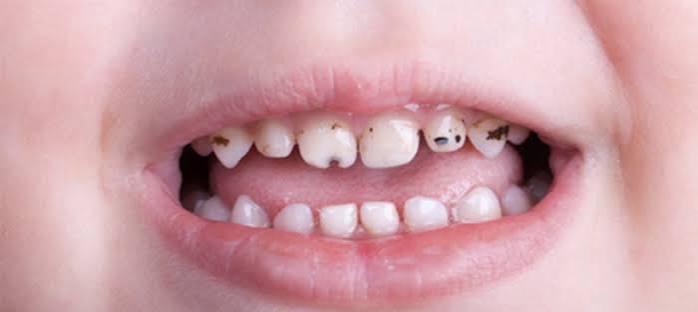
What Causes Tooth Decay in Children?
What Causes Tooth Decay in Children? Tooth decay in children occurs when cariogenic (decay-causing) bacteria present in the oral flora ferment the sugary and carbohydrate-rich foods consumed, producing lactic acid. Over time, this acid demineralizes the calcium and phosphate minerals in the tooth enamel (demineralization), and due to insufficient oral hygiene, this destructive process surpasses […]
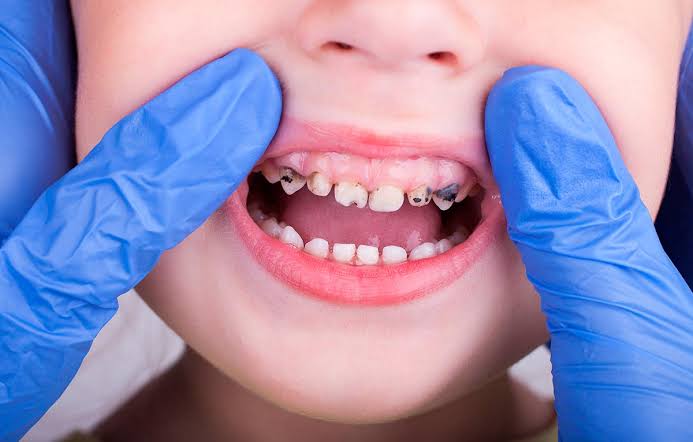
How Can Dental Caries in Children Be Prevented?
How to Prevent Tooth Decay in Children in Izmir? In Izmir, the prevention of tooth decay in children is achieved through regular fluoride mechanical brushing under parental supervision, a conscious dietary regimen that limits carbohydrate and sugar intake, and the implementation of professional preventive dental measures such as periodic application of fissure sealants and fluoride […]

Why Do Milk Teeth Decay?
Why do baby teeth decay in Izmir? Baby teeth in Izmir are more prone to decay due to several factors. The enamel layer is anatomically thinner and richer in organic matter compared to permanent teeth, the bacteria in the oral flora ferment refined sugars to produce acids, and childhood nutrition/hygiene habits support this acid attack. […]