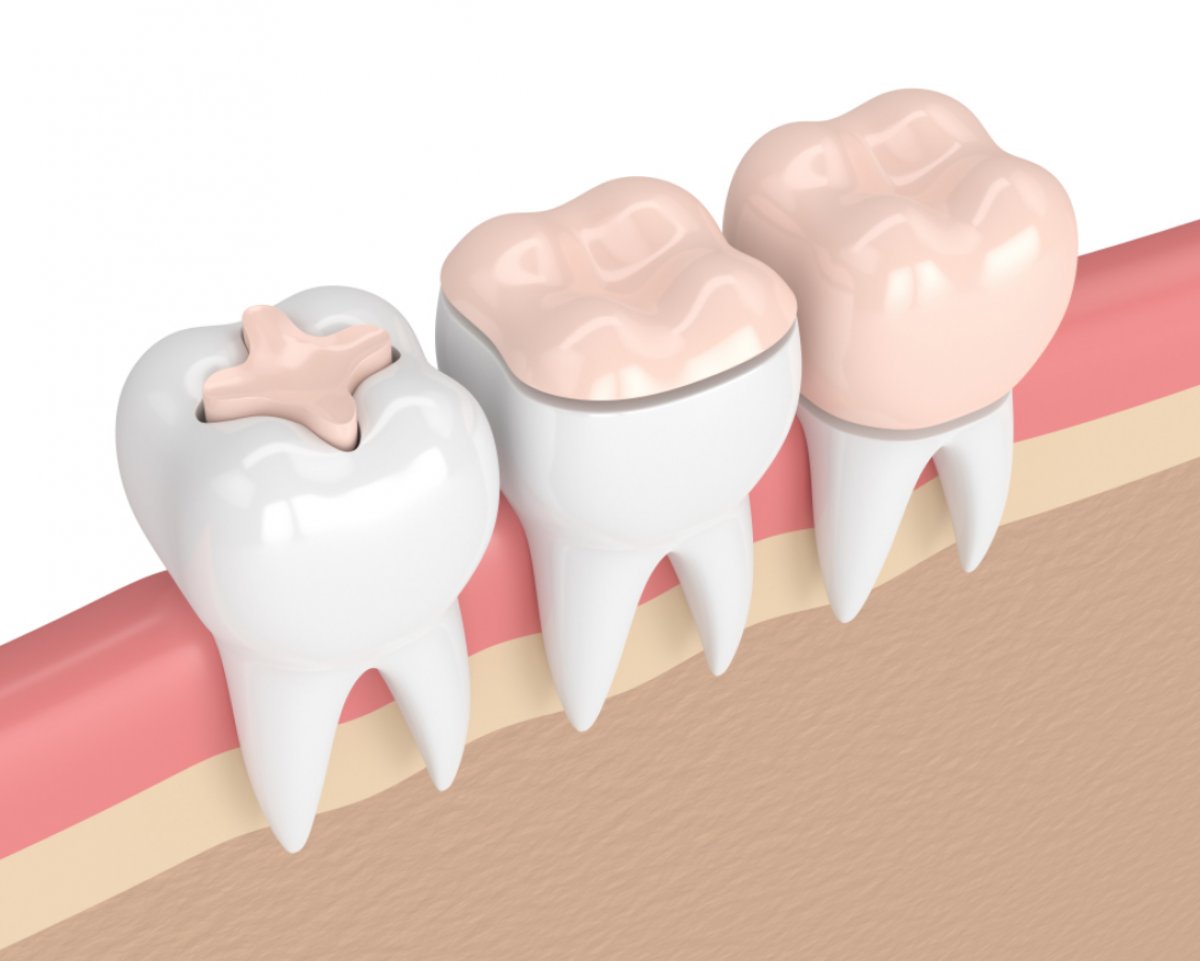

A clasp denture is a removable partial denture that holds on to the sound teeth remaining in the mouth with metal clasps and replaces the missing teeth. It may be suitable for people who are missing a few teeth but whose neighbouring teeth are sound and strong enough. The adjustment period varies from person to person; for most people there is a feeling of strangeness in the first days, which begins to fade within a few weeks.
What is a clasp partial denture?
A clasp denture is a denture in which the artificial teeth that replace the missing teeth sit on a gum-coloured base and are attached to the teeth in the mouth with clasps by means of a metal framework. The clasps wrap around the neighbouring teeth and keep the denture in place. Since the denture can be taken out and put back in, it is cleaned at home.
This denture can replace not just single teeth but several teeth at once. Unlike the complete denture used when all teeth are missing, it takes support from the remaining teeth.
How does it stay in place?
The way a clasp denture holds is similar to a frame locking on to the teeth in the mouth. The hold comes from three things: the clasps wrapping around the teeth, the base resting on the gum and palate, and the fit of the denture’s metal framework with the remaining teeth. The clasps are usually on the teeth on either side. Because a constant light force is placed on these teeth, it is important that the supporting teeth are sound and the gums are healthy.
Comparison of clasp and precision-attachment dentures
In a precision-attachment denture, instead of a visible clasp, special connecting parts placed inside the tooth or in a crown made on the tooth are used. These parts work on a press-stud-like principle and are barely visible from the outside. The table below compares the two options and the solution made with implants.
| Topic | Clasp denture | Precision-attachment denture | Implant-supported solution |
|---|---|---|---|
| How it holds | With metal clasps wrapped around the neighbouring teeth | With special connecting parts attached to the tooth | With implants placed in the jawbone |
| Appearance | The clasps may be visible when smiling | Less visible because the connection is hidden | An appearance close to a natural tooth |
| Who it suits | Those missing a few teeth whose neighbouring teeth are sound | Those with high aesthetic expectations whose supporting teeth can be crowned | Those with enough bone who want a fixed solution |
| Removable? | Yes | Yes | Can be chosen as fixed or removable |
| Care | Taken out and cleaned every day; the clasps and supporting teeth are brushed carefully | The same; the connecting parts are cleaned too | The area around the implant and the denture need special care |
| Time | Completed in a short time | May take longer because of the preparation and crowns | The longest process because of bone healing |
We explained the logic of a fixed solution with implants in our article on the differences between implant and bridge treatment.
In which situations is it preferred?
A clasp denture is considered especially in the following situations:
- If more than one tooth is missing and the neighbouring teeth are strong enough to support the clasps
- If an implant is not suitable because of age, general health or the condition of the bone
- If a solution that takes less time and does not require surgery is wanted
- If a temporary solution is needed while an implant is being considered for the future
If the supporting teeth have decay, gum disease or looseness, these have to be treated first. Otherwise the denture may shorten the life of the teeth.
Advantages and limits
The greatest advantage of a clasp denture is that it does not require surgery and is completed in a relatively short time. Because it can be taken out, it is easy to clean; it can also be adapted when a tooth needs to be added or the denture needs repair. It is a realistic option for people who cannot have surgery for general health reasons.
It has limits too. The clasps are sometimes visible when smiling, the denture may move slightly while eating, and the supporting teeth carry an additional load in the long term. If the denture is going to stay in the mouth for many years, regular check-ups and renewal when needed should be planned. Changes in the gum and bone over time can affect how the denture sits; in that case the underside of the denture can be relined or a new denture can be made.
Effect on the supporting teeth
The clasps constantly put a light strain on the teeth they wrap around. If the teeth are healthy and care is good, this load is carried without problems for a long time. However, if plaque builds up, the denture does not fit properly or the gum recedes, decay, sensitivity and loosening may be seen in the supporting teeth. For this reason, coming for check-ups in the first months after the denture and at regular intervals afterwards is important for protecting the supporting teeth.
In which situations may it not be suitable?
For people whose neighbouring teeth are very weak, loose or badly decayed, a clasp denture puts too much load on these teeth. A different approach may also be needed for those who are allergic to metal clasps, those with a severe gag reflex when wearing a denture, and those whose gum disease is not under control. In that case options such as a precision-attachment solution, an implant or a bridge are discussed.
What is assessed at the examination?
The dentist carries out an examination of the mouth, asks for an X-ray if necessary and looks at the soundness of the supporting teeth, the condition of the gums and your bite pattern. The position and number of the missing teeth and their relationship with the teeth in the opposite jaw also shape the design of the denture. Your lifestyle and expectations matter as well; for example, if it bothers you that the clasps show when you smile, you should say so at the examination. In this way the type of denture that suits you is chosen together.
Fitting and the adjustment process
The process is completed in several appointments: examination, impression, try-in and delivery. The dentist takes an impression of your mouth, tries in the framework and the tooth arrangement, and then checks the denture in place. In the first days after delivery the denture may feel like a foreign object in your mouth. A slight change in speech, increased saliva or difficulty while eating may be seen.
A few tips that make adjusting easier:
- Start with soft foods in the first days and take small bites.
- Try to get used to speaking by reading aloud.
- Take care to chew on both sides.
- Wear the denture throughout the day for as long as the dentist says; until the first check-up the dentist may recommend a different routine if needed.
Will it hurt?
Pain is the topic most people ask about with clasp dentures. A clasp denture may cause a feeling of light pressure or soreness. This shows that the base or a clasp is pressing too hard on the gum at one point, and it is resolved with a short adjustment. Rather than waiting patiently for the pain to pass, it is wiser not to put off the check-up. Do not try to file the denture at home; adjustment is done only by the dentist. In the first weeks there may be mild sensitivity in the teeth or a feeling of pressure in the teeth the clasps wrap around; this feeling lessens over time. If it does not lessen or if it increases, the tightness of the clasp should be checked. It is also normal to plan a few check-up appointments at short intervals when a new denture is fitted, because small adjustments may be needed while the gum adapts to the surface of the denture.
Common problems and their solutions
- Sore spot or stabbing: The area is corrected by the dentist; do not file it yourself.
- The denture moves: A clasp may have loosened or the base may no longer fit; an adjustment or renewal is needed.
- Food debris building up: Taking the denture out and cleaning it after every meal and using dental floss reduces the problem.
- Speech problems: They usually pass within a few days; if they do not, a check-up is needed.
- Broken clasp: Bring the denture to the clinic without forcing it so that it can be repaired.
Care and cleaning
A clasp denture should be taken out after every meal and rinsed under running water, and cleaned at least once a day with a soft brush and a denture cleaning product. At night, taking the denture out of the mouth and keeping it not dry but in a container filled with water preserves its shape. The supporting teeth, besides normal brushing, need to be cleaned under the clasps with dental floss or an interdental brush, because plaque builds up most here. Regular check-ups let you catch problems such as clasp loosening early.
Comparison with an implant
A clasp denture is not fixed and passes the chewing load partly to the gum and partly to the supporting teeth. An implant, on the other hand, puts a root in place of the missing tooth and carries the chewing load to the bone. For this reason an implant gives a more stable feel, but it requires surgery and the bone has to be sufficient. A clasp denture is quicker and needs no surgery, but the clasps may be visible when smiling and the supporting teeth may tire over time. You can find a comparison of the two options in the article can an implant be preferred instead of a removable denture. For the denture options made on top of an implant, you can look at the pages on implant-supported dentures and snap-on implants.
To find out which denture suits your mouth, you can ask for an appointment at one of our Çiğli, Balçova, Buca and Gaziemir branches through the contact page.