A hybrid prosthesis implant is an extensive prosthesis application that is fixed with screws to implants in the jaw and cannot be removed from the mouth by the patient. It is mostly considered for patients who are missing many teeth or whose remaining teeth cannot be preserved, who have sufficient jawbone and whose general health is suitable. Whether you are suitable is decided only after a dentist’s examination and imaging.
What a hybrid prosthesis implant is
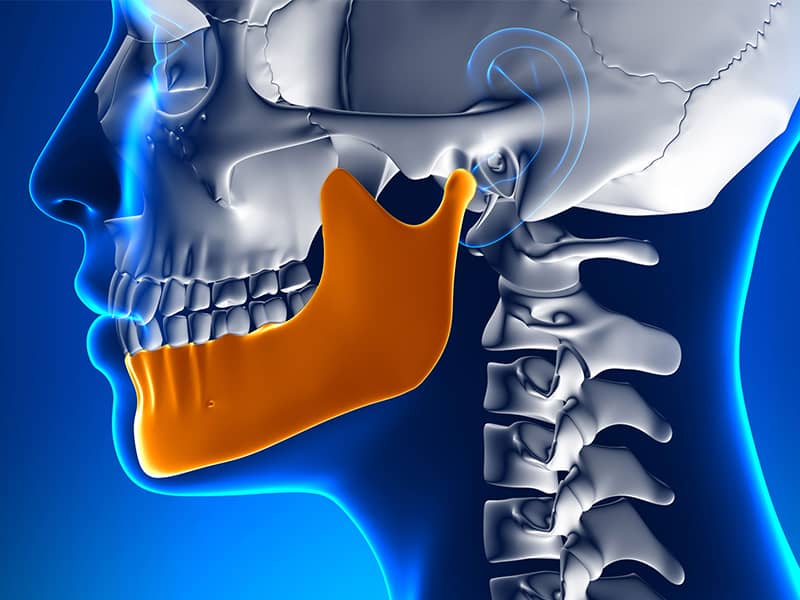
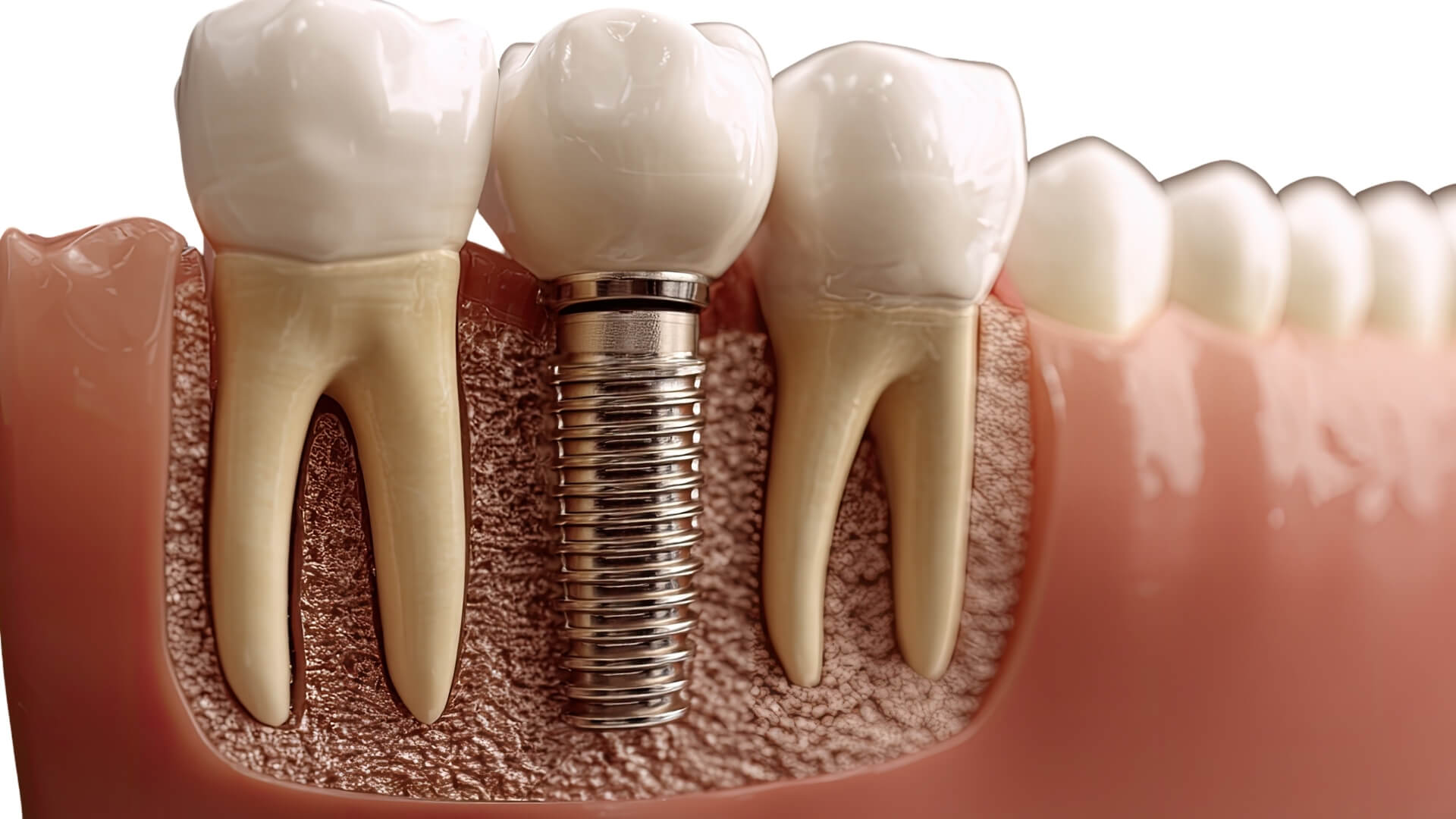
A hybrid prosthesis is a type of fixed prosthesis that sits on several implants and carries the teeth and gum portion together. Instead of placing a separate implant for each tooth, the load is shared among a certain number of implants; this logic is also used in All-on-4 and All-on-6 applications.
Its difference from a removable prosthesis is that it stays fixed in the mouth. You do not need to remove it other than by the dentist, but daily cleaning and regular check-ups are an important part of the treatment. You can read the path followed in complete tooth loss on the İzmir implant for complete tooth loss page and the logic of All-on-4 in the All On Four implant treatment article.
In which patients it is considered
A hybrid prosthesis is an option considered when many teeth are missing in the jaw or when it is understood that the remaining teeth cannot be preserved for a long time. It generally comes up in these situations:
- If nearly all of the teeth in the upper or lower jaw have been lost,
- If a removable prosthesis does not fit and makes speaking or chewing difficult,
- If the remaining teeth are loose because of advanced gum disease,
- If a fixed solution is wanted and there is bone that can carry implants.
In some patients, some preparations are needed first: uncontrolled systemic diseases, an ongoing gum infection, smoking and inadequate oral hygiene can change the plan of the process. If there is a lack of bone, supportive procedures such as a bone graft or sinus lifting may come up. We covered this topic separately in the article on treatments that can be applied in patients with insufficient jawbone.
Stages and waiting times
The process generally moves forward as examination and imaging, tooth extraction if needed, placement of the implants, healing, and making and fitting the prosthesis. The duration of each stage varies from person to person according to the bone structure, the need for extraction and the healing rate; so it would not be right to give a single schedule that suits everyone.
In some patients a temporary prosthesis can be fitted in the early period, and the final prosthesis is prepared after healing is complete. The dentist determines which option is possible for you by looking at the bone quality and the initial stability of the implants. For the general logic of timing, you can take a look at the article how long does implant treatment take.
Healing time in the upper and lower jaw
The upper jaw implant waiting time is generally planned to be longer than for the lower jaw; because the bone in the upper jaw is mostly more porous and in some patients the sinus area requires extra preparation. The lower jaw implant waiting time can generally be kept shorter because of the higher bone density.
This is not a rule, but a general tendency. The quality of the bone, healing after extraction, habits such as smoking and general health change the duration. The exact schedule is determined by the dentist after the examination and tomography.
Why osseointegration matters
Osseointegration is the process of the implant becoming integrated with the jawbone, that is, fusing with the bone. For the implant to carry chewing forces, this integration needs to form to a sufficient degree.
In a hybrid prosthesis, since the load is gathered on a few implants, this stage is especially important. Following the waiting time and check-up appointments recommended by the dentist, keeping up oral hygiene regularly and staying away from smoking support integration. For symptoms suggesting that the implant has not settled, you can look at the article symptoms of a failed implant.
The implant or crown decision
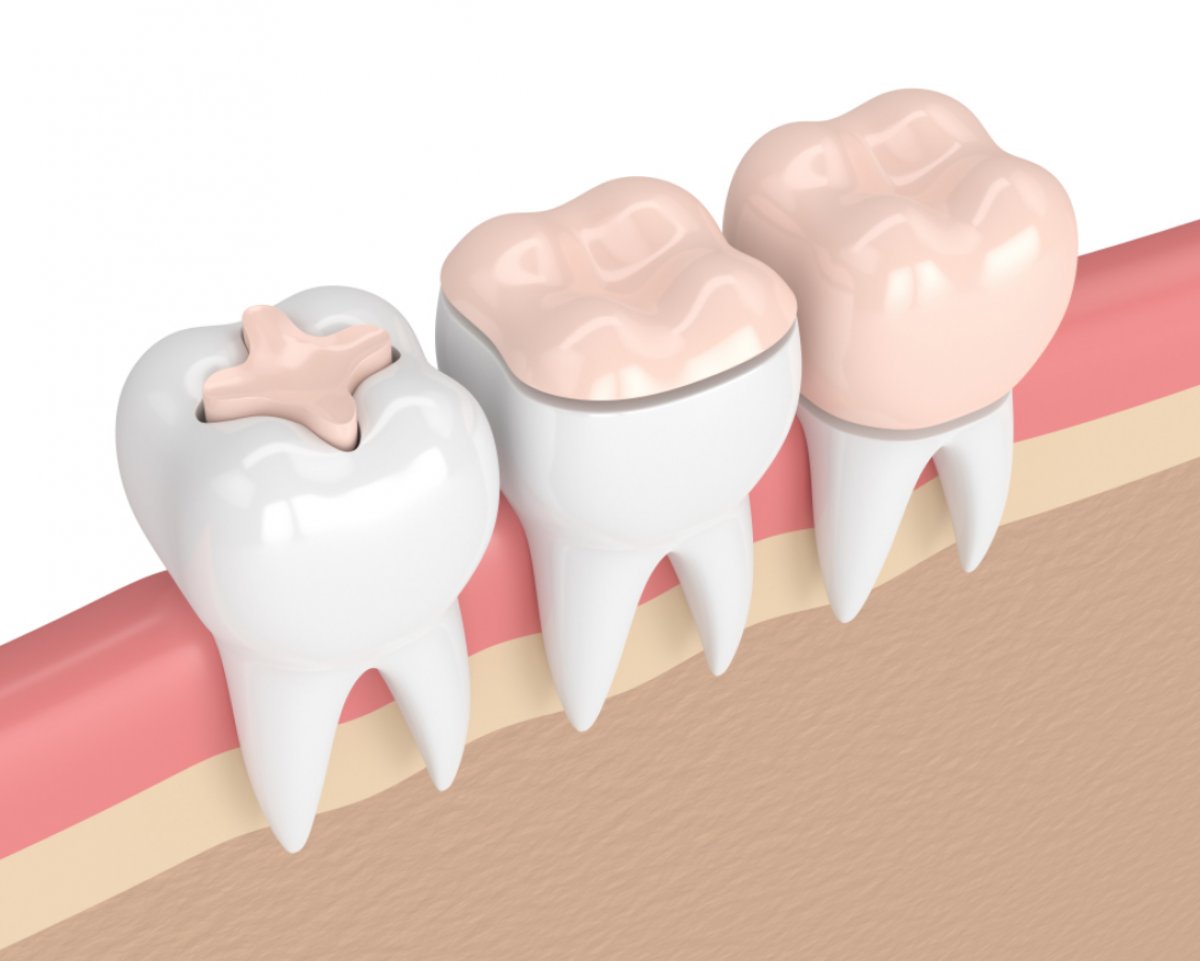
The decision depends on whether there is a tooth in the mouth and whether that tooth can be preserved. If the tooth is still in place and enough sound structure remains, preserving it with root canal treatment and a crown is mostly considered first; if the tooth has been lost or cannot be preserved, an implant comes up.
A crown is a restoration made over an existing tooth, while an implant is a screw that replaces the root of a missing tooth. The two are not direct alternatives of each other; the dentist first looks at whether the tooth can be saved. In extensive losses, a comprehensive plan such as a hybrid prosthesis can be considered instead of individual crowns or implants.
Comparison with other implant types
A single-tooth implant replaces one missing tooth, an implant-supported bridge replaces several neighboring teeth, and a hybrid prosthesis replaces a whole jaw with a small number of implants. The choice is made according to the number of missing teeth, the bone condition and expectations.
- Single implant: In the case of a single missing tooth, it provides a solution without touching the surrounding teeth.
- Implant-supported bridge: In the case of several side-by-side missing teeth, a bridge is made on the implants.
- Hybrid prosthesis (All-on-4 / All-on-6): Preferred for jaws in which all teeth are missing or cannot be preserved.
- Special techniques: When bone has decreased a lot, techniques such as zygomatic or pterygoid, or bone-supporting procedures, can be discussed.
You can find the differences between implants and bridges in the article differences between implant and bridge treatment.
What is looked at in the dentist’s examination
At the examination, the condition inside the mouth, gum health, the condition of the remaining teeth, bone volume and general health history are evaluated together. Tomography is generally used to image the jawbone in three dimensions.
At the end of this evaluation, whether a hybrid prosthesis suits you, whether additional preparation is needed and what the alternatives are are discussed. Taking your questions to the examination in writing makes the decision process easier.
Evaluation at our branches in İzmir
At Avrupadent, we receive our patients for examination and implant planning at our Çiğli, Balçova, Narlıdere, Buca and Gaziemir branches. You can choose the branch near you and book an appointment for the first evaluation.
Frequently asked questions
What is a hybrid prosthesis implant?
A hybrid prosthesis implant is an extensive prosthesis that is screwed onto a small number of implants in the jaw and stays fixed in the mouth. It is preferred when most or all of the teeth are missing.
Who is a hybrid prosthesis implant suitable for?
It is suitable for patients who are missing many teeth or whose remaining teeth cannot be preserved, who have enough bone to carry the implants and whose general health is suitable. Factors such as insufficient bone, gum disease or smoking can change the plan; the decision is given after the examination and tomography.
How long is the upper jaw implant waiting time?
The waiting time in the upper jaw is generally planned to be longer than in the lower jaw, because the bone is softer and sometimes extra preparation is needed for the sinus area. The exact duration varies by person and is determined by the dentist.
How long is the lower jaw implant waiting time?
Because the bone in the lower jaw is generally denser, the waiting time can often be kept shorter than in the upper jaw. Still, the schedule is personalized according to the healing rate and bone quality.
What is osseointegration?
Osseointegration is the implant fusing and integrating with the jawbone. For the implant to carry the chewing load, this process needs to be completed sufficiently.
Is an implant or a crown more sensible?
If the tooth can be preserved, root canal treatment and a crown are mostly considered first; if the tooth has been lost or cannot be saved, an implant comes up. The dentist, who looks at the remaining structure of the tooth, decides which is sensible.
To find out whether a hybrid prosthesis implant is suitable for you, you can request an appointment through our contact page and evaluate the options with your dentist after the examination.