How Does Chewing Get Affected After Implant Treatment in Izmir?
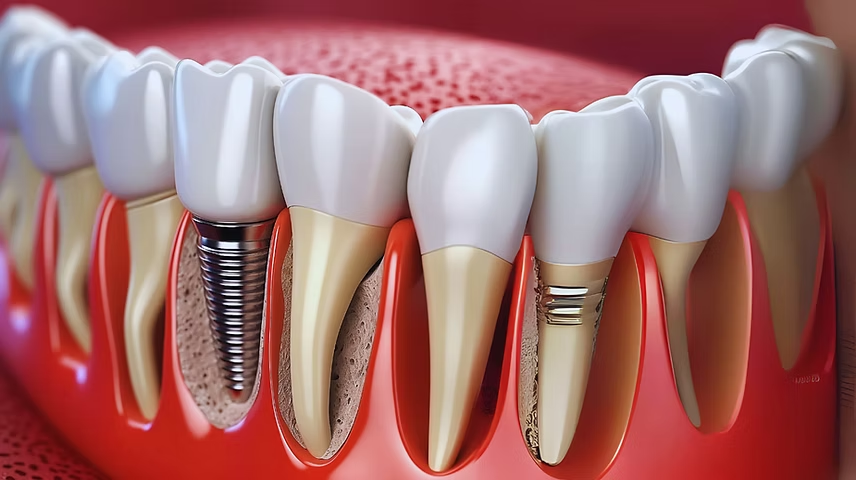
In Izmir, chewing after implant treatment is physiologically improved by achieving a chewing and heating capacity similar to that of natural teeth through prosthetic teeth anchored on medical titanium roots integrated into the jawbone. Since titanium bodies are cellularly directly connected to the jawbone, they eliminate issues faced with removable dentures, such as tissue compression or displacement of the prosthesis, thus providing individuals with stable, anatomically compatible, and safe chewing comfort.
Tooth loss not only results in aesthetic loss but also disrupts the mechanical chewing function in the mouth, which is a crucial starting point for the digestive system. When individuals lose their teeth, they cannot fully perform the functions of tearing and grinding food. This situation leads to whole foods being swallowed and causes digestive difficulties in the gastrointestinal system. The artificial root systems placed in the oral cavity aim to rebuild this lost function on biomechanical foundations. After the treatment process is completed, patients can return to their old eating habits, and as chewing muscles meet with correct mechanical resistance, the physiological balance in the jaw joint is restored. However, reaching this comfortable stage is dependent on strictly adhering to the biological healing processes.
How Does the Structure Placed in the Jawbone Counter Chewing Forces?
The structure placed in the jawbone distributes the chewing forces applied to it to the surrounding supporting bone tissue evenly, thanks to its threaded (screw-like) anatomical design, after completing the process of osseointegration with bone cells. Since the elastic connective tissue found in natural teeth is absent in these artificial roots, the applied vertical and lateral pressures are transmitted directly to the bone, creating an extremely stable mechanical resistance.
The human jaw can exert very high pressure values in kilograms (Newtons) during teeth grinding (bruxism) while sleeping or when chewing hard foods. Natural teeth can absorb this pressure slightly by flexing like a cushion, thanks to the periodontal fibers surrounding their roots. However, the medical titanium structure is designed to be completely rigid, with no flexibility. Therefore, the chewing force is transferred directly from the titanium body to its spine and from there to the jawbone. From a biomechanical perspective, this difference requires clinicians to be much more precise when adjusting occlusion settings while designing crowns. Proper distribution of forces helps to prevent any erosions that may occur in the bone.
| Biomechanical Parameters | Natural Teeth | Titanium (Artificial) Roots |
|---|---|---|
| Force Transmission Mechanism | Transmitted to the bone through flexible periodontal fibers. | Transmitted to the bone through direct cellular contact (rigid). |
| Vertical Pressure Tolerance | Causes micro-level sinking and flexing through fibers. | Does not flex, distributes the force through its grooves to the surface. |
| Chewing Sensation (Proprioception) | The intensity of pressure is instantly transmitted to the brain through nerve endings. | It is sensed through the surrounding bone tissue, which does not contain a nerve network. |
What Are the Differences Between Chewing Sensation with Natural Teeth and Titanium Roots?
The fundamental difference between the chewing sensation of natural teeth and titanium roots is that the nerve networks around the roots of natural teeth enable an immediate perception of the hardness of food or a small piece stuck in between (proprioception), while artificial roots lack this nerve network, leading to a more indirect and gentle sensation of chewing force through direct bone perception.
This mechanism, referred to as proprioception in medical terminology, is a protective sensation that ensures we reflexively open our jaws even when a grain of sand gets between our teeth. Such a nerve receptor does not exist within or immediately around the medically implanted titanium material. Therefore, when a patient bites down on food with an artificial tooth, they cannot feel the exact hardness of that food as sharply as they would with their natural teeth. This lack of sensation can lead patients to apply more mechanical force on their prosthetic teeth without being aware of it compared to their natural teeth (excessive loading). To balance this situation, it is recommended by doctors that patients consciously control their biting force during chewing.
How is the Chewing Function Restored in Complete Toothlessness?
In cases of total tooth loss, the chewing function is restored by fixed bridge prostheses prepared over strategically placed medical implants (usually All-on-4, All-on-6, or eight systems) in the jawbone, or through precision-retained removable (overdenture) systems, allowing the recovery of the natural chewing and tearing ability before the tooth loss. This treatment enables the patient to return to their normal diet, eliminating the sole requirement for pureed foods.
A patient who has lost all their teeth can perform at only 15% to 20% of their chewing force while using classic removable plate prostheses (complete dentures). This is because the plate prosthesis sits on the mucosa (gum), and when hard food is chewed, it can cause tissue bruising by sinking into the soft tissue. However, when these prostheses are anchored to titanium implants placed within the jawbone, the vertical and lateral forces during chewing are transferred directly to the jawbone instead of the mucosa. Thanks to this mechanical transformation, the patient can comfortably perform many functional eating movements that could not be achieved with classic prostheses, such as biting into an apple, chewing meat, or cracking nuts while maintaining biological limits.
How Does the Transition from Removable Prostheses to Fixed Prostheses Affect Chewing?
The transition from removable prostheses to fixed prostheses positively and fundamentally affects chewing; issues such as the prosthesis slipping in the mouth or dislodging while speaking or eating are completely eliminated, the biting force can increase up to five times, and since the palate area is left open, the sensory perception of food temperature and taste physiologically returns to normal.
Especially upper jaw complete dentures are designed to completely cover the roof of the mouth (palatal area). The inability of the tongue to contact this area and the closure of taste receptors in the palate causes patients to be unable to fully perceive the warmth and flavor of their food. In bridge dentures fixed onto artificial roots placed in the jawbone, the palate part is completely open and regains its natural form. The patient perceives the warmth of the food with the palatal tissue. Additionally, the replacement of a removable palate denture in the lower jaw by a stable porcelain significantly facilitates the control of the bite by the tongue and cheek muscles.
How is Occlusion Balanced in İzmir Avrupadent Clinics?
In İzmir Avrupadent clinics, the balance of occlusion is adjusted by testing the movements of the jaws in all directions (right, left, forward) using special articulation (interference) papers while the prostheses prepared in the laboratory are being tried in the oral cavity, and by balancing the high points that create early contacts and impose disproportionate loads on teeth with millimeter precision grinding procedures.
A prosthesis being aesthetically pleasing is not sufficient for medical success; the contact points between the upper and lower teeth must demonstrate a perfect fit. Specialists working in clinics in the İzmir region ask patients to move their jaws at different openings before delivering the porcelain teeth. Colored articulation papers guide the physician by coloring the first contact points between the teeth. Since titanium bodies do not flex, even the smallest “early contact” (high point) in that area causes the entire chewing force to focus only on that tooth. This condition, referred to as occlusal trauma in medical literature, can lead to vertical resorption in the jawbone or the loosening of internal connection screws. For this reason, occlusion adjustment constitutes the technique’s and biology’s core in the application.
Why Do Occlusal Disorders Pose Risks During Implantology?
Occlusal disorders (malocclusion) pose significant risks during the implantology process because they expose the titanium material to lateral (side) forces rather than vertical ones; this unbalanced force distribution can disrupt the cellular integrity of the bone, potentially leading to bone resorption similar to peri-implantitis and prosthetic fractures.
In human anatomy, tooth roots are designed to bear vertical forces. However, if there are discrepancies when teeth close, related to tooth loss or skeletal asymmetries, the forces are transmitted to the tooth at angles that are not vertical but rather crosswise (lateral). While artificial root systems are extremely resilient to vertical pressure, they are quite vulnerable to these lateral forces that create a leverage effect. If such an occlusal disorder is detected in a patient, it is essential to correct the alignment of the teeth through orthodontic treatment before any surgical procedure or to make small adjustments to neighboring teeth during the prosthetic phase to establish a comprehensive occlusal balance.
| Direction of Force | Physiological Effect and Biomechanical Result |
|---|---|
| Vertical Forces | This is the ideal force. It distributes evenly to the bone through the spine of the titanium and supports its stability. |
| Lateral Forces | This is a harmful force. It creates a leverage effect that leads to crater-like resorption in the bone neck (in the collar region). |
| Early Contact (Point Load) | It causes the breakage of the prosthesis or internal connection screw due to material fatigue. |
Can a Prosthetic Tooth Break While Chewing?
A prosthetic tooth can break while chewing; this may occur due to the patient consuming hard, crunchy, or very difficult-to-tear foods (traumatic movements such as cracking nuts, opening covers), having a habit of uncontrolled teeth grinding (bruxism) during sleep, or extreme mechanical stress conditions like the closure balance over the prosthesis not being correctly adjusted.
Medical alloys like porcelain or zirconium are produced under high physical resistances (measured in megapascals) in laboratory settings to withstand the normal chewing forces of the human jaw. It is not expected for these materials to break during a standard eating action. However, even the enamel of natural teeth cracks when excessively stressed, indicating that artificial materials also have a breaking threshold (metal fatigue). Especially in anterior denture prosthetics, attempting to break a hard object using the tooth like a chisel can lead to chipping of the porcelain. The long-term success of medical treatments is dependent on the patient consciously using these new teeth within functional limits (biological thresholds).
How Does Teeth Grinding (Bruxism) Habit Affect Chewing Biomechanics?
The habit of teeth grinding (bruxism) negatively affects chewing biomechanics by continuously reflecting the massive mechanical pressure created by the chewing muscles (especially the masseter muscle) during sleep, leading to wear of the prosthetics, loosening of internal connection screws, and causing excessive physiological resorption in the supporting jawbone.
A normal person only touches their teeth together while eating, which averages around 15-20 minutes a day. In contrast, bruxism patients grind their teeth against each other for hours during sleep. The pressure generated during this grinding far exceeds the consciously applied force felt when awake. Due to the absence of the cushioning effect (periodontal ligament) in titanium roots, this intense pressure shock is directly transferred to the implant system. Patients may experience pain in their teeth or muscles when they wake up in the morning. To manage this risky clinical situation, doctors design special “night guards” for patients to use after the surgical process. The night guard absorbs excessive pressure, protecting porcelain surfaces and distributes the force evenly to the jawbone.
How Does Unilateral Chewing Habit Damage the Jaw Joint?
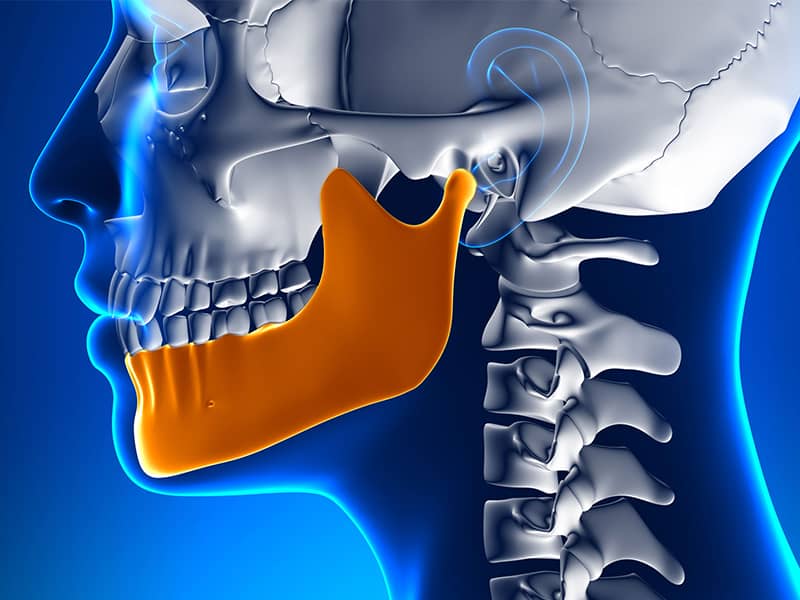
The unilateral chewing habit, which involves using only one side of the mouth for years, leads to an adaptation where the chewing muscles (masseter and temporal muscles) on that side develop excessively and reach an asymmetric force. This creates a one-sided, chronic pressure on the jaw joint (Temporomandibular Joint – TMJ), causing wear and pain in the joint disk (joint dysfunction).
People usually develop a habit of chewing on one side if they have a broken or painful tooth on one side of their mouth. The jaw joint is a delicate hinge system that connects the skull to the lower jawbone and requires synchronized functioning on both sides. Unilateral chewing puts strain only on one side of this hinge. Even years later, if artificial roots are placed in that vacant area and a dental prosthesis is applied, the patient tends to continue chewing on the old side due to habitual behavior. At the end of medical treatment, doctors advise the patient to use both sides equally (bilaterally). Using both sides for chewing is a physiological necessity to balance the load on the jaw joint and restore facial symmetry and muscle health.
Which Foods Should Be Avoided During the Healing Process?
During the healing process (at the bone healing stage), foods that can transmit mechanical vibrations to the jawbone, such as hard-shelled nuts, hard fruits like apples or quinces that are difficult to bite, bread crusts, bagels, and sticky caramel foods should definitely be avoided from being eaten and coming into contact with the operated area; nutrition should be maintained entirely with smooth, pureed foods that do not require chewing force.
After surgical procedures, the average period for the lower jaw is about 2-3 months, while for the upper jaw, it is 3-6 months (osseointegration phase). This is the most critical time when bone cells attempt to create a network by adhering to the titanium surface. If the patient tries to pull a hard food apart with temporary teeth or crushes a solid piece with the gap area, the resulting physical vibration can tear the microscopic connections between the bone cells and titanium material. The body responds to this shock by forming soft tissue (fibrous capsule) instead of hard bone, leading to unsuccessful healing. During these critical months, the patient’s diet consisting of pureed foods, soups, soft vegetable mash, and yogurt is the golden rule for medical recovery.
When Can Normal Chewing Return After Permanent Prostheses Are Placed?
After permanent prostheses are placed, normal chewing can be safely resumed following an average one to two-week gradual acclimatization process. This allows the lip and tongue muscles to adjust to the volume of the new teeth, the jaw joint to understand the closure balance, and ensures the patient’s phonetic (speech) adaptation.
The delivery of permanent porcelain or zirconium teeth to the patient marks the beginning of physiological adaptation. Tissues that have been edentulous for a long time or managing with temporary teeth may experience complaints such as cheek biting or strange sensations in the initial days when confronted with a fully occlusal solid prosthesis. Dentists recommend that patients avoid very hard foods (such as meat or nuts) on the first day the permanent teeth are attached; instead, they suggest practicing chewing with controlled, moderately hard foods by breaking them into smaller pieces. The body’s neuromuscular (nerve-muscle) system will ensure complete adaptation to the new teeth’s dimensions and occlusion points within a few days. If no early contact or mismatch is detected during the routine clinical check-up conducted at the end of the first month, the patient can integrate their previous natural nutrition and chewing routine into their life without any functional limitations.
What are the Recommendations for Long-Term Preservation of Chewing Function in the Implantology Process?
Implantology requires the complete application of the patient’s individual oral hygiene habits (brushing, inter-dental cleaning), attending six-month periodic check-ups to allow the doctor to monitor potential changes in occlusal balances, and not using the prosthesis in a traumatic manner that would exceed its biological limits, such as using it like a lever or a breaking tool, is a medical necessity.