How Many Implants Can Be Done at the Same Time?
The number of implants that can be placed in a single surgical session varies based on the individual’s jawbone anatomy, the number of missing teeth, and their overall systemic health condition. However, if the necessary medical conditions are met, up to 10 to 14 titanium roots can be implanted in a single surgical session. This number is not a standard requirement and is determined by the specialist physician according to each hospital’s physiological capacity and jaw volume.
In surgical interventions performed to compensate for dental deficiencies, one of the most curious topics for patients is how many sessions the surgical process will be divided into. The basic approach in modern dentistry is to minimize the number of sessions a patient is exposed to surgical trauma (operational stress) as much as possible within the limits of medical safety. If a patient has a significant number of missing teeth in their mouth, instead of planning separate operations for each area on different days, if anatomically feasible, all titanium bodies can be positioned in the jaw on the same day. This overall approach enables the phase of bone cell integration with the material (osseointegration) to start simultaneously for all areas and makes the overall treatment schedule quite rational.
How is the Decision for Multiple Implants Made at Izmir Avrupadent Clinics?
The decision for multiple procedures at Izmir Avrupadent clinics is made after obtaining the patient’s comprehensive medical history, followed by a three-dimensional dental tomography (CBCT) to examine the bone density and anatomical boundaries in millimeters. This is carried out through a multidisciplinary evaluation by specialists in the field. In this decision-making process, the primary priority is to ensure that the surgeries are appropriate and safe according to the patient’s biological limits rather than focusing solely on the number of procedures.
In order for multiple surgical procedures to be performed simultaneously, the local and systemic condition of the hospital must be considered as a whole. In European practices, such a comprehensive decision cannot be made based solely on an intraoral examination. By generating a three-dimensional radiological map of the hospital, the position of the sinus cavities in the upper jaw and the location of the nerve canal in the lower jaw are identified. It is calculated millimetrically through software whether the bone is thick and dense enough to protect these structures. After it is confirmed that the surgical procedure the hospital can physically tolerate and the anesthesia tolerance is appropriate, it is clarified based on objective data whether the operation will be performed in a single session or in two different sessions (for example, first the right jaw, then the left jaw).
| Evaluation Criteria | Content and Importance of Medical Evaluation |
|---|---|
| Bone Volume and Quality | The height and width of the bone must be sufficient cellular density to support multiple procedures simultaneously. |
| Hospital’s Surgical Tolerance | The ability of the patient to maintain an open mouth and physical comfort during a prolonged surgical session is taken into account. |
| Systemic Disease Status | Chronic diseases that could affect bleeding time or healing must be under control. |
| Anatomical Proximities | When placing multiple materials, safety distances to critical nerves and vascular pathways must be maintained. |
How Many Applications Can Be Made in One Session for a Jaw in Complete Edentulism?
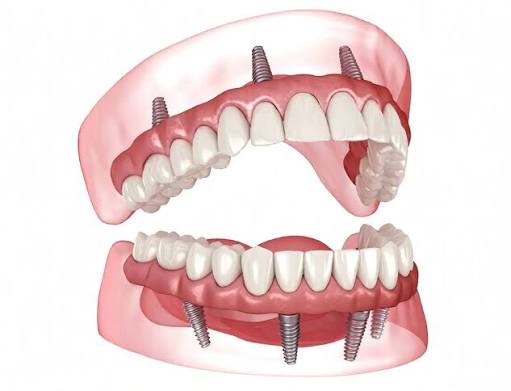
In cases of complete edentulism, typically 4, 6, or 8 titanium materials can be applied in a single session based on the analysis of bone volume and chewing forces. If there is sufficient anatomical space, these numbers are considered ideal from a biomechanical perspective to support a fixed bridge prosthesis, and all these placements can be completed within the same surgical appointment.
A common misconception among patients is that a single implant should be placed in the jaw for each missing tooth. If there are 14 teeth in the human jaw, it does not mean that 14 implants will be placed. According to the principles of biomechanics and engineering in dentistry, 6 or 8 strategically placed supports in the jaw can comfortably and safely carry a fixed porcelain bridge of 14 units. Even in cases where the back jawbones have resorbed, it is possible for the entire jaw’s chewing load to be supported with just 4 implants placed at special angles (All-on-4). Placing all these supports in the same operation in cases of complete edentulism is the healthiest medical approach to achieve the optimal fit for the subsequently fitted one-piece (full-arch) prosthesis.
What Are the Anatomical Criteria That Determine the Number of Implants to Be Placed Simultaneously in Partial Tooth Loss?
The anatomical criteria that determine the number of implants to be placed simultaneously in partial tooth loss include the horizontal and vertical bone thickness in the area where the missing teeth are located, the physiological width of adjacent gaps, and the millimetric safety distances to the nerve canal in the lower jaw and to the sinus cavities in the upper jaw. These anatomical limits directly determine how many supports the physician can place in that area.
In a region where three teeth are missing side by side, placing two titanium roots depending on the width of the bone and constructing a three-unit bridge prosthesis over them is a commonly planned method. Trying to place a material in each gap can violate the necessary biological healthy bone distance that must remain between materials (generally at least 3 mm). When roots are placed very close to each other, bone resorption may begin due to impaired blood supply between them, and gum retraction can occur. Therefore, the number of procedures to be performed on the same day in cases of partial deficiency is objectively determined not by the size of the gap, but by the amount of healthy bone tissue that can be left in between.
How Does Performing Multiple Procedures on the Same Day Affect the Healing Process?
Performing multiple procedures on the same day makes the overall healing schedule more efficient by allowing tissues to enter the biological repair process simultaneously, thanks to the consolidation of surgical procedures into a single session. Since surgical trauma is limited to one session, the patient does not experience operation stress repeatedly on different days, and cellular healing begins simultaneously.
The human body shows a local reaction to surgical intervention; this reaction is usually observed as tissue swelling (edema) and mild sensitivity resulting from the influx of healing cells into that area. When procedures are spread over different weeks or months, the patient’s body has to repeatedly enter this surgical healing cycle. Placing all tissues in the same session ensures that tissues get through the inflammation (non-inflammatory healing) phase at once. Additionally, the duration of antibiotic and pain relief (analgesic) medication use is also limited to a single period, which is extremely important for maintaining the patient’s overall physiological balance.
| Impact Area | Completion in a Single Session (Same Day) | Split Into Different Sessions |
|---|---|---|
| Tissue Healing (Edema) | All areas undergo a single healing and edema phase, the duration is shorter. | Each operation results in a new tissue trauma and healing phase. |
| Medical Drug Use | Protective medications (antibiotics, etc.) are used only as a single course. | Separate medication administration may be necessary for each surgical session. |
| Bone Fusion Timeline | The entire process of all roots integrating with the bone (2-6 months) occurs simultaneously. | The waiting periods for the first and the last roots may differ, which delays the prosthesis. |
Does the Individual’s Systemic Health Status Limit the Number of Procedures to be Performed at Once?
The individual’s systemic health status, especially factors such as uncontrolled diabetes, hypertension, cardiac disorders, and clotting disorders directly affect tissue healing capacity and operational tolerance, thus definitely limiting the number of procedures to be performed at once. In such cases, medical safety requires that surgical procedures be carried out in shorter sessions and spread over fewer numbers.
In dental surgery, a procedure performed locally in the mouth can lead to systemic consequences affecting the entire body through the bloodstream. Prolonged duration of the operation can increase physical stress in individuals with systemic diseases, causing fluctuations in blood pressure or blood sugar levels. For instance, in diabetic patients, creating open wounds (incisions) in multiple areas of the mouth in a single session can greatly strain the already weak cellular healing (blood supply) capacity and may expose those areas to infection. In such medical situations, the physician consults with relevant medical specialists and divides the surgery segment by segment, always prioritizing patient safety.
Can Multiple Surgeries Be Performed on Elderly Individuals in the Same Session?
For elderly individuals, multiple surgeries can be safely performed in the same session if the patient’s overall medical health checks are positive, bone quality is deemed sufficient, and physical condition is appropriate throughout the procedure. While age alone does not constitute an obstacle, it should be noted that tissue healing rates may be slower in elderly patients; therefore, the duration of the surgical session is planned to avoid exhausting the patient.
In medical science, chronological age (the age on the population registry) and biological age are evaluated differently. The potential for bone healing in a healthy individual aged 70 who has controlled systemic diseases may be much higher than that of a 45-year-old person with uncontrolled diabetes. Complete edentulousness is often addressed in this age group through all-on systems or multiple applications, typically performed under the consideration of potential back and neck pain or circulatory issues (orthostatic hypotension) that may arise from elderly patients remaining in the same position on the operating table for extended periods. Surgeons perform the surgical procedure using the most practical and minimally invasive techniques.
How Does the Need for Bone Powder (Graft) Change the Timing of Multiple Procedures?
The need for bone powder (graft) changes the timing of multiple procedures because areas of advanced atrophy in the jawbone require an additional cellular healing period for repair of the related area, generally adding an average waiting period of 4 to 6 months to the surgical schedule. The grafting procedure applied to insufficient areas of bone may be delayed concurrently with the placement of multiple implants, depending on primary stability.
When planning to perform 6 or 8 procedures in the same session, the physician examines the bone volume of the regions one by one via tomography. If the bone in 5 regions is intact but the bone in 1 region is completely eroded and the sinus membrane is sagging, a procedure should primarily be performed on that weak area, such as “elevating the sinus floor” or an operation using bone graft (augmentation). Even if the medical implants in other regions are placed on the same day, the insertion of material in the grafted area is usually postponed for a few months, as bone integration is expected. Due to these biological repair mechanisms, completing multiple procedures on the same day may not be medically feasible in cases of bone deficiency and may delay the process.
How Does the Anatomy of the Lower Jaw and Upper Jaw Affect the Number of Procedures That Can Be Done at the Same Time?
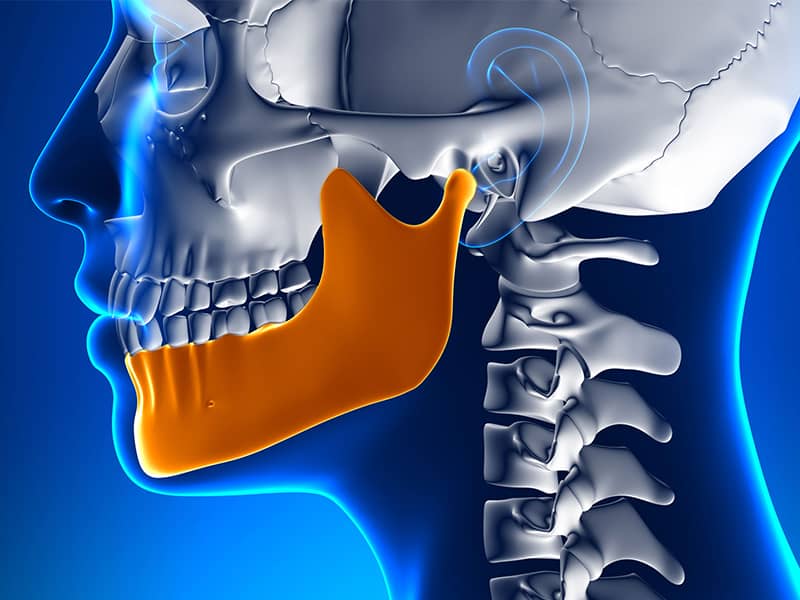
The anatomy of the lower jaw and upper jaw generally requires a greater number of supportive materials for the upper jaw due to its wider and spongier (trabecular) structure, while the lower jaw has a narrow and compact (cortical) bone structure in a U shape, resulting in higher biomechanical resistance with fewer supports, directly influencing the number of procedures that can be performed simultaneously.
In human anatomy, the lower jaw bone (mandible) is a very strong bone with powerful muscles, is movable, and is quite robust. This hard cortical structure supports the initial compression (primary stability) force of the inserted implants in a very strong manner. Therefore, according to anatomical conditions, 4 or 6 implants may be sufficient to carry a complete fixed bridge in the lower jaw. In contrast, the upper jaw (maxilla) is fixed to the skull, contains air cavities (sinuses), and is composed of spongy bone. To distribute chewing forces and alleviate biomechanical load in the spongy bone, increasing the number of supports (6 or 8 units) is generally preferred as a medical safety protocol in complete denture treatments for the upper jaw.
- Upper Jaw (Maxilla): Due to its spongy structure, the osseointegration (integration) process takes longer. Having a higher number of bodies (6-8 pieces) is advantageous for distributing force.
- Lower Jaw (Mandible): Due to its cortical (hard) structure, it holds onto the material tightly. Generally, a smaller number of bodies (4-6 pieces) can provide sufficient mechanical resistance when carrying chewing loads.
How Does Digital Planning Facilitate Multiple Procedures in Implantology Applications?
Implantology applications enable digital planning by allowing for the pre-simulation of the surgical process in a computer environment with millimeter precision. The use of surgical guides (template plates) greatly speeds up and simplifies multiple procedures clinically. Since the physician confirms the height and depth at which each material will be placed before the surgery, multiple procedures can be completed safely in the same session with minimal tissue trauma.
Especially in cases where 6 or 8 implants are to be placed on the same day as the complete tooth extraction, having the surgeon extensively open the gum tissue using traditional methods to observe the bone and align the openings with their manual experience greatly prolongs the operation time. However, when data obtained from three-dimensional tomography and intraoral scanners are combined in specialized medical software, the surgeon can clearly see the entire bone structure on the screen. In fact, the surgical procedure is completed on a computer days before the surgery. On the surgical day, a transparent “surgical guide plate” produced by 3D printers is placed in the patient’s mouth. The surgeon accesses the bone through the guiding holes on this plate with millimeter precision. This technology allows for the possibility of performing 10-12 procedures in the same day without cutting the gum (minimal invasive – stitchless), significantly reducing the operation time.
Can Multiple Applications (Immediate) Be Done in the Same Session as Tooth Extraction?
Multiple applications can be performed in the same session as tooth extraction on the condition that there is no acute infection in the sockets of the extracted teeth and that sufficient healthy bone tissue has been preserved in that area after extraction. When anatomical criteria are met, this method (immediate placement) helps reduce the number of surgical sessions for the patient and assists in halting bone resorption at an early stage.
In cases where a significant number of teeth cannot be saved due to advanced periodontal disease, such as severe gum disease, a medical procedure commonly applied in modern dentistry is the extraction of all teeth in a single session, along with the simultaneous placement of titanium implants in the extraction sockets. However, there are many strict rules for making this decision. It is essential to have at least 3-4 millimeters of healthy bone (apical bone) beyond the tip of the tooth roots, where the implant material can be firmly anchored. The extraction must be performed atraumatically, without breaking the bone walls, and the area must be completely cleared of infected tissues. If a chronic and large abscess (cyst) is present at the base of the extracted tooth, the risk of infection for the newly placed material will be very high, necessitating a delay in the application protocol for a few months to allow the bone to heal naturally (delayed placement).
What Should the Patient Pay Attention to in Daily Life After Multiple Procedures?
After multiple procedures, the patient should regularly apply cold compresses to control surgical swelling (edema), adhere to a diet with only soft and pureed foods for the duration specified by the doctor, and maintain sensitive oral hygiene with special brushing techniques that avoid trauma to the wound area. During the healing period, no physical pressure should be applied to the surgical site in any way.
When treatment is performed on multiple regions or the entire arch at the same time, the tissue reaction that the body will exhibit (swelling, slight bruising, or sensitivity) will naturally be more than that of a single tooth procedure. Applying an ice compress externally on the cheek for the first 48 hours and sleeping with the head elevated on a pillow (to balance blood pressure) limits the amount of swelling. Not disturbing the tissues during the bone healing process (fusion) for 2 to 6 months is the most critical rule for ensuring that the materials are strongly adhered to the bone (osseointegration). If cosmetic temporary teeth are placed on the same day, these teeth must not be subjected to hard foods like apples, bagels, or nuts. The diet should consist of warm foods that do not require strong chewing, such as soup, yogurt, and well-cooked vegetables.
How are Post-Treatment Routine Checks Organized for Multiple Cases in İzmir?
Post-treatment routine checks in İzmir for multiple cases are organized by planning a stitch removal and tissue check in the first week after the surgical operation, followed by a radiological examination of the bone level in the first and sixth months. The distribution of chewing forces in jaws with a large number of carriers is monitored under continuous physician supervision with long-term periodic examinations, and the health of the surrounding gums is also assessed.
In implantology treatments that cover the entire arch or multiple areas, the process does not end with the delivery of permanent porcelain or zirconium teeth to the patient; rather, it initiates a phase of clinical follow-up and preventive dentistry. In extensive bridges supported by multiple roots, the occlusal force applied by the jaw muscles may vary over time, or there may be undetectable slight loosening in the internal mechanical screws that carry the prosthesis. In Avrupadent’s clinical protocols, patients are invited to the clinic every six months, and the balances of these forces are measured using special articulation papers (interocclusal papers) and corrected if there are early millimeter contacts. Additionally, the accumulation of plaque beneath the gum line of the prosthesis is checked, and disinfection is ensured using professional devices.