The short answer to what a laminate is: a very thin porcelain leaf bonded to the front surface of a tooth. In everyday language, laminate, lamina and veneer describe the same treatment; all three are different ways of saying the leaf-thin porcelain covering known as a “laminate veneer”. You can find the details on our page about leaf porcelain (lamina veneer).
What does laminate mean?
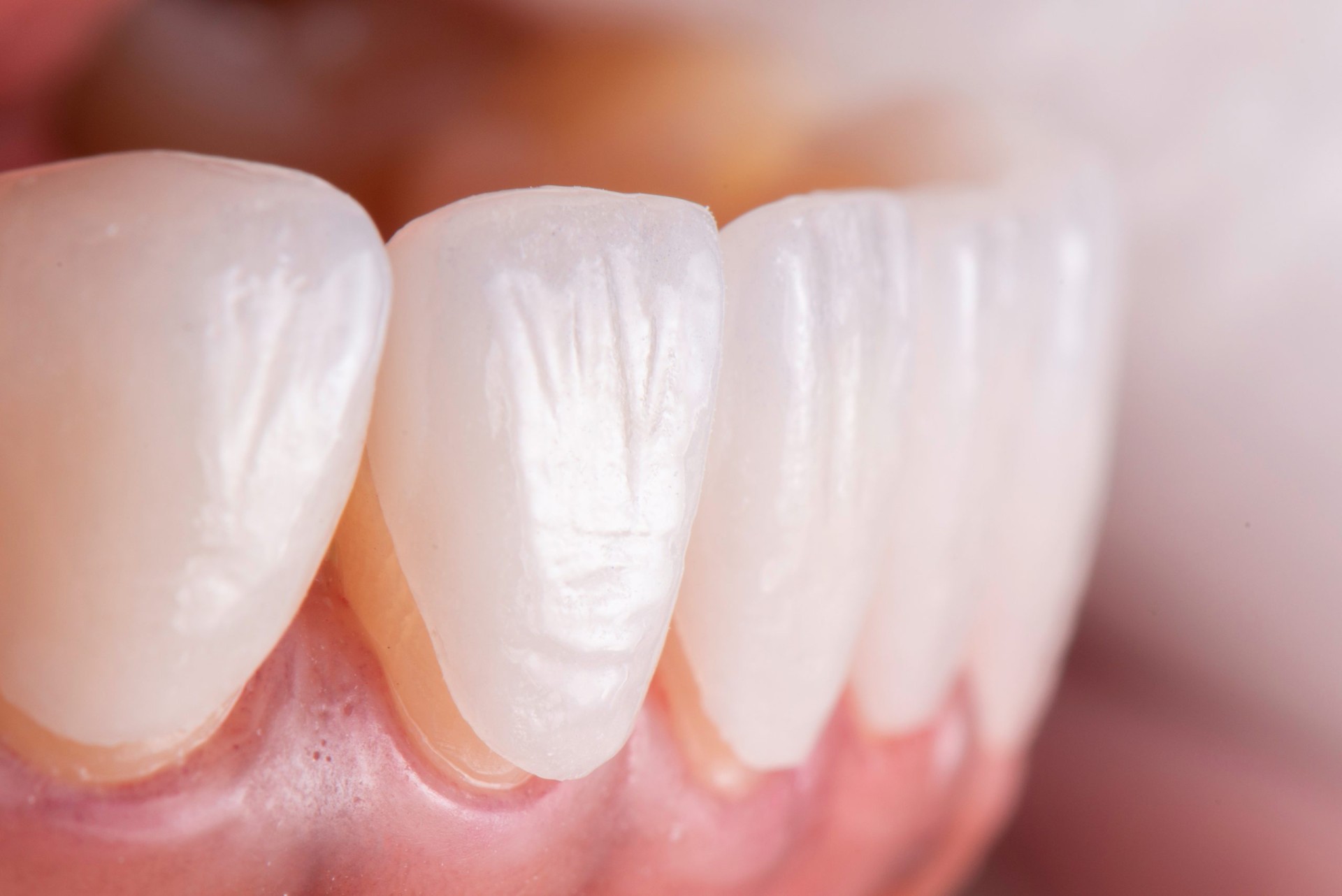
Laminate is a word meaning “covered in a thin layer”, and in dentistry it is used for the thin porcelain leaves that cover only the visible front surface of the tooth. Not the whole tooth, but its front surface and, where needed, its cutting edge is covered.
For this reason a laminate covering needs less tissue than a classic crown that wraps all the way around the tooth. The shape, color and length of the tooth are reshaped with this thin leaf.
Is there a difference between lamina and veneer?
No, there is no difference between lamina and veneer in terms of treatment. Lamina is the established short name in Turkish; veneer is the English equivalent of the same covering. “Laminate veneer” is the combined, full name of the two.
What matters for the patient is not the name but the scope of the procedure: how many teeth will be covered, which material will be used and how much tissue will be taken from the tooth. The dentist explains these at the examination.
What is the difference between a laminate veneer and a veneer crown?
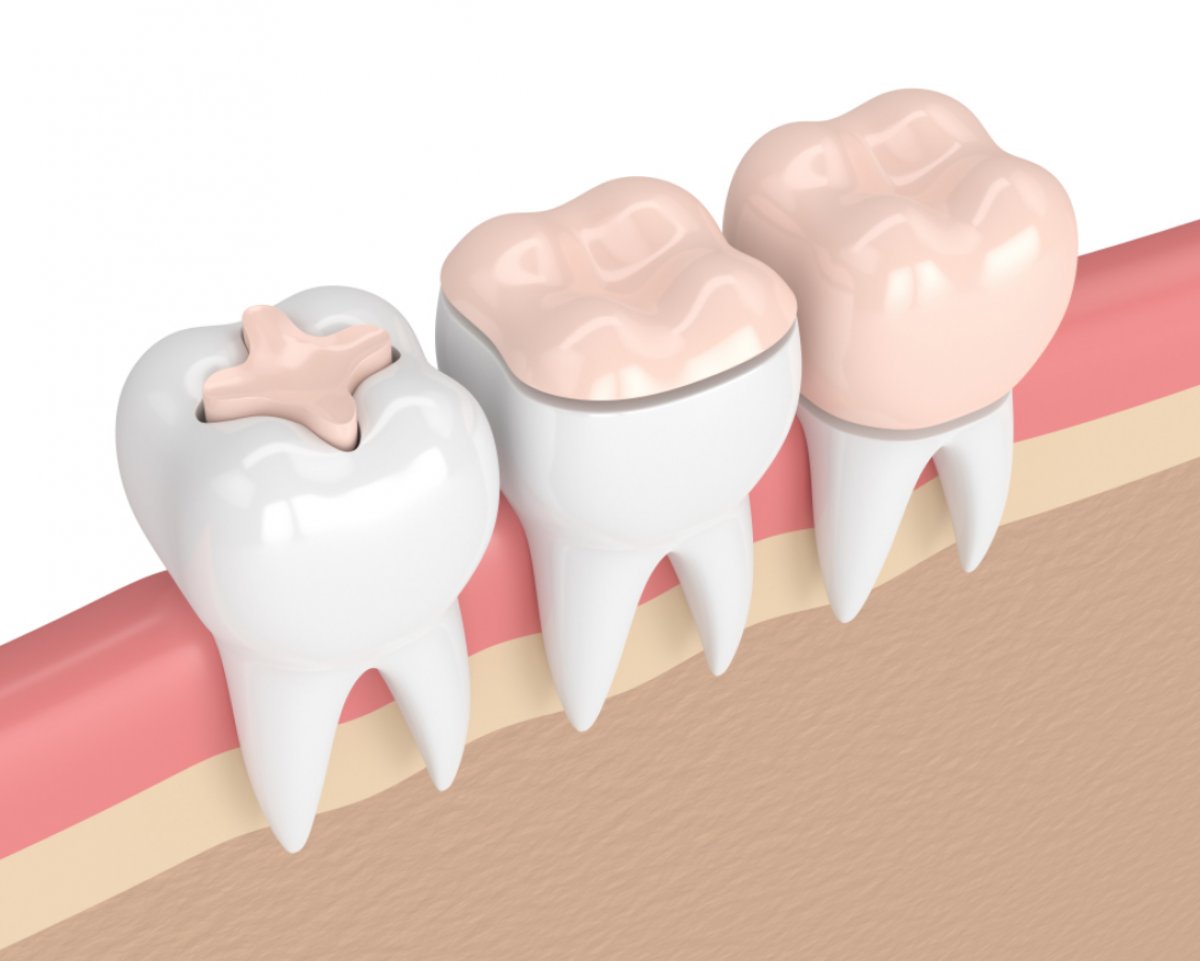
A laminate veneer is a thin leaf that covers only the front surface of the tooth; a crown is a thick covering that surrounds the tooth completely. That is why much more tissue is taken from the tooth for a crown.
- Laminate veneer: Covers the front surface, little tissue is taken, and it suits aesthetic correction on sound teeth.
- Crown: Covers the tooth all around and gives strength to broken teeth, teeth with large fillings or root-treated teeth.
The phrase “veneer crown” sometimes causes confusion, because some sources use this term for a full covering as well. When reading a text, checking which areas of the tooth the covering wraps around prevents misunderstanding.
What does E-max veneer mean, and is it the same as a porcelain lamina?
E-max is the trade name of a glass ceramic material called lithium disilicate; an E-max veneer means a lamina made from this material. Porcelain lamina is a broader definition and covers different types of ceramic.
In other words, E-max is one type of porcelain lamina. The choice of material depends on the color of the tooth, its translucency, the chewing force and your expectations. The answer to which one is chosen in which situation becomes clear at the oral examination.
Which one is chosen in which situation?
For people whose teeth are sound but whose color, shape or length is not as wanted, the laminate veneer comes to the fore. If a large part of the tooth is worn, broken or has had root canal treatment, a crown may be more suitable.
For a small correction, more conservative options such as bonding are also discussed. The decision is made by the dentist according to the tooth structure, the bite and your expectations.
How is digital planning used in laminate treatment?
In digital planning, photographs of the teeth and face and the intraoral scan are transferred to the computer, and the possible look of the smile is designed on the screen. This way, shape and size can be decided together with the dentist before the coverings are produced.
This design makes it possible to send clear measurement and shape information to the laboratory. We have described the advantages of the digital approach in the articles why digital planning matters in aesthetic dentistry and the advantages of digital smile design for the patient.
What to watch for when reading the terms in foreign sources
In English-language sources, “veneer” used alone sometimes describes a composite covering and sometimes a porcelain one. For this reason you need to look at which material the text is talking about and how many surfaces of the tooth it covers.
In addition, trade names such as “lumineers” and “prepless veneer” belong to the same class; however, each of them does not give the same result for every patient. If you would like to make an appointment at the Avrupadent branches to ask what the terms mean in your own treatment plan, you can use our contact page.