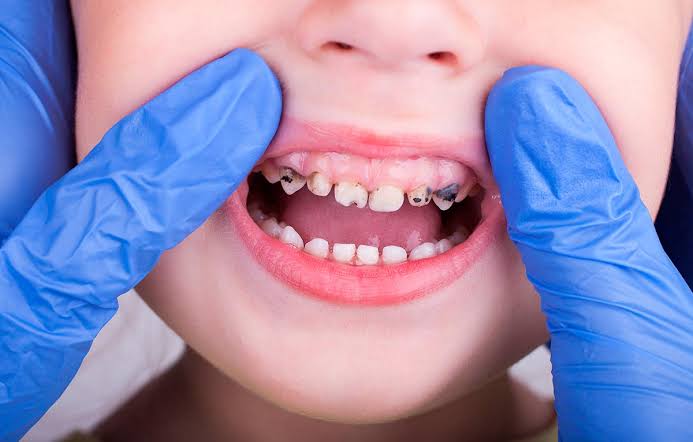
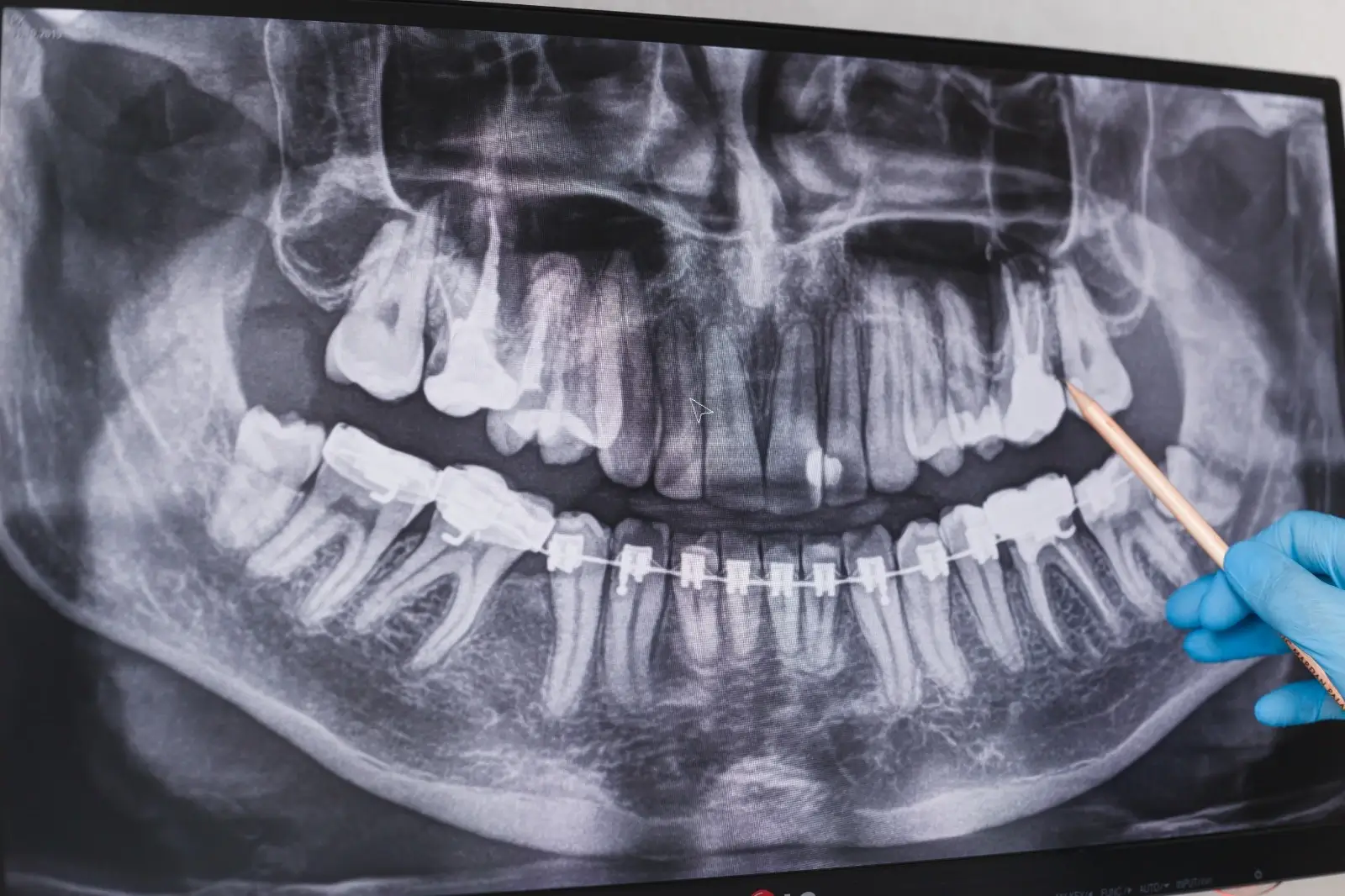
Dental radiography plays a critical role in the diagnosis and treatment processes of dentistry. It is used to detect many issues such as periodontal diseases, cysts, tumors, and developmental disorders. By providing detailed imaging of the jawbones and surrounding tissues, it allows for the diagnosis of conditions that might not be noticed in standard examinations. Thanks to modern digital radiography technologies, both radiation exposure has decreased and image quality has improved. These advancements increase diagnostic accuracy while also facilitating treatment planning. Dental radiographs are an indispensable diagnostic method for the early detection of problems related to oral health and monitoring their progression.
| Definition | It is the radiological examination method that allows the imaging of teeth, jawbone, and surrounding tissues. |
| Types | – Panoramic X-ray (Shows the entire jaw structure) – Periapical X-ray (Shows several teeth in detail) – Bitewing X-ray (Used to detect dental caries) – Cephalometric X-ray (Used for orthodontic treatments) |
| Areas of Use | Detection of dental caries, evaluation of periodontal diseases, detection of impacted teeth, orthodontic planning, assessment before root canal treatment, diagnosis of jawbone diseases. |
| Advantages | Quick and easy shot, low radiation dose, opportunity for early diagnosis, assists in treatment planning. |
| Who is it Applied To? | Individuals undergoing dental treatment, patients planned for orthodontic treatment, people with jaw pain or periodontal diseases, those with impacted teeth. |
| Duration of Shot | It usually lasts between a few seconds to a few minutes. |
| Radiation Dose | It is low, but caution should be exercised for pregnant women. |
| Is special preparation required? | No special preparation is needed. Metal braces and accessories should be removed. |
| Side Effects | They are minimal. Not recommended for pregnant women, but protection can be ensured using a lead apron. |
What is Dental X-ray and Why is it Important?
Dental X-ray is an imaging method used by dentists to evaluate the oral cavity and dental health in detail. It helps detect problems that cannot be observed during standard examination by examining the inner parts of oral structures and serves as a guiding tool in treatment planning:
- Cavities
- Periodontal diseases
- Impacted teeth
- Cysts
- All tumors
- Bone loss
Dental X-rays are not only used for diagnosing diseases but also for providing necessary data before implant placement, orthodontic treatment, and surgical procedures. Thanks to modern digital technologies, high-quality images can be obtained with low radiation doses, offering advantages in terms of patient safety and diagnostic success.
What are the Types of Dental X-rays?
Dental X-rays are used in various types to assess the oral cavity and dental health, detect different issues, and support treatment planning. Each is designed according to specific needs and provides different information.
Bitewing X-rays:
- Show the cavities and gaps between teeth.
- Detect early signs of periodontal diseases.
- Frequently preferred in routine check-ups.
Periapical X-rays:
- Show the detailed structure of the tooth crown and root.
- Used for kitchen infections, cysts, and bone loss.
- Effective in endodontic treatment planning.
Panoramic X-rays:
- Presents the entire jaw structure in a single image.
- Reveals issues like impacted teeth and wisdom teeth.
- Commonly preferred in orthodontic treatments.
Occlusal X-rays:
- Shows wide areas, the floor of the mouth, and the palate.
- Used in developmental assessments in children.
- Detects salivary stones.
Cephalometric X-rays:
- Provides a lateral view of the skull.
- Used in orthodontic treatment and skeletal assessments.
- Analyzes the relationship between the facial skeleton, teeth, and jaws.
How is a Dental X-ray Taken?
Taking a dental X-ray is a process consisting of several steps to examine the mouth and tooth structures in detail. The application of proper techniques is crucial for patient safety and obtaining clear images:
- The patient’s medical and dental history is reviewed.
- Metal accessories are removed.
- Lead apron and thyroid protector are worn.
Positioning:
- Intraoral X-rays: The patient sits upright, and the sensor or film is placed inside the mouth.
- Extraoral X-rays: The patient is positioned standing or sitting with jaw support.
Imaging and Processing:
- The X-ray machine emits a short burst of radiation.
- If using a digital system, images are captured instantly.
- In the traditional system, a chemical process is required.
Modern dental X-ray devices provide high image quality with minimal radiation. In special cases such as pregnancy, the procedure may need to be postponed or additional precautions taken.
What Are the Risks and Safety of Dental X-rays?
Dental X-rays are imaging methods that use low-dose radiation, commonly used in dentistry for diagnosis and treatment planning. However, they carry certain risks due to radiation exposure, and various safety measures are taken to minimize these risks.
Radiation Exposure:
- Similar to levels received from natural sources in daily life.
- Digital systems: Require a lower dose.
- Film-based systems: Contain higher radiation.
Safety Measures:
- Lead shield: Protects the body.
- Thyroid protector: Specifically protects the thyroid gland.
- Collimation: Focuses the X-ray only on the necessary area.
- Filtration: Reduces low-energy X-rays.
Potential Risks:
- Cancer risk: Is negligible even at very low doses.
- Thyroid sensitivity: Special care should be taken for children.
- Pregnancy: Low doses are generally safe, but are not recommended except in emergencies.
Thanks to safety measures and modern digital technologies, the radiation risk from dental X-rays has been minimized. However, more caution should be exercised in cases of pregnancy, children, and situations requiring frequent X-rays. While the benefits provided by dental X-rays for accurate diagnosis and treatment processes are accepted to outweigh the risks, it should not be forgotten to avoid unnecessary imaging.
In What Situations Are Dental X-rays Necessary?
Dental X-rays are used in various situations for a detailed assessment of the mouth and dental health. This method allows for the diagnosis of problems that are not visible to the naked eye, facilitating effective treatment planning:
- Detecting tooth decay
- Evaluating periodontal diseases
- Planning root canal treatment
- Identifying impacted teeth
- Detecting cysts and tumors
- Examining post-traumatic damage
- Monitoring tooth development
- Planning dental implants and prosthetics
- Evaluating sinus and jaw joint problems
With the widespread adoption of digital technologies, the use of dental X-rays has become safer and more efficient. Methods that ensure low radiation exposure particularly increase patient comfort during the treatment process. Furthermore, the high-quality images obtained enhance diagnostic accuracy, allowing for more detailed treatment planning.
Is Dental X-ray Safe During Pregnancy?
Dental X-rays are generally considered safe during pregnancy when necessary precautions are taken. Scientific studies indicate that modern technologies’ low radiation doses do not pose a serious risk to the fetus:
- Lead apron
- Thyroid protector
- Digital radiography devices
Radiation exposure during pregnancy is at lower levels compared to radiation from natural sources. Particularly, this dose in intraoral X-rays minimizes the likelihood of harming the fetus.
It should be avoided whenever possible to take X-rays during the first trimester of pregnancy because organ development begins. However, during the second and third trimesters, it can be safely applied in necessary situations. Additionally, in cases requiring urgent treatment, dental X-rays can be taken during the first trimester with appropriate protective methods.
International guidelines safely consider dental X-rays during pregnancy. The American Academy of Family Physicians and other reputable organizations indicate that with appropriate precautions, this practice does not adversely affect the fetus. Furthermore, neglecting dental health can negatively impact the overall health of both the mother and the baby during pregnancy. Therefore, it is important to conduct dental X-rays safely rather than delaying the diagnosis and treatment of dental problems.
What is Digital Dental X-ray and What Are Its Advantages?
Digital dental X-ray is a modern diagnostic method that uses digital sensors to visualize dental structures. This technology supports rapid and accurate diagnostic processes by converting X-rays into digital data:
-
\t
- Uses less radiation
- Provides instant visualization
- Offers high resolution images
- Can be stored electronically
- Does not harm the environment
- More comfortable for the patient
\t
\t
\t
\t
\t
Digital dental X-rays offer a detailed examination option, especially for complex dental and jaw problems. This method facilitates the sharing of images that strengthen doctor-patient communication and ease treatment planning.