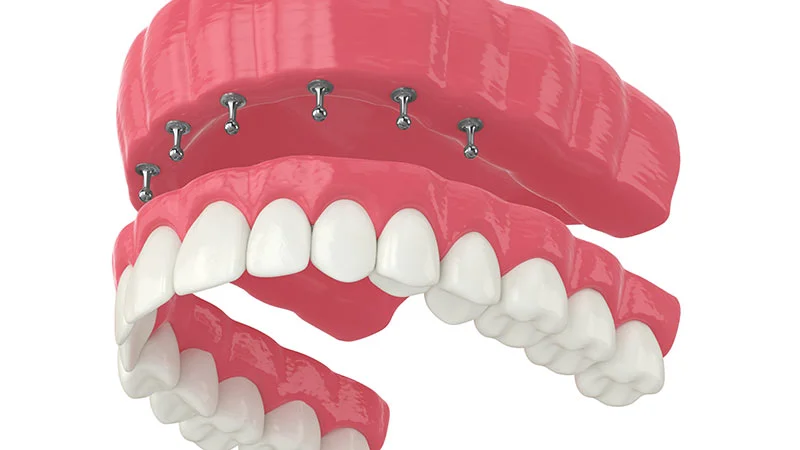
The implant-supported system offers a modern and practical solution for individuals experiencing significant tooth loss. This method is implemented using removable dentures supported by implants that are placed in the jawbone. The implant-supported system provides more stability and ease of use compared to traditional dentures, making daily activities such as eating and speaking more comfortable. Generally, 2 to 4 implants are placed in the jawbone, and the denture is securely attached to these implants with special attachments. The implant system is a popular choice for those needing a dental prosthesis due to its aesthetic and functional advantages.
| Definition | This is an implant-supported removable denture system that ensures the prostheses remain more stable within the mouth for completely edentulous patients. The prosthesis is secured using special implant-supported (locatable) attachments placed onto the implants. | |||
| Who Is It Suitable For? | Individuals experiencing complete tooth loss and have sufficient jawbone, as well as patients who have comfort issues with traditional dentures. | |||
| Advantages | – Provides more stability and safe usage compared to traditional complete dentures. | – Improves chewing and speaking functions. | – Slows down bone resorption. | – Reduces discomfort caused by removable dentures. |
| Disadvantages | – Requires implant surgery. | – The prosthesis may need maintenance over time. | – Initially, costs are higher compared to classical dentures. | |
| Application Process | 1. The health of the patient’s jawbone and gums is evaluated. | |||
| Maintenance and Use | It should be cleaned daily, and the prosthesis should be checked at regular intervals. | |||
| Lifetime | With regular care and hygiene, it can be used for many years. |
How Do Snap-on Implants Differ from Traditional Prosthetics?
Snap-on implants offer many advantages compared to traditional prosthetics. These advantages stand out particularly in terms of stability, comfort, and functionality. Traditional dentures try to stay in place by adhering to the gums or via suction forces. However, snap-on implants are supported by implants fixed to the jawbone, which minimizes the movement issues experienced with traditional prosthetics:
- Stability: Traditional prosthetics may experience slipping or shifting
- Comfort: Applies less pressure on the gums
- Functionality: Increases chewing efficiency and offers food variety
Snap-on implants also provide advantages in terms of hygiene as they eliminate the need for a fixture. Their removable feature makes cleaning easy, offering comfort for users in daily care. Additionally, this system creates a more natural feeling in the mouth, ensuring safe use while speaking.
How Are Snap-on Implants Applied?
The application of snap-on implants is a meticulous process carried out in several stages. First, the patient’s oral structure and gum health are evaluated. This assessment is important for determining the areas where the implants will be placed. In addition to clinical examination, radiological assessments such as panoramic X-rays or 3D tomography are performed. This allows for a more detailed analysis of bone structure and anatomical details. Based on the assessments, a treatment plan is created by determining how many implants will be placed and in which areas they will be positioned.
Local anesthesia is applied during the surgical placement of implants to ensure the patient is comfortable during the procedure. Appropriate-sized holes are drilled in the area where the implants will be placed, and the implants are positioned in these areas. This procedure ensures that the implants are securely anchored in the jawbone. If a two-stage procedure is used, the tops of the implants are closed with stitches; in a one-stage procedure, the healing caps are left exposed.
After the implants are placed, a healing process of 3 to 6 months begins. During this period, the implants are expected to integrate with the bone. If necessary, a temporary prosthesis may be provided to the patient during the healing phase. If a two-stage procedure is preferred, the tops of the implants will be reopened once healing is complete, and the healing caps will be placed.
Once healing is fully completed, the prosthesis fabrication process begins. In this phase, measurements are taken according to the position of the implants, and a prosthesis suitable for the patient’s measurements is prepared in the laboratory. In the prosthesis fabrication, components compatible with the implants are used for stabilization. The prepared overdenture is securely placed onto the implants.
In the final stage, the patient is informed about how to insert and remove the prosthesis and how to clean it. This information is important for the hygienic and long-lasting use of the prosthesis. Additionally, the patient should regularly attend follow-up visits to check the status of the implants and prostheses and make adjustments when necessary.
Who are Suitable Candidates for Complex Implant Treatment?
Complex implant treatment offers a suitable solution for patients who meet certain criteria. For the success of this treatment, it is crucial to have both good oral health and overall health conditions. The main factors to consider when determining suitable candidates for complex implants are as follows:
-
\t
- Sufficient bone density and volume
- Healthy oral structure
- Good overall health status
- Not using or ready to quit smoking
- Realistic prosthesis expectations and willingness to maintain regular care
\t
Complex implant treatment can be applied to patients with insufficient bone density through supportive procedures such as bone grafts. Especially individuals with chronic conditions that are not well controlled, such as diabetes, should undergo a detailed evaluation before treatment. Additionally, smokers should be encouraged to quit before starting the treatment process; because smoking negatively affects the integration of implants with bone and the healing process.
This treatment method is also suitable for patients who wish to maintain a balance between aesthetic and functional expectations. The patient’s desires regarding the prosthesis and willingness to engage in regular care increase the long-term success of the treatment.
What Are the Advantages and Possible Disadvantages of Complex Implants?
Complex implants provide a more stable and comfortable use by solving the issue of movement seen in traditional prostheses. These implant-supported prostheses rest on a few implants placed in the jawbone and ensure safety in daily functions. The balance of advantages and disadvantages should be evaluated based on users’ needs and oral structure.
Advantages:
- Increased stability and comfort
- Preservation of bone structure
- Prevention of gum irritation
- More natural and aesthetic appearance
- Freedom to eat a wider variety of foods
How Should Complex Implants Be Maintained and Protected?
In order for durable dental implants to remain long-lasting and healthy, proper maintenance and care measures must be applied regularly. There are certain special points of attention for the cleaning and protection of implant-supported dentures. Daily cleaning, regular maintenance, and professional dental check-ups support this process:
- Remove and clean every day
- Use a soft-bristled toothbrush
- Clean the connection surfaces
- Store in a water container
- Avoid abrasive products
Additionally, professional dental cleaning should be performed at least once a year and the connecting parts of the implants should be checked regularly.