What is All On Four Implant Treatment? İzmir Full Denture Treatment and Process Analysis
Total edentulism (complete toothlessness) cases, where all teeth are lost, fundamentally alter the chewing, swallowing, and speaking (phonation) functions in human physiology, forming a structural condition. The titanium artificial roots placed in strategic points of the bone architecture are at the forefront of prosthetic and surgical systems applied in modern dentistry for the restoration of these tissue losses. The medical concept called “All On Four” is based on the principle of four implants placed in the jawbone at specific angles (angulation) creating a mechanical skeleton for a fixed prosthesis block.
What is All On Four Implant Treatment and How Does It Work?
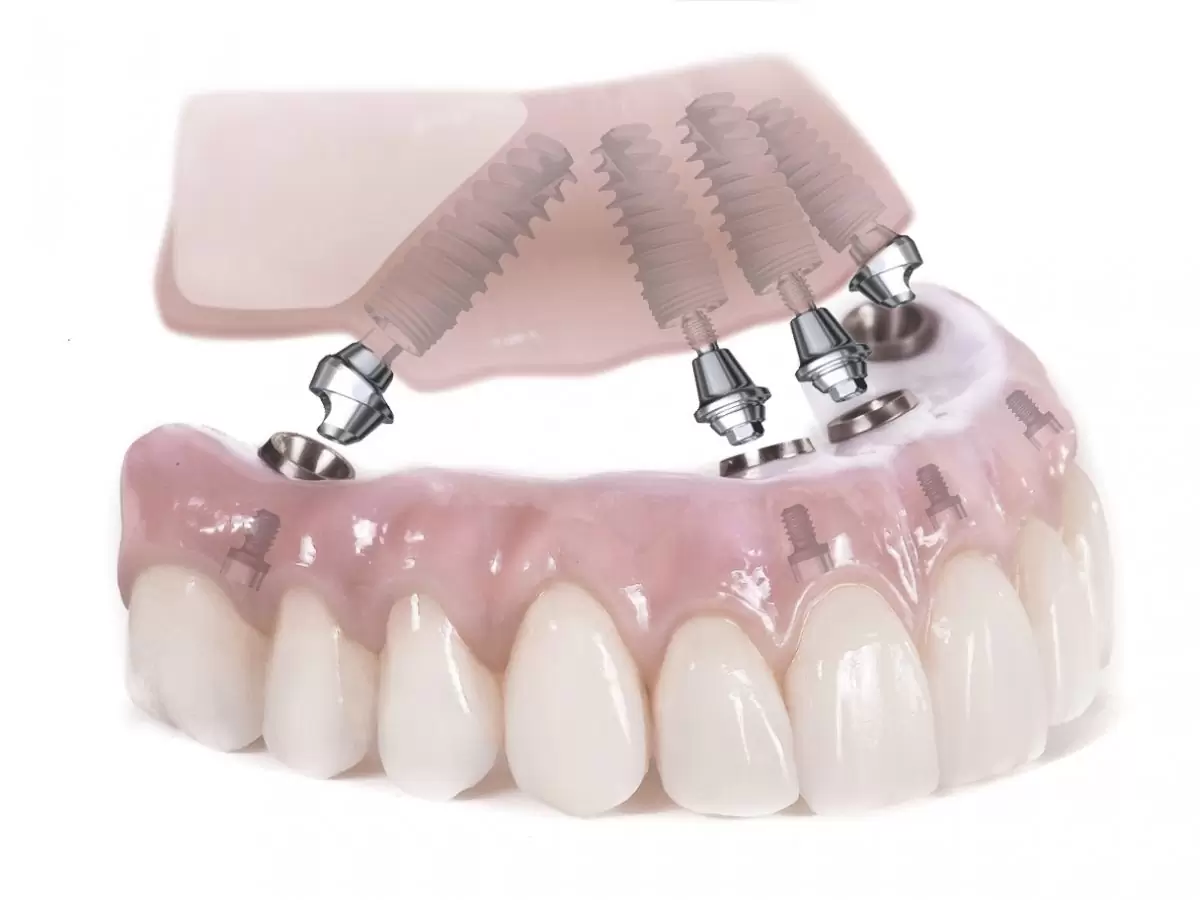
All On Four implant treatment is a surgical protocol where two titanium screws are placed vertically in the anterior region and two others at an angle between 30 and 45 degrees in the posterior regions of completely toothless jaws. This method supports a fixed prosthetic superstructure by balancing force distribution without contacting anatomical voids.
In a toothless jaw, transferring occlusal (chewing) forces directly to the bone instead of the mucosa ensures the mechanical stimulation of bone cells, slowing the resorption process. The biomechanical functionality of the All On Four implant concept adapts the laws of physics and engineering to jaw anatomy. The bone located in the anterior area is denser and harder (cortical structure), as it is more concentrated by nature. The first two screws of the system are positioned at a 90-degree angle into this dense bone tissue. This vertical placement counteracts the anterior shear forces of the prosthesis.
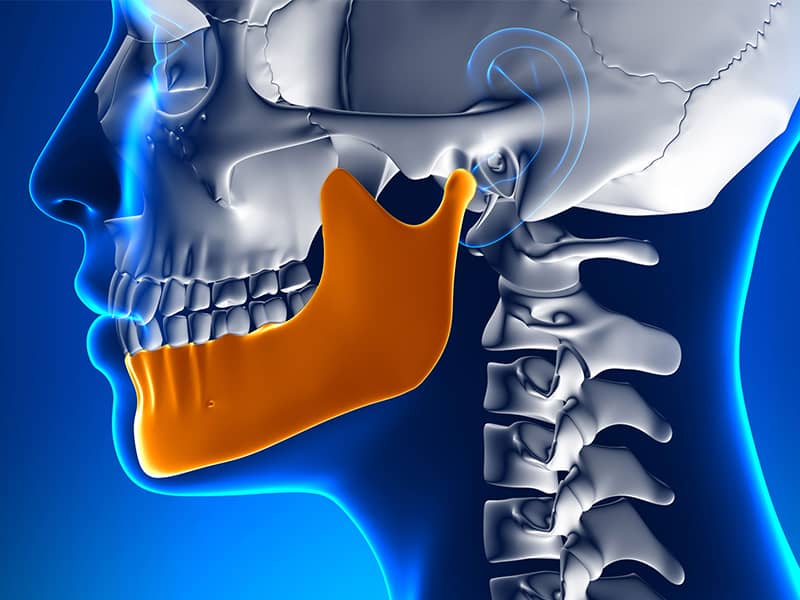
However, the situation differs in the posterior regions. Maxillary sinuses with respiratory cavities are in the upper jaw, while the mandibular nerve canal, which provides sensation to the lower lip, is located in the posterior regions of the lower jaw. When bone resorption occurs due to prolonged edentulousness, it becomes impossible to place vertical implants without damaging these anatomical structures. In the All On Four system, the two implants at the back are placed immediately in front of the anatomical spaces, tilted at an angle between 30 and 45 degrees (open). This open placement maximizes primary stability (initial tightness) by increasing the contact surface area of the screw with the bone. At the same time, it enhances mechanical resistance by ensuring that compressive forces on the posterior parts of the prosthesis are distributed over a wider skeletal area (anterior-posterior polygon). In the clinical processes conducted in İzmir, Avrupadent physicians simulate these open calculations digitally through software with millimetric precision.
Who Can Undergo All On Four Implant Treatment in İzmir?
This medical procedure can be applied to adult patients who have lost all their teeth or have existing teeth planned for extraction due to periodontal destruction, provided that their general systemic health profile is suitable for surgical intervention. A minimum bone volume to support the implant in the anterior region of the jaw is a fundamental anatomical suitability criterion.
For a surgical operation in dentistry to be planned, it is expected that the individual has completed their skeletal development (18 years and older). The All On Four implant treatment structurally aims to provide a wide-ranging functional restoration. Individuals with no teeth left in their upper and lower jaws (total edentulism) are directed towards this medical procedure to overcome physiological limitations caused by the bruising from movable palate prostheses or the movement of the prosthesis in the mouth during speech. At the same time, in cases where there are teeth in the mouth but these teeth are loose due to severe bone loss (periodontitis) and functionally compromised (terminal dentition), this procedure can be planned to be performed in the same session as tooth extraction.
For the procedure, the patient’s medical history (anamnesis) and cellular healing capacity are examined with great attention. In patients with type 2 diabetes, it is required that blood glucose levels and HbA1c rates are within clinical reference ranges. For individuals with cardiovascular (heart) diseases, the dosage of anticoagulant medications must be appropriately regulated for the operation by the physician. In patients receiving intravenous bisphosphonates with a diagnosis of osteoporosis (bone loss), this procedure is subject to specific medical evaluations since the bone cell renewal cycle is suppressed. In the examinations within the Avrupadent network, patients’ systemic conditions are classified through the ASA (American Society of Anesthesiologists) risk scale to create a medical pathway.
How is the Aesthetic Placement of Titanium Screws Planned in the All On Four System?
The aesthetic placement is planned with radiological data in such a way that it wraps around the maxillary sinus walls in the upper jaw, and in the lower jaw, it avoids the ‘inferior alveolar nerve’ canal. The angle of 30-45 degrees given to the back screws expands the mechanical axis through which forces will be transmitted, forming a structural base for the prosthesis to be added on top.
In the anatomy of the jaw, the posterior (molar) regions are areas where the chewing force is felt most intensely (hundreds of Newtons). When designing a fixed prosthesis, it is desired that the supporting columns (implants) extend backward as far as possible to counter this force (anterior-posterior distribution). If the implants are only concentrated in the front area, the posterior extension of the prosthetic body creates a ‘balcony’ (cantilever) effect, exposing it to excessive biting forces during chewing and gradually causing bone loss around the screws over time.
The physiological barrier that limits the placement of vertical screws in the posterior regions is the vital organs located within or just above the bone. The medical innovation of the All On Four system emerges at this point. The titanium artificial roots in the back begin just in front of the nerve canal or sinus cavity and are anchored into the bone in an opened backward manner. This angled rotation restricts the screw’s entry into anatomical voids while ensuring that the connection point of the prosthesis (abutment interface) reaches much further back in the jaw. At the Izmir Avrupadent clinics, this open surgical placement is designed through millimetric calculations established on three-dimensional tomography (CBCT) data, rather than at random. When deemed necessary, surgical guides are produced with 3D printers, and during the operation, only this guide is used, bringing it under medical discipline.
What Are the Structural Differences Between All On Four Implant Treatment and Traditional Implant Methods?
In traditional methods, it is expected that 6 to 8 implants are placed vertically at the jaw’s ends for a fixed prosthesis, and usually, bone powder (graft) is added in the posterior regions. The All On Four concept minimizes the need for grafts with only 4 screws and an open surgical placement, limiting surgical trauma and repair time.
The medical approaches used in the treatment of complete tooth loss exhibit variations based on biomechanical principles. In traditional implant procedures, 6 to 8 artificial roots are positioned at regular intervals along the relevant crest to design a complete jaw restoration (fixed porcelain or zirconium bridges). All screws are placed with a vertical axis of 90 degrees to the bone. When there is insufficient vertical space in the posterior parts of the jawbone, the physician resorts to advanced (reconstructive) surgical procedures such as ‘Sinus Lifting’ (lifting the sinus membrane) or bone block transplants in order to augment these areas.
These advanced surgical procedures require an additional biological healing period of 4 to 6 months for the graft (bone powder) material to integrate with the patient’s own living bone. The structural difference of All On Four implant treatment is based on making the most efficient use of the existing volume of resorbed (absorbed) bone. Thanks to the angled placement, anatomical obstacles are bypassed, eliminating the need for additional bone powder in most cases. As the number of screws placed decreases, the amount of surgical incision (cut) and osteotomy (drilling) made to the tissue also decreases; this limits physiological inflammatory response (edema) after the operation.
| Medical Parameter | All On Four Concept | Traditional Fixed System (6-8 Screws) |
|---|---|---|
| Number of Implants Used | 4 implants per jaw (2 vertical, 2 angled) | 6 to 8 implants per jaw (all vertical) |
| Need for Bone Graft (Powder) | Minimized to a large extent thanks to the angled placement. | Rear areas (sine surgery/neural proximity) are often required. |
| Surgical Stage Duration | Since grafting is not performed, the seating time is shorter. | The procedure time is longer due to advanced surgical techniques added. |
| Biomechanical Force Distribution | Coated screws provide support over a wide area, balancing the moment of tipping. | A large number of vertical columns absorb occlusal forces in the vertical axis. |
How is the All On Four Implant Process Planned at Avrupadent?
The process consists of steps including examining the patient’s medical history, identifying alveolar bone boundaries with 3D CBCT tomography, and determining the prosthetic axis through reverse planning using computer software. The surgical phase is conducted following radiological guides by the physician within medical sterilization protocols.
In Avrupadent clinics located in Izmir, advanced surgical interventions are subjected to standard diagnostic algorithms. A three-dimensional volumetric tomography is performed to analyze the bone matrix, which is not visible under the mucosa of the patient. CBCT data numerically reveals not only the height and width of the jaw but also the density degree of the bone (trabecular softness or cortical hardness) in Hounsfield Units (HU). In All On Four treatment, since primary stability (initial physical compression strength) determines the fate of the temporary prosthesis that will be placed on the system, knowing the bone hardness values in advance shapes the surgical technique that the physician will use.
The obtained radiological data is processed with the concept of “backward planning.” In classic surgeries, the implant is placed where the bone is located, and efforts are made to adapt the prosthesis; while in digital planning, the positions of the ideal teeth that should be in the dental arch are designed in a virtual environment. The points where the chewing vector will be transferred most evenly are identified, and then four implants are virtually placed in the bone under this dental framework. This medical map, approved in consultation with the oral surgeon and the specialist in prosthetic dental treatment, is applied step by step to physical anatomy under aseptic (microbial-free) conditions on the day of the operation.
How Long Does Bone Healing (Osseointegration) Last After All On Four Implant Treatment?
Osseointegration, which is the structural integration of titanium material with human cells, lasts an average of two to three months in the cortical structured lower jaw and three to six months in the trabecular structured upper jaw. This duration is a cellular phase dependent on the organism’s healing speed.
During the operation, the doctor achieves mechanical compression (primary stability) when placing the implant into the prepared socket in the bone. This compression force (torque) is calculated in Newton-centimeters (Ncm). However, since bone is a living tissue, this mechanical force decreases over time, giving way to cellular retention (secondary stability). The first blood clot that forms in the area of surgical trauma encapsulates the region by creating fibrinogen strands.
In the following weeks, macrophages and fibroblasts clean the wound site, while bone-forming osteoblast cells migrate into the microscopic pores (fissures) present on the titanium surface. These cells release calcium and phosphate minerals into the area, constructing new, calcified (hardened) bone tissue. The lower jaw (mandible) has a very hard and dense mineral structure, which shortens the retention and proliferation phase of the cells compared to medical norms. However, the upper jaw (maxilla) has a spongiform architecture due to the air spaces within it, and the calcification process is anatomically prolonged. This waiting period is a biological cycle, which is monitored through periodic X-ray checks in the medical practices of İzmir Avrupadent to assess tissue integration.
How is Anesthesia Management Applied During All On Four Implant Procedure?The procedure is performed by pharmacologically blocking the nerve cords using local anesthetic agents delivered to the mucosa and bone membrane. Since conduction is interrupted, the patient remains conscious and can only perceive mechanical pressure and device vibrations; electrochemical stimuli do not reach the brain.
The procedure is performed by pharmacologically blocking the nerve cords using local anesthetic agents delivered to the mucosa and bone membrane. Since conduction is interrupted, the patient remains conscious and can only perceive mechanical pressure and device vibrations; electrochemical stimuli do not reach the brain.
In jaw and facial surgery, the control of pain receptors is ensured by anesthetic solutions that temporarily close the sodium channels of peripheral nerve fibers (usually with active ingredients of articaine or lidocaine). The physician suspends impulse transmission by injecting around the major nerve cords that supply the innervation (nerve nourishment) of the operative area (mandibular block or maxillary infiltration). While this pharmacological effect is active, making an incision (cut) in the tissue or performing osteotomy with a drill does not create a biological damage signal.
Surgical micromotors used during osteotomy continuously cool the area by spraying physiological serum while drilling into the bone. These rotary instruments create a certain degree of mechanical vibration in the jawbone. While local anesthesia blocks the fine nerve fibers carrying pain, it does not completely silence the thick fibers that transmit pressure and touch sensations. Therefore, it is common and a physiological reaction for the patient to feel pressure in their jaw during the procedure. For individuals with extreme dental phobia or those whose cardiovascular reflexes can be triggered by stress, intravenous (intra-venous) conscious sedation techniques can be applied in the presence of an anesthesiologist to create a medical comfort zone.
How Does the All On Four Technique Provide an Alternative When Jawbone Volume is Insufficient?
When vertical bone height is lost in the posterior regions, positioning implants at a specific angle starting from the front and directed backward allows for support from healthy cortical bone without getting obstructed by anatomical barriers like the sinus or nerve canal. This approach minimizes the need for advanced grafting (bone dust).
During prolonged periods of being edentulous, the alveolar ridge physiologically resorbs, decreasing in vertical height and narrowing in the horizontal axis (resorption). In the posterior areas of the upper jaw, the maxillary sinus membrane sagging downwards is further influenced by gravity (pneumatization). In traditional approaches, operations are planned to place a vertical screw in the posterior area, where the sinus membrane is surgically pushed upward (Sinus Lifting), and particulate materials sourced from bone or synthetic grafts are placed in the void. Additional months are added to the treatment for these particles to turn into living bone.
In the All On Four system, the 30-45 degree rotational opening applied uses the anterior wall of the sinus void in the upper jaw, and the mesial region just anterior to the mental foramen (nerve exit hole) in the lower jaw. This opening allows the doctor to utilize the healthy and dense (cortical) bone in the front parts of the jaw without interfering with more problematic and resorbed bone areas that are further back. As the screw progresses in position, it finds the chance to have a longer body (the area of contact with the bone increases) while structurally limiting the need for reconstructive surgery by bypassing the sinus/nerve path. Clinical decisions at Izmir Avrupadent are made based on the volumetric calculations obtained through 3D tomography.
How Does Prosthetic Restoration Work in the All On Four System (Temporary and Permanent Prostheses)?
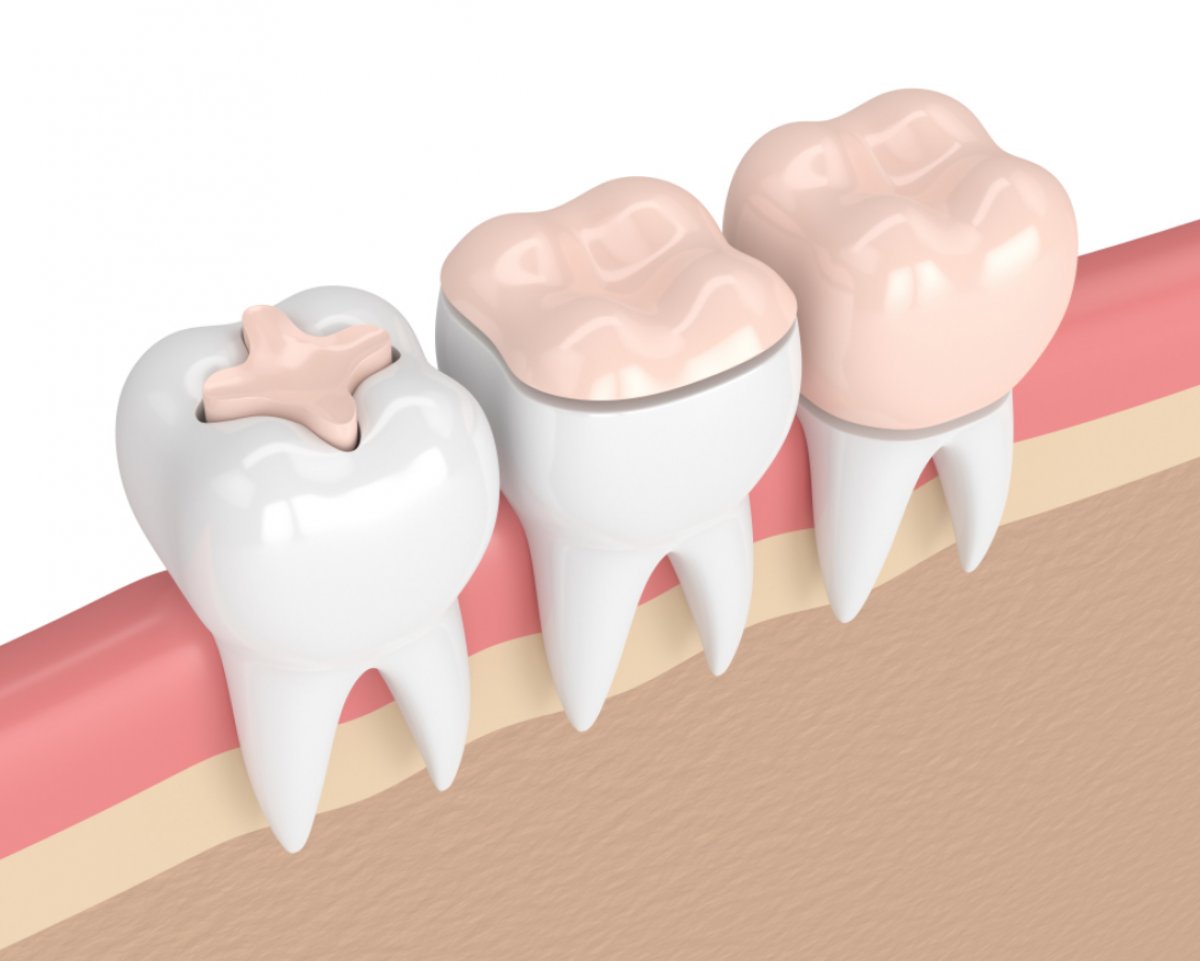
On the day of the operation, if the torque (mechanical compression) for placing the implants into the bone meets the medical measurements, a fixed temporary acrylic prosthesis can be screwed onto it in the same session. When the bone cells are completely fused with titanium (after months), the treatment is completed by producing high-mechanical-resistance zirconium or metal-supported ceramic permanent prostheses.
The unique feature of this medical system’s emerging procedures is its ability to incorporate the concept of ‘immediate loading’. If the screws are tightened with a force of 35 Ncm or more into the bone during the surgical procedure (indicating high primary stability), the doctor screws an acrylic-based temporary bridge prosthesis into the patient’s mouth using measurements taken or pre-prepared laboratory templates on the same or next day. This temporary prosthesis begins to immediately support phonation (speech) and the reflexes for chewing soft food, preventing the patient from being without teeth. At the same time, the micro-movements of the four implants rigidly connected to each other are limited, thus preserving the healing tissue.
However, the material of the temporary prosthesis is not structurally rigid enough to withstand occlusal (chewing) pressures for a long time; its purpose is to provide aesthetic and minimal function until the osseointegration phase (cellular bonding) is completed. After the biological cycle, which lasts for 2-3 months in the lower jaw and 3-6 months in the upper jaw, the transition to the permanent (definitive) prosthetic phase takes place. The patient’s facial anatomy, lip support (profile), and vertical occlusion dimension are re-analyzed. Metal-supported ceramic blocks or hybrid zirconium bridges that mimic the natural appearance of teeth with light permeability are milled in the dental laboratory to withstand the forces applied to the posterior molar regions without deformation. The laboratory integration at İzmir Avrupadent aims to enhance the mechanical resistance of the underlying systems (bar) of these final restorations, thus ensuring functional maintenance.
| Feature | Temporary Prosthesis (Acrylic) | Permanent Prosthesis (Zirconium/Porcelain) |
|---|---|---|
| Purpose and Duration of Use | To eliminate edentulousness while waiting for bone healing (First 3-6 months). | To ensure long-term maintenance after cellular bonding is completed. |
| Material Structure | Flexible, breakable acrylic/composite alloy. | Rigid (non-flexible), titanium bar, high-strength ceramic. |
| Chewing Capacity | Only a soft diet should be applied (Pureed and non-grainy). | Normal (hard) diet can be applied within anatomical limits. |
| Biological Function | Connects the implants and restricts micro-movements. | It balances the muscle forces along the bone axis at a Newton value. |
Is All On Four Implant Treatment Medically Possible in Older Age Groups?
While older age may slow general skeletal metabolism to some extent, it does not constitute a definite medical barrier for surgical procedures. What is important is not the chronological age but the individual’s biological age, cardiovascular capacity, and whether chronic diseases are kept under medical control.
Total toothlessness (edentulism) is a pathology that is often observed in geriatric (older age) individuals. Elderly patients who have used a removable denture for years experience significant resorption in the alveolar bone. Although the rate of cellular renewal (osteoblast activity) shows a marginal decrease due to aging physiology, the capacity of bone tissue to adhere to titanium surfaces and ensure osseointegration persists. Data in the medical literature indicate that the rates of cellular integration between healthy elderly individuals and younger individuals contain very close medical statistics.
When making treatment decisions in İzmir Avrupadent processes, internal organ functions and systemic profiles are analyzed rather than the age listed on the patient’s identity card. Cardiac reserves that can tolerate surgical stress, as well as liver and kidney functions that can metabolize local anesthetics, are examined. Minimizing the duration of operations for elderly patients is a medical preference when possible. The All On Four concept reduces chair time (procedure duration) by using only 4 screws and not requiring extensive bone graft surgeries, thereby structurally limiting post-operative (post-surgical) recovery inflammation and morbidity in geriatric patients.
How Do Systemic Diseases Affect the All On Four Implant Operation?
Chronic systemic conditions such as diabetes, hypertension, and osteoporosis affect the microvascular circulation (capillary flow) and osteoblast activity in the wound area. Regulating these disorders to medical reference ranges with pharmacological agents is necessary to limit infection risk and ensure cellular healing.
Surgical operations performed over a large area (entire jaw) are directly related to the circulation and immune (vascular) system. In patients with chronic high blood sugar levels, particularly those with diabetes (Type 2), thickening occurs in the vessel walls (microangiopathy). This cellular defect narrows the volume of blood that needs to reach the surgical site, leading to oxygen deprivation (hypoxia) in the tissue and preventing defense cells (leukocytes) from combating infections. Therefore, tests measuring HbA1c, which is an indicator of blood sugar over the last three months, are requested prior to surgery.
Anticoagulant (blood-thinning) medications used in patients who have undergone cardiovascular bypass, stent, or valve surgery slow down the coagulation cascade. In order to physiologically halt any bleeding when the flap is opened and incision made (hemostasis), medication modifications (bridging therapy) are applied with cardiologist approval. In patients receiving bisphosphonates for osteoporosis, the route of medication administration (oral or intravenous) is examined. Intravenous administration of bisphosphonates can suppress the jawbone’s self-renewal cycle and potentially lead to bone death (osteonecrosis), prompting a detailed medical consultation with the relevant endocrinology department to evaluate the operability of the procedure.
How Should Oral Care Be Done After All On Four Implant Treatment?
The long-term maintenance of fixed bridge prostheses involves cleaning the microbial plaque underneath the prosthesis by using a special thick dental floss, mouth rinse, and by implementing professional clinical tartar (dental calculus) cleaning at regular intervals, which is an integral part of the medical care routine.
In the All On Four concept, the prosthetic upper structure (bridge) attached to titanium implants is screwed in such a way that it cannot be removed by the patient. The non-corrosion of titanium and the non-decay of the inorganic ceramic/zirconium material should not lead to the misconception that the application can be left without maintenance. The surrounding mucosa (gums) and the supporting tissue of the alveolar bone are extremely sensitive to bacterial dental plaque (biofilm). The periodontal fiber structures around natural teeth, which prevent bacteria from reaching the bone, are not anatomically present around titanium screws.
If bacterial plaque accumulates in the mucosal groove where the prosthesis joins the gum, initial soft tissue inflammation (peri-mucositis) is observed. If the lack of mechanical hygiene continues, these bacteria can penetrate down to the bone, causing localized resorption of the bone surrounding the titanium (peri-implantitis). According to the care directives communicated to patients by the specialists at İzmir Avrupadent, it is mandatory to mechanically clean the thin (micro) gaps between the gums and the bridge with a type of floss called ‘superfloss’ or to rinse them with devices that use pressurized water (water flosser). Patients are invited to the clinic every six to eight months for periodic examination by a physician; if necessary, the prosthetic screws are removed for ultrasonic cleaning and radiological bone levels are archived.
How Do Radiological Analyses Guide All On Four Implant Planning?
The CBCT (Cone Beam Computed Tomography) analyses used beyond two-dimensional films measure the width of the bone, vertical volume, and the hardness of the spongy tissue through Hounsfield values. This digital data helps define the anatomical coordinates of the implants to be placed in an open manner, thereby preventing nerve/sinus injuries.
During a clinical examination, the doctor observes the mucosal structure and the intraoral tissues, but the architecture of the bone beneath the mucosa can only be understood through advanced radiological examinations. Panoramic X-rays reflect the overall jaw shape as a general curve, but they include a certain degree of distortion (approximately 15-20%) and do not physiologically depict the bone’s anterior-posterior (buccal-lingual) thickness.
Cone Beam Computed Tomography (CBCT) systems create a digital clone of the jaw by separating it into millimeter sections with low radiation dose. The “open placement” at 30-45 degrees, which is the heart of All On Four treatment, is a precise surgical route that does not tolerate a margin of error. In backward planning done on the tomography, the doctor designs the entry point of the screw into the bone and the angle at which it touches the wall of the sinus cavity in three-dimensional space. By determining the hardness of the bone, surgical drill protocols are chosen for primary stability (target torque: >35 Ncm) (for example, the underpreparation technique involves minimal drilling in soft bone). Thanks to these technological analyses performed in İzmir, the surgical operation is based on a scientific guide freed from surprise anatomical obstacles.
How Does Smoking Affect the Healing Period of All On Four Implants?
The nicotine and carbon monoxide in tobacco products cause constriction (vasoconstriction) in the capillaries, reducing oxygenation (hypoxia) in the wound area. This cellular damage suppresses osteoblast activity, slows down the bone healing (osseointegration) process, and increases the susceptibility to infections medically.
The cellular success of dental procedures involving surgical incision (cut) and osteotomy (drilling) is directly related to the quality of blood that will be transported to the surgical area. The inhalation of all smoke introduces carbon monoxide into the systemic circulation, which binds to hemoglobin molecules in the blood with a much higher affinity than oxygen. The decrease in the oxygen levels that cells require (hypoxia) disrupts the synthesis capacity of fibroblasts, which play a role in bone structure and tissue repair.
Simultaneously, the nicotine in cigarette composition causes vasoconstriction (narrowing) in peripheral (circumferential) blood vessels, limiting the volume of blood flow to the surgical area. A rich nutritional chain is required for the initial blood clot (fibrin network) to transform into new vessel (angiogenesis) and new bone (osteogenesis) cells. An ischemic (bloodless) wound area may struggle to close (epithelialization), turning into an open necrosis (cell death) area, susceptible to the proliferation of opportunistic bacteria in the oral flora. In the Izmir Avrupadent treatment protocols, to support the microscopic adhesion of osteoblast (bone) cells to titanium and to maintain functional continuity, it is communicated to patients as a clinical guideline that all tobacco consumption should be restricted weeks before the operation and throughout the entire healing period.