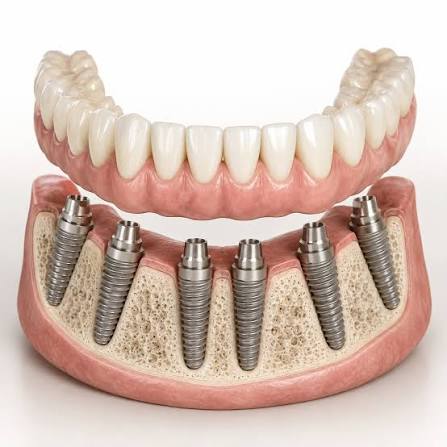
What Causes the Tooth on the Implant to Be Loose?
The main reason for the looseness of the tooth on the implant is generally due to the loosening of the mechanical screw in the abutment that connects the titanium root in the jawbone to the visible crown (prosthesis) in the mouth. Additionally, the degradation of the medical structure that secures the tooth to the abutment over time or structural fatigue occurring in the upper structure material due to intense chewing forces can also lead to looseness. If the root has a biological connection with the jawbone, this mobility experienced only in the upper part of the tooth is a prosthetic (related to the upper structure) condition that can be resolved with clinical procedures.
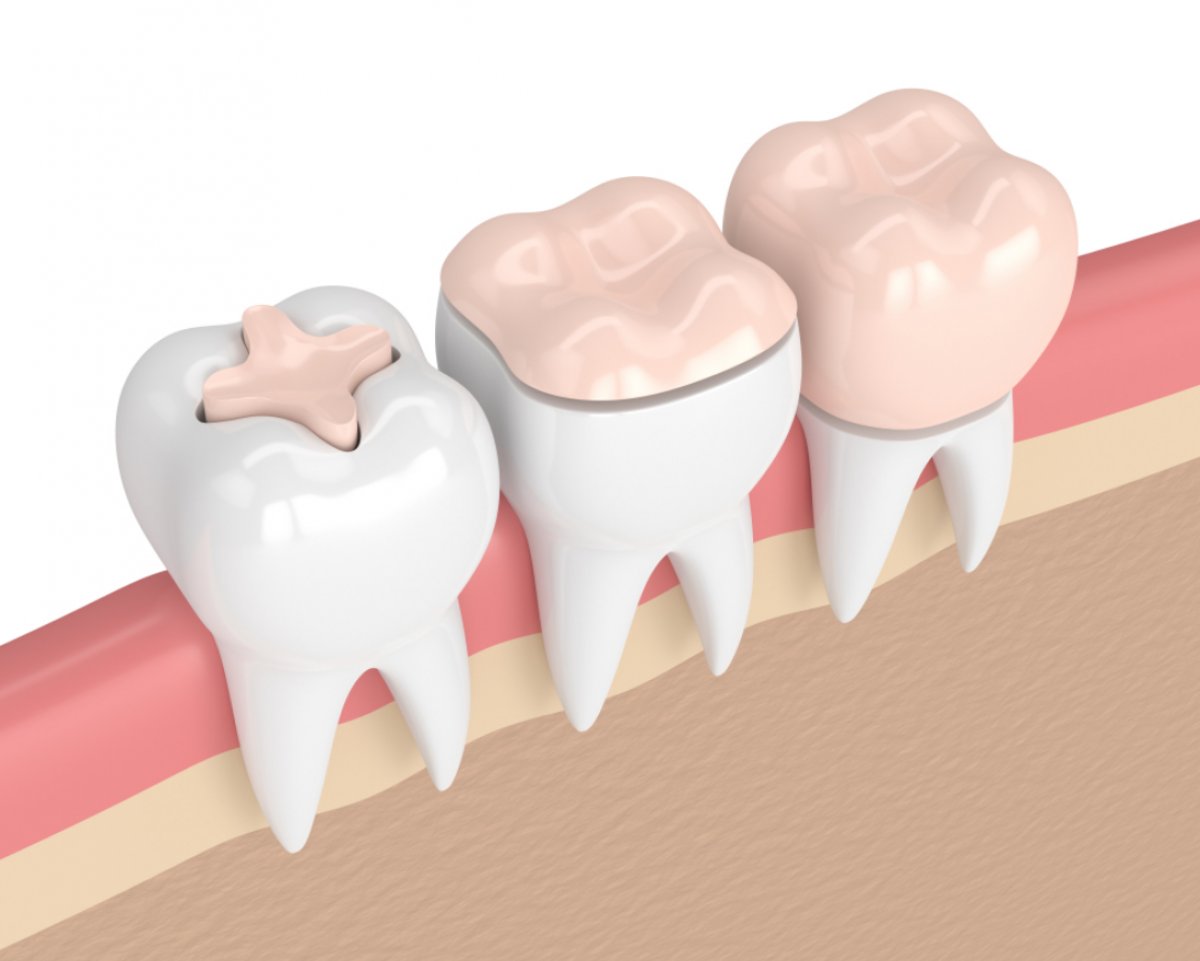
The titanium structures placed in the jawbone and the porcelain or zirconium teeth placed on top of these structures are not a single piece. To ensure proper anatomical fit and biomechanical force distribution, these systems typically consist of three different components (titanium root, abutment, and porcelain tooth). When the patient feels looseness in the mouth, the immediate concern usually revolves around the failure of the root within the jawbone; however, in a large majority of clinical cases, the part that is actually moving is not the root within the bone, but the upper tooth portion that is later screwed or constructed on top of the root. It is extremely important to correctly identify this distinction in terms of determining the medical approach to be applied.
Which Component Can Cause the Looseness of the Tooth on the Implant?
The loosening of the implant-supported tooth can stem from the main titanium body (fixture) within the bone, the connecting element (abutment) that attaches the body to the prosthesis, the internal screw that secures the intermediate element, or the outermost ceramic/zirconium crown layer. A detailed clinical and radiological examination conducted by the physician will determine exactly which layer or connection point of this mechanical system is causing the loosening movement.
These systems used in the treatment of tooth loss are modular structures that operate according to engineering principles. Each piece is subjected to forces in different directions and intensities during chewing. The closing of the jaws, lateral movements to the left and right, and the pressure generated during the chewing of food are transmitted from the uppermost porcelain tooth down to the intermediate part, ultimately reaching the titanium root within the jawbone. Any microscopic gap or weakness in the connection involved in this force transmission chain is perceived by the patient as ‘my tooth is loose.’
| Part of the System | Anatomical Location | Possible Reasons and Symptoms of Loosening |
|---|---|---|
| Crown (Upper Prosthetic Tooth) | The aesthetic tooth surface visible entirely in the mouth, where chewing is performed. | Rotation or dislodgement of the crown due to the melting of the adhesive (cement) material. |
| Connection Screw | The internal mechanical screw that connects the intermediate part to the root embedded in the jawbone. | Loosening of the grooves and the overall movement of the upper structure due to chewing vibrations (micro-mobility). |
| Abutment (Connector) | The body that supports the prosthesis by passing through the tooth structure. | Mechanical loosening, secondary to misalignment or loosening of the screw, leading to overall failure. |
| Fixture (Titanium Root) | A structure completely embedded within the jawbone and integrated with it. | The system moving from the foundation when the bone loses its cellular support (peri-implantitis). |
What Causes the Loosening of the Screws Holding the Superstructure (Prosthesis)?
The loosening of the screws holding the superstructure (prosthesis) is caused by biomechanical vibrations resulting from the continuous functioning of the teeth, excessive load created by teeth grinding or clenching (bruxism) during sleep, imbalances in the relationship of the prosthesis closure (occlusion), or the traumatic chewing of hard foods. The threads to which the screw is attached may lose torsion (tightening force) over time, depending on these stress factors.
Mechanical screws consist of interlocking metal surfaces. The dentist tightens this screw with a specific force (torque in Ncm). However, the oral environment is a dynamic area where continuous vertical and horizontal forces are applied. The force exerted by the chewing muscles is absorbed by the elastic tissue called the periodontal ligament at the root of the natural teeth, acting somewhat like a “shock absorber”, while there is no such elasticity in the titanium roots that are integrated into the jawbone. Therefore, all forces are transferred directly to the screw system. Micro loosening of the screw over a long period or under heavy pressure is a reflection of a physical reality.
How Does the Degradation of the Prosthetic (Crown) Constructor Lead to Loosening?
The degradation of the prosthetic material occurs through the chemical weakening caused by the saliva’s enzymes, acidic foods, or local bacterial activity over time, which ultimately anchors the medical cement (the prosthesis) to the abutment. When the prosthetic layer melts or its structure deteriorates, gaps form between the porcelain or zirconium veneer and the underlying supporting piece, causing the outer shell of the tooth to start moving.
There are fundamentally two methods used for fixing prosthetic teeth onto titanium roots: screw systems and cemented systems. In cemented systems, the dentist integrates the porcelain tooth onto the supporting structure using special medical compounds. However, each prosthetic material has a certain resistance capacity under liquid and acid exposure. In cases where there is excessive acidic dietary habits or inadequate cleaning near the gum line (col area), micro-leakages occur in the prosthetic line. These leakages undermine the adhesion of the cement and the patient may feel a slight ‘clicking’ sound or a sensation of displacement in the tooth.
- Acidic Interaction: The frequent consumption of acidic beverages and foods can gradually weaken the chemical bonds of the prosthetic material.
- Mechanical Pressure: The consumption of sticky foods (such as caramel, gum, etc.) continuously pulls the tooth upward in a vertical direction, challenging the bonding resistance.
- Saliva Composition: The pH level of an individual’s saliva is a parameter that affects the long-term stability of the prosthetic materials inside the mouth.
- Insufficient Crown Length: If the underlying supporting piece (abutment) is anatomically short, it can accelerate loosening by reducing the holding surface area of the prosthesis.
Does Bone Loss (Peri-implantitis) Cause Tooth Mobility?
Bone loss around the implants (peri-implantitis) is a condition where bacteria plaques seep under the gum tissue in the relevant area, causing the surrounding living bone tissue to erode the titanium root. In advanced cases, this can lead to the entire system wobbling from the inside of the bone. Unlike prosthetic wobbles connected to other parts, the wobbles caused by peri-implantitis are a tissue infection problem that requires urgent medical intervention due to the loss of cellular support in the bone tissue.
Similar to gum recession and bone loss (periodontitis) seen in natural teeth, it can also be observed around titanium roots. If the patient does not pay attention to oral hygiene, does not brush regularly, or does not use interproximal cleaners, the plaque layer can turn into tartar. Microorganisms within the tartar produce acids and toxins that can lead to the death (necrosis) or regression of bone cells. When bone support decreases both horizontally and vertically, the titanium root cannot hold within the bone and begins to move away from the tooth base. This situation creates a much more detailed clinical picture than a loosening of a screw in the superstructure.
How Do Excessive Chewing Forces and Teeth Grinding (Bruxism) Affect the Superstructure?
Excessive chewing force and the habit of grinding teeth during sleep (bruxism); the disproportionate mechanical load generated by the jaw muscles transmits directly to the porcelain teeth and the connecting screws within them, leading to material fatigue (metal fatigue) and consequently to the wobbling of the superstructure. These continuous lateral and vertical pressures prepare the ground for both the micro-level breakage of structural materials and the loss of natural torque of the connecting screws.
Human beings, especially during sleep, can exert pressures significantly exceeding normal chewing force through the tensed masseter muscle. The unconscious clenching of teeth can lead to long-lasting strain and stress on prostheses. While natural teeth can tolerate some of this stress due to the surrounding fibers, rigidly bonded structures to the jawbone directly transmit this shock to their components. Patients may often feel a loosening or sensitivity in their teeth upon waking up. To mitigate these risks, it is recommended that patients diagnosed with bruxism use a “night guard” after treatment.
| Affected Area | Physical Effect and Result |
|---|---|
| Porcelain / Zirconium Crown | Microcracks, abrasions, or fracture of the material on the tooth surface. |
| Connection Screw (Internal Screw) | Wearing or breaking of the screw due to continuous lateral forces. |
| Abutment | Fatigue of the metal framework carrying the load due to excessive lateral movements. |
| Surrounding Bone Tissue | Bone internal stress related to excessive force and physiological bone resorption (resorption) in the affected area. |
What Should Not Be Done at Home When the Implant Tooth is Loose?
Implant crowns should never be pushed back and forth with fingers or tongue, excessive force should not be applied to the tooth surface, and chewy foods (such as gum, caramel, etc.) should be urgently avoided. Patients should not attempt to use any commercial or non-medical substances in their home environment to hold the moving tooth in place, as this can lead to irreversible tissue damage and complete system failure.
The first and only thing that should be done when a loose crown is noticed is to promptly visit the clinic. Tooth loosening is a sign of an internal mechanical mismatch. If a patient continuously plays with the tooth using their tongue, it may lead to the breaking of a screw that is only loose inside, causing it to become lodged within the root. The breakage of the screw inside requires a much more complex clinical intervention. Additionally, using home-type substances inside the oral cavity is a situation that should definitely be avoided as it can lead to toxic substances leaking under the gums and causing acute infections.
How to Approach Loose Tooth Cases at İzmir Avrupadent Clinics?
The approach to loose tooth cases at İzmir Avrupadent clinics starts with the patient’s application to the clinic, followed by the three-dimensional radiological (CT/X-ray) imaging of the relevant area and clinical stability tests to determine whether the looseness originates from inside the bone or just from the upper prosthetic base. After this diagnostic phase, the process will be advanced by determining a mechanical repair or tissue treatment protocol based on the objective medical data obtained.
At Avrupadent, the priority is to transparently identify the root cause of the problem during procedures. When the patient sits in the dental chair, the dentist carefully checks whether the tooth is moving rotationally (around its axis) or vertically. If the tooth rotates around its own axis, it is generally due to fixture loosening; if it moves vertically or horizontally with all its parts, it raises suspicion of screw loosening. Radiological images evidence whether the titanium root of the jawbone is still securely held. Based on all these evaluations, the necessary procedures for the repair will be communicated to the patient.
How is the Repair or Replacement of a Loose Prosthetic Tooth Planned?
The repair of a loose prosthetic tooth is planned when the diagnosis shows that the issue is solely due to the loosening of the screw. The prosthesis (crown) is meticulously removed by the dentist, and the internal screw is retightened to the specified torque value (medical tightening force) before reattaching the prosthesis in place. If the cause of looseness is the deterioration of the porcelain tooth’s fixture, old fixtures are cleaned in a clinical setting using special tools, and the tooth is reattached to the main body with fresh medical cement.
These mechanical repair procedures are typically done within a single session, requiring no anesthesia (as there is no intervention within the bone) and are quick protocols. After tightening the screw or reattaching the tooth, the dentist must check the occlusion (the closure of the jaw). The primary cause of looseness may be that the patient is applying higher than normal pressure on that tooth. The contact points on the tooth are tested with thin sheets (articulation paper), and the high areas are adjusted millimetrically, bringing the tooth into a balanced biting position.
- In Case of Screw Loosening: The cover over the screw is opened (the filling material on top of screw crowns is removed), the piece is tightened with special torque wrenches, and the access hole is sealed with a new composite material.
- In Case of Abutment (Base) Failure: The crown is carefully removed, the inner surface and the underlying abutment piece are disinfected with chemical solutions. Then, the area is reattached with suitable abutment material.
- In Case of Screw Breakage: The broken screw piece inside the root is extracted under a microscope with the help of specific dental devices, and a new, healthy connecting screw is placed in the system.
- In Case of Prosthesis (Porcelain) Breakage: Crowns that cannot withstand the closing forces and have lost their structural integrity are measured again and remade in the laboratory.
How Should Daily Care Be Done to Prevent Tooth Mobility Problems?
To prevent tooth mobility problems, daily care includes regularly brushing the gum-tooth junction with a soft or medium-hard toothbrush, using the tools recommended by the dentist to remove debris under the crown, or employing spongy dental floss (superfloss). In addition to mechanical cleaning, using pressure dental brushes prevents bacterial plaque from adhering around the prosthetic areas, thus maintaining bone and gum health and ensuring system stability.
In cases where daily care is insufficient, not only natural teeth but also the tissues surrounding artificial roots placed in the jawbone are under serious threat. The peri-implantitis infection resulting from neglected oral hygiene can displace even the healthiest systems. Therefore, the patient must assume their own care in accordance with implantology principles. While classic brushing cleans the porcelain’s porous outer surface, the crucial point is the hygiene of the invisible boundary (sulcus) where the gum meets the prosthesis.
What is the Role of Regular Check-ups in Implantology Applications?
Regular clinical check-ups every 6 months or annually in all implantology applications play a critical role in the early detection and prevention of micro-loosening in screws by the physician before patients notice them, professional cleaning of dental stones around the prosthesis, and adjusting discrepancies in occlusion that change over time. This proactive approach helps to prevent major mechanical damages that may occur in the superstructures.