Why Are Facial Contours Considered in Aesthetic Design?
Restorative processes that reconstruct the asymmetries, morphological discrepancies, and color differences in the mouth, teeth, and jaw structure are not limited to the small area occupied by the teeth but require a broad anatomical vision. The morphological perfection exhibited by a tooth individually can create an unexpected sense of estrangement when placed within the facial skeleton or lip framework. The human face contains countless biometric variables such as forehead width, prominence of cheekbones, distance between pupils, and the curvature of the jaw. The form and sizes of the porcelain restorations to be planned must align with this skeletal geography, which is a fundamental principle underlying Aesthetic Dentistry practices.
The success of a visual restoration is dependent on the mathematical and optical relationship established between extraoral (outside the mouth) and intraoral (inside the mouth) reference points. If the general arrangement of the teeth is not integrated into the patient’s facial shape (for example, square, oval, or triangular forms), the result can give an artificial expression as if a mask belonging to someone else has been placed on the person. Facial contours uniquely determine how soft or sharp the corners of the produced teeth should be, the limits of vertical length, and how the chewing mechanics will harmonize with lip movements. Our detailed clinical guide elaborates on the effects of facial geometry on dental form, the importance of midline symmetry, the guiding role of lip thickness in restoration, and how these biometric analyses are managed in the processes at Avrupadent.
How Does Facial Geometry Play a Role in Determining Dental Form?
In human anatomy, the general contours of the teeth often reflect an inverted miniature version of the facial oval. The general shape of the facial skeleton is examined through digital photography analyses by the physician, drawing the boundaries of the restoration according to this map. In individuals with a square and broad facial profile, the chewing muscles (masseter) are quite pronounced. In such a robust bony structure, the teeth are designed to be slightly rounded and delicate, creating a visual contrast with the overall facial structure. In these profiles, the cutting edges of the teeth are designed to be flatter and the corners more pronounced (steeply angled), preserving skeletal integrity.
Conversely, in individuals with oval facial forms that slope gently from the cheekbones towards the chin, the situation is different. In these patients, the corners of the teeth (incisal embrasures) are rounded, reflecting the natural curve of the face onto the porcelain structures. Analyzing facial geometry is an indispensable clinical requirement for aesthetic procedures to ensure a personalized (characterized) structure that aligns with the individual’s own genetic codes, moving away from a factory-produced appearance.
| Facial Skeletal Form | Compatible Prosthetic Tooth Form | Medical and Aesthetic Purpose |
|---|---|---|
| Square / Angular Face | Flat cutting edges, pronounced angles, and broad horizontal forms. | Supporting anatomical harmony by balancing the lines created by powerful jaw muscles. |
| Oval / Round Face | Rounded corners, soft transitions, and ovoidly shaped curved teeth. | Creating a soft and symmetrical optical perception by following the natural curves of the face. |
| Long (Rectangular) Face | Forms with limited vertical size, emphasizing horizontal width. | Providing a broader expression by balancing the optical illusion of excessive length perception of the face. |
How Do the Structure of the Jaw and Cheekbones Influence the Mechanics of Smiling?
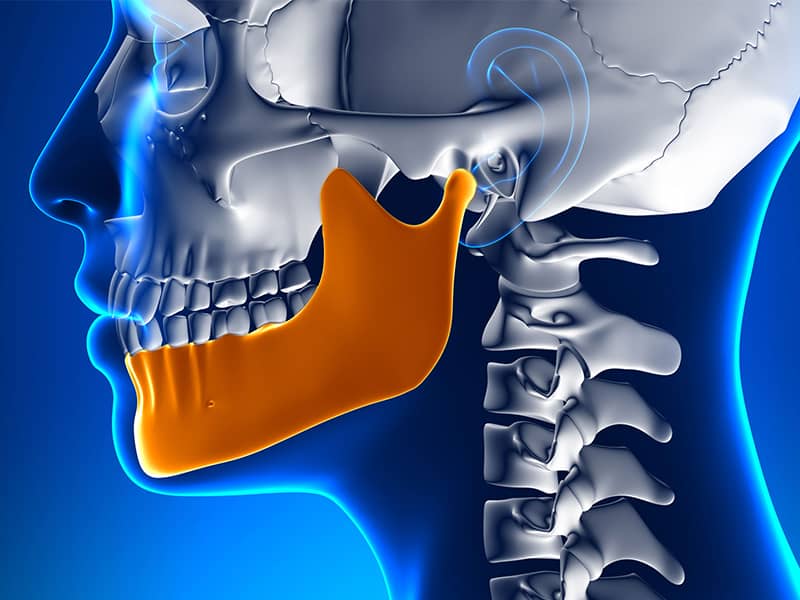
The cheekbones (zygomatic bones) that directly influence the form of the upper jaw (maxilla) define the horizontal limits of the visual framework created during the act of smiling. In individuals with a wide jaw arch, it is possible to position the back teeth more noticeably (angularly directed) towards the cheeks when designing porcelain restorations. However, in patients where the cheekbones are narrow and the jaw structure is V-shaped (constricted form), if the back teeth are designed too far outwards, it exerts internal pressure on the cheek muscles and disrupts tissue function.
At the same time, the height of the jaw bones sets biological limits on how large the teeth can be. A detailed analysis of the bone structure in this way is fundamental to the planning between the dentist and the laboratory technician. Restorations achieve an organic appearance within the limits allowed by the existing skeletal volume without adding extra load to the temporomandibular joint (TMJ) and muscles.
How Does the Midline Design Affect the Distance Between the Pupils?
The perception of symmetry in facial aesthetics is based on how the human brain compares horizontal and vertical lines. The imaginary vertical line (midline) that passes through the center of the face separates the right and left halves. It is aimed that the joining line of the two upper front incisors (centrals) is either aligned with this facial midline or runs parallel with minimal (unnoticeable) deviation. If the tooth midline is significantly misaligned from the facial midline, no matter how perfect the completed teeth are, an asymmetric and unbalanced appearance will emerge.
In the horizontal plane, the line passing through the pupils (pupillary line) is taken as a reference. The occlusal plane that connects the edges of the incisors should be positioned parallel to this pupil line. Otherwise, one side of the restorations will sit lower than the other (occlusal tilt), giving the face a sagging or distorted expression. In digital design programs, these reference lines are drawn on photographs, and all materials to be produced are integrated into this coordinate system.
To What Extent Do Lip Thickness and Asymmetry Change Dental Dimensions?
The lips are a window through which restorations inside the mouth meet the world. When designing the outer shape, the thickness of the lips, their volume, and the range of motion during speaking (hypermobility) must be taken into account. In patients with thick and full lips, the visibility of porcelain teeth (buccal contour) can be slightly increased to ensure that the teeth do not get lost in the shadow of the lips. However, in patients with thin and tight lip structures, if the teeth are designed to be too protruding or voluminous, the lips may struggle to close, resulting in speech problems related to tissue tension.
However, in some individuals, there may be congenital or habit-related lip asymmetries (such as one side of the lip lifting more when smiling). In these asymmetrical cases, the clinician plans to camouflage (hide) the asymmetric movement of the lip by not only considering the symmetry of the teeth themselves but also resorting to optical tricks that will conceal this asymmetry.
How Do Gender and Age Factors Reflect on Facial Design?
As a person ages, changes occur at specific skeletal and muscular levels. As the lips lose elasticity, the upper lip droops slightly. This situation causes the upper teeth to be less visible and the lower teeth to be more prominent when speaking. When planning an Aesthetic Dentistry treatment for a patient in the older age group, this drooping is taken into account, and the length of the upper front teeth is extended by one or two millimeters within biomechanical tolerances. Transparent ceramic touches applied to the incisal edges add youthfulness and dynamic energy to the face.
Sexual characteristics also exhibit distinct differences in facial features. A feminine (female) facial structure has softer transitions in the cheekbones and chin curves. To support this face type, the anterior central incisors are designed to be longer, and the corners are rounded. In a masculine (male) facial structure, there is a more angular jawline; along these lines, the tooth dimensions are more uniform, the incisors are flatter, and the inter-tooth triangles (embrasures) are designed to be tighter.
How Does the Facial Profile (Convex, Concave, or Flat) Affect the Aesthetics of Porcelain Teeth?
In cephalometric (skull bone) analyses, the facial profile is evaluated using an imaginary line drawn between the tip of the nose and the chin tip. In convex facial profiles where the chin tip is significantly retruded, excessive labial inclination of the upper front teeth forces the lip closure and leads to further disproportionate perception of the profile. In these patients, the axial inclinations of the teeth (axial axes) are positioned more upright to balance the profile.
In concave facial profiles where the chin tip is prominent, the situation is exactly the opposite. To minimize the appearance of the upper lip being retracted and depressed, a slight curve is added to the external surfaces of the upper porcelain restorations to provide volume (lip support) from within the lip. The lateral analysis of the facial profile in this way ensures that the restorations are compatible with the patient’s entire skeletal structure, not just from the front.
How are Buccal Corridors Balanced with Facial Width?
When an individual smiles broadly, black, dark areas appear in the inner parts of the corners of the lips. If the curve of the jaw (dental arch) is much narrower compared to the individual’s facial width, these dark buccal corridors appear very large, and the smile is perceived as if it is squeezed into a few teeth at the front. Excessive darkness in these gaps on a patient with a wide face disrupts aesthetic appearance.
In this type of clinical tables, the external surface volumes of restorations made on small (premolar) and large molar teeth are slightly increased, and the jaw arch is prosthetically expanded. Thus, dark areas are filled during smiling, and the arrangement of teeth extends to the corners of the lips, giving the face a brighter, wider, and fuller expression. However, this procedure is carried out without violating the pressure area of the cheek muscles, adhering to mechanical limits.
How Are Asymmetries in Facial Contours Camouflaged with Optical Illusions?
The human face never possesses perfect symmetry between the right and left halves. It is common for the nose to be slightly tilted to one side, for one lip to be positioned higher than the other, or for there to be height differences in the cheekbones. If there is such asymmetry across the entire face but the teeth are perfectly symmetrical as if drawn with a ruler, the asymmetry on the face becomes even more pronounced.
To overcome this medical challenge, dental technicians benefit from the principles of optical illusion. For instance, if there is a slight pull towards one side of the face, the midline of the teeth and their long axes are designed to be very slightly (barely noticeable) offset to optically balance that asymmetry. Small interventions made to the reflective surfaces of the teeth (line angle) ensure that the light reaches the eye from different angles, presenting the asymmetrical facial contours in a more harmonious manner.
What Technologies Are Used for Facial Analysis in Avrupadent Clinic Standards?
The medical quality infrastructure of a clinic is directly related to the digital equipment used in the diagnosis and planning stages. In Avrupadent’s process management, traditional impression materials have been completely replaced by digital workflows. The dental replica obtained within seconds using intraoral scanners is combined with façade and profile photos taken in the hospital’s clinical studio environment.
Thanks to this integration, the dentist can map the patient’s facial midline, pupils, and lip contours millimetrically on the computer screen. The boundaries of the ceramic restorations to be produced are shaped into a personalized (tailor-made) design based on this virtual map. Before transitioning the prepared design to laboratory production, it is transferred to a mold using three-dimensional printers and physically tested in the patient’s mouth (Mock-up), creating a communication strength that excludes surprises from Avrupadent protocols.
How is Functional Chewing Mechanics Integrated with Jawbone Structure?
Aesthetic Dentistry planning must be backed by flawless engineering and biomechanics behind visual harmony. The chewing pressure created by the facial muscles (masseter and temporal muscles) is transferred from the jaw joint through the facial skeleton to the teeth. Newly made porcelain restorations should not cause a deviation from their natural trajectory during the movements of the jaw to the right, left, or forward.
If the front teeth are made excessively long or thick to create an aesthetic appearance in accordance with the patient’s facial structure, the front teeth may come into premature contact with each other (anterior interference) while the patient is speaking or chewing food. These early contacts can lead to pain in the jaw joint, muscle spasms, and fractures in the porcelain over time. Therefore, while considering the facial contours, the permissible range of motion of the skeleton (envelope of function) is also calculated simultaneously to protect the biological lifespan of the restorations.
Frequently Asked Questions
1. How will the shape of my teeth change the form of my face?
If your face is square, oval, or triangular in shape, the corners and widths of the teeth to be created will be designed to reflect and balance this geometry of your face in a contrasting miniature form.
2. Why is focusing only on teeth insufficient?
Teeth are like a painting in the center of the face; if this painting is placed misaligned with the frame of the face, such as the lip curvature, cheekbones, and midline, it may look beautiful locally but creates artificiality in the overall expression.
3. How does midline deviation disrupt facial aesthetics?
If the vertical line that goes through the center of your face does not align with the combination point of your front teeth, it can be perceived that there is asymmetry on the right and left sides of your entire face, disrupting aesthetic balance.
4. Does the structure of my lips affect the appearance of my teeth?
Yes, the thickness of your upper lip and the amount it stretches when you smile are the main anatomical factors that determine how long your porcelain teeth can be made and how much will be visible from the outside.
5. Why are facial photographs taken during smile design?
Dimensions within the mouth are taken not just in terms of teeth, but also to align and proportionally design with references of lip posture, the pupil line, and nostril shapes using computer-assisted methods.
6. How is the dental alignment planned for someone with a recessed chin?
In outwardly curved (convex) facial profiles, since the chin is positioned backward, the upper teeth are not designed too prominently; they are positioned at a steeper angle to limit the extreme protruding appearance of the profile.
7. Can asymmetries on my face be corrected with teeth?
Although natural facial asymmetries cannot be completely eliminated, minor axial adjustments on the midlines of the teeth and optical illusions such as surface reflections can significantly camouflage these asymmetries on the face.
8. How is tooth length adjusted for individuals with thin lips?
For patients with thin lip structures, the teeth are not designed to be overly voluminous or prominently convex; otherwise, it may hinder the closure of the lips, leading to functional and phonetic (speech) issues.
9. How does the width of the buccal corridor (dark area) affect the face?
When smiling, if the black spaces that form at the corners of the lips are too wide, your smile may appear narrow; the volume of the back porcelain teeth is slightly increased to fill these gaps, giving the face a broader, brighter expression.
10. Do the height of the cheekbones affect the design?
Yes, pronounced cheekbones increase the horizontal width of the face, guiding the dental arch to be designed to support this width.
11. Do the facial lines that change with age reflect onto the teeth?
As we age, the drooping lip tissues cause the upper teeth to become less visible; in designs, the incisal edges are elongated slightly and transparency is added to restore a youthful energy to the face.
12. What happens if oval teeth are made for a person with a square face?
When very rounded and delicate teeth are integrated into a square face with strong muscles, the soft form of the teeth clashes with the face’s firm character, and the teeth appear as a foreign, mismatched addition within the face.
13. What digital technologies are used in facial analysis?
Intraoral optical scanners, DSLR cameras, and CAD/CAM software are used to analyze the patient’s three-dimensional skeletal data in a computer environment.
14. What is the relationship between the smile arc and the lower lip?
For an aesthetic appearance, the imaginary line that connects the tips of your upper front teeth must parallel the ‘U’ curve formed by your lower lip when you smile.
15. Do teeth that do not match the facial lines disrupt chewing?
Yes, teeth that are excessively long or thick, which are independent of aesthetic concerns, violate the natural movement limits of the jaw, thus jeopardizing chewing mechanics and joint health.